


Dust Collector Bag Filter
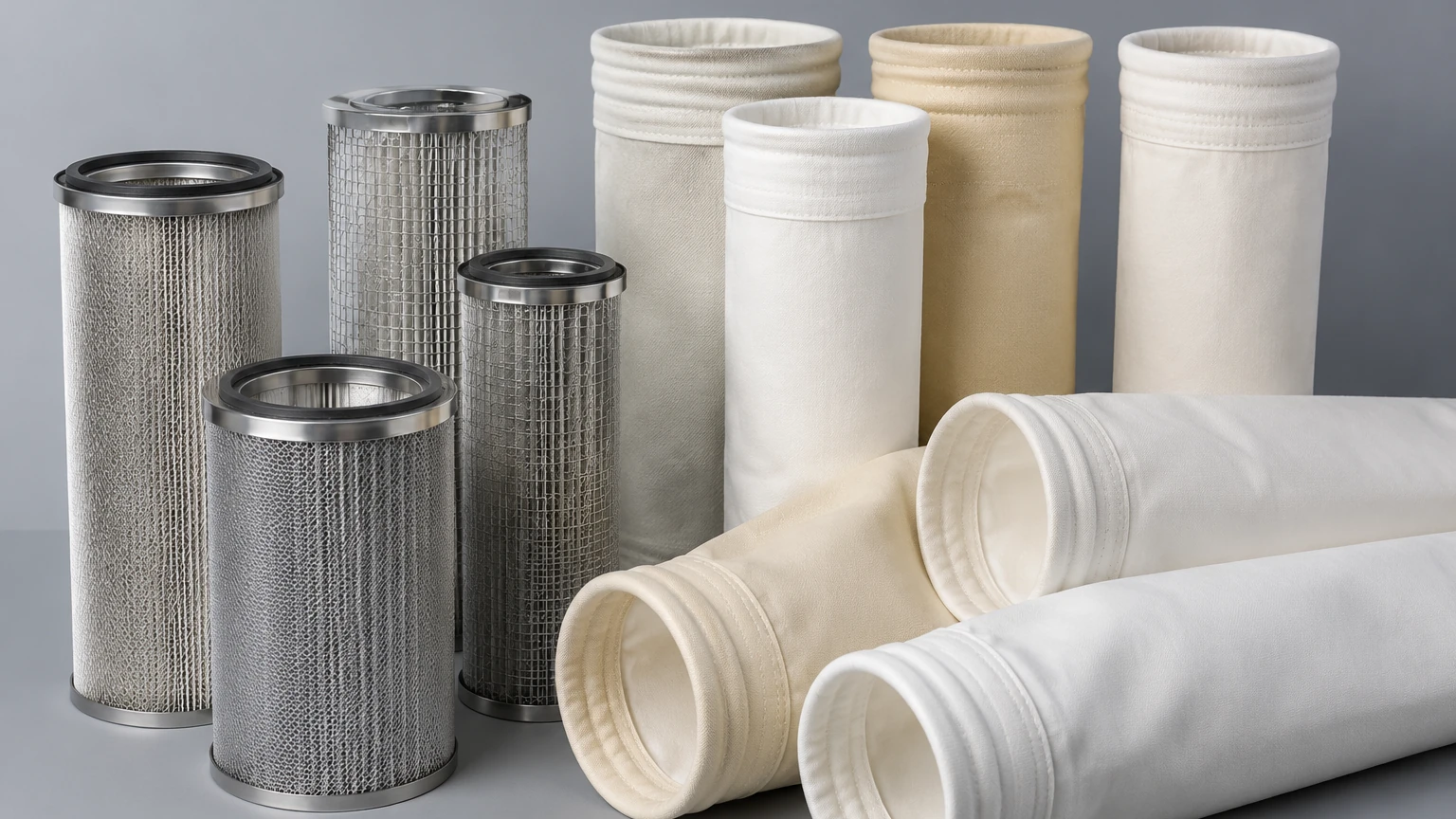
In industrial environments, the management of airborne particulate matter is a critical requirement for regulatory compliance, worker safety, and process efficiency. A dust collector bag filter serves as the primary separation medium in baghouse systems, designed to capture dust and other dry particles from gas streams. While the term often refers to the fabric sleeves used in standard air filtration, the engineering behind these components involves complex material science and mechanical design to ensure they withstand the rigors of industrial operations.
For engineers and procurement teams, selecting the appropriate dust collector bag filter requires a deep understanding of the specific application environment, including gas chemistry, temperature fluctuations, and the physical characteristics of the dust being handled. As a manufacturer specializing in high-performance filtration, Kaifil provides technical insights into how these components function and the criteria necessary for optimizing filtration performance.
The Role of Dust Collector Bag Filters in Industrial Air Quality
Dust collection systems are integral to industries ranging from chemical processing and pharmaceuticals to food production and metalworking. The dust collector bag filter is the functional heart of the baghouse. Its primary role is to intercept particles while allowing cleaned air or gas to pass through the media and exhaust into the atmosphere or return to the facility.
Beyond simple air cleaning, these filters are often used for product recovery. In industries like pharmaceutical manufacturing or precious metal refining, the dust captured by the filter is a valuable product. Therefore, the efficiency of the filter directly impacts the bottom line. High-quality filtration prevents the loss of expensive raw materials and ensures that the final discharge meets environmental standards set by organizations such as the EPA or OSHA.
Technical Classification and Filtration Mechanisms
To select the right dust collector bag filter, it is essential to understand the three primary mechanisms by which particles are trapped: inertial impaction, interception, and diffusion.
1. Inertial Impaction: This occurs when a particle is too large to follow the curved streamlines of the gas flow around a filter fiber. Instead, the particle’s inertia causes it to strike the fiber directly and become lodged.
2. Interception: This happens when a particle follows the gas streamline but comes close enough to a fiber to be captured by it. This is typically the dominant mechanism for mid-sized particles.
3. Diffusion: For extremely small particles (sub-micron level), Brownian motion causes them to move erratically, increasing the likelihood that they will contact and adhere to the filter media.
In most industrial baghouses, a "dust cake" forms on the surface of the filter media shortly after operation begins. This layer of captured dust actually improves filtration efficiency by acting as an additional filter bed, though it also increases the pressure drop across the system. Balancing this efficiency with the energy required to move air through the filter is a key engineering challenge.
Material Engineering: From Synthetic Fibers to Stainless Steel
The choice of material for a dust collector bag filter is dictated by the chemical and thermal conditions of the exhaust gas. While standard applications may use polyester or polypropylene, more demanding industrial processes require specialized materials.
Synthetic Media Options
* Polyester: The most common material for general-purpose applications. It offers good dimensional stability and resistance to most oxidizing agents.
* Aramid (Nomex): Used in high-temperature applications (up to 400°F), such as cement kilns or metal smelting.
* PTFE (Teflon): Known for its exceptional chemical resistance and high-temperature tolerance. PTFE membranes are often laminated onto other fabrics to improve dust release characteristics.
The Role of Stainless Steel and Metal Components
In extreme environments where synthetic fibers fail—such as highly corrosive chemical streams or ultra-high temperature processes—stainless steel filtration components become necessary. Kaifil specializes in custom stainless steel filtration solutions that can be integrated into dust collection systems. Stainless steel wire mesh or sintered metal filters provide unmatched durability and can be cleaned and reused far more effectively than disposable fabric bags. For technical professionals looking for robust alternatives to standard media, you can Review product options and application support on our Main Page to see how metal filtration integrates into industrial systems.
Operational Parameters and Performance Optimization
When specifying a dust collector bag filter, engineers must evaluate several critical performance metrics to ensure the system operates at peak efficiency.
Air-to-Cloth Ratio
The air-to-cloth (A/C) ratio, also known as the filtration velocity, represents the volume of gas passing through a square foot of filter media per minute (CFM/ft²). A lower A/C ratio generally leads to higher filtration efficiency and longer filter life, but it requires a larger (and more expensive) baghouse. Conversely, an excessively high A/C ratio can cause "blinding," where dust is driven deep into the media pores, making it impossible to clean.
Pressure Drop ($ΔP$)
Pressure drop is the difference in static pressure between the inlet and outlet of the filter. It is a direct indicator of the resistance to airflow. A rising $ΔP$ suggests that the dust cake is thickening or the filters are becoming clogged. Monitoring this metric is vital for maintaining energy efficiency, as the system’s fan must work harder to overcome higher resistance.
Micron Rating and Efficiency
Filters are rated by their ability to capture particles of a certain size. In industrial dust collection, the goal is often to achieve 99.9% efficiency for particles 1 micron or larger. For hazardous dusts, such as silica or lead, HEPA-grade secondary filtration or specialized primary bags with ePTFE membranes may be required.
Cleaning Systems and Maintenance Cycles
The longevity of a dust collector bag filter depends heavily on the cleaning mechanism employed by the baghouse. There are three primary types:
1. Pulse-Jet Cleaning: The most common modern method. A high-pressure burst of compressed air is sent down the length of the bag, causing it to expand rapidly and shatter the dust cake. This allows for continuous operation without shutting down the airflow.
2. Shaker Systems: The tops of the bags are mechanically shaken to dislodge the dust. This typically requires the airflow to be stopped during the cleaning cycle.
3. Reverse Air: A fan blows air in the opposite direction of the normal flow, gently collapsing the bags and causing the dust cake to fall into the hopper.
Maintenance teams should establish regular inspection intervals. Signs of failure include "bleeding" (visible dust exiting the stack), an abnormally low pressure drop (indicating a hole or bypass), or an unmanageably high pressure drop (indicating blinding). Replacing filters before a total failure occurs prevents downstream contamination and protects the main blower from damage.
Customization and OEM Integration for Industrial Filtration
Standard off-the-shelf filters are often insufficient for specialized industrial machinery. Customization is frequently required in terms of dimensions, mounting hardware, and media properties. For instance, in the chemical processing industry, a filter may need custom-engineered gaskets to ensure a gas-tight seal, or specific grounding wires to prevent static discharge in explosive environments.
Kaifil works closely with OEM partners to develop precision metal filter components that serve as the structural support or the primary filtration media within dust collection units. Whether it is a custom-sized stainless steel cage to support a fabric bag or a fully integrated metal cartridge for high-temperature gas filtration, engineering precision is paramount. By focusing on the specific chemical compatibility and mechanical load requirements of an application, we help engineers reduce downtime and improve the total lifecycle of their filtration systems.
Evaluating Total Cost of Ownership in Baghouse Systems
When purchasing a dust collector bag filter, the initial price is only one component of the total cost of ownership (TCO). A comprehensive evaluation includes:
* Energy Consumption: High-pressure drop filters increase the electrical load on the system fans.
* Compressed Air Usage: In pulse-jet systems, the frequency and pressure of the cleaning pulses contribute to operational costs.
* Replacement Frequency: Durable materials like 316L stainless steel or high-grade synthetic polymers may have a higher upfront cost but offer a significantly longer service life, reducing labor costs and production downtime associated with frequent filter changes.
* Disposal Costs: In some industries, used filter bags are considered hazardous waste. Utilizing cleanable, long-life metal filtration components can significantly reduce the volume of waste generated.
For engineers tasked with optimizing these systems, the focus should remain on selecting a filter that matches the specific particulate characteristics—such as abrasiveness, moisture content, and particle shape—of their process.
Conclusion
The dust collector bag filter is a sophisticated engineering component that plays a vital role in industrial safety and efficiency. From the selection of raw materials like stainless steel and advanced polymers to the calculation of air-to-cloth ratios, every detail impacts the performance of the baghouse. By understanding the technical boundaries of filtration media and the operational demands of the specific application, purchasing teams can make informed decisions that enhance system reliability.
As a professional manufacturer of custom filtration solutions, Kaifil provides the technical expertise and manufacturing capabilities required to solve complex industrial filtration challenges. To explore our full range of stainless steel and precision metal filter components, please visit our Main Page for detailed product specifications and engineering support.
