


Johnson Screens New Brighton
In the landscape of industrial filtration and separation technology, the name Johnson Screens is synonymous with the development and refinement of wedge wire technology. The facility associated with Johnson Screens in New Brighton, Minnesota, has historically served as a critical hub for engineering excellence, particularly in the design and manufacture of V-wire screens used across a multitude of heavy industries. For engineers and procurement professionals, understanding the technical legacy and the current manufacturing standards established at such facilities is essential when evaluating high-performance filtration components.
This guide explores the technical foundations of industrial screens, the engineering considerations inherent in the New Brighton manufacturing tradition, and the critical factors that decision-makers must confirm when sourcing stainless steel filtration solutions for demanding applications.
The Engineering Foundation of Wedge Wire Technology
The core of the technology often associated with the Johnson Screens New Brighton legacy is the continuous-slot wedge wire. Unlike standard woven wire mesh, wedge wire is constructed by wrapping a profile wire around longitudinal support rods and joining them through resistance welding. This creates a "V" shaped profile that widens inwardly.
From a technical perspective, this geometry is critical for several reasons:
1. Non-Clogging Surface: The two-point contact between the particles and the slot ensures that any particle passing through the narrowest part of the opening will continue through the screen without becoming wedged. This is vital for continuous processes in water treatment and mineral processing.
2. Structural Integrity: Because the wires are welded at every intersection, the resulting cylinder or flat panel possesses high mechanical strength, allowing it to withstand significant pressure differentials and mechanical loads that would deform or tear traditional mesh.
3. Precise Slot Openings: Manufacturing at facilities like those in New Brighton requires high-precision machinery to ensure slot tolerances are maintained within microns. This level of accuracy is necessary for applications requiring specific particle size retention.
Key Evaluation Criteria for Industrial Screens
When engineers evaluate screens sourced from major manufacturers or their alternatives, several performance metrics must be prioritized. It is not enough to simply match a part number; the component must be validated against the specific stresses of the operating environment.
Flow Capacity and Open Area
The efficiency of a filtration system is largely determined by its open area—the ratio of the slot openings to the total surface area. A higher open area results in a lower entrance velocity, which reduces the pressure drop across the screen and minimizes the risk of impingement or abrasion. Engineers must calculate the required open area based on the fluid viscosity, flow rate, and the allowable pressure drop (ΔP) of the system.
Mechanical Loading and Collapse Strength
In deep-well applications or high-pressure hydraulic systems, the collapse strength of the screen is a primary safety concern. The selection of the support rod shape (round, teardrop, or rectangular) and the frequency of the welds determine the screen's ability to resist external pressure. For those looking at specifications similar to those produced in New Brighton, verifying the burst and collapse ratings under operating temperatures is a non-negotiable step in the procurement process.
Material Selection for Corrosive and High-Temperature Environments
While the mechanical design of the screen is paramount, the metallurgy determines the component's lifespan. Stainless steel remains the industry standard, but the specific grade must be matched to the chemical composition of the process fluid.
* Grade 304/304L: Suitable for general-purpose applications where cost-effectiveness is a priority and the environment is only mildly corrosive.
* Grade 316/316L: The preferred choice for chemical processing and marine environments due to the addition of molybdenum, which enhances resistance to pitting and crevice corrosion.
* Duplex and Exotic Alloys: In highly acidic or high-chloride environments—common in oil and gas or advanced wastewater treatment—standard stainless steels may fail. In these instances, materials like Duplex 2205 or Monel are required to prevent premature failure.
As a professional manufacturer of custom stainless steel filtration solutions, Kaifil emphasizes the importance of material traceability. Ensuring that the raw materials meet ASTM or ISO standards is a fundamental part of maintaining the quality levels expected in the industry. For more information on specialized material options, you may visit the Main Page to review product options and application support.
Customization vs. Standardized Components
A significant challenge for many maintenance and plant engineers is the replacement of legacy components. While the Johnson Screens New Brighton facility has provided many standardized designs over the decades, modern industrial processes often require bespoke modifications to improve efficiency.
Customization options typically include:
* Varying Slot Sizes: Transitioning from a uniform slot size to a graduated slot design to manage different particle sizes in a single pass.
* End Fittings: Customizing flanges, threaded connectors, or reinforcement rings to ensure a seamless fit into existing housings without the need for piping modifications.
* Surface Treatments: Applying electropolishing or specialized coatings to reduce bacterial growth in food and beverage or pharmaceutical applications.
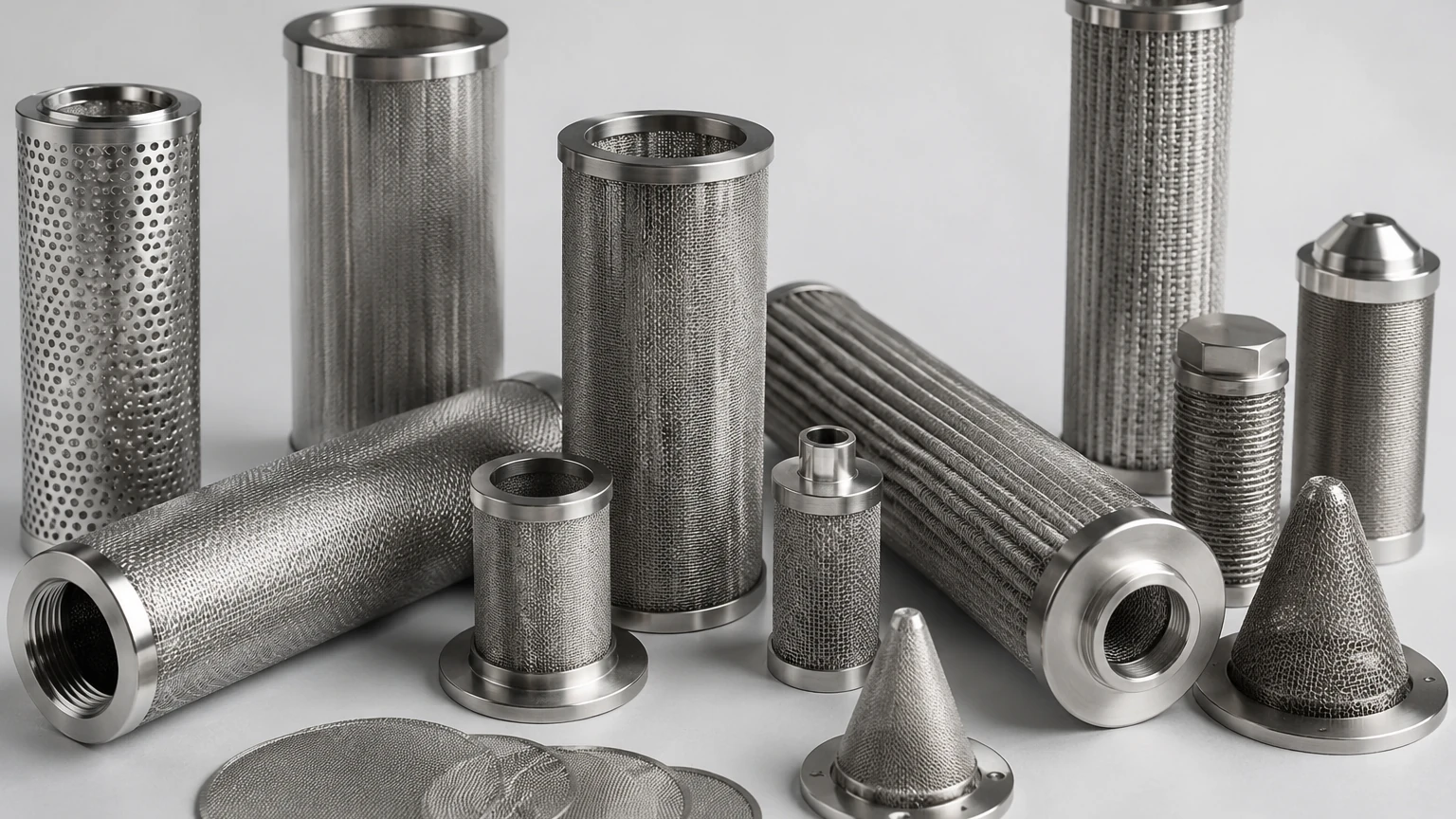
Choosing a manufacturer that offers OEM and customized filtration solutions allows for greater flexibility. It ensures that the filter is not just a replacement, but an upgrade that addresses specific pain points such as rapid scaling or excessive wear.
Sourcing and Procurement: Confirming Technical Specifications
Before finalizing a purchase order for industrial screens, the technical team should confirm several key pieces of information with the supplier. This prevents costly downtime and ensures the longevity of the filtration system.
1. Filtration Direction: Is the flow from out-to-in (FOTI) or in-to-out (FITO)? The orientation of the V-wire (radial or axial) must be matched to the flow direction to utilize the non-clogging properties of the wedge wire.
2. Slot Tolerance: What is the acceptable variance in the slot width? In precision applications, even a 10% variance can lead to downstream contamination.
3. Welding Standards: Ensure that the resistance welding process is monitored for consistency. Brittle welds are a common cause of screen failure in high-vibration environments.
4. Lead Times and Logistics: For facilities that previously relied on local production in New Brighton, understanding the global supply chain is essential. Evaluating manufacturers based on their ability to provide reliable shipping and technical support regardless of location is a key B2B strategy.
Maintenance and Total Cost of Ownership (TCO)
The initial purchase price of a stainless steel filter is only one component of the Total Cost of Ownership. Engineers must also consider the ease of cleaning and the expected replacement cycle. Wedge wire screens are generally favored because they are highly compatible with backwashing and CIP (Clean-In-Place) systems.
Because the slots widen inwardly, a reverse flow of fluid effectively dislodges particles trapped on the surface. This reduces the frequency of manual cleaning and extends the life of the screen. When comparing different suppliers, it is helpful to ask for empirical data on the number of cleaning cycles the screen can withstand before the slot geometry begins to degrade due to abrasion.
Conclusion: Navigating the Industrial Filtration Market
Whether you are seeking components originally engineered at the Johnson Screens New Brighton facility or looking for high-performance alternatives, the focus must remain on technical precision and material integrity. The transition from legacy brands to modern, agile manufacturers requires a thorough understanding of filtration principles and a commitment to verifying every engineering specification.
By focusing on the mechanical strength, material suitability, and customization potential of stainless steel filtration components, purchasing teams can ensure they achieve reliable and cost-effective performance. In demanding industrial environments, the right filtration solution is not just a commodity—it is a critical asset that protects downstream equipment and ensures the purity of the final product.
