


Asme Bpe
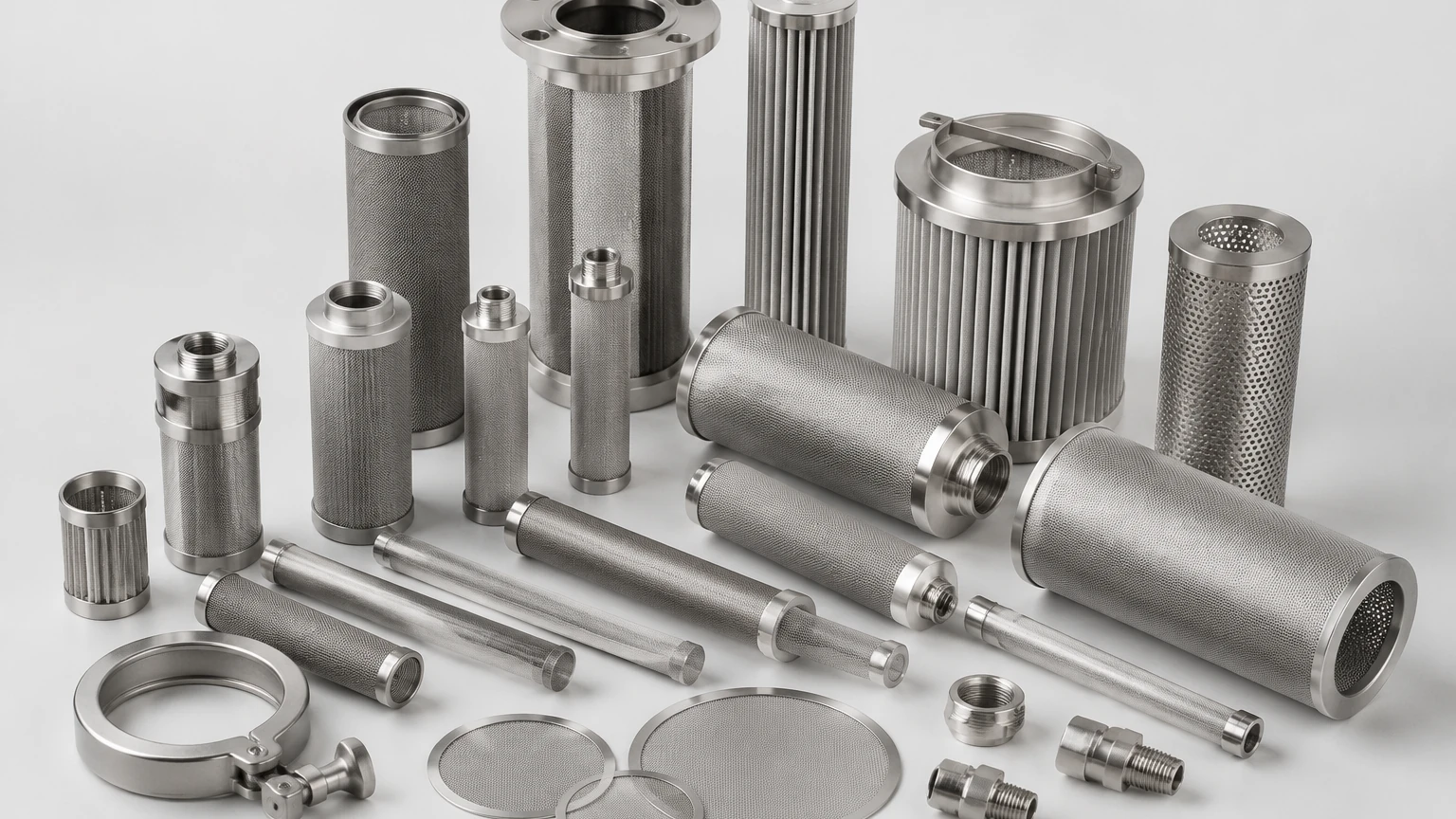
In the high-stakes environments of biopharmaceutical manufacturing and life sciences, the integrity of process equipment is not merely a matter of operational efficiency but a fundamental requirement for product safety and regulatory compliance. The ASME BPE (BioProcessing Equipment) standard serves as the leading framework for the design, materials, construction, and inspection of equipment used in these industries. For engineers and procurement professionals sourcing filtration solutions, understanding the nuances of ASME BPE is essential to ensuring that stainless steel filter housings, cartridge components, and custom assemblies meet the rigorous demands of sterile processing.
Adherence to these standards minimizes the risk of contamination, ensures cleanability, and facilitates the validation processes required by global health authorities. As a manufacturer specializing in custom stainless steel filtration, Kaifil aligns its production capabilities with these technical expectations to provide reliable components for demanding industrial environments. For a comprehensive overview of our capabilities, you can visit our Main Page.
The Scope and Purpose of ASME BPE
The ASME BPE standard was developed to provide a unified set of guidelines for the bioprocessing industry, where traditional industrial standards often fell short of addressing the unique challenges of sterility and cleanability. Unlike general pressure vessel codes, ASME BPE focuses specifically on the "hygienic" aspects of equipment. This includes the prevention of microbial growth, the elimination of "dead legs" where process fluids can stagnate, and the assurance that all surfaces in contact with the product can be effectively cleaned and sterilized.
For filtration systems, this means that every component—from the outer housing to the internal support cores of a filter cartridge—must be evaluated against BPE criteria. The standard covers several critical areas, including materials of construction, surface finish, fabrications, and seals. By following these guidelines, manufacturers can ensure that their systems are compatible with Clean-in-Place (CIP) and Steam-in-Place (SIP) protocols, which are standard in modern bioprocessing.
Materials of Construction: Beyond Basic Stainless Steel
One of the cornerstones of the ASME BPE standard is the strict control over materials. While 316L stainless steel is the industry standard due to its corrosion resistance, ASME BPE specifies more granular requirements to ensure long-term performance and weldability.
Chemical Composition and Sulfur Control
One of the most technical aspects of the ASME BPE material requirements is the control of sulfur content in 316L stainless steel. For components intended for orbital welding, the sulfur content is typically specified between 0.005% and 0.017%. If the sulfur content is too low, the weld pool may lack the necessary fluid dynamics for consistent penetration; if it is too high, it can lead to slag formation and reduced corrosion resistance. This level of precision is vital for the integrity of filter housing inlets and outlets, where smooth, repeatable welds are necessary to prevent entrapment zones.
Traceability and Certification
In an ASME BPE-compliant environment, every piece of metal must be traceable back to its original melt. This is documented through Material Test Reports (MTRs). For engineers, confirming that a filtration partner provides full heat number traceability is a non-negotiable step in the procurement process. This documentation provides the factual evidence needed during FDA or EMA audits to prove that the equipment will not leach harmful elements into the process stream.
Surface Finish and the Role of Electropolishing
In bioprocessing, the smoothness of a surface is directly related to its cleanability. ASME BPE defines specific surface finish (SF) designations based on the Roughness Average (Ra). These range from SF1 (mechanical polish) to SF6 (electropolished to a very high degree of smoothness).
Understanding Ra Values
For most biopharmaceutical filtration applications, internal surfaces in contact with the product are required to have an Ra of 20 μ-in (0.5 μ-m) or better. A rough surface provides microscopic "valleys" where bacteria can hide and form biofilms, which are notoriously difficult to remove during CIP cycles. By achieving a high-quality surface finish, filtration components ensure that cleaning agents can reach every part of the surface effectively.
The Importance of Electropolishing
While mechanical polishing can achieve low Ra values, it often leaves the surface with microscopic scratches and embedded abrasives. Electropolishing, an electrochemical process, removes the outer layer of the metal, rounding off microscopic peaks and creating a "passive" chromium-rich layer. This not only improves the surface smoothness but also significantly enhances the corrosion resistance of the stainless steel. For custom wire mesh filters and cartridge housings, electropolishing is often the preferred final treatment to meet ASME BPE standards.
Design for Sterility: Dead Legs and Drainability
The geometry of a filtration system is just as important as the material it is made from. ASME BPE provides strict guidelines on the design of equipment to ensure that no part of the system can harbor contaminants.
The 2:1 Dead Leg Rule
A "dead leg" is an area in a piping system or filter housing where the process fluid does not flow at the same velocity as the main stream, leading to stagnation. ASME BPE traditionally recommended a dead leg ratio of no more than 2:1 (the length of the leg divided by its diameter). While newer iterations of the standard push for even shorter ratios where possible, the 2:1 rule remains a benchmark for hygienic design. In filter housing design, this applies to gauge ports, drain valves, and vent connections.
Full Drainability
For a system to be truly cleanable, it must be fully drainable. Any residual liquid left in a filter housing after a batch or a cleaning cycle can become a breeding ground for microbes. ASME BPE-compliant filter housings are designed with sloped bottoms and appropriately positioned outlets to ensure that gravity allows for complete evacuation of fluids. This is a critical consideration for engineers when integrating filters into a larger process skid.
Seals, Gaskets, and Biocompatibility
Filtration systems rely on seals and gaskets to maintain pressure and prevent bypass. However, these elastomeric components are potential sources of extractables and leachables. ASME BPE requires that all seals meet USP Class VI standards for biocompatibility.
Material Selection for Seals
Common materials include EPDM, Silicone, and PTFE. Each has different temperature and chemical resistance profiles. In an ASME BPE context, the seal must not only be chemically compatible with the process fluid but also capable of withstanding repeated SIP cycles (typically 121°C to 134°C) without degrading or losing its sealing properties. When ordering custom filtration components, engineers must specify the seal material based on both the process chemistry and the sterilization requirements.
Validation and Quality Documentation
The difference between a standard industrial filter and an ASME BPE-compliant filter often lies in the documentation package. For a biopharmaceutical facility to be validated, every component must be accompanied by a comprehensive data package. This typically includes:
* Material Test Reports (MTRs): To verify chemical composition and heat traceability.
* Certificates of Compliance: For surface finish (Ra) and electropolishing.
* Welding Documentation: Including Welder Performance Qualification (WPQ) and Weld Procedure Specifications (WPS), often following AWS D18.1 or D18.2.
* Elastomer Certificates: Confirming USP Class VI and FDA CFR 21 177.2600 compliance.
* Inspection Reports: Including boroscope logs for internal welds and hydrostatic pressure test results.
Engineering Considerations for Filter Selection
When selecting or designing a filtration solution under ASME BPE guidelines, engineers should consider the following factors to optimize performance and ensure compliance:
1. Filtration Accuracy vs. Cleanability: While fine wire mesh or sintered metal can provide excellent filtration, the structure must be designed so that it does not trap particles in a way that prevents effective CIP. In many cases, backwashable designs or easily removable cartridges are preferred.
2. Pressure Drop and Flow Dynamics: ASME BPE emphasizes smooth flow paths. High pressure drops across a filter can indicate turbulence or stagnation zones, which should be minimized through proper sizing of the housing and internal components.
3. Customization Requirements: Many bioprocessing applications require non-standard connections or unique housing geometries. Working with a manufacturer that understands ASME BPE allows for the creation of custom solutions that maintain hygienic integrity without compromising on specific process needs.
4. Total Cost of Ownership: While ASME BPE-compliant components have a higher initial cost due to material quality, surface treatment, and documentation, they significantly reduce the long-term costs associated with batch failures, contamination events, and extended cleaning cycles.
Conclusion
The ASME BPE standard is the essential roadmap for high-purity filtration in the modern industrial landscape. By focusing on material integrity, surface finish, and hygienic design, it provides a framework that ensures process safety and product quality. For engineers and purchasing teams, partnering with a manufacturer that possesses deep technical expertise in stainless steel fabrication and an understanding of these standards is the most effective way to mitigate risk.
At Kaifil, we combine manufacturing precision with engineering knowledge to support the most demanding applications in the chemical, pharmaceutical, and food and beverage sectors. Whether you require standard filter cartridges or complex, custom-engineered metal filtration components, our commitment to quality and durability ensures that your systems perform reliably in the most sensitive environments. For more information on our filtration solutions and technical support, please visit our Main Page.
