


Dust Collectors Manufacturers
In the industrial sector, air quality management is not merely a matter of compliance but a critical component of operational efficiency, worker safety, and product integrity. Dust collectors manufacturers play a pivotal role in designing systems that capture airborne contaminants, ranging from fine chemical powders to abrasive metal shavings. For engineers and procurement professionals, selecting the right manufacturer involves a deep dive into technical specifications, material durability, and the long-term performance of filtration components.
Industrial dust collection is a complex engineering challenge. Systems must be tailored to the specific particle size, volume, and chemical properties of the waste material. Whether the application is in pharmaceutical cleanrooms, food processing plants, or heavy-duty metal fabrication shops, the effectiveness of a dust collector is ultimately determined by its filtration media and structural design. This guide explores the technical landscape of dust collectors manufacturers and the essential criteria for selecting high-performance filtration solutions.
Understanding the Role of Dust Collectors Manufacturers in Industrial Safety
Dust collectors manufacturers provide the primary defense against combustible dust explosions and respiratory hazards. In industries such as woodworking, grain handling, and metalworking, fine particles can become explosive when suspended in the air at certain concentrations. Manufacturers must adhere to stringent standards, such as those set by the National Fire Protection Association (NFPA) and the Occupational Safety and Health Administration (OSHA), to ensure their equipment can safely mitigate these risks.
Beyond safety, these manufacturers support environmental sustainability. By capturing particulate matter before it is exhausted into the atmosphere, industrial facilities can meet EPA (Environmental Protection Agency) standards and reduce their carbon footprint. The engineering behind these systems involves sophisticated airflow modeling to ensure that the capture velocity at the source is sufficient to transport particles through ductwork to the filtration unit without settling.
Technical Specifications and Engineering Considerations
When evaluating dust collectors manufacturers, technical professionals must focus on several key engineering metrics. These parameters dictate whether a system will function reliably under continuous industrial loads.
Air-to-Cloth Ratio
The air-to-cloth (A/C) ratio, also known as the filtration velocity, is the ratio of the volume of air entering the dust collector per minute (CFM) to the total square footage of the filter media. A lower A/C ratio generally leads to better filtration efficiency and longer filter life, as it reduces the stress on the media. Manufacturers who provide detailed A/C ratio calculations based on specific dust types offer a higher level of engineering support.
Pressure Drop and Energy Consumption
Pressure drop refers to the resistance to airflow across the filter media. As dust builds up on the filters, the pressure drop increases, requiring the fan to work harder and consume more energy. High-quality manufacturers design systems with optimized cleaning mechanisms—such as pulse-jet or mechanical shaking—to maintain a stable pressure drop. Understanding the "clean" vs. "dirty" pressure drop is essential for calculating the total cost of ownership.
Particle Size Distribution (PSD)
Effective filtration requires an accurate understanding of the particle size distribution. Dust collectors manufacturers must specify the efficiency of their filters at various micron levels. For example, sub-micron particles in pharmaceutical applications require HEPA-grade filtration, whereas larger metal chips in a machine shop may only require a standard cyclone separator followed by a secondary filter.
Evaluating Filter Media: The Core of Dust Collection Systems
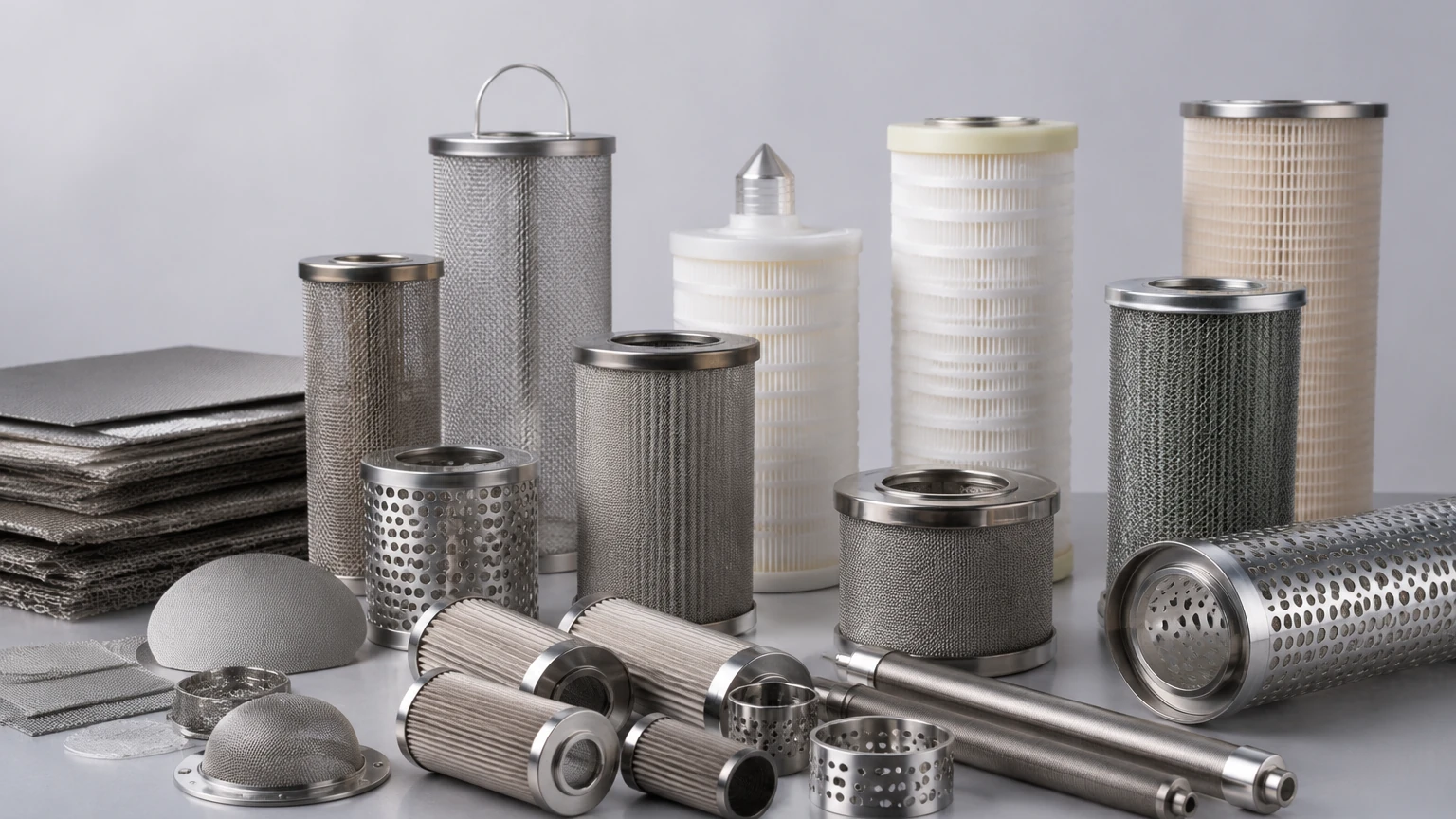
The heart of any dust collection system is the filter media. While many systems use polyester or cellulose bags, demanding industrial environments often require more robust materials. This is where specialized manufacturers of stainless steel filtration components become essential.
Stainless Steel Wire Mesh and Sintered Metal
For applications involving high temperatures, corrosive gases, or high-moisture environments, traditional fabric filters often fail. Stainless steel wire mesh and sintered metal filter cartridges offer superior durability. These components can withstand temperatures exceeding 500°F and resist chemical degradation that would destroy synthetic fibers.
Engineers often prefer stainless steel filters because they are cleanable and reusable. Unlike disposable bags, these precision-engineered components can be back-washed or ultrasonic-cleaned, significantly reducing waste and long-term replacement costs. When sourcing from dust collectors manufacturers, it is vital to confirm the grade of stainless steel (such as 304 or 316L) to ensure compatibility with the process environment.
Surface vs. Depth Filtration
Manufacturers typically offer two types of filtration mechanisms. Surface filtration, common in membrane-coated media and fine wire mesh, captures particles on the outermost layer. This allows for easier cleaning via pulse-jet systems. Depth filtration, on the other hand, traps particles within the thickness of the media. While depth filtration can hold a larger volume of dust, it is often more difficult to clean and may require complete replacement once saturated.
Customization and OEM Capabilities in Filtration
One of the most significant advantages of working with experienced dust collectors manufacturers is the ability to customize filtration components. Off-the-shelf solutions rarely meet the exact needs of specialized industrial processes. Customization can range from unique flange designs and housing dimensions to specific micron ratings tailored to a proprietary chemical powder.
OEM Integration
For original equipment manufacturers (OEMs) who build larger industrial machinery, partnering with a filtration specialist is critical. These partners provide the internal filter cartridges and mesh screens that ensure the final machine meets performance guarantees. A manufacturer that offers comprehensive OEM services can assist in the design phase, providing CAD drawings and material certifications that streamline the integration process. For more information on customized industrial filtration, engineers can visit the Main Page to explore technical capabilities.
Material Selection and Precision Engineering
Customization also extends to material selection. In the food and beverage industry, filters must be made from FDA-compliant materials and feature hygienic designs that prevent bacterial growth. In hydraulic systems, filters must handle high-pressure pulses without deforming. Precision engineering ensures that the filter fits perfectly within the housing, preventing "bypass," where contaminated air skips the filter media entirely.
Maintenance, Durability, and Total Cost of Ownership
The initial purchase price of a dust collection system is only a fraction of its total cost. Savvy procurement teams look at the total cost of ownership (TCO), which includes maintenance labor, energy consumption, and the frequency of filter replacements.
Replacement Cycles
Standard fabric filters may need replacement every few months in heavy-use environments. In contrast, high-quality stainless steel filter cartridges can last for several years if maintained correctly. Dust collectors manufacturers who emphasize durability help facilities reduce downtime. Every hour a system is offline for a filter change is an hour of lost production.
Monitoring and Diagnostics
Modern dust collection systems often include differential pressure gauges and automated sensors. These tools alert maintenance teams when a filter is reaching the end of its functional life. Manufacturers who provide integrated monitoring solutions allow for "predictive maintenance," moving away from arbitrary schedules to a data-driven approach that maximizes the life of every component.
Common Risks in Selecting Dust Collectors Manufacturers
Choosing a manufacturer based solely on the lowest bid can lead to significant operational risks. Common issues include:
1. Undersized Systems: A manufacturer may quote a smaller, cheaper unit that operates at an excessively high A/C ratio, leading to rapid filter clogging and poor suction at the source.
2. Inadequate Material Specs: Using carbon steel in a high-moisture environment leads to rust, which can contaminate the product and eventually cause structural failure of the collector.
3. Lack of Compliance Support: If a manufacturer cannot provide documentation for NFPA or ATEX compliance, the end-user may face legal liabilities or insurance denials in the event of an accident.
4. Poor After-Sales Support: Finding replacement parts for proprietary or non-standard systems can be difficult if the manufacturer does not maintain a robust inventory of components.
Information to Confirm Before Purchasing
Before finalizing a contract with dust collectors manufacturers, technical teams should confirm the following details:
* Filtration Efficiency: Request a fractional efficiency curve to see how the system performs across different particle sizes.
* Material Certifications: Ensure that all stainless steel components come with mill test reports (MTRs) to verify the alloy composition.
* Cleaning Mechanism Efficiency: Ask for data on the compressed air consumption required for pulse-jet cleaning systems.
* Lead Times for Custom Components: If the system requires custom-sized cartridges, confirm the lead time for both the initial build and future replacements.
* Warranty and Performance Guarantees: A reputable manufacturer should stand behind their engineering with a clear performance guarantee based on the provided dust characteristics.
Conclusion: Selecting the Right Partner for Industrial Filtration
The selection of dust collectors manufacturers is a strategic decision that impacts the long-term health and productivity of an industrial facility. By focusing on technical excellence, material durability, and the ability to provide customized filtration solutions, engineers can ensure that their air quality systems perform reliably under the most demanding conditions.
High-performance filtration starts with the quality of the individual components. Whether you are looking for replacement cartridges or designing a new OEM system, understanding the nuances of wire mesh and stainless steel filtration is essential. For those seeking professional guidance and high-quality filtration components, reviewing product options and application support on the Main Page is an excellent next step in optimizing your industrial dust collection strategy.
