


Automated Filter Press
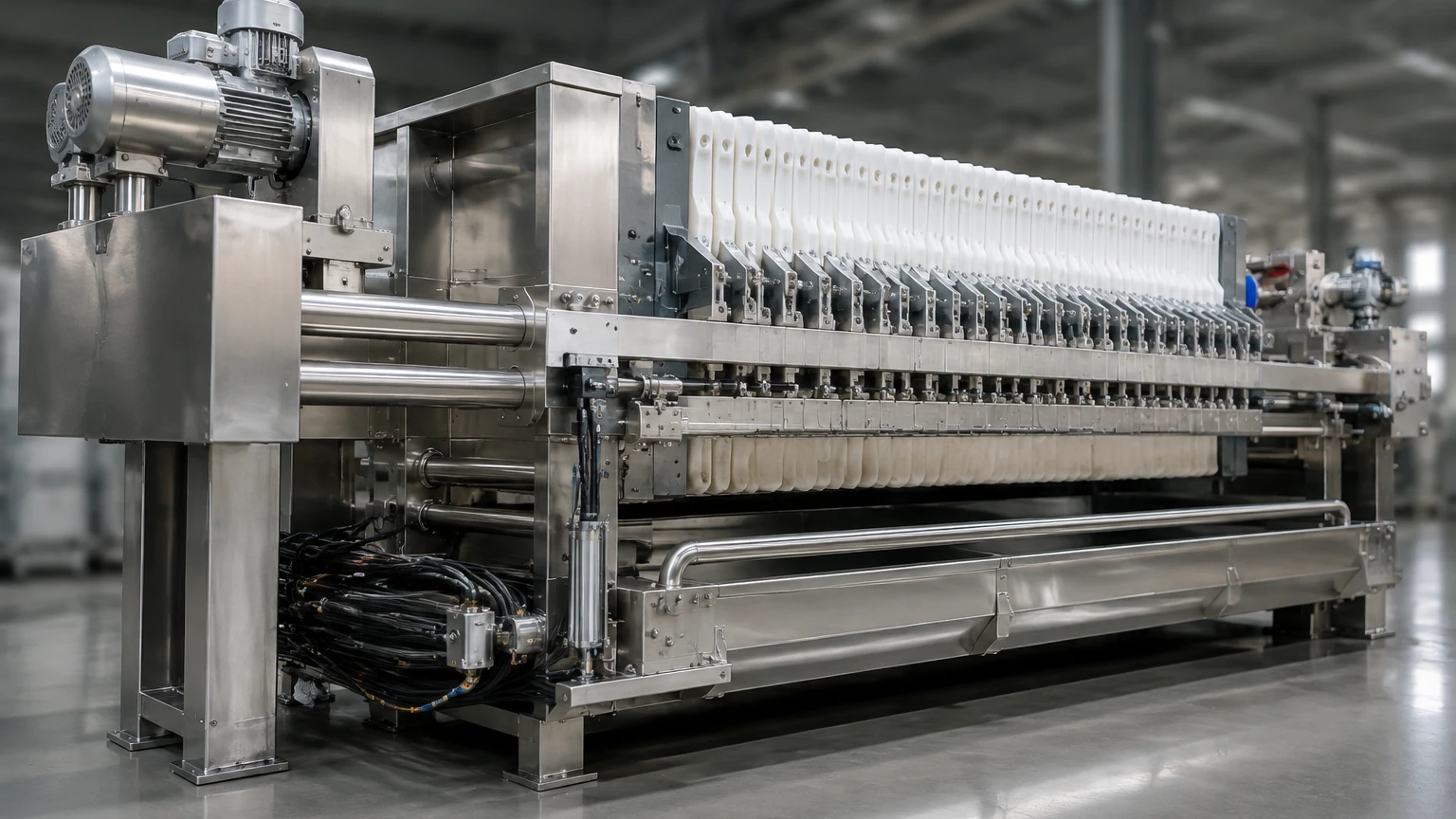
In the landscape of industrial solid-liquid separation, the automated filter press stands as a cornerstone technology for achieving high-efficiency dewatering and slurry management. Unlike manual systems that require constant operator intervention for plate shifting and cake removal, an automated filter press integrates mechanical, hydraulic, and electronic control systems to streamline the filtration cycle. This transition from manual to automated operation is driven by the need for increased throughput, reduced labor costs, and improved safety standards in demanding environments such as chemical processing, mining, and large-scale wastewater treatment.
For engineers and procurement teams, understanding the technical nuances of these systems is essential. The performance of an automated filter press is not merely a product of its hydraulic force but is deeply dependent on the synergy between the machine’s mechanical design and the precision of the filter media employed. As industrial requirements become more stringent regarding cake dryness and filtrate clarity, the selection of robust components becomes a critical factor in long-term operational success.
The Evolution of Industrial Dewatering Technology
The fundamental principle of a filter press—using pressure to force a liquid through a semi-permeable medium—has remained constant for decades. However, the move toward automation has transformed the equipment from a labor-intensive batch process into a sophisticated, high-performance industrial asset. Modern automated systems utilize Programmable Logic Controllers (PLCs) to manage the sequence of operations, including the closing of the plate pack, the feeding of the slurry, the squeeze cycle (in membrane presses), and the final cake discharge.
Automation addresses the primary bottleneck of traditional filtration: the downtime between cycles. In a manual setup, the time required to shift plates and ensure all solids have been cleared can exceed the actual filtration time. An automated filter press utilizes high-speed plate shifters and vibration systems to ensure rapid and complete cake release. This efficiency is particularly vital in industries where high volumes of slurry must be processed continuously to prevent upstream bottlenecks.
Core Components and Mechanical Operations
An automated filter press is a complex assembly of several integrated subsystems. Each component must be engineered to withstand high pressures and, often, corrosive or abrasive environments.
1. The Skeleton and Frame: The heavy-duty steel frame provides the structural integrity necessary to resist the massive clamping forces generated by the hydraulic system. This includes the head stand, end stand, and side rails that support the plate pack.
2. The Hydraulic System: This system is responsible for closing the plates with enough force to create a leak-proof seal against the internal feed pressure. In automated models, the hydraulic unit includes pressure transducers that communicate with the PLC to maintain optimal sealing pressure throughout the cycle.
3. The Plate Pack: Depending on the application, these may be recessed chamber plates or membrane squeeze plates. Membrane plates allow for secondary compression of the filter cake, significantly reducing moisture content before the discharge phase.
4. The Control Logic (PLC): The brain of the automated filter press, the PLC manages the timing of valves, pumps, and mechanical shifters. It allows for the storage of multiple "recipes" or operation profiles, enabling the facility to switch between different slurry types with minimal reconfiguration.
The Importance of Precision Filter Media in Automated Systems
While the mechanical structure of the automated filter press provides the force, the filter media provides the separation. In many high-performance applications, standard cloth media may be insufficient due to chemical incompatibility, high temperatures, or the need for extreme durability. This is where specialized metal filtration components become indispensable.
As a professional manufacturer of custom stainless steel filtration solutions, Kaifil provides the precision-engineered wire mesh and metal filter components that are often integrated into advanced filtration systems. For engineers looking to optimize their automated filter press, visiting the Main Page can provide insights into how stainless steel wire mesh filters offer superior structural stability compared to synthetic fabrics.
In an automated environment, the durability of the filter media is paramount. If a filter cloth tears or blinds prematurely, the automation benefits are lost to emergency maintenance. Stainless steel mesh media, known for its high mechanical strength and resistance to thermal expansion, ensures that the filtration accuracy remains consistent over thousands of cycles. This is especially critical in the pharmaceutical and food and beverage sectors, where hygiene and material integrity are non-negotiable.
Engineering Evaluation and Selection Criteria
Selecting an automated filter press requires a detailed analysis of the slurry characteristics and the desired output. Engineers must consider several variables to ensure the equipment is sized and configured correctly:
Slurry Characteristics
* Particle Size Distribution: This determines the required micron rating of the filter media. Finer particles may require a pre-coat or specialized multi-layered wire mesh to prevent blinding.
* Solids Concentration: A higher percentage of solids typically leads to faster cake formation but requires more robust mechanical discharge systems.
* Chemical Compatibility: The pH level and chemical composition of the slurry dictate the materials used for the plates, manifolds, and filter media. For highly corrosive slurries, AISI 316L stainless steel components are often preferred.
Desired Performance Metrics
* Cake Dryness: If the goal is to minimize disposal costs or recover valuable solids, a membrane squeeze system is usually necessary. This adds complexity to the automation but results in a drier, more manageable cake.
* Filtrate Quality: In applications where the liquid is the product (e.g., fine chemical synthesis), the precision of the filter media is the primary concern. The automated system must be capable of monitoring filtrate turbidity to ensure the process remains within specification.
* Cycle Time: The total time from the start of the feed to the end of the discharge phase. Automation is specifically designed to minimize the "non-productive" parts of this cycle.
Operational Risks and Preventive Maintenance
Despite the advantages of automation, these systems are not "set and forget." Several operational risks must be managed to maintain peak performance.
1. Media Blinding: Over time, fine particles can become trapped within the pores of the filter media. In an automated filter press, this is often addressed through automated cloth washing systems. However, if the media is not correctly matched to the particle size, blinding will occur frequently, increasing the backpressure and reducing the feed rate.
2. Plate Misalignment: Automated plate shifters are precision instruments. If the side rails are not kept clean and lubricated, or if the plates become warped due to uneven pressure distribution, the shifting mechanism can jam. This requires immediate manual intervention, defeating the purpose of the automated system.
3. Hydraulic Seal Failure: The high-pressure seals in the hydraulic cylinder are subject to wear. A drop in clamping pressure can lead to "wicking" or leakage between the plates, which not only creates a mess but can also erode the sealing surfaces of the plates themselves.
4. Sensor Calibration: Automated systems rely on data from pressure sensors, limit switches, and flow meters. Regular calibration is necessary to ensure the PLC is making decisions based on accurate information. For instance, a faulty pressure transducer might signal the pump to continue feeding even when the chambers are full, leading to a potentially catastrophic over-pressurization.
Customization and Integration for Specialized Applications
Every industrial process has unique requirements that a standard, off-the-shelf automated filter press may not fully meet. Customization is often required in the design of the manifolds, the selection of the filter media, and the integration of auxiliary equipment like air-blow systems for cake drying.
Kaifil specializes in the manufacturing of custom stainless steel filtration solutions that support these specialized needs. Whether an application requires a specific wire mesh weave for high-viscosity liquids or custom-dimensioned metal filter cartridges for a pre-filtration stage, the ability to tailor the hardware to the application is a significant advantage. In the context of an automated filter press, using high-quality, custom-engineered metal components can extend the service life of the machine and reduce the total cost of ownership by minimizing the frequency of media replacement.
For engineers designing a new filtration line, it is important to confirm the compatibility of the filter media with the automated discharge mechanism. Some automated systems use a "flexing" action to drop the cake, which may not be suitable for rigid metal media. In such cases, the engineering team must design alternative discharge aids or select a media structure that balances rigidity with the necessary release characteristics.
Total Cost of Ownership (TCO) Considerations
When evaluating the investment in an automated filter press, the initial capital expenditure (CAPEX) is only one part of the equation. The Total Cost of Ownership (TCO) includes energy consumption, labor, replacement parts, and the cost of downtime.
Automation typically carries a higher upfront cost than manual or semi-automatic presses due to the inclusion of the PLC, hydraulic power units, and motorized shifters. However, the operational expenditure (OPEX) is significantly lower. By reducing the number of operators required to manage the press and increasing the number of cycles per shift, the payback period for an automated system is often surprisingly short in high-volume environments.
Furthermore, the use of durable filtration components, such as those found on the Main Page of Kaifil’s technical resource site, contributes to a lower TCO. High-quality stainless steel filters may have a higher initial cost than disposable synthetic cloths, but their longevity and ability to be cleaned and reused multiple times provide a better return on investment over the lifecycle of the equipment.
Conclusion: Optimizing Filtration Infrastructure
The implementation of an automated filter press represents a significant step forward in industrial process optimization. By delegating the repetitive and physically demanding aspects of filtration to a controlled mechanical system, facilities can achieve levels of consistency and productivity that are impossible with manual labor.
However, the success of the automation depends on a holistic approach to engineering. From the structural integrity of the frame to the precision of the stainless steel wire mesh, every component must be selected with the specific application in mind. By focusing on high-quality materials and robust design, engineers can ensure that their automated filter press remains a reliable and cost-effective asset for years to come. For those seeking specialized filtration components to enhance their industrial systems, exploring the technical capabilities of a dedicated manufacturer like Kaifil is a vital step in the procurement process.
