


Backwash Filter System
In industrial fluid processing, the transition from manual batch filtration to continuous automated systems represents a significant shift toward operational efficiency and reduced downtime. A backwash filter system is a specialized self-cleaning filtration solution designed to remove suspended solids from a liquid stream without interrupting the flow. Unlike standard cartridge filters that require manual removal and replacement once saturated, backwash systems utilize a reverse-flow mechanism to dislodge accumulated contaminants from the filter media, flushing them out through a dedicated drain port.
For engineers and facility managers, understanding the mechanical nuances, material requirements, and integration parameters of a backwash filter system is essential for maintaining process integrity. This guide examines the technical foundations of these systems, the role of high-performance metal media, and the critical factors involved in selecting a solution that meets specific industrial demands.
Engineering Principles of the Backwash Mechanism
The core functionality of a backwash filter system relies on the principle of pressure differential. As fluid passes through the filter media—typically a stainless steel mesh or sintered metal element—solid particles are trapped on the upstream surface. Over time, this accumulation creates a "filter cake," which increases the resistance to flow, resulting in a pressure drop (differential pressure) between the inlet and outlet.
When this differential pressure reaches a pre-set threshold, or after a specific time interval, the system initiates the backwash cycle. There are several mechanical approaches to this process:
1. Flow Reversal: The system redirects a portion of the filtered fluid (or an external cleaning agent like compressed air or clean water) in the opposite direction of the normal flow. This reverse pressure lifts the contaminants off the media surface.
2. Internal Scraper or Suction Scanner: In some designs, a rotating suction scanner or mechanical scraper moves across the surface of the filter element. The localized pressure drop created by the scanner draws the contaminants into the backwash line.
3. Segmented Cleaning: To ensure uninterrupted service, many systems utilize multiple filter chambers or segmented elements. Only one section is backwashed at a time, while the remaining sections continue to process the main flow.
The efficiency of this cycle depends heavily on the "backwash velocity"—the speed at which the cleaning fluid moves through the media. If the velocity is too low, the filter cake may not fully dislodge; if it is too high, it may cause mechanical stress on the filter elements.
The Role of Stainless Steel Media in Backwash Systems
The choice of filter media is the most critical factor in the longevity of a backwash filter system. Because the media is subjected to frequent pressure reversals and mechanical cleaning, it must possess high structural integrity and fatigue resistance. Stainless steel is the industry standard for these applications due to its durability and ability to withstand harsh chemical environments.
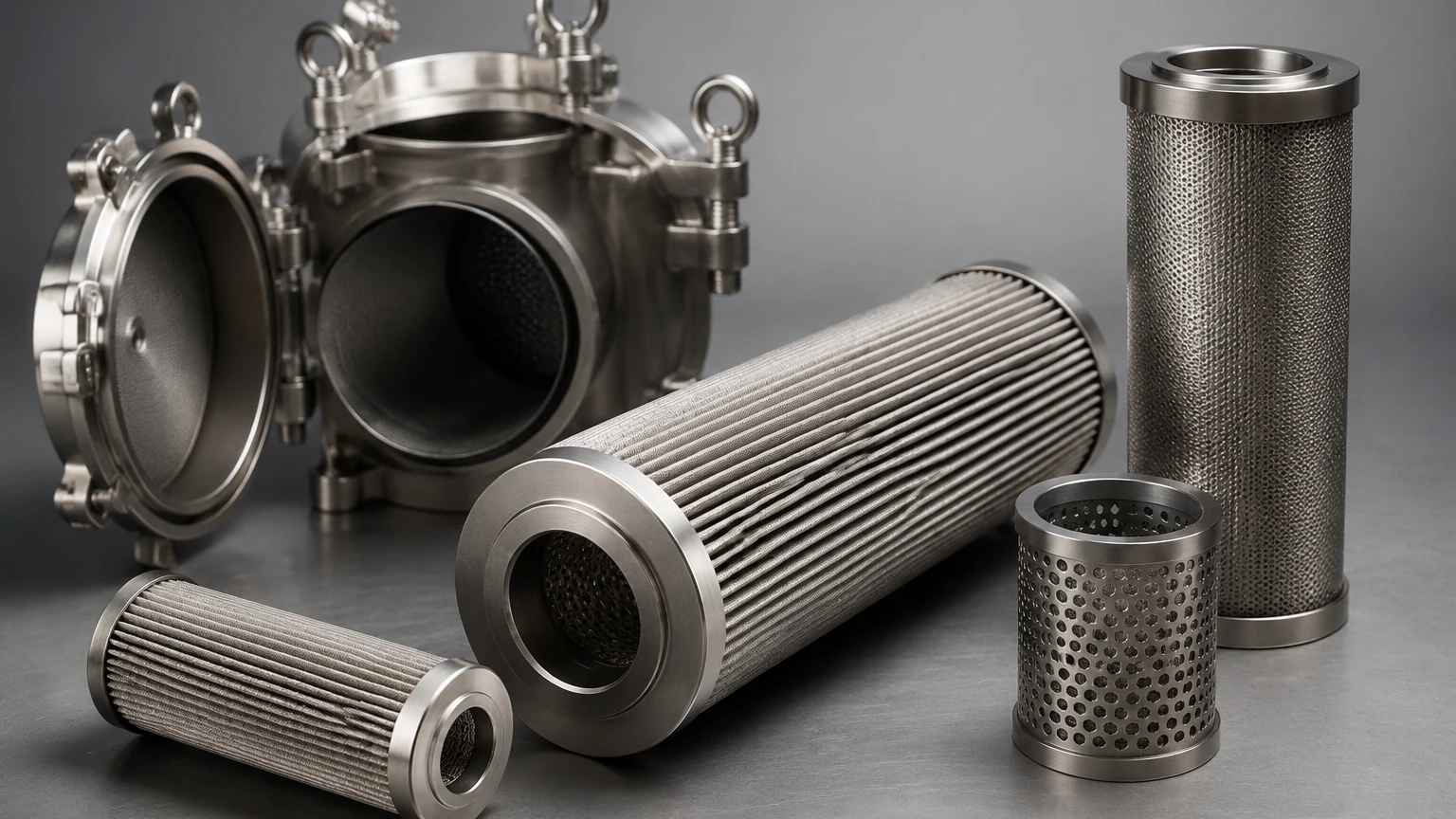
Wire Mesh and Sintered Elements
Kaifil specializes in manufacturing precision stainless steel filtration components that are specifically engineered for backwash environments. Common media types include:
* Woven Wire Mesh: Available in various weaves (plain, twill, or dutch), stainless steel wire mesh provides a precise pore size and a smooth surface that facilitates easy particle release during backwash.
* Sintered Metal Mesh: For high-pressure or high-temperature applications, multiple layers of wire mesh are sintered (diffusion-bonded) together. This creates a robust, monolithic structure that maintains its filtration accuracy even under extreme mechanical stress.
* Perforated Metal Supports: To prevent the mesh from collapsing during the high-pressure reverse flow of a backwash cycle, media is often supported by a heavy-duty perforated stainless steel core.
Selecting the correct material grade, such as 304, 316L, or specialized alloys, ensures compatibility with the fluid being processed, preventing premature corrosion or leaching in pharmaceutical and food-grade applications.
Key Evaluation Criteria for Industrial Selection
When evaluating a backwash filter system for a new installation or a retrofit, engineers must look beyond the initial purchase price and focus on technical performance metrics. On the Main Page of technical specifications, several variables dictate the success of the system.
Filtration Accuracy (Micron Rating)
Determining the required micron rating involves a balance between fluid clarity and backwash frequency. A finer micron rating captures more particles but will trigger the backwash cycle more often. It is vital to distinguish between nominal and absolute filtration ratings to ensure that the system consistently meets the required purity standards.
Flow Rate and Flux
The flux—defined as the volume of fluid passing through a unit area of filter media over time—must be optimized. Overloading a filter with a flow rate higher than its design capacity leads to rapid clogging and excessive backwash cycles, which increases the volume of wastewater (reject) and accelerates wear on the moving parts.
Operating Pressure and Temperature
Backwash systems must be rated for both the maximum operating pressure of the process line and the peak pressure experienced during the backwash pulse. High-temperature applications, common in chemical processing, require specialized seals and gaskets to prevent bypass or external leaks.
Addressing Common Risks and Operational Challenges
While backwash filter systems are designed for automation, they are not immune to operational challenges. Identifying these risks early can prevent costly system failures.
1. Media Blinding: This occurs when particles become wedged deep within the pores of the mesh rather than sitting on the surface. If the backwash pressure is insufficient to dislodge these particles, the "baseline" differential pressure will rise over time, eventually rendering the system ineffective. This is often solved by selecting a different mesh weave or increasing the backwash pulse intensity.
2. Mechanical Wear of Seals: The moving parts within an automated backwash system, such as rotating arms or valves, rely on high-quality seals. In abrasive applications (e.g., sand removal in water treatment), these seals can degrade, leading to internal bypass where unfiltered fluid enters the clean stream.
3. High Reject Volume: Every backwash cycle consumes a certain amount of fluid to flush the contaminants. If the system is not properly tuned, the volume of this "reject" fluid can become economically burdensome, especially if the fluid is expensive or requires specialized waste treatment.
Customization and OEM Integration
Industrial applications rarely follow a one-size-fits-all model. A backwash filter system often requires customization to fit within existing piping footprints or to handle unique fluid characteristics. Customization options typically include:
* Custom Housing Dimensions: Adjusting the inlet and outlet configurations to match existing infrastructure.
* Specialized Coatings: Applying coatings to stainless steel components to enhance abrasion resistance or reduce particle adhesion.
* Control Logic Integration: Programming the PLC (Programmable Logic Controller) to integrate with the plant’s wider SCADA system, allowing for remote monitoring and data logging of filtration performance.
By working with a manufacturer capable of providing custom stainless steel filtration solutions, engineering teams can ensure that the filter elements are perfectly matched to the specific particle morphology and chemical makeup of their process fluid.
Pre-Purchase Technical Checklist
Before finalizing the procurement of a backwash filter system, the following data points should be confirmed with the manufacturer to ensure the system is fit for purpose:
* Fluid Characterization: What is the viscosity, density, and chemical compatibility of the fluid? Viscous fluids require larger surface areas and higher backwash pressures.
* Contaminant Profile: What is the concentration (PPM) of solids, and what is their nature (hard, soft, fibrous, or gelatinous)? Fibrous contaminants often require different cleaning mechanisms than sand or metallic fines.
* Available Utilities: Does the facility have the necessary compressed air or electrical capacity to power the automation and backwash pumps?
* Maintenance Access: Is there sufficient overhead or side clearance to remove the internal filter elements for periodic inspection or deep cleaning?
Conclusion
A well-engineered backwash filter system is a cornerstone of modern industrial efficiency. By automating the cleaning process and utilizing durable stainless steel media, these systems provide a reliable solution for high-demand applications in chemical processing, water treatment, and food production. Focusing on the technical synergy between the filter media and the mechanical cleaning cycle allows engineers to achieve optimal filtration performance with minimal manual intervention. For further technical details on specific filter element designs and material options, engineers are encouraged to review product options and application support on the Kaifil website to ensure their filtration strategy aligns with industry best practices.
