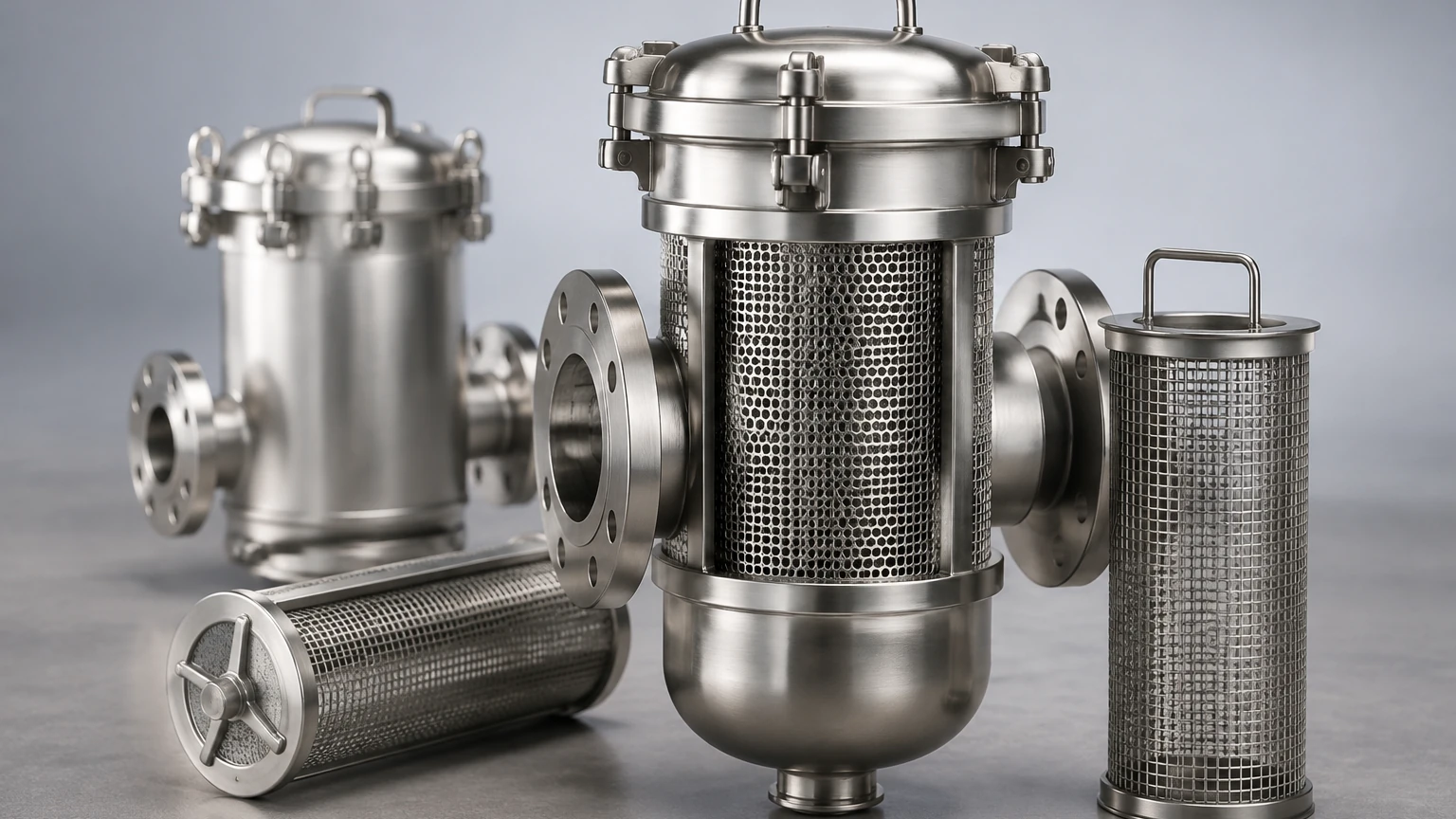
Backwash Strainers
In industrial fluid handling, the necessity for continuous operation and minimal downtime has led to the widespread adoption of automated filtration systems. Backwash strainers, also known as self-cleaning strainers or automatic back-flushing filters, represent a critical component in protecting downstream equipment from particulate contamination without requiring manual intervention or process interruption. For engineers and procurement teams, understanding the technical nuances of these systems—ranging from the mechanics of the backwash cycle to the material properties of the filter media—is essential for optimizing system performance and longevity.
The Mechanics of Automated Filtration
Backwash strainers are designed to remove solid particles from liquids in a variety of industrial applications. Unlike manual strainers, which require the process flow to be stopped and the filter element to be removed for cleaning, backwash strainers utilize a self-cleaning mechanism triggered by either a timer or a differential pressure (DP) sensor.
When the accumulated debris on the internal filter element—typically a stainless steel wire mesh or wedge wire screen—reaches a predetermined threshold, the pressure drop across the filter increases. The system detects this change and initiates the backwash cycle. During this cycle, a portion of the filtered fluid (or an external clean fluid source) is directed in reverse through a section of the filter element. This reverse flow dislodges the contaminants, which are then carried out through a dedicated flush valve. Because only a small portion of the filter area is cleaned at any one time, the main process flow continues uninterrupted, ensuring 100% uptime for the production line.
Engineering Selection: Filter Media and Material Compatibility
The heart of any backwash strainer is the filter element. At Kaifil, the focus is on high-precision stainless steel filtration solutions that can withstand the mechanical stresses of the backwash cycle. Selecting the right filter media involves more than just choosing a micron rating; it requires an analysis of the fluid characteristics and the nature of the contaminants.
1. Stainless Steel Wire Mesh: This is often the preferred choice for fine filtration. Sintered multi-layer mesh provides excellent mechanical strength and precise filtration accuracy. It is particularly effective in chemical processing and water treatment where fine particulates must be removed reliably.
2. Wedge Wire Elements: Known for their "V" shaped profile, wedge wire screens are highly resistant to clogging and are ideal for removing fibrous or sticky materials. They offer a high open-area ratio, which minimizes initial pressure drop.
3. Material Grades: For most industrial applications, Grade 304 or 316L stainless steel is the standard. 316L is specifically recommended for environments involving high chloride concentrations or acidic fluids, such as in marine or pharmaceutical applications, to prevent pitting and crevice corrosion.
When evaluating a supplier's Main Page, engineers should look for customization capabilities that allow for the tailoring of these elements to specific flow rates and particle loads. The durability of the mesh directly impacts the replacement cycle and the total cost of ownership.
Key Evaluation Criteria for Industrial Backwash Strainers
When specifying backwash strainers for a new project or an upgrade, several technical parameters must be confirmed to ensure the system operates within its design limits:
* Flow Rate and Velocity: The strainer must be sized to handle the maximum expected flow rate without exceeding a specific velocity, which could lead to excessive pressure drop or erosion of the internal components.
* Filtration Rating (Micron): Determining the required filtration accuracy is a balance between protecting downstream equipment and managing the frequency of backwash cycles. A finer mesh will capture more particles but will require more frequent cleaning.
* Operating Pressure and Temperature: The housing and internal seals must be rated for the maximum system pressure and temperature. In high-temperature applications, thermal expansion of the internal rotating parts must be accounted for in the engineering design.
* Viscosity: Highly viscous fluids require larger filtration areas and potentially modified backwash mechanisms to ensure the reverse flow is powerful enough to clear the mesh.
Common Risks and Mitigation Strategies
While backwash strainers are designed for reliability, certain operational risks can compromise their efficiency if not addressed during the design phase. One common risk is "short-cycling," where the strainer enters the backwash mode too frequently. This is often caused by an undersized filter area or an unexpectedly high concentration of solids in the influent. To mitigate this, engineers should conduct a thorough analysis of the total suspended solids (TSS) in the fluid before finalizing the strainer dimensions.
Another risk involves the mechanical wear of the backwash arm or the seals. In abrasive applications, such as mining or raw water intake, the internal components should be hardened or manufactured from wear-resistant alloys. Regular inspection of the differential pressure sensors is also vital, as a faulty sensor can lead to a failure to initiate the cleaning cycle, resulting in a collapsed filter element due to extreme pressure differential.
Customization and OEM Integration
In many B2B scenarios, a standard off-the-shelf strainer may not meet the specific spatial or functional requirements of a complex industrial skid. Customization is a core strength of manufacturers like Kaifil, providing OEM solutions that integrate seamlessly into existing hydraulic or chemical processing systems.
Customization options often include:
* Custom Flange Configurations: Matching existing piping standards (ANSI, DIN, JIS).
* Specialized Coatings: Applying epoxy or rubber linings for highly corrosive environments.
* Control System Integration: Designing the backwash controller to communicate with the facility's central PLC via Modbus or other industrial protocols.
* Footprint Optimization: Designing vertical or horizontal orientations to fit within tight mechanical rooms.
By working closely with a manufacturer that understands the intricacies of stainless steel fabrication, purchasing teams can ensure that the backwash strainers they procure are not only durable but also optimized for the specific fluid dynamics of their application.
Total Cost of Ownership (TCO) and Maintenance
While the initial capital expenditure (CAPEX) for an automatic backwash strainer is higher than that of a manual simplex or duplex strainer, the long-term operational expenditure (OPEX) is significantly lower. The primary cost savings stem from the reduction in manual labor and the elimination of process downtime.
In a manual system, the cost of labor to clean filters, the potential for fluid loss during the cleaning process, and the risk of environmental exposure (especially with hazardous chemicals) can be substantial. Backwash strainers minimize these factors. Furthermore, because the filter elements are cleaned in place, they generally have a longer service life than disposable cartridges, reducing the waste stream and the cost of replacement parts.
Maintenance for backwash strainers typically involves periodic inspection of the drive motor, lubrication of moving parts, and verification of the flush valve operation. Because these systems are designed for heavy-duty industrial use, the replacement of the main stainless steel filter element is usually only necessary after years of service, provided the system was correctly specified for the application.
Conclusion: Making an Informed Decision
Selecting the right backwash strainer requires a comprehensive understanding of the interplay between fluid chemistry, particle characteristics, and mechanical design. For engineers, the goal is to achieve a balance between filtration efficiency and system reliability. By focusing on high-quality materials like stainless steel and leveraging the expertise of specialized manufacturers, industrial facilities can ensure their filtration systems provide consistent protection for years to come.
Before proceeding with a purchase, it is recommended to confirm the compatibility of the strainer materials with the process fluid and to verify that the manufacturer can provide the necessary documentation, such as material test reports (MTRs) and pressure test certifications. For those seeking reliable, high-performance filtration components, exploring the options available on a professional Main Page is the first step toward optimizing industrial fluid management.