


Bag Filter Housing Stainless Steel
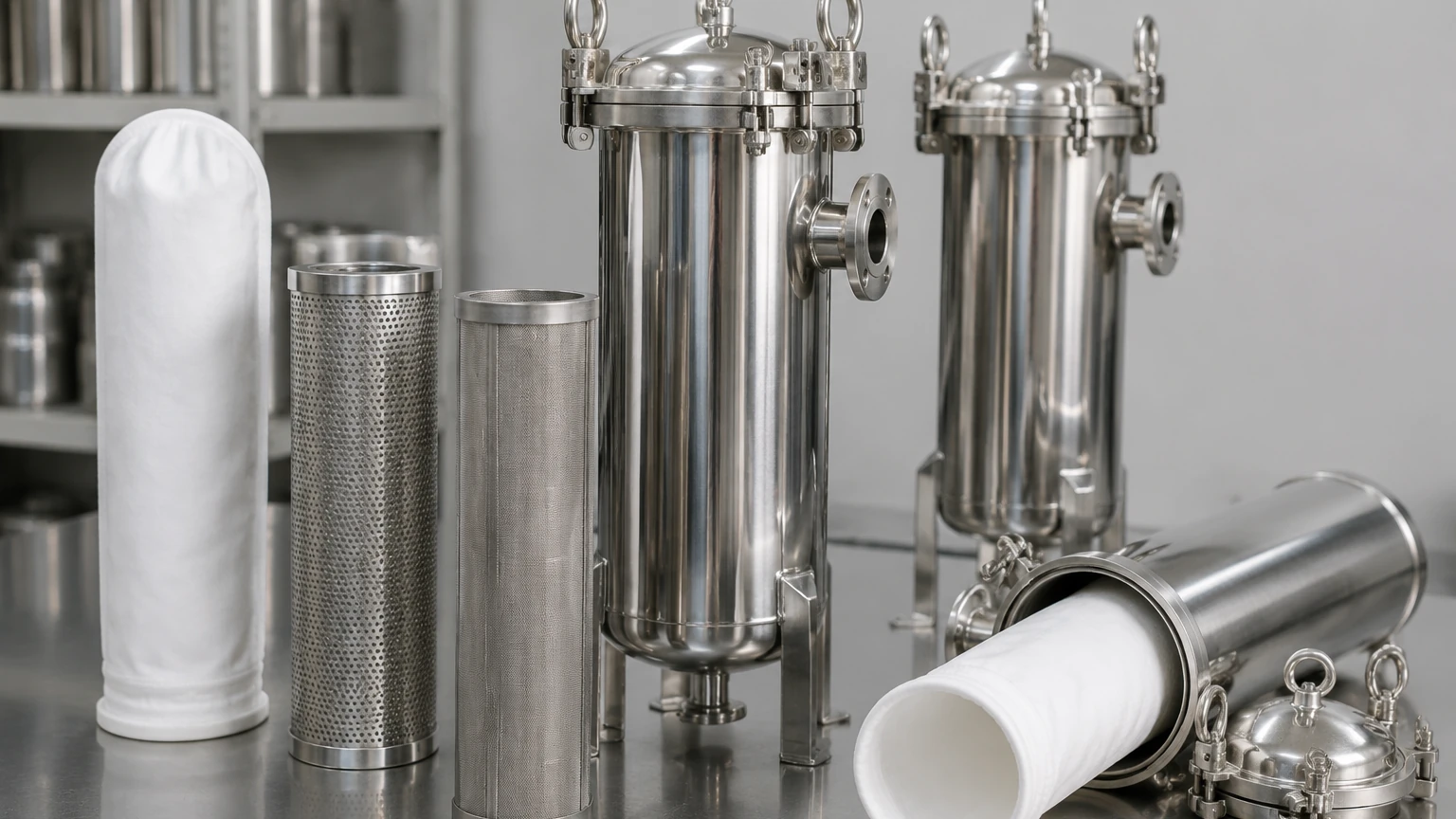
In the landscape of industrial liquid filtration, the bag filter housing stainless steel serves as a fundamental component for managing high-volume flow while maintaining strict debris control. These pressure vessels are designed to hold filter bags of various micron ratings, providing a versatile solution for removing suspended solids from liquids. For engineers and procurement specialists, selecting the correct housing involves more than just matching pipe sizes; it requires a deep understanding of material science, fluid dynamics, and the specific mechanical requirements of the process environment.
As a specialized manufacturer, Kaifil provides precision-engineered filtration components that address these technical challenges. Whether the application involves chemical processing, water treatment, or food and beverage production, the integrity of the housing determines the overall efficiency and safety of the filtration system. You can explore a wide range of industrial filtration solutions by visiting the Main Page.
Material Science and Corrosion Resistance in Bag Filter Housings
The choice of stainless steel is the primary factor in determining the longevity and chemical compatibility of a filter housing. In industrial settings, two grades predominate: SS304 and SS316L.
SS304 vs. SS316L
Stainless steel 304 is the standard choice for general industrial applications, offering excellent durability and resistance to oxidation. However, in environments involving chlorides or high acidity, SS316L is preferred. The addition of molybdenum in SS316L significantly enhances its resistance to pitting and crevice corrosion. For engineers, evaluating the pH levels and chemical composition of the process fluid is the first step in selecting a bag filter housing stainless steel that will not succumb to premature material failure.
Surface Finish and Passivation
Beyond the alloy grade, the interior and exterior surface finish (measured in Ra) is critical, especially in the pharmaceutical and food industries. A smoother internal surface prevents bacterial growth and makes the housing easier to clean. Electropolishing or mechanical polishing to a specific Ra value ensures that the housing meets sanitary standards. Furthermore, proper passivation—a process that removes free iron from the surface—is essential to maintain the protective oxide layer that prevents rust.
Structural Design: Single vs. Multi-Bag Configurations
The design of a bag filter housing stainless steel must align with the required flow rate and the solids loading of the process. Housings are generally categorized into single-bag and multi-bag configurations.
Single-Bag Housings
Single-bag units are ideal for batch processing or lower flow rate applications. They are compact and typically feature a side-entry or top-entry design. Top-entry housings are often preferred for their "over-the-top" flow path, which ensures a 360-degree seal and minimizes the risk of bypass—a common failure point where unfiltered liquid escapes around the edge of the bag.
Multi-Bag Housings
For high-capacity continuous operations, multi-bag housings allow for significantly higher flow rates (up to several thousand gallons per minute) within a single vessel. These units house multiple filter bags in a parallel arrangement. The engineering challenge in multi-bag units is ensuring even flow distribution across all bags to prevent uneven loading and premature clogging of a single bag. Multi-bag housings often feature heavy-duty davit covers or hydraulic assisted lifting mechanisms to facilitate safe and efficient bag changes.
Technical Parameters: Flow Rate, Pressure Drop, and Viscosity
When specifying a bag filter housing stainless steel, engineers must calculate the relationship between the flow rate, the viscosity of the liquid, and the allowable pressure drop (ΔP).
1. Flow Rate Capacity: This is determined by the surface area of the filter bags and the nozzle size of the housing. Overloading a housing leads to high velocity, which can damage the filter media or cause the bag to burst.
2. Viscosity Considerations: Highly viscous liquids (like oils or resins) move more slowly through filter media. To maintain a specific flow rate with a viscous fluid, a larger housing or more filter bags are required to reduce the flux rate (flow per unit area).
3. Clean vs. Dirty Pressure Drop: A system should ideally start with a clean pressure drop of less than 2-3 PSI. As the bag captures contaminants, the pressure drop increases. The housing must be rated for a maximum operating pressure (often 100 or 150 PSI) that safely exceeds the point at which the bags are changed (typically 15-25 PSI ΔP).
Internal Components and Sealing Mechanisms
The performance of a bag filter housing stainless steel is heavily dependent on its internal components, specifically the strainer basket and the sealing arrangement.
The Strainer Basket
The filter bag is a non-rigid element that requires a robust stainless steel strainer basket for support. These baskets are typically made from perforated metal or heavy-duty wire mesh. The open area of the basket must be maximized to minimize flow resistance while providing enough structural support to prevent the bag from stretching or rupturing under pressure.
Sealing and Bypass Prevention
Bypass is the most significant risk in bag filtration. If the seal between the bag and the housing is not airtight, unfiltered liquid will contaminate the downstream process. High-quality housings use a compression-fit seal or a specialized O-ring (often made of Viton, EPDM, or Buna-N) to ensure a positive seal. The design of the housing lid and the bag collar (whether plastic or steel ring) must be perfectly compatible to prevent bypass.
Industrial Applications: From Chemical Processing to Food Safety
Stainless steel bag filter housings are utilized across diverse sectors due to their versatility and hygienic properties.
* Chemical and Petrochemical: Used for the filtration of solvents, acids, and process water. The corrosion resistance of stainless steel is vital for handling aggressive chemicals and high temperatures.
* Food and Beverage: In this sector, housings must be constructed with 316L stainless steel and feature sanitary fittings (like Tri-clamp connections). They are used for filtering bottled water, juices, and edible oils, ensuring the removal of particulates without altering the product's flavor or safety.
* Water Treatment: Bag filters serve as effective pre-filtration for Reverse Osmosis (RO) systems, removing silt and sand that could foul expensive membranes.
* Paints and Coatings: Removing "seeds" or oversized particles from paint is essential for a smooth finish. The bag filter housing stainless steel provides the high-flow capability needed for large-scale production lines.
Maintenance Protocols and Total Cost of Ownership
While the initial purchase price of a bag filter housing stainless steel is a factor, the total cost of ownership (TCO) is determined by maintenance efficiency and the cost of consumables (filter bags).
Bag Replacement Cycles
Frequent bag changes increase labor costs and downtime. To optimize this, engineers should monitor differential pressure gauges. Modern systems often include automated sensors that alert operators when the ΔP reaches a critical threshold. A well-sized housing reduces the frequency of these changes by providing more dirt-holding capacity.
Cleaning and Inspection
Periodic inspection of the housing's interior is necessary to check for signs of erosion or chemical attack. The strainer basket should be cleaned to remove any trapped debris that could restrict flow. Replacing O-rings and gaskets during scheduled maintenance prevents leaks and ensures the pressure vessel remains airtight.
Customization Options
Manufacturers like Kaifil offer customization to meet specific site requirements. This includes specialized inlet/outlet orientations, custom mounting legs, or the integration of heating jackets for fluids that must be kept at a specific temperature to maintain low viscosity. Customizing the housing at the design phase can significantly reduce installation costs and improve operational ergonomics.
Selecting the Right Partner for Filtration Solutions
Choosing a bag filter housing stainless steel requires balancing technical specifications with operational reality. Engineers must confirm the compatibility of the housing material with the process fluid, ensure the pressure rating meets safety standards, and select a design that allows for easy maintenance.
Kaifil’s expertise in manufacturing custom stainless steel filtration solutions allows for the development of high-performance components tailored to demanding industrial environments. By focusing on precision manufacturing and quality materials, Kaifil helps industrial teams achieve reliable and cost-effective filtration. For more information on customized designs and technical support, visit the Main Page.
In conclusion, the bag filter housing stainless steel is a critical investment in process purity and equipment protection. By prioritizing engineering considerations—such as material grade, seal integrity, and flow dynamics—organizations can ensure their filtration systems deliver consistent performance over a long service life.
