


Compression Filter
In industrial environments, the term "compression filter" encompasses a broad range of high-performance components designed to operate under significant pressure or utilize compressed media to achieve precise separation. Whether used in compressed air systems, hydraulic circuits, or as compressed metal mesh elements in chemical processing, these filters are critical for maintaining the integrity of downstream equipment and the purity of the final product. For engineers and procurement specialists, selecting the right filtration solution requires a deep understanding of material science, fluid dynamics, and the specific mechanical stresses inherent in pressurized applications.
Industrial filtration is rarely a one-size-fits-all endeavor. The performance of a compression filter is dictated by its ability to withstand differential pressure without deforming, its chemical compatibility with the process fluid, and its efficiency in capturing contaminants at the required micron level. As a manufacturer specializing in stainless steel filtration, Kaifil provides the technical expertise necessary to navigate these complex requirements, ensuring that every component meets the rigorous demands of modern industry.
The Fundamentals of Compression Filter Technology
At its core, a compression filter serves to remove solid particulates, moisture, or oil aerosols from a fluid stream. In many B2B applications, this involves the filtration of compressed gases where the density of the fluid is significantly higher than at atmospheric pressure. This increased density changes the behavior of contaminants, often requiring specialized media that can handle higher mass flow rates within a compact footprint.
Another interpretation of the compression filter involves the use of compressed metal fibers or wire mesh. In this manufacturing process, layers of stainless steel mesh are compressed and often sintered to create a porous structure with high mechanical strength. This "compressed" media offers superior durability compared to synthetic alternatives, making it ideal for high-temperature or high-pressure environments where polymer-based filters would fail. These elements are frequently found in polymer melt filtration, steam filtration, and high-pressure hydraulic systems.
For technical professionals, the primary goal is to balance filtration fineness with the structural stability of the filter element. A filter that is too restrictive will cause an excessive pressure drop, leading to energy inefficiency and potential system failure. Conversely, a filter that lacks sufficient structural integrity may collapse under the compressive force of the fluid flow, leading to catastrophic bypass.
Material Selection and Structural Integrity
When specifying a compression filter, material selection is the most critical decision. Stainless steel, particularly grades 304 and 316L, remains the industry standard due to its exceptional corrosion resistance and mechanical properties.
1. Stainless Steel 316L: This is the preferred material for applications involving corrosive chemicals, pharmaceuticals, or food and beverage processing. The low carbon content and addition of molybdenum enhance its resistance to pitting and crevice corrosion, especially in chloride-rich environments.
2. Sintered Metal Fiber: For high-efficiency compression filters, sintered metal fibers provide a high porosity (up to 80%) while maintaining a rigid structure. This allows for lower initial pressure drops and longer service lives between cleaning cycles.
3. Woven Wire Mesh: Used in both pleated and cylindrical configurations, woven mesh provides precise pore sizes. When multiple layers are compressed together, they create a depth-filtration effect that is highly effective at capturing irregularly shaped particles.
Beyond the media itself, the structural components—such as the inner support core, outer cage, and end caps—must be engineered to resist mechanical compression. In high-pressure applications, the filter element is often subjected to "crush pressure." Engineers must confirm that the collapse rating of the filter exceeds the maximum possible differential pressure of the system by a safe margin.
Evaluating Filtration Efficiency and Pressure Drop
Efficiency in a compression filter is typically measured by its micron rating and Beta ratio. However, in pressurized gas or high-viscosity liquid applications, these metrics must be viewed in the context of the operating environment.
* Absolute vs. Nominal Rating: For critical industrial processes, absolute-rated filters are necessary. An absolute rating implies that the filter will capture 99.9% of particles at the specified micron size. Nominal ratings are less precise and may allow larger particles to pass through under fluctuating pressure conditions.
* Pressure Drop (Delta P): Every filter introduces resistance to flow. In compressed air systems, a high pressure drop translates directly into increased energy costs for the compressor. Engineers should look for filters that offer a low "clean" pressure drop and a predictable "dirty" pressure drop curve.
* Dirt-Holding Capacity: This refers to the total amount of contaminant the filter can retain before the pressure drop reaches a terminal level. A higher dirt-holding capacity reduces the frequency of filter changes, lowering the total cost of ownership.
When evaluating these metrics, it is essential to consider the fluid's viscosity and flow velocity. A compression filter that performs well in a low-pressure water system may behave very differently when integrated into a high-pressure hydraulic line or a gas purification system.
Addressing Risks: Bypass, Fatigue, and Chemical Degradation
Failure to correctly specify or maintain a compression filter can lead to several industrial risks. One of the most common issues is bypass, which occurs when fluid finds a path around the filter media rather than through it. This is often caused by poor sealing at the end caps or the failure of the compression gasket. Ensuring a tight, mechanical seal is paramount in high-pressure applications.
Material fatigue is another concern, particularly in systems with pulsating flow or frequent start-stop cycles. The constant change in pressure can cause the metal mesh to flex, eventually leading to work hardening and cracking. To mitigate this, high-quality filters utilize reinforced pleats and robust support structures to minimize movement.
Finally, chemical degradation must be accounted for. Even stainless steel can be compromised if the process fluid contains aggressive agents at high temperatures. Engineers should perform a thorough compatibility check of all filter components, including elastomers and adhesives, to prevent premature failure. For more information on material compatibility and selection, you can review product options and application support on our Main Page.
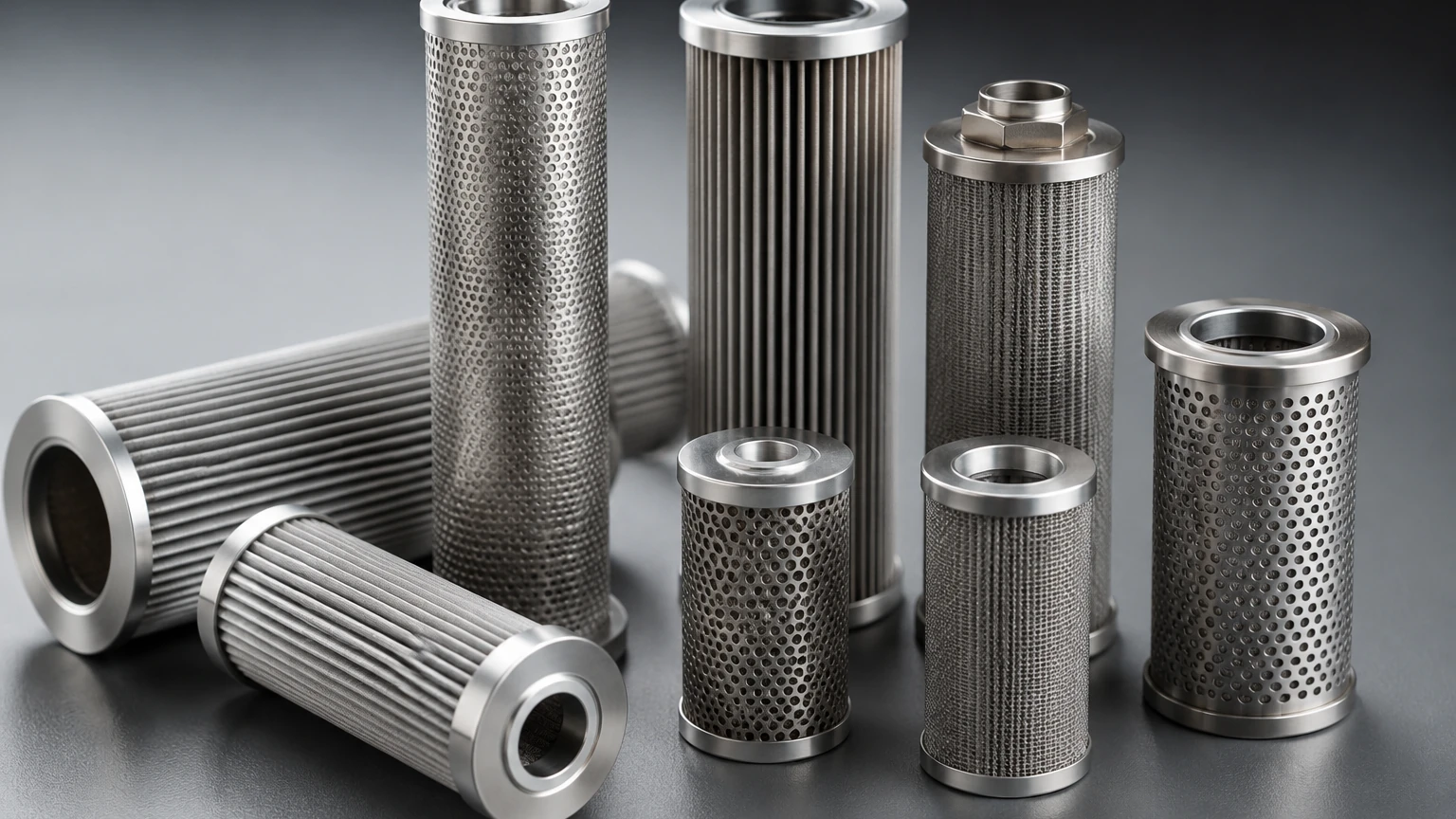
Customization Options for Specialized Industrial Applications
Standard off-the-shelf filters often fall short in specialized B2B environments. Customization allows engineers to tailor the compression filter to the exact needs of their machinery. Common customization options include:
* Custom Dimensions: Tailoring the length, diameter, and fitting types (such as NPT, BSP, or flange mounts) to fit existing housings without the need for expensive piping modifications.
* Multi-Layer Composites: Combining different types of mesh—such as a fine inner layer for filtration and a coarse outer layer for structural support—to optimize performance.
* Surface Treatments: Electropolishing or specialized coatings can be applied to stainless steel filters to improve cleanability and reduce the adhesion of sticky contaminants, which is particularly useful in the food and pharmaceutical industries.
* High-Temperature Gaskets: Replacing standard O-rings with PTFE or metallic seals to allow the compression filter to operate in extreme thermal environments.
By working with a manufacturer that offers OEM capabilities, purchasing teams can ensure that they are receiving a component designed specifically for their system's flow rate, pressure, and contaminant profile.
Total Cost of Ownership and Maintenance Strategies
While the initial purchase price of a stainless steel compression filter is higher than that of a disposable synthetic filter, the Total Cost of Ownership (TCO) is often significantly lower. Stainless steel elements are cleanable and reusable, eliminating the recurring cost of replacement cartridges and the environmental impact of waste disposal.
To maximize the lifespan of a compression filter, a proactive maintenance strategy is required:
1. Differential Pressure Monitoring: Installing gauges upstream and downstream of the filter allows operators to track the pressure drop in real-time. This ensures that cleaning or replacement occurs at the optimal interval, preventing both premature maintenance and system overpressure.
2. Ultrasonic Cleaning: For metal filters, ultrasonic cleaning is the most effective method for removing deeply embedded particulates from the mesh structure. This process restores the filter to near-original performance levels.
3. Integrity Testing: In critical applications, such as pharmaceutical manufacturing, regular integrity tests (like the bubble point test) should be conducted to ensure the filter has not been damaged during cleaning or operation.
Before finalizing a purchase, engineers should confirm the manufacturer's recommendations for cleaning procedures and the expected number of cleaning cycles the media can withstand before structural integrity is compromised.
Conclusion
Selecting a compression filter is a technical challenge that requires balancing filtration precision with mechanical durability. By focusing on high-quality materials like stainless steel and considering the specific stresses of pressurized environments, industrial professionals can achieve reliable, long-term filtration performance. Whether the goal is to protect sensitive hydraulic valves, ensure the purity of food-grade gases, or manage high-temperature chemical flows, the right filter is a cornerstone of operational efficiency.
For those seeking to optimize their filtration processes, partnering with an experienced manufacturer is essential. Detailed technical specifications and engineering guidance can help bridge the gap between theoretical requirements and practical application success. To explore the full range of custom stainless steel filtration solutions, visit our Main Page.
