


Basket Filters Strainers
In industrial fluid handling, the protection of downstream equipment—such as pumps, valves, and heat exchangers—is a critical engineering priority. Basket filters strainers serve as the primary line of defense, removing oversized particulate matter from process streams. Unlike simpler filtration components, these units are designed for high-capacity debris retention and ease of maintenance, making them indispensable in sectors ranging from chemical processing to food and beverage production.
As a specialized manufacturer, Kaifil provides precision-engineered stainless steel filtration solutions that address the specific mechanical and chemical demands of these industries. Understanding the technical nuances of basket filters strainers is essential for engineers and procurement teams tasked with optimizing system uptime and reducing total cost of ownership.
Engineering Fundamentals of Basket Filters Strainers
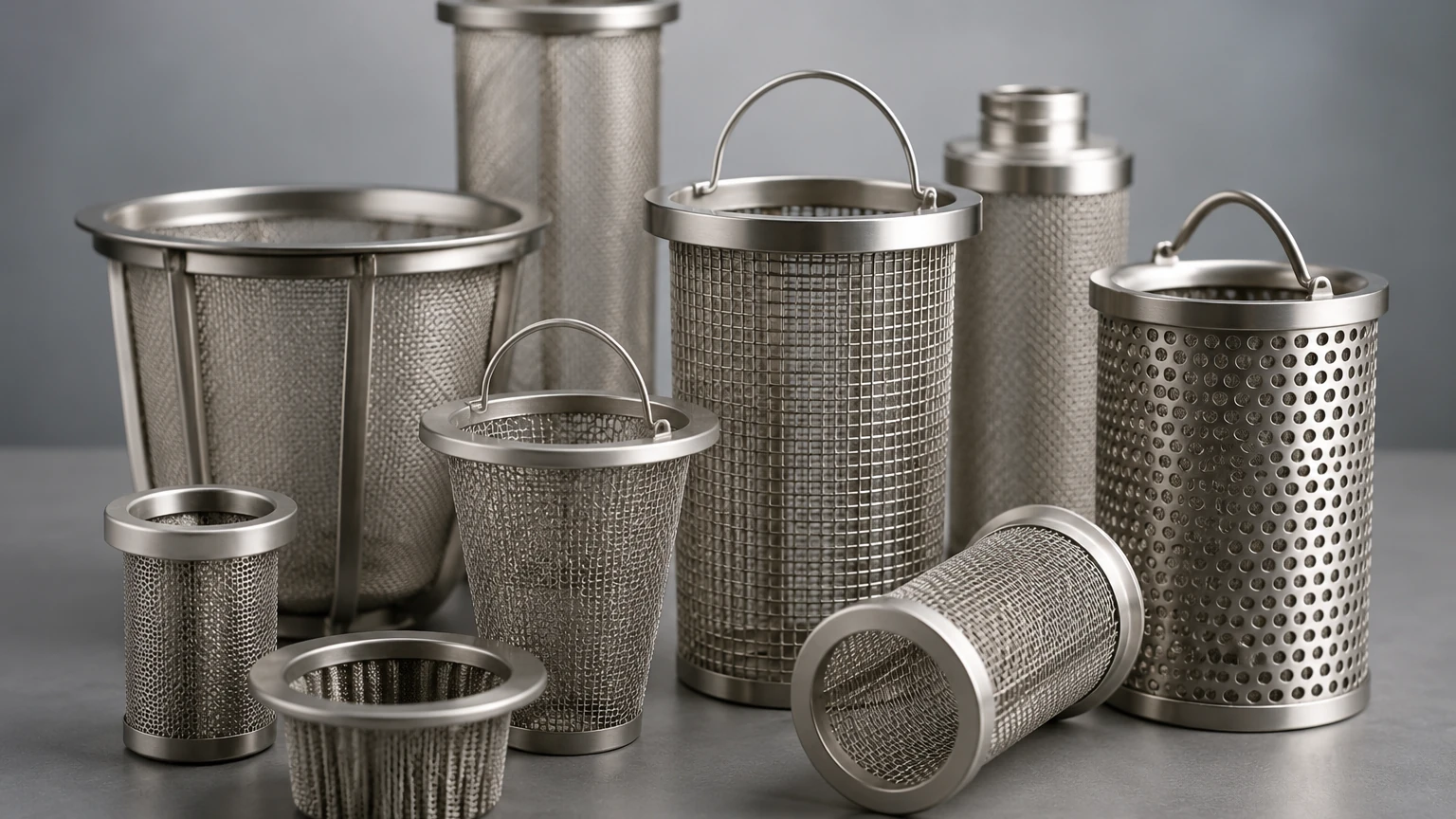
The primary function of basket filters strainers is the mechanical separation of solids from liquids or gases. The "basket" design refers to the internal element’s shape, which typically features a handle for easy removal. This geometry offers a significantly larger surface area compared to Y-strainers, allowing for a higher dirt-holding capacity and longer intervals between cleaning cycles.
From an engineering perspective, the efficiency of a strainer is determined by its open area ratio (OAR). This is the ratio between the total open area of the basket mesh and the cross-sectional area of the inlet pipe. A higher OAR results in a lower initial pressure drop and extended operational life before the unit requires servicing. In most industrial applications, an OAR of 6:1 or higher is preferred to ensure that the system does not experience significant flow restriction as the basket begins to fill with contaminants.
Material Selection and Structural Integrity
Material compatibility is a non-negotiable factor in filter selection. For most industrial environments, stainless steel is the standard due to its corrosion resistance and structural durability. Kaifil specializes in utilizing high-grade alloys to meet specific application needs:
* AISI 304 Stainless Steel: Suitable for general industrial use, water treatment, and mildly corrosive environments. It offers excellent strength and cost-effectiveness.
* AISI 316L Stainless Steel: Preferred for pharmaceutical, chemical, and marine applications. The addition of molybdenum provides superior resistance to chlorides and acidic solutions, preventing pitting and crevice corrosion.
Beyond the alloy type, the construction of the basket itself must withstand the mechanical stresses of the process. In high-pressure or high-viscosity applications, a simple wire mesh basket may collapse under the force of the fluid. To prevent this, baskets are often constructed with a perforated metal support layer that provides the necessary rigidity, while a fine wire mesh liner handles the actual filtration. This multi-layer approach ensures that the basket maintains its shape even when heavily loaded with debris.
Customization and OEM Filtration Solutions
Standard off-the-shelf strainers often fail to meet the precise requirements of specialized industrial processes. Customization is frequently necessary to account for unique flow rates, specialized connection types, or specific micron ratings. As a professional manufacturer, Kaifil works closely with global partners to develop customized Main Page solutions that integrate seamlessly into existing infrastructure.
Customization options for basket filters strainers include:
1. Micron Ratings: Depending on the application, filtration accuracy can range from coarse perforated plates (several millimeters) to fine woven wire mesh (down to 5 microns).
2. Seal Materials: The choice of O-rings or gaskets (EPDM, Viton, PTFE) must be matched to the chemical composition and temperature of the process fluid.
3. Connection Types: Whether the system requires flanged, NPT threaded, or sanitary tri-clamp connections, the housing must be designed for leak-proof integration.
4. Duplex Configurations: For processes that cannot be shut down for cleaning, duplex basket strainers allow for flow to be diverted to a second basket while the first is being serviced.
Evaluating Performance: Pressure Drop and Flow Rate
One of the most common questions engineers face is how to balance filtration fineness with system performance. A finer mesh provides better protection but creates a higher pressure drop (ΔP). If the pressure drop across the basket filters strainers becomes too high, it can lead to cavitation in pumps or reduced throughput in the entire system.
To optimize this, it is necessary to consider the viscosity of the fluid. High-viscosity fluids, such as oils or syrups, require larger mesh openings or increased surface area to maintain a manageable ΔP. Engineers should always review the clean pressure drop curves provided by the manufacturer and establish a "terminal pressure drop" at which the basket must be cleaned or replaced. Monitoring this differential pressure is the most effective way to ensure the longevity of both the filter and the downstream equipment.
Maintenance and Operational Life Cycles
The durability of stainless steel basket filters strainers is a significant advantage over disposable media. While the initial capital expenditure for a stainless steel unit is higher than for plastic or fabric alternatives, the total cost of ownership is lower because the elements are cleanable and reusable.
Maintenance protocols typically involve:
* Manual Cleaning: Removing the basket and using high-pressure water, steam, or ultrasonic baths to dislodge trapped particles.
* Chemical Cleaning: In industries like food processing or chemical manufacturing, baskets may require soaking in specialized solvents to remove organic buildup or scale.
* Inspection for Fatigue: Regular checks for wire breakage or seam separation are vital, especially in systems subject to pressure surges or vibration.
By selecting a high-quality manufacturer like Kaifil, organizations ensure that the filtration components are built to withstand repeated cleaning cycles without loss of filtration accuracy or structural failure.
Industry-Specific Applications for Basket Strainers
The versatility of basket filters strainers allows them to be deployed across diverse sectors, each with unique technical hurdles.
Chemical and Petrochemical Processing
In these environments, the primary concern is chemical attack and high temperatures. Stainless steel 316L baskets are often the baseline requirement. These strainers protect sensitive instrumentation and prevent the clogging of spray nozzles used in reactor cooling.
Food and Beverage Industry
Sanitary design is paramount here. Basket strainers must be constructed with smooth, crevice-free welds to prevent bacterial growth. The ability to withstand Clean-in-Place (CIP) processes is essential, making high-grade stainless steel the only viable material choice.
Water Treatment and Desalination
Large-scale water systems use basket strainers to remove sand, scale, and biological matter before the water reaches membrane filtration stages. In desalination, the high salt content requires specialized corrosion-resistant alloys to prevent rapid degradation of the filter element.
Pharmaceutical Manufacturing
Precision is the defining characteristic of pharmaceutical filtration. Basket filters strainers in this sector are often used as pre-filters to protect expensive ultra-filtration membranes. They must meet stringent material traceability and surface finish standards to ensure product purity.
Technical Considerations Before Purchasing
Before finalizing a specification for basket filters strainers, procurement teams and engineers should confirm several key data points with their supplier:
* Maximum Operating Pressure and Temperature: Ensure the housing and the internal basket are rated for the peak conditions of the system, not just the nominal flow.
* Flow Velocity: Excessive velocity can cause erosion of the mesh or bypass of contaminants. Most systems are optimized for velocities between 5 and 10 feet per second.
* Particle Characteristics: Is the debris hard and abrasive, or soft and deformable? This determines whether a single-layer mesh or a reinforced perforated basket is required.
* Ease of Access: For systems requiring frequent cleaning, quick-opening covers (such as swing bolts) are preferable to standard bolted flanges to minimize downtime.
Conclusion
Basket filters strainers are a fundamental component of industrial fluid management, providing a robust and reusable solution for protecting critical infrastructure. By focusing on material quality, structural design, and precise customization, manufacturers like Kaifil enable engineers to maintain high operational efficiency even in the most demanding environments. Whether the application involves corrosive chemicals, high-viscosity food products, or high-pressure hydraulic systems, the correct selection of a stainless steel basket strainer is a strategic investment in system reliability and longevity.
For technical professionals seeking to optimize their filtration processes, partnering with an experienced OEM manufacturer ensures that every component is tailored to the specific mechanical and chemical realities of the application. Through rigorous engineering and a commitment to quality, high-performance filtration solutions continue to drive industrial progress across the globe.
