


Basket Strainer Filter
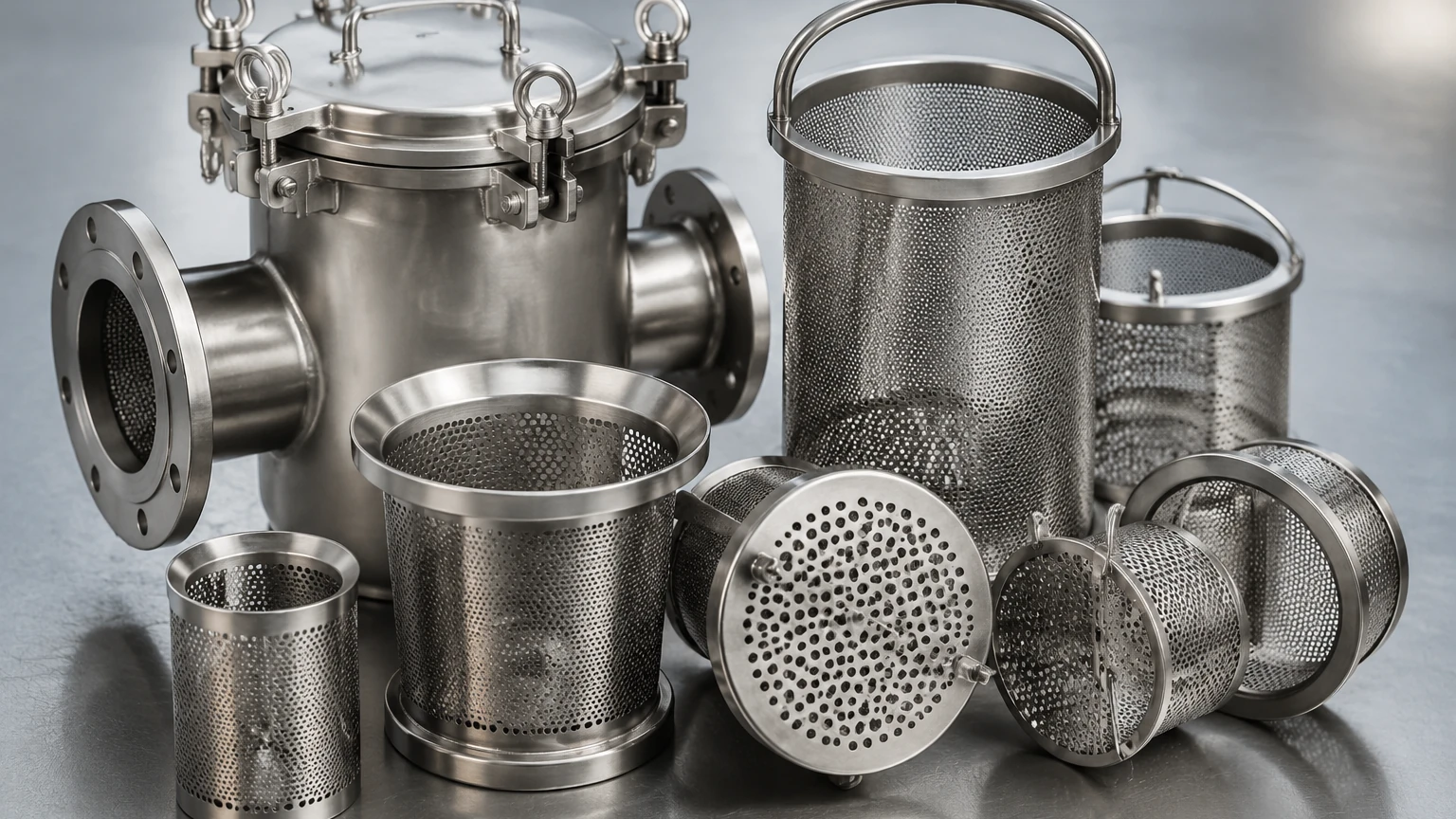
In industrial fluid handling systems, the protection of downstream equipment is a critical engineering priority. A basket strainer filter serves as a closed vessel with a removable screen or basket that intercepts solid particles from a process stream. Unlike Y-strainers, which are often used for smaller amounts of debris in high-pressure steam lines, basket strainers are designed for liquid applications where high flow rates and significant solids loading are common. Their larger internal volume allows for a greater dirt-holding capacity, which directly translates to longer intervals between cleaning cycles and reduced system downtime.
For engineers and procurement teams, selecting the right basket strainer filter involves more than just matching pipe sizes. It requires a deep understanding of fluid dynamics, material compatibility, and the specific filtration accuracy needed to protect sensitive components like pumps, flow meters, and heat exchangers. As a specialized manufacturer of stainless steel filtration solutions, Kaifil provides the technical expertise necessary to navigate these variables, ensuring that every filtration component meets the rigorous demands of industrial environments.
Understanding the Function of a Basket Strainer Filter
The primary role of a basket strainer filter is to provide a mechanical barrier against contaminants. When fluid enters the strainer housing, it is directed into the basket. The mesh or perforated metal of the basket allows the liquid to pass through while trapping solids on the interior surface. This design simplifies the cleaning process, as the debris is contained within the basket and can be removed easily once the system is depressurized.
In many industrial setups, basket strainers are installed in horizontal pipelines. They are particularly effective in suction-side applications for pumps. By removing scale, weld beads, and other foreign matter before they reach the pump impeller, the strainer prevents mechanical wear and catastrophic failure. Furthermore, the low-pressure drop characteristics of a well-engineered basket strainer ensure that the Net Positive Suction Head (NPSH) of the pump is maintained within safe operating limits.
Material Selection and Engineering Specifications
Material integrity is the foundation of reliable filtration. In demanding sectors such as chemical processing and pharmaceuticals, the choice of metal determines the service life of the filter. Stainless steel is the industry standard due to its corrosion resistance and structural strength.
Stainless Steel Grades
Most industrial basket strainers utilize either SS304 or SS316L. SS304 is suitable for general-purpose applications involving water, oils, and mild chemicals. However, for environments involving high chloride concentrations or acidic solutions, SS316L is preferred. The addition of molybdenum in SS316L provides superior resistance to pitting and crevice corrosion, making it essential for marine applications and aggressive chemical manufacturing.
Basket Construction
The internal basket typically consists of a perforated metal support sheet lined with a fine wire mesh. The perforated sheet provides the necessary structural rigidity to withstand the differential pressure across the filter, while the wire mesh determines the actual filtration rating. At Main Page, the focus is on providing precision-engineered baskets that balance mechanical strength with high flow permeability.
Evaluating Filtration Efficiency and Open Area Ratios
One of the most important technical metrics for a basket strainer filter is the Open Area Ratio (OAR). This is the ratio of the total open area of the strainer basket to the internal cross-sectional area of the inlet pipe. A high OAR is desirable because it minimizes the initial pressure drop and allows the filter to operate longer before the mesh becomes blinded by debris.
An OAR of 6:1 is often considered the benchmark for high-performance industrial strainers. If the OAR is too low, the fluid velocity through the mesh increases, which can lead to "impingement"—a condition where particles are forced through the mesh or cause premature wear on the wire strands. Engineers must also consider the viscosity of the fluid; higher viscosity liquids require larger open areas and coarser mesh to maintain efficient flow rates.
Filtration accuracy is measured in microns or mesh size. While a finer mesh provides better protection, it also increases the frequency of maintenance. Selecting the optimal micron rating involves a trade-off between the level of protection required by downstream equipment and the operational costs associated with cleaning and pressure loss.
Industrial Applications and Performance Requirements
Basket strainer filters are utilized across a broad spectrum of industries, each with unique performance requirements. Understanding these application-specific needs is vital for correct filter selection.
Chemical and Petrochemical Processing
In these environments, filters must handle volatile and corrosive fluids at varying temperatures. The durability of stainless steel ensures that the basket does not degrade or leach contaminants into the process stream. Custom seal materials, such as Viton or PTFE, are often required to ensure the housing remains leak-proof under chemical exposure.
Food and Beverage Industry
Sanitary design is paramount in food and beverage production. Basket strainers used here must feature smooth surface finishes (often electropolished) to prevent bacterial growth. The design must allow for complete drainage and easy disassembly for Clean-in-Place (CIP) or manual cleaning protocols. Stainless steel 316L is typically mandated to ensure compliance with food safety standards.
Water Treatment and Desalination
Large-scale water systems use basket strainers to remove sand, silt, and biological matter. In desalination plants, the high salt content of the water necessitates the use of high-grade stainless steel or specialized alloys to prevent rapid corrosion. Here, the capacity to handle large volumes of water with minimal maintenance is the primary performance driver.
Installation and Maintenance for Long-Term Reliability
Proper installation is critical to the performance of a basket strainer filter. The unit should be installed with sufficient clearance to allow for the removal of the basket. Additionally, installing pressure gauges upstream and downstream of the strainer is a best practice. This allows operators to monitor the differential pressure (DP) in real-time.
Monitoring Differential Pressure
As the basket collects debris, the pressure drop across the filter increases. A common rule of thumb is to clean the basket when the differential pressure reaches 5-10 psi above the clean-start pressure. Operating a strainer with an excessively high DP can lead to basket collapse or "bypass," where the fluid finds a path around the filter element, defeating its purpose.
Cleaning Procedures
Maintenance involves isolating the strainer, venting any internal pressure, and removing the cover. The basket should be cleaned using a soft brush or a high-pressure air/water hose, taking care not to damage the fine wire mesh. Regular inspection of the cover gasket is also necessary; a worn gasket can lead to external leaks or air ingress in suction-side applications.
Customization and OEM Considerations for Industrial Systems
Off-the-shelf filtration solutions often fail to meet the specific spatial or performance constraints of complex industrial systems. This is where customization becomes a strategic advantage. Engineers frequently require bespoke basket strainer filters that accommodate non-standard pipe diameters, unique flange configurations, or specific height restrictions.
Customization also extends to the filtration media itself. Depending on the particle distribution of the contaminant, a multi-layered mesh approach might be necessary to provide gradient filtration, where larger particles are trapped by an outer layer and finer particles by an inner layer. This extends the life of the filter element and improves overall efficiency.
Kaifil specializes in these customized designs, working closely with global customers to develop filtration components that are tailored to specific application requirements. Whether it is a unique housing design for a hydraulic system or a specialized wire mesh configuration for a pharmaceutical line, the ability to manufacture to exact specifications ensures that the filtration system performs as intended without compromise.
Total Cost of Ownership and Selection Advice
When evaluating a basket strainer filter, the initial purchase price is only one component of the total cost of ownership (TCO). Engineers must also account for:
* Operational Energy Costs: A filter with a higher pressure drop requires more pump energy to maintain flow.
* Maintenance Labor: Designs that allow for quick basket removal reduce the labor hours required for cleaning.
* Replacement Cycles: High-quality stainless steel baskets last significantly longer than cheaper alternatives, reducing the frequency of spare parts procurement.
* Equipment Protection: The cost of a strainer is negligible compared to the cost of repairing a damaged high-pressure pump or replacing a fouled heat exchanger.
To make an informed decision, it is recommended to confirm the fluid's chemical properties, flow rate, operating temperature, and the maximum allowable pressure drop before finalizing a specification. For those seeking reliable, high-performance filtration components, visiting the Main Page provides access to a wealth of technical resources and product options designed to meet the most demanding industrial standards.
By prioritizing material quality, engineering precision, and application-specific design, facilities can ensure their fluid handling systems remain efficient, protected, and operational for the long term. A robust basket strainer filter is not just a commodity; it is a vital safeguard for industrial productivity.
