


Beadfilter
In the landscape of industrial liquid-solid separation and biological treatment, the beadfilter represents a sophisticated evolution of granular media filtration. Unlike traditional sand filters that rely on heavy, static media, a beadfilter utilizes buoyant or semi-buoyant plastic pellets—often referred to as beads—to achieve both mechanical filtration and biological processing within a single pressurized vessel. For engineers and facility managers in sectors such as aquaculture, wastewater treatment, and industrial cooling, understanding the technical nuances of these systems is essential for optimizing water quality and system longevity.
This guide examines the engineering principles of beadfilter technology, the critical role of internal stainless steel components in maintaining system integrity, and the selection criteria necessary for demanding B2B applications.
The Fundamentals of Beadfilter Technology in Industrial Processes
A beadfilter operates as an expandable granular media filter (EGMF). The core of the system is a bed of small plastic beads, typically 2mm to 4mm in diameter, which are packed into a pressure vessel. As influent water enters the vessel, it passes through the bead bed. The tight packing of the beads creates a tortuous path that traps suspended solids while providing a massive surface area for the growth of beneficial biofilms.
In industrial settings, the beadfilter is often preferred over sand filtration for several reasons:
1. Reduced Backwash Volume: Beadfilters typically require significantly less water for backwashing compared to sand filters, as the media is lighter and more easily agitated.
2. Dual-Functionality: They provide both fine mechanical filtration (down to 20-30 microns) and biological nitrification in a single footprint.
3. Scalability: The modular nature of bead media allows for systems to be sized precisely for specific flow rates and organic loading requirements.
From an engineering perspective, the efficiency of a beadfilter is determined by the hydraulic loading rate (HLR) and the specific surface area (SSA) of the media. High-density polyethylene (HDPE) beads are commonly used due to their chemical inertness and buoyancy, which simplifies the backwashing process through flotation and agitation.
Mechanical Filtration and Solids Capture Mechanisms
The mechanical performance of a beadfilter is governed by four primary mechanisms: straining, sedimentation, interception, and adsorption. As water flows through the interstitial spaces between the beads, larger particles are physically strained. However, the true efficiency of a beadfilter develops as a "Schmutzdecke" or bio-mat begins to form on the beads, which enhances the capture of finer particles through biological sticking and surface adsorption.
In industrial pretreatment or closed-loop cooling systems, the ability to capture fine particulates without rapid clogging is vital. Beadfilters manage this by distributing the solids load throughout the depth of the bed rather than just on the surface. This depth filtration capability allows for longer run times between backwash cycles. However, engineers must account for the increasing pressure drop (head loss) as the bed becomes loaded. Monitoring this differential pressure is the primary method for determining when a backwash cycle must be initiated to prevent flow channeling or media compaction.
Biological Filtration: Biofilm Management and Nitrification
Beyond mechanical separation, the beadfilter serves as a high-rate bioreactor. In applications like recirculating aquaculture systems (RAS) or specific chemical processing effluents, the removal of dissolved ammonia and nitrites is critical. The beads provide a protected surface area—often exceeding 1,100 m² per cubic meter of media—where nitrifying bacteria (Nitrosomonas and Nitrobacter) can thrive.
Effective biological filtration requires a balance of oxygen levels, pH, and nutrient loading. Because the beadfilter is a pressurized, enclosed environment, maintaining adequate dissolved oxygen (DO) in the influent is necessary to prevent anaerobic pockets. If the biofilm becomes too thick, it can bridge the gaps between beads, leading to "clumping." This reduces the effective surface area and increases hydraulic resistance. Therefore, the internal design must allow for vigorous agitation during cleaning to shear off excess biofilm while retaining the core bacterial colony.
Engineering the Internal Infrastructure: Retention Screens and Laterals
The most critical engineering challenge in beadfilter design is media retention. Because the beads are small and buoyant, the internal components—specifically the intake laterals and outlet screens—must be designed with precision. If a screen fails or the slot size is incorrectly specified, the media can migrate into the downstream process, leading to catastrophic system failure and equipment damage.
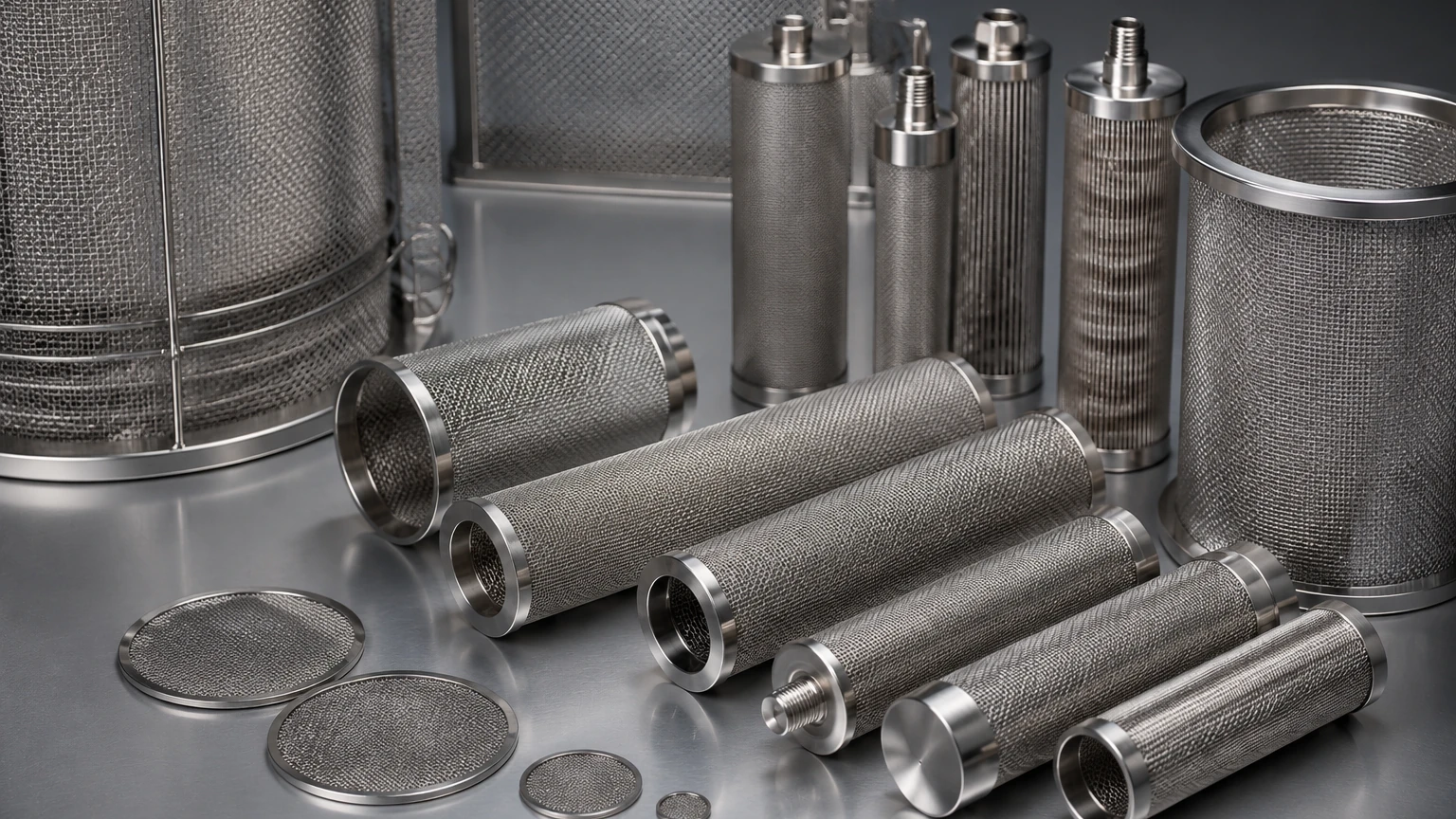
This is where the quality of stainless steel filtration components becomes paramount. While some low-end systems use plastic slotted pipes, industrial-grade beadfilters rely on custom-engineered stainless steel wedge wire or wire mesh cartridges. These components offer several advantages:
* Precision Slot Widths: For beads that are 3mm in diameter, a screen slot of 1.5mm to 2.0mm is typically specified to ensure zero media bypass while minimizing pressure drop.
* Structural Integrity: Under the turbulence of air scouring or high-pressure backwashing, plastic internals can crack. Stainless steel 304 or 316L provides the mechanical strength to withstand years of cyclic loading.
* Corrosion Resistance: In applications involving saline water or aggressive chemicals, 316L stainless steel ensures that the retention system does not degrade, which would otherwise lead to slot widening and media loss.
For engineers seeking to specify or replace these critical internal parts, consulting a specialist manufacturer is essential. To explore the full range of customization options for industrial filtration components, technical teams can refer to the Main Page of a dedicated manufacturer like Kaifil to understand how precision wire mesh and wedge wire solutions are integrated into high-performance filter vessels.
Operational Dynamics: Backwashing and Hydraulic Efficiency
The longevity and performance of a beadfilter are almost entirely dependent on the effectiveness of its backwash cycle. Unlike sand filters that use high-velocity water to fluidize the bed, many beadfilters utilize an "air scour" or a mechanical agitator to break up the bead pack.
During a backwash, the flow is often reversed or bypassed, and air is injected into the bottom of the vessel. The rising bubbles cause the beads to collide, stripping away trapped solids and excess biofilm. The heavy solids then settle into a concentrated sludge at the bottom of the vessel, where they are purged.
Key engineering considerations for the backwash cycle include:
* Air-to-Water Ratio: Ensuring enough turbulence to clean the beads without causing excessive mechanical wear.
* Wash-Water Recovery: In water-scarce industrial environments, the ability to minimize the volume of water lost during the purge is a major ROI factor.
* Internal Strainer Durability: The intake strainers must be positioned and designed to allow the sludge to exit freely while preventing the beads from being sucked out during the purge phase.
Material Engineering for Industrial Longevity
In a B2B context, the total cost of ownership (TCO) is heavily influenced by material selection. While the beads themselves are durable, the vessel and its internals are subject to constant hydraulic stress and potential chemical attack.
1. Vessel Construction: For high-pressure industrial applications, fiberglass-reinforced plastic (FRP) or stainless steel vessels are standard. Stainless steel vessels are preferred in pharmaceutical and food-grade applications where sanitization is required.
2. Media Quality: Not all beads are equal. Virgin HDPE beads are preferred over recycled materials to ensure uniform buoyancy and to prevent the leaching of contaminants into the process stream.
3. Filtration Elements: The use of precision-woven wire mesh or wedge wire for the internal laterals ensures that the system maintains its filtration rating over thousands of cycles. Unlike plastic, these metal components can be chemically cleaned or ultrasonically treated if they become fouled with mineral scale or stubborn biofilms.
Selection Criteria for Engineers and Procurement Teams
When evaluating a beadfilter for a new installation or an upgrade, technical teams should confirm several parameters with their supplier to ensure the system meets the specific demands of the application:
* Filtration Rating vs. Flow Rate: Understand the trade-off between the micron rating and the flow velocity. Higher velocities may push smaller particles through the bed.
* Organic Loading Capacity: For biological applications, the system must be sized based on the daily nitrogenous load (e.g., kg of ammonia per day) rather than just water volume.
* Media Retention Design: Ask for the specifications of the internal screens. Ensure they are made from high-grade stainless steel (304 or 316L) and that the slot size is significantly smaller than the minimum bead diameter.
* Maintenance Access: Industrial filters should have accessible manways or handholes to allow for the inspection of internal laterals and the periodic replacement or topping off of media.
* Customization Requirements: Many industrial processes require non-standard inlet/outlet configurations or specialized materials for gaskets and seals. Working with a manufacturer that offers OEM and customized filtration solutions ensures that the beadfilter integrates seamlessly into the existing infrastructure.
By focusing on these engineering details, procurement teams can avoid the common pitfalls of media loss and premature component failure. A well-engineered beadfilter, equipped with high-quality stainless steel internals, provides a reliable, low-maintenance solution for the most challenging industrial water treatment needs.
