


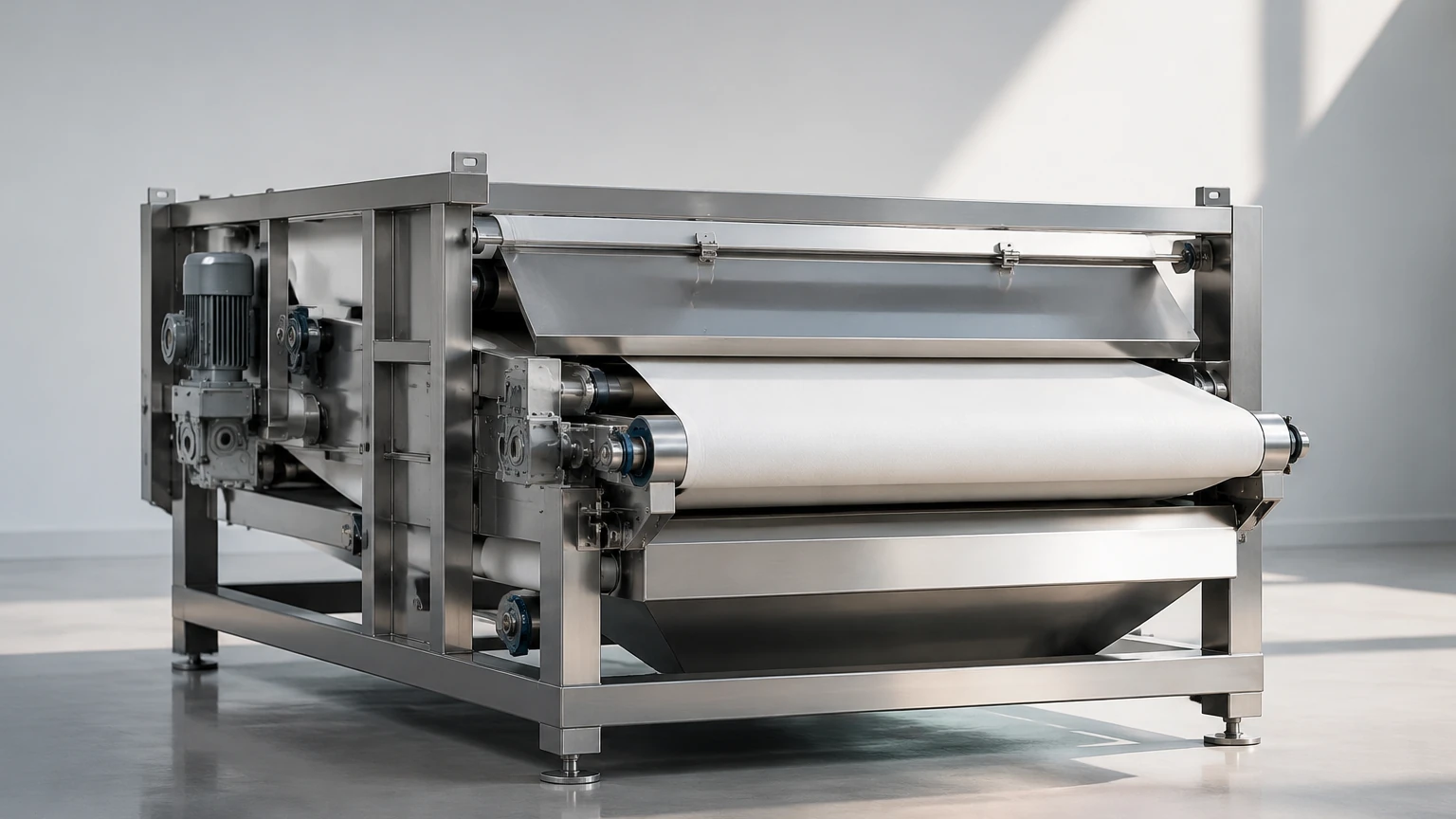
Belt Dewatering Press
In industrial liquid-solid separation, the belt dewatering press stands as a critical component for high-volume sludge processing and material recovery. Primarily utilized in municipal wastewater treatment, chemical processing, and food production, this equipment relies on mechanical pressure and gravity to extract liquid from slurry, resulting in a concentrated solid "cake." For engineers and procurement professionals, understanding the technical nuances of belt press design—from metallurgy to filtration media—is essential for optimizing throughput and minimizing the total cost of ownership.
Selecting the right belt dewatering press requires a deep dive into the engineering specifications that govern performance. This guide examines the operational mechanics, material considerations, and evaluation criteria necessary for integrating these systems into demanding industrial environments.
Understanding the Mechanics of the Belt Dewatering Press
The operation of a belt dewatering press is a continuous process that transitions through three distinct stages: gravity drainage, wedge compression, and high-pressure shear. Each stage serves a specific purpose in reducing the moisture content of the feed material.
1. Gravity Drainage Zone
Before the slurry enters the mechanical pressure stages, it is usually treated with chemical flocculants to aggregate fine particles. The conditioned slurry is then distributed onto a moving porous belt. In the gravity drainage zone, free water is allowed to permeate through the belt mesh, leaving behind a thickened sludge. Engineering the drainage zone involves calculating the optimal belt speed and surface area to ensure that the sludge reaches a sufficient consistency before entering the compression zones. If the gravity drainage is insufficient, the sludge may "blow out" the sides of the press during the high-pressure stage.
2. Wedge Zone
As the thickened sludge moves forward, it is sandwiched between two converging belts. This is known as the wedge zone. Here, a gradual increase in pressure is applied to the material. This transition is vital for stabilizing the sludge cake, preparing it for the high-pressure rollers without compromising the integrity of the belt or the filtration media.
3. High-Pressure (Shear) Zone
The final stage involves the belts wrapping around a series of rollers in an "S" configuration. As the belts pass over these rollers, the tension creates a combination of compression and shear forces. This dual action squeezes the remaining interstitial water from the cake. The diameter of the rollers typically decreases toward the discharge end, which incrementally increases the pressure applied to the material.
Critical Engineering Parameters for Industrial Performance
When evaluating a belt dewatering press for a specific application, several technical parameters must be harmonized to achieve the desired cake dryness and solids recovery rate.
Throughput and Loading Rates
Throughput is measured in terms of dry solids per hour (kg/h) or hydraulic flow (m³/h). Engineers must determine the solids loading rate based on the characteristics of the feed slurry. High-clay content or biological sludges may require slower belt speeds and longer residence times compared to fibrous or granular materials. Overloading the press leads to poor filtrate quality and increased wear on the mechanical components.
Cake Dryness and Solids Recovery
The primary KPI for any dewatering operation is the percentage of dry solids in the final cake. While some applications require only enough dryness for transport, others, such as those involving incineration or chemical recovery, demand maximum moisture removal. Simultaneously, the solids recovery rate—the percentage of solids retained by the belt versus those lost in the filtrate—must be maximized to ensure process efficiency. This is largely dependent on the aperture size and weave of the filtration belt.
Polymer and Chemical Conditioning
Most belt dewatering press operations are heavily dependent on chemical conditioning. The selection of the right polymer (flocculant) affects the floc strength and the speed of gravity drainage. From an engineering perspective, the dosing system must be precise and capable of adjusting to fluctuations in feed concentration to prevent blinding of the filter media.
Material Selection: The Role of Stainless Steel in Press Longevity
The environment within a belt dewatering press is often corrosive, involving high humidity, chemical additives, and abrasive solids. Consequently, the choice of materials for the frame, rollers, and filtration components is paramount.
Stainless steel is the industry standard for these systems due to its superior resistance to oxidation and chemical attack. Most structural components are fabricated from Grade 304 or Grade 316 stainless steel.
* Grade 304: Suitable for standard municipal applications and non-corrosive industrial sludges. It provides excellent structural integrity and moderate corrosion resistance.
* Grade 316: Recommended for chemical processing, pharmaceutical applications, or environments with high chloride concentrations. The addition of molybdenum in 316 stainless steel enhances its resistance to pitting and crevice corrosion.
Beyond the frame, the precision metal filter components and support structures must be engineered to withstand constant tension and the mechanical stress of the rollers. For specialized filtration needs, reviewing product options and application support on the Main Page can provide insights into how custom stainless steel components enhance system durability.
Optimizing Filtration Efficiency through Belt Selection
The belt is the most critical consumable in a belt dewatering press. It must be durable enough to withstand high tension while remaining porous enough to allow for rapid drainage. While synthetic belts (polyester or polyamide) are common, certain industrial applications require the precision and thermal resistance of stainless steel wire mesh belts.
Weave Patterns and Aperture Size
The weave pattern (e.g., plain weave, twill weave, or satin weave) determines the belt's stability and its ability to release the cake at the discharge point. A belt with a smooth surface and optimized aperture size prevents particles from becoming trapped in the mesh (blinding), which would otherwise require frequent high-pressure washing and lead to downtime.
Tensile Strength and Tracking
Belts are subject to significant longitudinal tension. If a belt stretches unevenly, it will fail to track correctly across the rollers, leading to edge wear and eventual rupture. High-quality belts are pre-stabilized during manufacturing to ensure dimensional stability under load. Tracking systems, often utilizing pneumatic or hydraulic actuators, must be integrated into the press design to maintain belt alignment automatically.
Operational Challenges and Maintenance Protocols
To maintain the efficiency of a belt dewatering press, a rigorous maintenance schedule is required. Engineers should focus on three primary areas: cleaning, lubrication, and component inspection.
Belt Washing Systems
As the cake is discharged, the belt must be cleaned before it returns to the gravity drainage zone. High-pressure spray bars are used to dislodge residual solids from the mesh. The water quality used for washing is important; if the wash water contains high levels of minerals or solids, it can contribute to belt blinding. Nozzle maintenance is critical to ensure uniform cleaning across the entire width of the belt.
Bearing and Roller Maintenance
The rollers in a belt press operate under high load and often in wet conditions. Sealed, high-capacity bearings are essential. Any misalignment in the rollers can cause uneven pressure distribution, leading to inconsistent cake dryness and premature belt failure. Regular ultrasonic testing or vibration analysis of bearings can help predict failures before they cause unplanned outages.
Monitoring Wear on Filter Components
Over time, the abrasive nature of the sludge will wear down the filtration media and the surfaces of the rollers. Monitoring the thickness of the filter mesh and the integrity of the seams is necessary. In systems using stainless steel mesh, checking for signs of fatigue or stress corrosion cracking is a vital part of the inspection cycle.
Evaluation Criteria for Purchasing and OEM Customization
When sourcing a belt dewatering press or replacement components, technical professionals should confirm several factors with the manufacturer to ensure the equipment meets the specific demands of the application.
1. Pilot Testing Data: Whenever possible, dewatering performance should be verified through pilot testing with the actual sludge. This provides empirical data on polymer consumption, belt loading, and achievable cake dryness.
2. Customization Requirements: Standard models may not suffice for highly acidic or high-temperature processes. Inquiries should be made regarding the availability of specialized alloys or custom-engineered mesh patterns to optimize drainage for unique particle sizes.
3. Ease of Component Replacement: The design should allow for relatively easy belt changes and roller access. A press that requires total disassembly for a belt change will significantly increase maintenance costs.
4. Integration with Control Systems: Modern belt presses should be capable of integrating with plant-wide SCADA systems. Automated adjustments for belt speed, tension, and polymer dosing based on real-time sensors can greatly improve operational efficiency.
Conclusion
The belt dewatering press remains a versatile and effective solution for industrial sludge management, provided it is engineered with the correct materials and filtration parameters. By focusing on the quality of stainless steel components and the precision of the filtration media, facilities can achieve reliable, long-term performance. For engineers seeking to optimize their filtration systems or source custom-manufactured metal filter components, visiting the Main Page offers access to technical expertise and high-performance solutions tailored to demanding industrial environments.
