


Pp Pleated Filter Cartridge
In the landscape of industrial liquid and gas processing, the PP pleated filter cartridge stands as a fundamental component for achieving high-efficiency particle removal. These cartridges are engineered using 100% polypropylene (PP) media, providing a combination of broad chemical compatibility, high dirt-holding capacity, and low pressure drop. For engineers and procurement specialists, understanding the technical nuances of these filters is essential for optimizing process yields and protecting downstream equipment.
Unlike traditional depth filters, such as string-wound or melt-blown cartridges, pleated designs utilize a folded media structure. This geometry significantly increases the effective filtration surface area within the same footprint. By spreading the fluid flow over a larger area, the face velocity is reduced, which enhances the capture of fine particulates and extends the service life of the element. As a professional manufacturer, Kaifil emphasizes the importance of selecting the correct filtration media and structural configuration to ensure system reliability in demanding environments.
Understanding the Engineering of PP Pleated Filter Cartridges
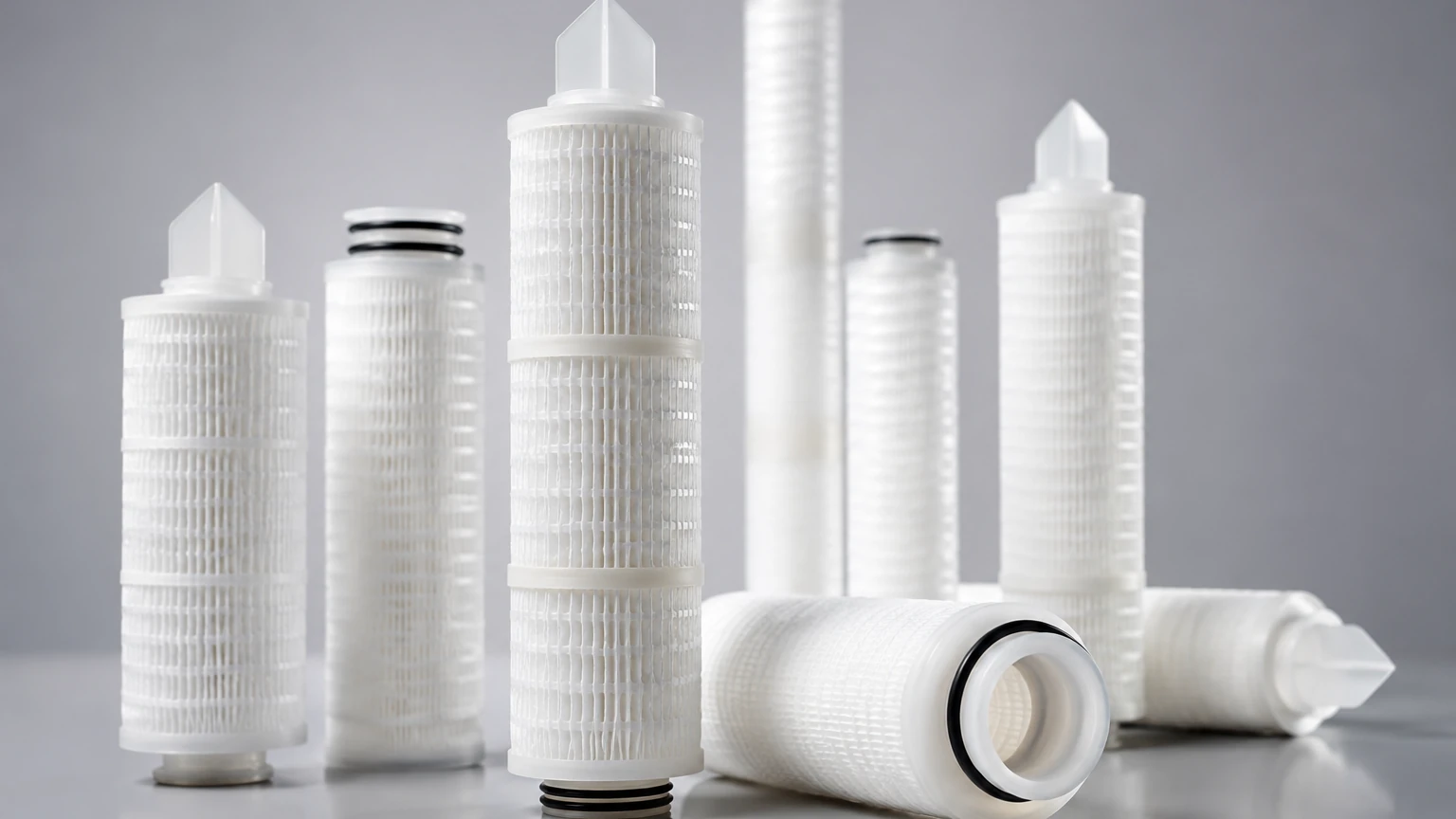
The performance of a PP pleated filter cartridge is dictated by its multi-layered construction. Typically, these filters consist of a polypropylene micro-fiber media layer, supported by inner and outer polypropylene non-woven layers. These layers are pleated together and thermally bonded to a rigid polypropylene core and an outer support cage.
One of the primary engineering advantages of this construction is the absence of adhesives, binders, or surfactants. Thermal bonding ensures that the end caps, media, and core are fused into a single integral unit. This eliminates the risk of bypass and ensures that no chemicals leach into the process fluid, which is a critical requirement in pharmaceutical and food and beverage applications. The micro-fiber media itself is manufactured through a melt-blown process that creates a complex, three-dimensional pore structure, allowing for both surface and depth filtration.
Key Performance Factors: Efficiency and Dirt-Holding Capacity
When evaluating a PP pleated filter cartridge, technical professionals must distinguish between nominal and absolute filtration ratings.
1. Absolute Rating: Refers to a micron rating where the filter is capable of removing at least 99.9% (Beta 1000) of particles at that specific size. This is essential for critical clarification and final filtration stages.
2. Nominal Rating: Indicates the filter's ability to remove a major percentage (typically 60% to 90%) of particles of a certain size. These are often used in pre-filtration stages to protect more expensive absolute-rated filters.
Dirt-holding capacity is another vital metric. Because the pleating process provides up to 5 to 10 times the surface area of a standard melt-blown filter, the cartridge can trap a significantly higher volume of contaminants before reaching its terminal pressure drop. This translates to fewer filter changes, reduced downtime, and lower total cost of ownership. Engineers should request flow-rate-versus-pressure-drop curves to determine how the filter will behave under specific viscosity and flow conditions.
Chemical Compatibility and Thermal Stability
Polypropylene is favored in industrial filtration due to its exceptional resistance to a wide range of chemicals. It is generally inert to most organic acids, alkalis, and many organic solvents. This makes the PP pleated filter cartridge a versatile choice for chemical processing, plating baths, and industrial water treatment.
However, thermal limits are a critical consideration. Standard polypropylene filters are typically rated for continuous operation up to 80°C (176°F). Beyond this temperature, the structural integrity of the polymer may degrade, leading to pore deformation or mechanical failure. For applications involving higher temperatures or aggressive solvents that might swell polypropylene, engineers often turn to metallic solutions. While Kaifil specializes in custom stainless steel filtration, PP cartridges remain the standard for high-purity, low-temperature aqueous and chemical applications where disposability is preferred.
Comparative Analysis: PP Pleated vs. Stainless Steel Filters
Choosing between a disposable PP pleated filter and a cleanable stainless steel filter depends on the specific process requirements, fluid characteristics, and economic goals.
* Disposable PP Pleated Filters: These are ideal for processes where cross-contamination must be strictly avoided, such as in the production of different batches of pharmaceuticals or specialty chemicals. They offer a lower initial capital expenditure and are easier to handle for operators, as they do not require cleaning validation. Their high surface area makes them superior for removing fine, deformable particles.
* Stainless Steel Filters: In contrast, stainless steel filters are designed for extreme environments involving high pressures, cryogenic or high-temperature fluids, and highly aggressive solvents. While the initial cost is higher, their ability to be cleaned and reused provides long-term cost benefits in stable, high-volume processes.
For many industrial systems, a hybrid approach is used: PP pleated cartridges serve as the high-efficiency fine filters, while stainless steel mesh filters act as robust pre-filters or strainers. For more information on integrated filtration systems, you can visit the Main Page.
Industrial Applications and Use Cases
PP pleated filter cartridges are utilized across a diverse spectrum of industries due to their high efficiency and cleanliness standards.
Water Treatment and RO Pre-filtration
In Reverse Osmosis (RO) systems, protecting the expensive membranes from particulate fouling is paramount. PP pleated cartridges with absolute ratings of 1 to 5 microns are frequently used as the final stage before the high-pressure pump to ensure that the Silt Density Index (SDI) of the water is within acceptable limits.
Food and Beverage Processing
In the beverage industry, these filters are used for the clarification of bottled water, beer, and wine. They effectively remove yeast, proteins, and other suspended solids that affect product clarity and shelf stability. Because they are made of FDA-compliant materials, they meet the rigorous safety standards required for direct food contact.
Pharmaceutical and Biotechnology
For pharmaceutical manufacturing, PP pleated filters are used in the pre-filtration of buffers, cell culture media, and Active Pharmaceutical Ingredients (APIs). They are often designed to withstand repeated autoclave or in-situ steam sterilization cycles, ensuring that the filtration process remains aseptic.
Chemical and Electronics
The electronics industry requires ultra-pure water and chemicals for wafer cleaning and etching. PP pleated filters provide the necessary sub-micron filtration to remove trace particles that could otherwise cause defects in semiconductor components.
Selection and Installation Criteria for Procurement Teams
Selecting the right PP pleated filter cartridge involves more than just choosing a micron rating. Procurement and engineering teams must confirm several technical specifications to ensure compatibility with existing filter housings:
* End-Cap Configuration: Common styles include Double Open End (DOE), 222 O-ring with a flat cap, 222 O-ring with a fin, and 226 O-ring with a locking tab. Ensuring the correct fit is vital to prevent fluid bypass.
* O-ring and Gasket Materials: While the filter body is PP, the seals must be compatible with the process fluid. Options typically include EPDM, Silicone, Viton, and PTFE-encapsulated Viton.
* Length and Diameter: Standard lengths range from 5 to 40 inches, with diameters usually around 2.5 to 2.7 inches. High-flow variants may have larger diameters (up to 6 inches) to accommodate significantly higher flow rates.
* Validation and Certification: For regulated industries, confirm that the filters meet USP Class VI plastics biological reactivity tests and are free from silicone or other contaminants.
Maintenance, Sterilization, and Replacement Protocols
To maintain optimal filtration performance, a proactive maintenance schedule is required. The most effective way to monitor filter health is through differential pressure (ΔP) measurement.
1. Initial ΔP: The pressure drop across a clean filter. If this is unexpectedly high, it may indicate that the filter is undersized for the flow rate or the fluid viscosity is higher than anticipated.
2. Terminal ΔP: The pressure drop at which the filter is considered fouled and must be replaced. For PP pleated cartridges, this is typically between 2.0 and 2.5 bar (30-35 psi). Operating beyond this point risks media migration or structural collapse.
In applications requiring sterilization, it is important to follow the manufacturer's guidelines regarding cumulative steam-time or the number of autoclave cycles. Polypropylene has a limited tolerance for the mechanical stress caused by thermal expansion and contraction during sterilization. If the process requires frequent high-temperature sterilization, a metal filter housing and potentially a more robust filter media may be necessary.
Conclusion
The PP pleated filter cartridge is a highly engineered solution for critical industrial filtration tasks. Its ability to provide high-efficiency particle removal while maintaining low operational costs makes it a staple in modern manufacturing. By focusing on the material purity, pleat geometry, and structural integrity, engineers can ensure their processes remain efficient and their end products meet the highest quality standards. Whether used as a standalone filter or as part of a multi-stage system alongside precision metal components, the PP pleated cartridge remains a reliable choice for achieving consistent filtration performance. For technical support in selecting the right filtration components for your specific industrial application, reviewing professional product options at the Main Page can provide the necessary guidance for informed decision-making.
