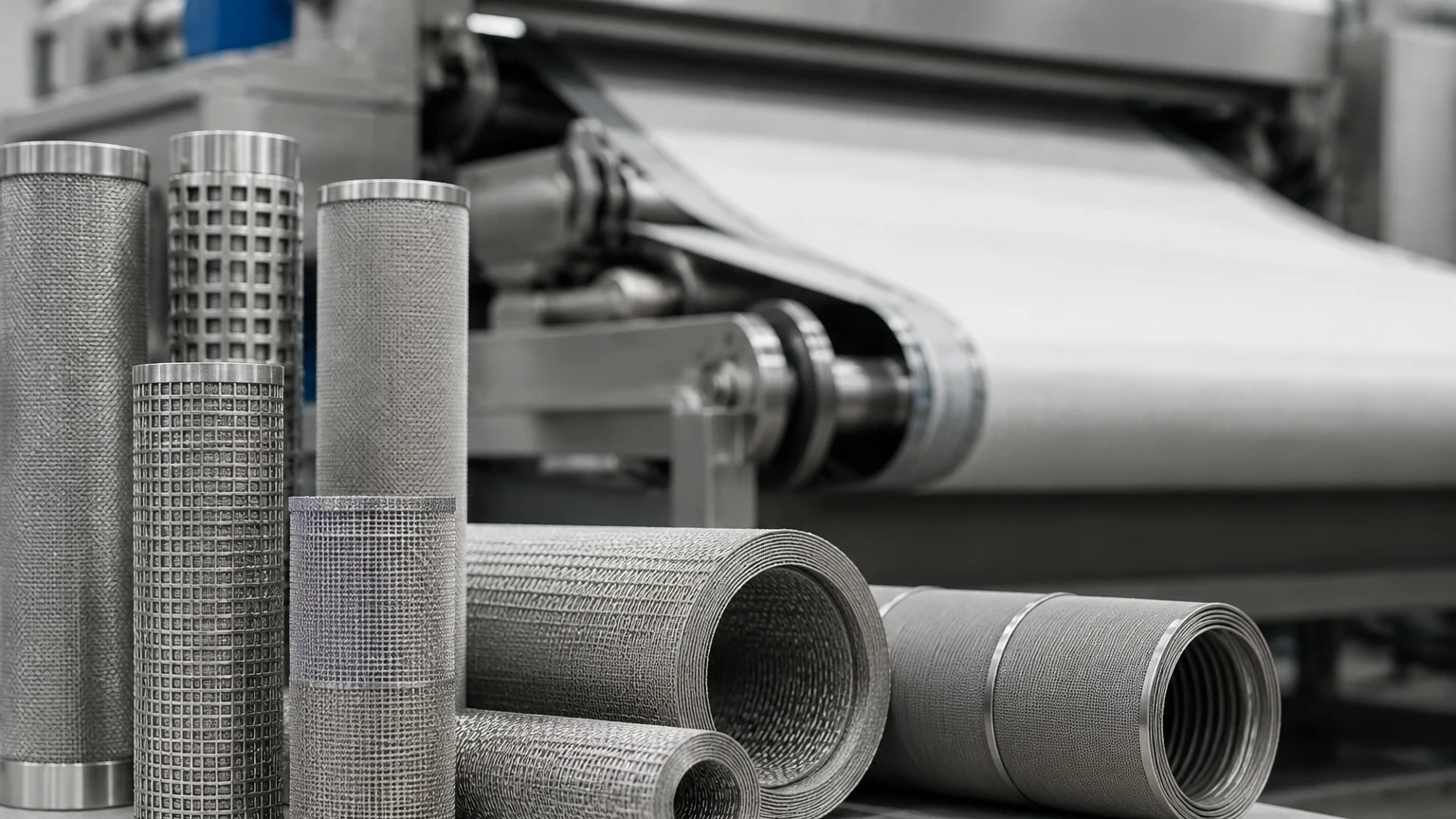
Belt Filter Press
In the landscape of industrial liquid-solid separation, the belt filter press (BFP) remains a cornerstone technology for dewatering sludge and slurries. Primarily utilized in municipal wastewater treatment, chemical processing, and mining operations, the efficiency of a belt filter press is not merely a function of the mechanical assembly but is deeply dependent on the technical specifications of the filtration media and the engineering of the internal components. For engineers and procurement specialists, understanding the mechanical nuances and material requirements of these systems is essential for optimizing throughput and minimizing the total cost of ownership.
Understanding the Belt Filter Press in Industrial Dewatering
A belt filter press is an automated dewatering system that utilizes a series of rollers and two tensioned belts to mechanically compress a chemically conditioned slurry. The primary objective is to remove the maximum amount of water, resulting in a concentrated "filter cake" that is easier and less expensive to transport or incinerate.
Unlike plate and frame filter presses which operate in batches, the belt filter press provides a continuous process. This makes it highly suitable for high-volume applications where downtime must be minimized. However, the continuous nature of the operation places significant mechanical stress on the filter belts and the supporting stainless steel components. Choosing the correct filtration media—often involving precision-woven wire mesh or synthetic fabrics—is the most critical factor in determining the moisture content of the final cake and the clarity of the filtrate.
Mechanical Operation: From Slurry to Filter Cake
The operation of a belt filter press is typically divided into three distinct functional zones. Each zone requires specific physical conditions to ensure effective separation.
1. Gravity Drainage Zone
In the initial stage, the chemically conditioned slurry (usually treated with polymers to encourage flocculation) is fed onto a moving porous belt. In this zone, the majority of the free water is removed by gravity. The design of the belt’s weave is paramount here; it must have sufficient permeability to allow rapid drainage while retaining the flocculated solids. If the mesh is too fine, it may blind prematurely; if it is too coarse, solids will pass through, reducing the quality of the filtrate.
2. Wedge Zone
As the slurry moves out of the gravity zone, it enters the wedge zone. Here, the two belts—the upper and lower belts—begin to converge. This creates a gradual increase in pressure, gently squeezing the sludge between the belts. This transition is vital to prepare the sludge for the high-pressure zone. If pressure is applied too rapidly, the sludge may be forced out of the sides of the belts, a phenomenon known as "squeeze-out."
3. High-Pressure Zone
The final stage involves a series of rollers of decreasing diameters. As the belts wrap around these rollers, they exert both compression and shear forces on the sludge. The decreasing roller diameter increases the surface pressure, forcing the remaining interstitial water out of the cake. During this stage, the mechanical integrity of the belt and the precision of the roller alignment are tested. The belts must withstand high tensile loads without stretching or misaligning.
The Importance of Filter Media Selection for Belt Presses
The filter belt is the most critical consumable in a belt filter press. While many systems use synthetic polymers like polyester or polypropylene, specific industrial applications—particularly those involving high temperatures, aggressive chemicals, or abrasive materials—require the durability and precision of stainless steel filtration components.
When evaluating filtration media, engineers must consider the following technical parameters:
* Permeability: Measured in CFM (Cubic Feet per Minute), this determines how quickly water can pass through the belt. High permeability is required for the gravity zone, but it must be balanced against solids retention.
* Tensile Strength: The belt is under constant tension. A belt that stretches will lead to tracking issues and uneven pressure distribution, which negatively impacts dewatering performance.
* Chemical Compatibility: In chemical processing or pharmaceutical applications, the belt must resist degradation from pH extremes or solvents. Stainless steel mesh is often preferred in these environments for its inert properties and thermal stability.
* Surface Smoothness: A smoother surface facilitates better cake release. If the cake sticks to the belt, it increases the cleaning requirement and can lead to mechanical wear on the scraper blades.
For those seeking specialized components or custom engineering support for filtration systems, visiting the Main Page of a professional manufacturer can provide insights into material grades and custom weave patterns tailored for industrial demands.
Performance Metrics and Engineering Evaluation
To assess the effectiveness of a belt filter press installation, several Key Performance Indicators (KPIs) must be monitored. These metrics help engineers determine if the current filtration media and machine settings are optimal.
1. Cake Solids Content: This is the percentage of dry solids in the final filter cake. Higher solids content reduces disposal costs. Typical results range from 15% to 35% depending on the sludge type.
2. Solids Capture Rate: This measures the efficiency of the press in retaining solids. A high-performing system should capture over 95% of the solids, leaving a clear filtrate.
3. Throughput Capacity: Measured in dry pounds per hour per meter of belt width. This determines the size of the equipment required for a specific facility.
4. Polymer Consumption: Since BFPs rely on chemical flocculation, the cost of polymers is a significant part of the operating budget. Efficient belt selection can sometimes reduce the amount of polymer needed by improving natural drainage.
Operational Challenges: Addressing Blinding and Wear
Even the best-designed belt filter press will encounter operational hurdles. The most common issue is "blinding," where the pores of the filter media become clogged with fine particles or biological growth. This significantly reduces drainage and increases the moisture content of the cake.
To combat blinding, BFPs are equipped with high-pressure wash headers that spray the belts after the cake has been discharged. The design of these spray nozzles and the quality of the wash water are essential. In many cases, stainless steel wire mesh filters are used within the wash water system itself to ensure that the nozzles do not become clogged with debris, which would lead to uneven belt cleaning.
Mechanical wear is another concern. The rollers, bearings, and tracking sensors are subject to a corrosive and abrasive environment. Utilizing stainless steel for these critical components, or as a reinforcement within the filtration media, can extend the service life of the equipment and reduce the frequency of maintenance shutdowns.
Customization and Material Considerations for Harsh Environments
Standard belt filter press configurations may not suffice for specialized industrial applications. For instance, in the food and beverage industry, hygiene is paramount. Components must be easy to sanitize and resistant to food-grade cleaning agents. In such cases, 304 or 316L stainless steel filtration components are the industry standard due to their corrosion resistance and ease of sterilization.
In hydraulic or high-pressure chemical applications, the mechanical stresses on the filter media are even greater. Custom-engineered wire mesh, featuring specific weave types like Plain Dutch or Twilled Dutch, can provide the necessary balance of fine filtration and structural strength. These custom solutions ensure that the belt filter press can handle fluctuating flow rates and varying sludge densities without a loss in performance.
Total Cost of Ownership and Maintenance
When purchasing a belt filter press or replacement belts, the initial capital expenditure is only one part of the equation. The total cost of ownership (TCO) includes:
* Replacement Cycles: How often do the belts need to be replaced? High-quality stainless steel or reinforced synthetic belts may have a higher upfront cost but offer a significantly longer service life.
* Energy Consumption: The power required to drive the belts and the wash water pumps.
* Disposal Costs: The primary driver for BFP investment. A 1% increase in cake dryness can result in thousands of dollars in annual savings on hauling and landfill fees.
* Maintenance Labor: The ease of belt tracking and the reliability of the tensioning system determine how much technician time is required for daily operation.
Engineers should work closely with manufacturers to specify the exact filtration requirements of their process. By analyzing the particle size distribution and chemical makeup of the slurry, a manufacturer can recommend a belt weave and material that optimizes both the capture rate and the drainage speed.
For more information on high-performance filtration components and custom stainless steel solutions, you can explore the Main Page of Kaifil to see how precision engineering supports industrial dewatering and separation processes. Understanding these technical boundaries ensures that the belt filter press remains a reliable and cost-effective asset in any industrial facility.