


Flash Chamber
In industrial process engineering, the flash chamber—often referred to as a flash vessel or flash tank—serves as a critical component for phase separation. It is a pressure vessel designed to facilitate the rapid evaporation, or "flashing," of a liquid as it undergoes a reduction in pressure. This process is fundamental in steam systems, chemical processing, and thermal desalination, where the efficient recovery of vapor from a high-pressure liquid stream can significantly impact overall thermal efficiency and operational costs.
For engineers and technical professionals, understanding the internal dynamics of a flash chamber is essential. Beyond the basic thermodynamic principles of pressure reduction, the mechanical design of the vessel and its internal filtration components determines the quality of the separated phases. Without high-precision internal components, such as wire mesh demisters and stainless steel filter elements, the risk of liquid entrainment in the vapor stream increases, leading to downstream equipment damage and process inefficiencies.
Engineering Principles of Flash Chamber Operation
The operation of a flash chamber relies on the relationship between pressure and the boiling point of a fluid. When a saturated liquid at high pressure is introduced into a chamber maintained at a lower pressure, a portion of the liquid immediately boils off into vapor to reach a new equilibrium state. This phenomenon is adiabatic, meaning the energy required for evaporation is drawn from the sensible heat of the liquid itself, resulting in a temperature drop of the remaining liquid.
Vapor-Liquid Separation Dynamics
The primary engineering challenge in a flash chamber is ensuring the clean separation of the resulting vapor from the remaining liquid. Several factors influence this efficiency:
1. Vessel Sizing and Velocity: The cross-sectional area of the chamber must be sufficient to keep the upward vapor velocity below the "terminal velocity" of the liquid droplets. If the velocity is too high, liquid is carried over into the vapor outlet (entrainment).
2. Residence Time: The liquid must remain in the vessel long enough for the vapor bubbles to disengage and for the liquid level to stabilize.
3. Pressure Differential: The magnitude of the pressure drop dictates the percentage of the fluid that flashes. Engineers must calculate this using steam tables or chemical property software to size the vessel inlets and outlets correctly.
The Role of Internal Baffles and Distributers
To prevent the incoming high-velocity fluid from creating turbulence or "short-circuiting" directly to the vapor outlet, flash chambers utilize internal baffles. These components redirect the flow, encouraging the liquid to fall to the bottom while the vapor rises. However, baffles alone are rarely sufficient for high-purity applications, necessitating the use of advanced filtration and demisting technologies.
The Critical Role of Filtration and Demisting
In many industrial applications, the vapor produced in a flash chamber is repurposed—for example, flash steam used in heat exchangers or vaporized solvents in chemical recovery. If this vapor contains liquid droplets, it can cause water hammer in steam lines, corrosion in turbines, or contamination in pharmaceutical processes. This is where precision-engineered filtration components become indispensable.
Wire Mesh Demisters
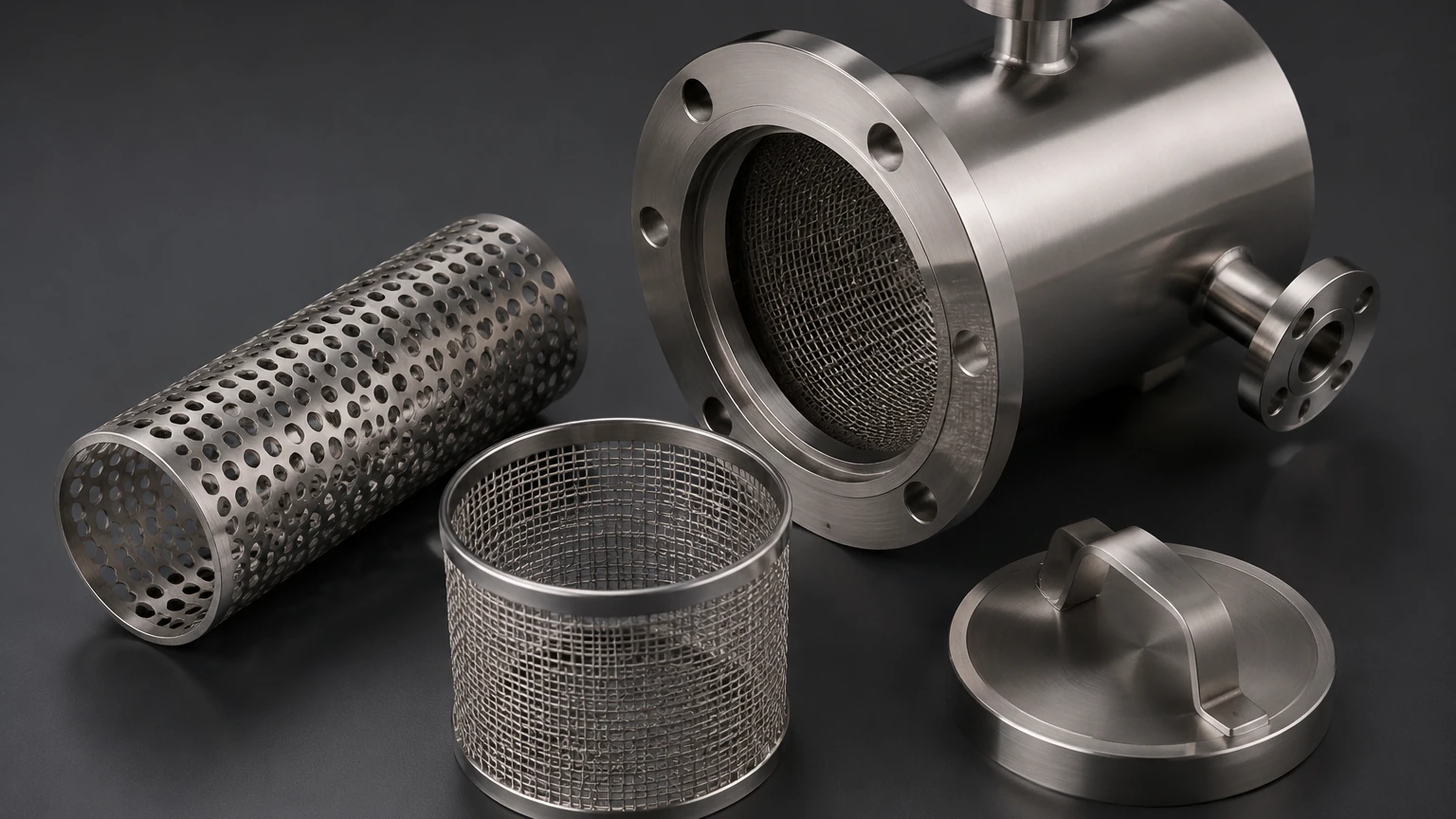
A wire mesh demister (or mist eliminator) is a porous blanket of knitted metal wires, typically made from stainless steel, installed near the vapor outlet of the flash chamber. As the vapor passes through the mesh, the liquid droplets, which have greater inertia than the gas, collide with the wire surfaces. These droplets coalesce into larger drops and eventually fall back into the liquid pool due to gravity.
Kaifil specializes in the manufacture of these precision wire mesh components, ensuring that the mesh density and wire diameter are optimized for specific industrial flow rates. For engineers, selecting the right mesh density is a balance between maximizing separation efficiency and minimizing the pressure drop across the filter.
Stainless Steel Filter Cartridges
In some specialized flash chamber designs, particularly those involving high-purity chemical or pharmaceutical fluids, stainless steel filter cartridges are used to capture fine particulates or aerosols that a standard demister might miss. These cartridges offer high mechanical strength and thermal resistance, making them ideal for the high-pressure and high-temperature environments found in industrial flashing processes.
Material Selection for Demanding Environments
Flash chambers often operate under harsh conditions, including high temperatures, fluctuating pressures, and corrosive chemical environments. Consequently, the materials used for both the vessel and its internal filtration components must be selected with durability in mind.
Stainless Steel Grades
Stainless steel is the industry standard for flash chamber internals due to its corrosion resistance and structural integrity. Common grades include:
* Grade 304/304L: Suitable for general steam applications and non-corrosive industrial fluids. It provides excellent value and structural reliability.
* Grade 316/316L: The preferred choice for chemical processing and pharmaceutical applications. The addition of molybdenum provides superior resistance to chlorides and organic acids.
* Duplex and Super Alloys: In highly aggressive environments, such as seawater desalination or concentrated acid flashing, specialized alloys may be required to prevent pitting and stress corrosion cracking.
When sourcing components for a flash chamber, engineers should consult the Main Page of a specialized manufacturer like Kaifil to review the material compatibility and technical specifications of available filtration solutions.
Key Evaluation Criteria for Industrial Engineers
When designing or upgrading a flash chamber system, procurement and engineering teams must evaluate several technical parameters to ensure long-term performance and a favorable total cost of ownership.
Filtration Accuracy and Efficiency
The required purity of the vapor stream dictates the choice of internal components. For flash steam recovery, a standard wire mesh demister capable of removing droplets down to 5–10 microns is often sufficient. However, in gas processing or pharmaceutical evaporation, finer filtration may be necessary. Engineers must define the "allowable carryover" to determine the appropriate filtration specification.
Pressure Drop Management
Every internal component introduced into the flash chamber creates a resistance to flow, resulting in a pressure drop. Excessive pressure drop can reduce the efficiency of the flashing process and increase energy consumption. It is vital to select filter media that provide high surface area with high porosity to maintain low differential pressure.
Maintenance and Cleaning Cycles
In many industrial processes, the liquid being flashed may contain solids or minerals that can scale or clog the internal filters. Engineers should consider:
* Cleanability: Are the stainless steel filters or mesh pads cleanable via backwashing or ultrasonic cleaning?
* Accessibility: Is the flash chamber designed with manways or flanges that allow for the easy removal and inspection of internal components?
* Durability: How well does the filter media withstand the mechanical stress of high-velocity flashing events?
Common Risks and Mitigation Strategies
Operating a flash chamber involves managing specific risks that can compromise safety and productivity. Addressing these during the design phase is more cost-effective than attempting retrofits later.
Liquid Entrainment and Carryover
As previously mentioned, carryover is the most common failure mode in flash chambers. This is often caused by undersized vessels or damaged demister pads. Regular inspection of the wire mesh for signs of erosion or displacement is critical. Using high-quality, custom-fabricated mesh from a reliable OEM ensures a precise fit that prevents vapor from bypassing the filter.
Scaling and Fouling
In water treatment or chemical applications, dissolved solids can precipitate out of the liquid as it flashes, coating the internal surfaces and filters. This scaling reduces heat transfer and increases pressure drop. Selecting smooth, precision-finished stainless steel components can help reduce the rate of scale adhesion, and choosing the correct filtration micron rating can prevent downstream fouling of sensitive equipment.
Pressure Fluctuations and Fatigue
Flash chambers are subject to cyclic loading as process conditions change. This can lead to mechanical fatigue in the internal supports and filter housings. Utilizing robust, welded stainless steel structures rather than thin-gauge materials ensures that the internal components can withstand the turbulent environment of a high-pressure flash event.
Customization and OEM Solutions
No two industrial processes are identical, and standard off-the-shelf components often fall short in specialized flash chamber applications. Customization is frequently required in terms of vessel geometry, connection types, and filtration performance.
Working with a manufacturer like Kaifil allows engineers to develop bespoke filtration solutions. Whether it is a unique wire mesh configuration for a specific vapor velocity or a custom-designed filter cartridge for a proprietary chemical process, OEM capabilities ensure that the filtration component integrates seamlessly with the overall system design. This collaborative approach helps in optimizing the separation efficiency and extending the service life of the equipment.
Conclusion
The flash chamber is a cornerstone of modern industrial thermal management and chemical separation. Its effectiveness, however, is deeply tied to the quality of its internal separation and filtration components. By focusing on rigorous material selection, precise engineering of demisters, and a thorough understanding of fluid dynamics, engineers can ensure that their flash systems operate at peak efficiency with minimal maintenance.
For those looking to optimize their industrial filtration processes or source high-performance stainless steel components, it is essential to partner with a manufacturer that understands the technical nuances of the industry. To explore the full range of custom filtration and wire mesh solutions tailored for demanding industrial environments, technical professionals are encouraged to visit the Kaifil Main Page for detailed product specifications and application support.
