


Belt Filter Presses
In industrial wastewater treatment and sludge management, the efficiency of solids-liquid separation is a critical factor in determining operational costs and environmental compliance. Belt filter presses (BFP) represent a cornerstone technology in this field, providing a continuous, mechanical method for dewatering organic and inorganic sludges. For engineers and facility managers, understanding the mechanical nuances, material requirements, and selection criteria for these systems is essential to optimizing throughput and achieving the desired cake dryness.
While the press itself provides the mechanical force, the performance of the system is fundamentally limited by the quality and specifications of the filter media used. As a specialized manufacturer of stainless steel filtration solutions, Kaifil recognizes that the interaction between the sludge and the filter belt determines the success of the dewatering process. This guide examines the engineering principles of belt filter presses and the technical considerations necessary for effective implementation in industrial environments.
The Mechanical Principles of Belt Filter Press Operation
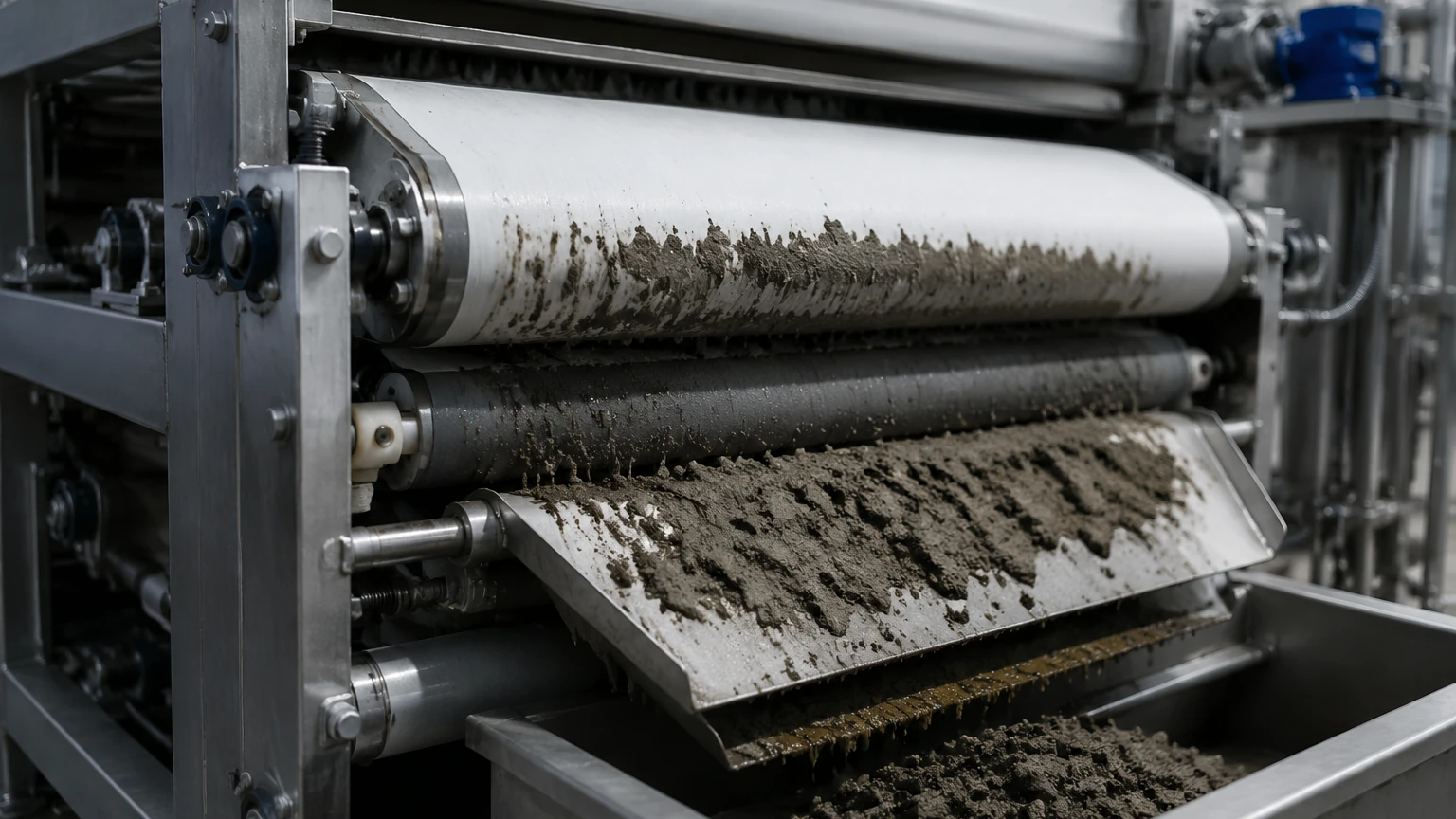
A belt filter press operates on the principle of progressive pressure application. Unlike batch processes such as plate and frame presses, a BFP provides continuous operation, which is vital for high-volume industrial applications. The process is generally divided into three distinct functional zones, each requiring specific filtration characteristics.
1. Gravity Drainage Zone
In the initial stage, the sludge—often pre-conditioned with polymers to promote flocculation—is distributed across a moving porous belt. In this zone, free water is removed by gravity. The efficiency of this stage depends heavily on the permeability of the filter media. If the mesh is too fine, the water cannot escape quickly enough, leading to "pooling" and potential overflow. Conversely, if the mesh is too coarse, fine solids may pass through, reducing the solids capture rate.
2. The Wedge Zone
Following gravity drainage, the thickened sludge enters the wedge zone. Here, two belts (an upper and a lower belt) converge, gradually sandwiching the sludge. This stage applies a gentle, increasing pressure that prepares the sludge for the high-pressure rollers. The structural integrity of the filter media is tested here, as it must maintain its shape and tracking while under increasing tension.
3. The High-Pressure (Squeeze) Zone
The final stage involves the belts passing through a series of rollers of decreasing diameters. The serpentine path creates shear forces and high compressive pressure, squeezing the remaining interstitial water out of the sludge cake. This results in a concentrated solid "cake" that is scraped off the belts at the discharge point. The mechanical strength of the belts is paramount in this zone to prevent stretching or tearing under the intense pressure of the rollers.
Engineering Considerations for Filter Media Selection
For technical professionals, selecting the right belt material and weave is as important as the press design itself. While synthetic belts (such as polyester or polypropylene) are common, certain industrial applications require the enhanced durability and chemical resistance of stainless steel wire mesh or specialized metal components. When evaluating filter media for belt filter presses, several engineering factors must be prioritized.
Material Compatibility and Durability
In chemical processing or high-temperature environments, synthetic belts may degrade or lose dimensional stability. Stainless steel filtration components offer superior resistance to thermal expansion and chemical corrosion. For engineers managing aggressive sludges, specifying 304 or 316L stainless steel ensures that the filter media can withstand the cleaning cycles and the chemical nature of the filtrate without premature failure.
Weave Patterns and Filtration Accuracy
The weave of the belt determines both the drainage rate and the cake release properties. Common patterns include:
* Plain Weave: Offers a standard balance of strength and open area.
* Twill Weave: Provides a smoother surface, which can improve cake discharge.
* Dutch Weave: Used for high-pressure applications where fine particle retention is critical.
Selecting the correct micron rating and open area percentage is a balancing act between clarity of the filtrate and the speed of the dewatering process. Technical teams should consult the Main Page to review how different wire mesh configurations can be customized to meet specific industrial filtration requirements.
Performance Evaluation and Optimization
To ensure a belt filter press is operating at peak efficiency, engineers must monitor several key performance indicators (KPIs). These metrics help in identifying when a belt needs replacement or when the pre-treatment process requires adjustment.
Cake Solids Concentration
The primary goal of a BFP is to achieve the highest possible percentage of dry solids in the discharge cake. Higher cake dryness reduces the weight and volume of the waste, significantly lowering disposal costs. If cake dryness drops, it may indicate that the filter media is blinded (clogged) or that the belt tension is insufficient.
Solids Capture Rate
This metric measures the percentage of solids retained by the belt versus the amount lost in the filtrate (centrate). A low capture rate suggests that the mesh size is too large for the flocculated particles or that the polymer dosing is incorrect. High-performance stainless steel mesh can provide more consistent pore sizes over time compared to synthetics, which may stretch and enlarge their openings.
Throughput Capacity
Throughput is measured in terms of dry solids per hour per meter of belt width. Maximizing throughput without sacrificing cake dryness is the ultimate goal of system optimization. This requires a filter media that allows for rapid drainage in the gravity zone while maintaining the strength to handle high speeds in the pressure zone.
Common Operational Risks and Mitigation
Operating belt filter presses involves managing several risks that can lead to downtime or increased maintenance costs. Understanding these risks allows purchasing teams to make more informed decisions regarding replacement parts and system upgrades.
Belt Blinding and Cleaning
Blinding occurs when fine particles become lodged within the weave of the filter belt, preventing water from passing through. This is often mitigated by high-pressure washwater sprays. However, if the filter media material is prone to surface adhesion, cleaning becomes difficult. Precision-engineered metal filters often feature smoother surface profiles that facilitate easier cleaning and more effective cake release.
Tracking and Alignment Issues
If a belt is not manufactured with high dimensional precision, it may "wander" or track unevenly across the rollers. This leads to edge wear and eventual belt failure. Ensuring that belts are sourced from manufacturers who prioritize tight tolerances in wire diameter and weave consistency is essential for long-term reliability.
Abrasive Wear
In applications involving mineral slurries or sand-laden wastewater, abrasive wear can quickly erode the filter media. Stainless steel's hardness provides a significant advantage over polymers in these environments, extending the replacement cycle and reducing the total cost of ownership.
Total Cost of Ownership (TCO) in Industrial Filtration
When procuring components for belt filter presses, it is tempting to focus solely on the initial purchase price of the belts. However, a professional B2B evaluation must account for the Total Cost of Ownership. This includes:
1. Replacement Frequency: How often does the belt fail or become permanently blinded?
2. Chemical and Energy Consumption: Does the filter media require excessive polymer dosing or high-pressure washwater to function?
3. Downtime Costs: What is the cost to the facility when the press is offline for a belt change?
4. Disposal Costs: Does the belt achieve sufficient cake dryness to minimize waste hauling fees?
By investing in high-quality, customized filtration components, such as those provided by Kaifil, industrial operators can often achieve a lower TCO despite a higher initial material cost. The durability of stainless steel and the precision of custom-engineered mesh ensure that the system remains productive for longer intervals.
Technical Confirmation Before Procurement
Before finalizing a purchase or specifying a new belt for an existing press, engineering teams should confirm several technical details with their supplier:
* Sludge Characteristics: Provide data on pH, temperature, particle size distribution, and abrasiveness.
* Mechanical Specifications: Confirm the required belt tension (kN/m), width, and seam type (clipper, spiral, or endless).
* Filtration Goals: Define the target cake dryness and the maximum allowable solids in the filtrate.
* Customization Options: Inquire about specialized coatings or edge reinforcements that might extend the life of the belt in specific environments.
For those seeking reliable OEM and customized filtration solutions, visiting the Main Page provides access to technical expertise and product specifications that help bridge the gap between standard equipment and optimized industrial performance.
Conclusion
Belt filter presses remain a vital technology for industrial dewatering, but their success is inextricably linked to the performance of the filter media. By focusing on engineering fundamentals—material selection, weave precision, and mechanical durability—technical professionals can ensure their filtration systems operate with maximum efficiency. Whether managing chemical processing waste or municipal sludge, the right choice in filtration components leads to lower operational costs, improved compliance, and more sustainable industrial processes.
