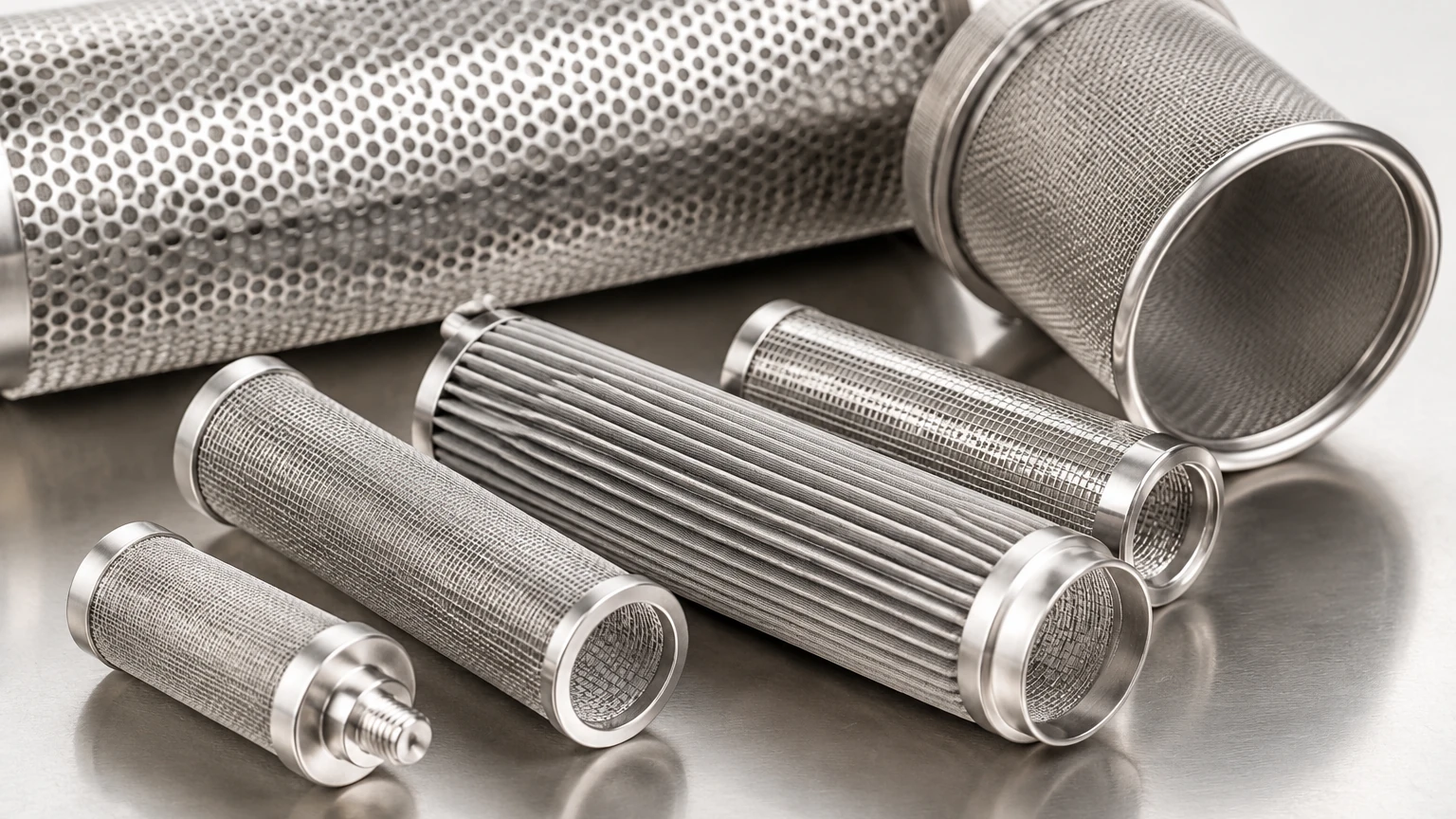
20ppi
In the specialized field of industrial filtration, technical specifications dictate the efficiency, longevity, and safety of a processing system. Among these specifications, the term "PPI" (Pores Per Inch) serves as a critical metric for evaluating reticulated structures, metal foams, and specialized porous media. A 20ppi rating represents a specific balance of porosity and structural integrity, often utilized in applications where high flow rates must be maintained alongside effective particulate capture. For engineers and procurement specialists, understanding the nuances of 20ppi media is essential for optimizing filtration performance in demanding environments such as chemical processing, molten metal filtration, and high-velocity gas streams.
Understanding PPI in Industrial Filtration
The metric "Pores Per Inch" (PPI) is a linear measurement used to define the cellular density of a porous material. Unlike mesh count, which typically refers to the number of wires per inch in a two-dimensional woven fabric, PPI describes the three-dimensional architecture of a foam or reticulated structure. A 20ppi material contains approximately 20 individual pores across one linear inch of the material surface.
In a 20ppi structure, the geometry is characterized by a series of interconnected dodecahedral cells. This "open-cell" design is what differentiates it from closed-cell foams used for insulation. For industrial filtration, the open-cell nature of 20ppi media allows fluids—whether liquid or gas—to pass through a tortuous path. This path increases the probability of particulate matter coming into contact with the internal surfaces (ligaments) of the filter, facilitating depth filtration rather than simple surface straining.
Technical Characteristics of 20ppi Structures
When evaluating 20ppi media for industrial use, several physical properties must be considered to ensure the component meets the operational requirements of the system. These properties include pore size distribution, relative density, and surface area.
Pore Size and Geometry
In a standard 20ppi reticulated metal or ceramic foam, the average pore diameter typically ranges from 1.5mm to 2.5mm. This makes 20ppi a relatively coarse filtration grade compared to 60ppi or 80ppi alternatives. However, the coarseness is a deliberate design choice for applications involving high-viscosity fluids or large particulate loads that would instantly blind a finer filter. The ligaments—the solid "struts" that form the cell walls—are thicker in 20ppi structures than in higher PPI counts, providing superior mechanical strength and resistance to pressure surges.
Porosity and Void Volume
One of the primary advantages of 20ppi media is its high void volume, which often exceeds 75% to 90%. This high porosity ensures a very low initial pressure drop (clean pressure drop). In hydraulic and pneumatic systems, maintaining a low pressure drop is vital for energy efficiency and for preventing cavitation in pumps. The 20ppi specification provides enough open space to allow high-velocity flow while the internal surface area remains sufficient for catalytic reactions or depth-loading of contaminants.
Tortuosity and Depth Filtration
Because the pores in a 20ppi filter are interconnected in a stochastic (randomized) three-dimensional matrix, the fluid does not travel in a straight line. This "tortuosity" forces the fluid to change direction multiple times. Heavier particles, unable to follow the fluid streamlines due to inertia, collide with the filter ligaments and become trapped. This mechanism allows 20ppi filters to capture particles that are technically smaller than the pore openings themselves.
Material Considerations for 20ppi Filters
The performance of a 20ppi filter is heavily dependent on the material from which it is manufactured. As a professional manufacturer, Kaifil emphasizes the selection of alloys that match the chemical and thermal demands of the application. On the Main Page, technical professionals can explore various material options tailored for specific industrial environments.
Stainless Steel (304, 316L)
Stainless steel is the most common material for 20ppi industrial filters due to its excellent corrosion resistance and mechanical durability. 316L stainless steel, in particular, is preferred in chemical processing and marine environments because of its resistance to pitting and crevice corrosion. Sintered 20ppi stainless steel structures can withstand high temperatures and are easily cleaned via ultrasonic baths or backwashing, making them a cost-effective long-term solution.
High-Temperature Alloys
For applications involving extreme heat, such as exhaust gas filtration or molten metal processing, 20ppi filters may be produced from Inconel, Hastelloy, or FeCrAlY alloys. These materials maintain their structural integrity at temperatures exceeding 800°C, where standard polymers or lower-grade metals would oxidize or deform.
Ceramic vs. Metal Foams
While ceramic 20ppi filters are common in foundries for filtering molten aluminum or iron, metal foams are generally preferred in pressurized industrial systems. Metal 20ppi structures offer better ductility and resistance to thermal shock, reducing the risk of material shedding (media migration) into the downstream flow—a critical factor in pharmaceutical and food-grade applications.
Key Applications for 20ppi Filtration
The 20ppi specification is utilized across a broad spectrum of industries, each leveraging the unique balance of high flow and moderate filtration efficiency.
Molten Metal Filtration
In the foundry industry, 20ppi ceramic or silicon carbide filters are used to remove dross, slag, and non-metallic inclusions from molten metal. The 20ppi rating is ideal here because it allows the heavy, viscous molten metal to flow through the gating system quickly enough to fill the mold before cooling, while still trapping the impurities that cause structural defects in the final casting.
Air and Gas Pre-filtration
In large-scale HVAC and industrial air intake systems, 20ppi reticulated metal foams serve as effective pre-filters. They capture large debris, insects, and heavy dust particles, protecting more expensive HEPA or secondary fine filters located downstream. Their ability to be washed and reused makes them a sustainable choice for heavy industrial zones.
Mist Elimination and Coalescing
20ppi structures are frequently used in oil-gas separators. As gas containing fine oil droplets passes through the 20ppi matrix, the droplets impinge on the ligaments and coalesce into larger drops that eventually drain away due to gravity. The low pressure drop of 20ppi media ensures that the separation process does not significantly hinder the overall system throughput.
Catalyst Supports
In chemical reactors, the high surface-area-to-volume ratio of a 20ppi metal foam makes it an excellent substrate for catalysts. The open structure allows for high-contact time between the reactants and the catalyst-coated ligaments without creating the massive backpressure associated with packed-bed reactors.
Performance Evaluation and Selection Criteria
Selecting a 20ppi filter requires more than just identifying the pore count. Engineers must evaluate several performance metrics to ensure the filter will function correctly within its intended lifecycle.
1. Permeability Coefficient: This measures how easily a fluid can flow through the 20ppi structure. It is calculated based on Darcy’s Law and is essential for sizing pumps and compressors.
2. Particle Retention Efficiency: While 20ppi is a coarse grade, its efficiency can be enhanced by increasing the depth (thickness) of the filter media. Doubling the thickness of a 20ppi filter can significantly improve the capture rate of finer particles without doubling the pressure drop.
3. Mechanical Strength (Crush Strength): In high-pressure hydraulic systems, the filter must resist deformation. The thicker ligaments of a 20ppi structure provide a higher crush strength compared to 40ppi or 60ppi media of the same material.
4. Chemical Compatibility: It is vital to confirm that the filter material (e.g., 316L stainless steel) is compatible with the fluid being filtered, especially in the pharmaceutical and food and beverage sectors where leaching or corrosion can contaminate the product.
Customization and Engineering Support
Industrial filtration is rarely a one-size-fits-all endeavor. Customization is often required to integrate a 20ppi filter into existing hardware or to meet specific flow dynamics. Kaifil provides comprehensive OEM and customized filtration solutions, helping engineers move from initial concept to final production.
Customization options for 20ppi components include:
* Geometric Shaping: 20ppi media can be machined or molded into discs, cylinders, or complex 3D shapes to fit specific housing requirements.
* Reinforcement: For high-vibration environments, 20ppi metal foams can be sintered to perforated metal supports or wire mesh to increase structural rigidity.
* Surface Treatments: Coatings can be applied to 20ppi ligaments to enhance corrosion resistance, alter hydrophobicity, or provide catalytic properties.
When consulting with a manufacturer, it is important to provide data on the operating temperature, fluid viscosity, flow rate, and the nature of the contaminants. This allows for the engineering of a 20ppi solution that balances initial cost with the total cost of ownership, including maintenance and replacement cycles.
Maintenance and Total Cost of Ownership
One of the primary B2B considerations for 20ppi stainless steel filters is the total cost of ownership (TCO). While the initial purchase price of a precision-engineered 20ppi metal foam may be higher than disposable polymer alternatives, the long-term savings are substantial.
Because 20ppi stainless steel filters are robust, they can undergo multiple cleaning cycles. Methods such as backpulsing, ultrasonic cleaning, or chemical solvent baths can restore the filter to near-original permeability. This reduces the frequency of procurement cycles and minimizes the waste stream associated with disposable cartridges. In high-volume industrial settings, the durability of 20ppi metal media ensures that system downtime for filter changes is kept to an absolute minimum.
Conclusion
The 20ppi specification is a cornerstone of industrial filtration for applications requiring high flow, low pressure drop, and significant mechanical strength. Whether used as a pre-filter in a chemical plant, a mist eliminator in an oil refinery, or a dross trap in a foundry, the 20ppi structure provides a reliable and cleanable solution for managing large particulate loads.
By focusing on material integrity and precise manufacturing standards, companies like Kaifil ensure that these components meet the rigorous demands of modern engineering. For those looking to integrate these solutions into their operations, reviewing the technical capabilities and product ranges available on the Main Page is the first step toward achieving optimized filtration performance and improved operational efficiency.