


Breathing Air Filters
In industrial environments where ambient air is contaminated by dust, chemical vapors, or low oxygen levels, the provision of safe, breathable air is a critical engineering requirement. Breathing air filters are the primary components in compressed air systems designed to remove contaminants and ensure that the air delivered to respirators, hoods, and masks meets stringent safety standards. For engineers and procurement specialists, selecting the correct filtration media and housing configuration is not merely a matter of compliance, but a fundamental aspect of life-support system design.
Industrial breathing air systems typically rely on a multi-stage approach to transform standard industrial-grade compressed air into Grade D breathing air or better. This process involves the removal of solid particulates, liquid water, oil aerosols, and gaseous impurities. As a manufacturer specializing in custom stainless steel filtration solutions, Kaifil provides the precision metal components necessary to maintain the integrity and performance of these high-pressure systems.
The Technical Necessity of Multi-Stage Filtration
Standard compressed air is often laden with contaminants introduced by the compressor itself or drawn in from the surrounding environment. To make this air safe for human consumption, a sequence of specialized breathing air filters must be employed. Each stage targets a specific class of contaminant to prevent health risks such as respiratory irritation, long-term lung damage, or acute toxicity.
1. Particulate Filtration: The first stage usually involves a mechanical filter designed to capture solid debris, scale from piping, and dust. This stage protects downstream components from abrasion and clogging.
2. Coalescing Filtration: These filters are designed to remove liquid aerosols, such as oil and water. By forcing the air through a dense matrix of fibers, small droplets are encouraged to collide and form larger drops, which then drain away. This is crucial for preventing oil mist from reaching the user.
3. Adsorption Filtration: Once liquid contaminants are removed, gaseous impurities like oil vapors and odors must be addressed. Activated carbon is typically used in this stage. However, the efficiency of adsorption is highly dependent on the dryness of the air, making the preceding stages vital.
4. Catalytic Conversion: In some systems, a catalyst is used to convert carbon monoxide (CO) into carbon dioxide (CO2), as standard mechanical filtration cannot remove CO molecules.
For those seeking comprehensive information on industrial filtration components and custom manufacturing capabilities, visiting the Main Page provides a broader overview of how these technologies are integrated into larger industrial frameworks.
Engineering Considerations for Breathing Air Filters
When specifying breathing air filters for an industrial application, engineers must look beyond simple micron ratings. Several technical variables dictate the reliability and safety of the system.
Filtration Efficiency and Micron Ratings
In the context of breathing air, filtration efficiency is often categorized by the size of particles the media can reliably trap. While 0.01-micron efficiency is common for coalescing stages, the structural integrity of the filter element is equally important. Stainless steel wire mesh and sintered metal components are often utilized in the pre-filtration and post-filtration stages to provide a rigid structure that can withstand high differential pressures without collapsing or releasing bypass air.
Pressure Drop (Delta P)
Every filter element introduces resistance to the airflow, known as pressure drop. Excessive pressure drop increases the energy demand on the compressor and can lead to insufficient air delivery to the respirator. Engineers must balance high filtration efficiency with a low initial pressure drop. High-quality stainless steel mesh filters are often preferred in these systems because they offer high porosity and precise pore size distribution, which optimizes the flow-to-surface-area ratio.
Material Compatibility and Durability
Breathing air systems often operate in harsh environments, such as offshore oil rigs or chemical processing plants. The materials used in the filter housing and the internal elements must resist corrosion. Stainless steel (304 or 316L) is the industry standard for these applications due to its ability to withstand moisture, chemical exposure, and high-pressure cycles without degrading. Unlike plastic or lower-grade metal components, stainless steel does not outgas or introduce new contaminants into the air stream.
The Role of Stainless Steel in High-Performance Air Systems
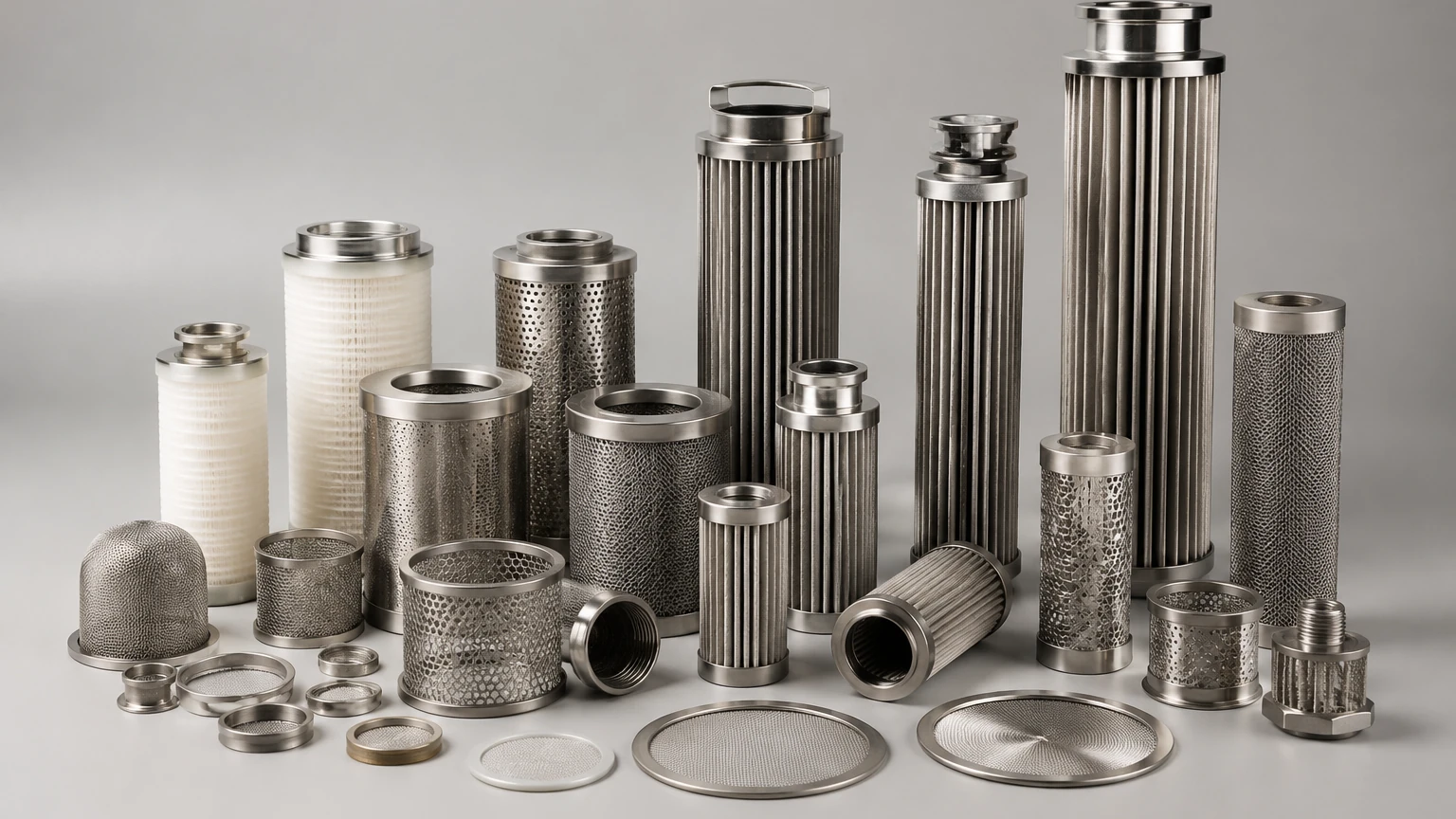
As a specialist in stainless steel filtration, Kaifil focuses on the precision engineering of metal filter cartridges and wire mesh components that serve as the backbone of industrial breathing air filters. Stainless steel offers several advantages over disposable or synthetic media in specific parts of the air treatment chain.
* Mechanical Strength: Sintered metal and multi-layer wire mesh can handle extreme pressures that would tear paper or synthetic media. This is particularly important in the event of a system surge.
* Thermal Stability: In applications where compressed air may be high in temperature, stainless steel maintains its structural integrity and filtration accuracy.
* Cleanability: While many breathing air stages use disposable media for chemical adsorption, the primary particulate stages can often utilize cleanable stainless steel elements, reducing the total cost of ownership and waste.
By focusing on these durable materials, manufacturers ensure that the filtration system remains a reliable barrier between the compressor and the worker.
Common Risks and Performance Failures
Failure to properly maintain or specify breathing air filters can lead to catastrophic results. Understanding the common failure modes is essential for any technical professional managing these systems.
Media Saturation and Breakthrough
In adsorption stages, the activated carbon has a finite capacity for oil vapor. Once saturated, "breakthrough" occurs, and contaminants pass directly to the user. Because oil vapor is often odorless at low concentrations, users may not realize they are being exposed until it is too late. Monitoring systems and strict replacement schedules are the only effective defenses against breakthrough.
Bypass and Seal Failure
Even the most efficient filter media is useless if air can bypass the element. This often occurs due to poor seal design or the use of low-quality gaskets. In high-pressure breathing air systems, the interface between the filter element and the housing must be precision-engineered. Custom stainless steel cartridges with integrated O-ring grooves or machined end caps provide a much higher level of security than generic push-fit designs.
Corrosion and Internal Contamination
If the internal surfaces of a filter housing corrode, the filter itself becomes a source of contamination. This is why the selection of corrosion-resistant alloys for all wetted parts is non-negotiable in breathing air applications. Particulate matter from a corroding housing can clog fine mesh filters downstream, leading to a rapid and unexpected increase in pressure drop.
Customization and OEM Solutions for Breathing Air
Every industrial environment has unique constraints, whether it is space limitations on a portable cart or specific flow requirements for a large-scale facility. Standard, off-the-shelf breathing air filters may not always meet these specialized needs. This is where custom manufacturing becomes a necessity.
Customization options often include:
* Specific Micron Ratings: Tailoring the wire mesh weave to target specific particulate sizes relevant to the local environment.
* Custom Dimensions: Engineering filter elements to fit into existing proprietary housings where the original manufacturer's parts are no longer available or are underperforming.
* Material Upgrades: Moving from standard 304 stainless steel to 316L or other high-nickel alloys for superior resistance in marine or highly acidic environments.
For engineers developing new breathing air products, partnering with a manufacturer that understands the nuances of metal filtration allows for the creation of more compact, efficient, and durable systems.
Maintenance and Total Cost Considerations
The purchase price of breathing air filters is only a fraction of the total cost of ownership. To ensure long-term safety and cost-effectiveness, facilities must implement a proactive maintenance strategy.
1. Differential Pressure Monitoring: Installing gauges across each filter stage allows operators to see exactly when an element is becoming loaded with contaminants. This prevents premature replacement and ensures the system never operates in a high-pressure-drop state.
2. Regular Air Quality Testing: Periodic testing of the output air (quarterly or semi-annually) is often a legal requirement. These tests verify that the filtration stages are working in unison to provide Grade D air.
3. Element Replacement Cycles: Even if a filter does not show a high pressure drop, certain media (like activated carbon) must be replaced based on service hours or calendar dates to prevent chemical saturation.
By choosing high-quality, precision-engineered components, such as those found on the Main Page, companies can extend the life of their equipment and ensure the highest levels of safety for their personnel. Investing in robust stainless steel filtration components reduces the frequency of emergency repairs and the risk of system-wide contamination, ultimately protecting both the workers and the bottom line.
