


Breathing Filters
In industrial fluid management and storage, the integrity of a system often depends on its ability to "breathe" without introducing contaminants. Breathing filters, also known as tank breathers or vent filters, are critical components designed to allow the free flow of air into and out of enclosures, such as storage tanks, hydraulic reservoirs, and gearboxes, while capturing particulate matter and moisture. For engineers and maintenance professionals, selecting the correct breathing filter is not merely a matter of fitting a cap; it is a technical decision that impacts equipment longevity, product purity, and operational safety.
At Kaifil, we specialize in the manufacturing of high-performance stainless steel filtration solutions. Understanding the nuances of breathing filters—from material compatibility to flow rate calculations—is essential for optimizing industrial processes. This guide examines the engineering principles, selection criteria, and application-specific considerations for industrial breathing filters.
The Role of Breathing Filters in Industrial Systems
Industrial containers are rarely static environments. As liquid levels rise and fall during filling or emptying cycles, or as temperatures fluctuate, the air volume inside the vessel must change to equalize pressure. Without a dedicated vent, a tank could face structural failure, such as implosion under vacuum or bursting under over-pressure.
Breathing filters serve as the gatekeepers of this air exchange. Their primary functions include:
1. Contamination Control: Preventing airborne dust, silica, and microbial contaminants from entering the system and degrading the fluid or the internal surfaces of the vessel.
2. Pressure Equalization: Ensuring that the differential pressure between the tank interior and the atmosphere remains within safe engineering limits.
3. Environmental Protection: In some applications, breathing filters prevent vapors or mists from escaping the tank into the workspace, helping to maintain air quality and safety standards.
For a broader view of how these components integrate into larger filtration assemblies, technical teams can refer to our Main Page for detailed product specifications and custom engineering support.
Engineering Material Selection: Why Stainless Steel?
While plastic or disposable breathing filters are common in light-duty applications, heavy industrial environments often require the durability of metal components. Stainless steel, particularly grades 304 and 316L, is the preferred material for breathing filters in chemical, pharmaceutical, and food processing industries.
Corrosion Resistance
Breathing filters are frequently exposed to harsh outdoor environments or corrosive process vapors. 316L stainless steel provides superior resistance to chlorides and acidic environments, ensuring that the filter itself does not become a source of rust or particulate contamination.
Thermal Stability
Industrial processes often involve high temperatures that would compromise the structural integrity of polymer-based filters. Stainless steel breathing filters maintain their mechanical properties and filtration efficiency across a wide temperature spectrum, from cryogenic storage to high-heat chemical reactors.
Cleanability and Reusability
Unlike disposable cellulose or synthetic media, stainless steel wire mesh and sintered metal filters can be cleaned and returned to service. This is particularly advantageous in B2B operations focused on reducing total cost of ownership (TCO) and minimizing waste. Methods such as ultrasonic cleaning or backwashing are highly effective for restoring the flow capacity of metal breathing filters.
Technical Specifications and Evaluation Criteria
When specifying breathing filters for a project, engineers must look beyond the physical connection size. Several technical parameters dictate the performance and suitability of the filter.
Micron Rating and Filtration Efficiency
The micron rating defines the size of particles the filter can successfully capture. For hydraulic systems, a 3-micron or 10-micron rating is often required to protect sensitive valves. In food and beverage applications, finer filtration may be necessary to prevent microbial ingress. It is important to distinguish between nominal ratings (an approximate value) and absolute ratings (a guaranteed capture efficiency) based on the sensitivity of the internal fluid.
Flow Rate and Pressure Drop (ΔP)
The most common failure in breather specification is undersizing the filter for the required flow rate. The air flow through the breather must match or exceed the maximum liquid displacement rate. For example, if a pump removes liquid at 500 gallons per minute, the breathing filter must allow 500 gallons per minute of air (approximately 67 cubic feet per minute) to enter the tank without creating a significant vacuum. An excessive pressure drop across the filter can lead to tank deformation.
Environmental Conditions
If the equipment is located in a high-humidity area, a standard particulate filter may not be sufficient. In such cases, breathing filters may be paired with desiccant media or specialized hydrophobic coatings to prevent moisture from entering the reservoir, which is critical for preventing oil oxidation and corrosion in hydraulic systems.
Application-Specific Considerations
Different industries impose unique demands on breathing filters. A "one-size-fits-all" approach rarely yields the best results in complex industrial settings.
Chemical Processing
In chemical plants, breathing filters must withstand aggressive vapors. The use of PTFE-lined housings or high-grade alloys like Hastelloy may be considered alongside stainless steel mesh to ensure chemical compatibility. The filter must also be designed to prevent the "clogging" effect of crystallizing vapors.
Food and Pharmaceutical Production
Sanitary breathing filters must comply with strict hygienic standards (such as FDA or 3-A guidelines). These filters often feature polished stainless steel housings with no dead spaces where bacteria could proliferate. They must also be capable of withstanding Clean-in-Place (CIP) or Steam-in-Place (SIP) sterilization cycles.
Hydraulic and Lubrication Systems
In heavy machinery, breathing filters are the first line of defense against oil contamination. Since 70-80% of hydraulic component failures are caused by fluid contamination, the breather must be robust enough to handle the rapid "pulsing" air flow caused by cylinder movement while maintaining high-efficiency particulate capture.
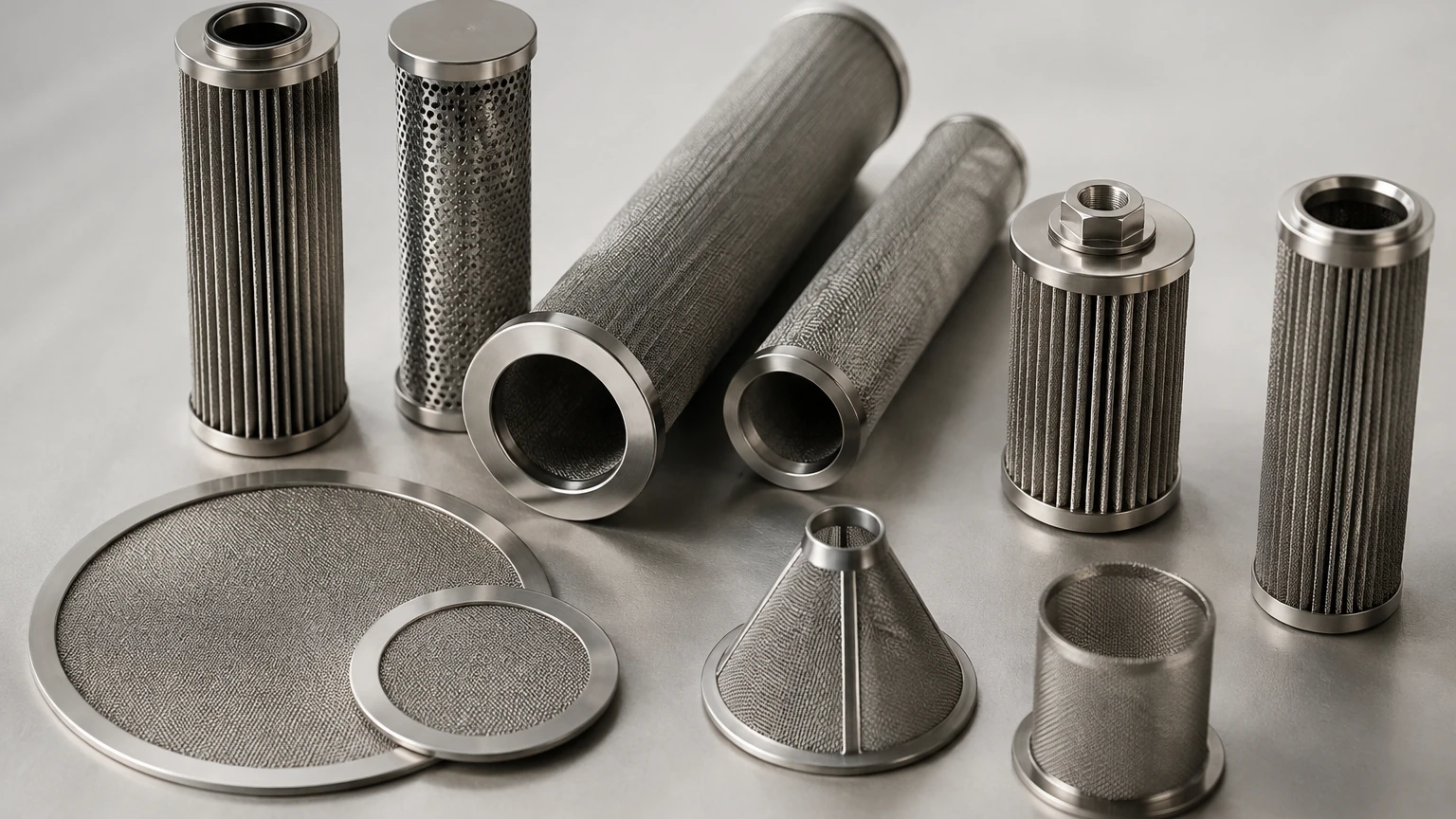
Customization and OEM Integration
Standard off-the-shelf breathing filters may not meet the geometric or performance requirements of specialized equipment. Customization is often necessary to address specific challenges, such as:
* Custom Connection Types: Threaded (NPT/BSP), flanged, or tri-clamp fittings to match existing tank ports.
* Integrated Relief Valves: Combining the breather with a pressure/vacuum relief valve (PVRV) to provide a secondary safety layer.
* Space Constraints: Low-profile designs for equipment with limited overhead clearance.
* Visual Indicators: Adding mechanical or electronic gauges to monitor pressure drop and signal when the filter element requires cleaning or replacement.
Kaifil works closely with OEM partners to develop bespoke filtration components that align with these specific engineering constraints, ensuring that the final product provides optimal protection for the intended application.
Maintenance and Replacement Cycles
While stainless steel breathing filters are durable, they are not "set and forget" components. A maintenance schedule is vital for ensuring continued system safety. The frequency of inspection depends on the environment; a filter in a cement plant will require more frequent cleaning than one in a cleanroom.
Signs that a breathing filter requires attention include:
* Visible Particulate Buildup: Dust or debris coating the external mesh.
* Increased Cycle Times: Slower filling or emptying of tanks due to air flow restriction.
* Tank "Wheezing": Audible signs of air struggling to pass through the vent during high-flow operations.
By implementing a regular cleaning cycle for metal filters, companies can extend the life of their equipment and avoid the recurring costs associated with disposable plastic breathers.
Conclusion
Breathing filters are small but indispensable components in the landscape of industrial fluid management. By selecting high-quality stainless steel options and carefully calculating flow and filtration requirements, engineers can significantly improve system reliability and product quality. Whether protecting a large-scale chemical storage tank or a precision hydraulic power unit, the right breather ensures that the system can operate safely and efficiently in any environment.
For technical assistance in selecting or designing the ideal filtration solution for your specific industrial application, please explore the resources available on our Main Page. Our team of experts is ready to provide the engineering support necessary to achieve precise and durable filtration performance.
