


Brewery Filtration Systems
In the production of high-quality beer, filtration is a critical stage that determines the final product's clarity, biological stability, and shelf life. For engineers and production managers, selecting the right brewery filtration systems involves balancing throughput efficiency with the precise removal of yeast, proteins, and spoilage organisms. Industrial brewery filtration relies heavily on stainless steel components due to their hygienic properties, mechanical strength, and ability to withstand rigorous cleaning cycles. This guide examines the technical specifications, material considerations, and engineering principles behind effective filtration in the brewing industry.
The Fundamentals of Brewery Filtration
Filtration in a brewery is not a single event but a multi-stage process designed to refine the liquid at various points of production. The primary objective is the separation of solids from liquids, which can be categorized into three main phases: clarification, polishing, and sterile filtration.
Clarification (Primary Filtration)
During the initial stages, the goal is to remove large particles such as spent grains, hop debris (trub), and the bulk of the yeast. This often begins in the brewhouse with the lauter tun or mash tun, where wedge wire screens serve as the primary separation barrier. Following fermentation, primary filtration reduces the suspended solids load, preparing the beer for finer processing. At this stage, the focus is on high flow rates and the ability to handle high solids loading without immediate blinding of the filter media.
Polishing (Secondary Filtration)
Polishing filtration targets smaller particles, including residual yeast cells and protein-polyphenol complexes that cause colloidal haze. This stage is essential for achieving the "brilliant" clarity expected in many commercial beer styles. Stainless steel filter cartridges or fine wire mesh filters are frequently employed here to provide a consistent micron rating while maintaining structural integrity under pressure.
Sterile Filtration (Cold Stabilization)
Before packaging, many breweries utilize sterile filtration to remove any remaining microorganisms, such as lactic acid bacteria or wild yeast, that could lead to spoilage. This process is an alternative to flash pasteurization, preserving the delicate flavor profile of the beer. It requires high-precision filter media with absolute micron ratings, often ranging from 0.45 to 0.65 microns.
Material Selection: The Role of Stainless Steel
For industrial brewery filtration systems, material selection is dictated by the need for corrosion resistance and sanitization compatibility. Stainless steel is the industry standard, but the specific grade chosen impacts the long-term durability of the system.
1. Grade 304 Stainless Steel: Suitable for many general-purpose applications within the brewery, offering good corrosion resistance and excellent fabrication characteristics. It is commonly used for support structures and less aggressive filtration environments.
2. Grade 316L Stainless Steel: This is the preferred material for components in direct contact with the product and cleaning chemicals. The "L" denotes low carbon content, which prevents carbide precipitation during welding, ensuring the integrity of the filter housing and mesh. The addition of molybdenum provides superior resistance to chlorides and organic acids found in beer, as well as the caustic and acidic solutions used in Clean-in-Place (CIP) cycles.
Beyond the alloy grade, the surface finish (measured in Ra, or roughness average) is critical. A smooth, polished surface prevents microbial attachment and ensures that the cleaning process is effective, meeting the stringent hygiene standards of the food and beverage industry.
Engineering Considerations for Filter Selection
When designing or upgrading brewery filtration systems, engineers must evaluate several technical parameters to ensure the system meets production goals without excessive operational costs.
Micron Rating: Nominal vs. Absolute
Understanding the difference between nominal and absolute micron ratings is vital for process control. A nominal rating indicates the filter's ability to retain a majority of particles at a specific size, whereas an absolute rating guarantees the retention of nearly 100% of particles at that size. For yeast removal and stabilization, absolute-rated stainless steel cartridges are necessary to ensure consistency.
Pressure Drop and Flow Rates
The pressure differential (Delta P) across the filter media increases as solids accumulate. Engineers must calculate the initial clean pressure drop and define the maximum allowable terminal pressure drop before the filter requires cleaning or replacement. High-performance stainless steel filters are designed to minimize initial pressure drop, allowing for higher flow rates and longer filtration runs.
Dirt Holding Capacity
This refers to the amount of contaminant the filter can retain before the pressure drop becomes prohibitive. In brewery applications, where yeast loads can vary between batches, selecting a filter with high dirt holding capacity—such as pleated wire mesh—can significantly extend the time between maintenance intervals.
Types of Filtration Media in Brewing
Different stages of the brewing process require different types of metal filtration media. Kaifil specializes in manufacturing these components to meet specific industrial requirements. For more information on tailored solutions, you can visit the Main Page to review product options and application support.
Sintered Wire Mesh
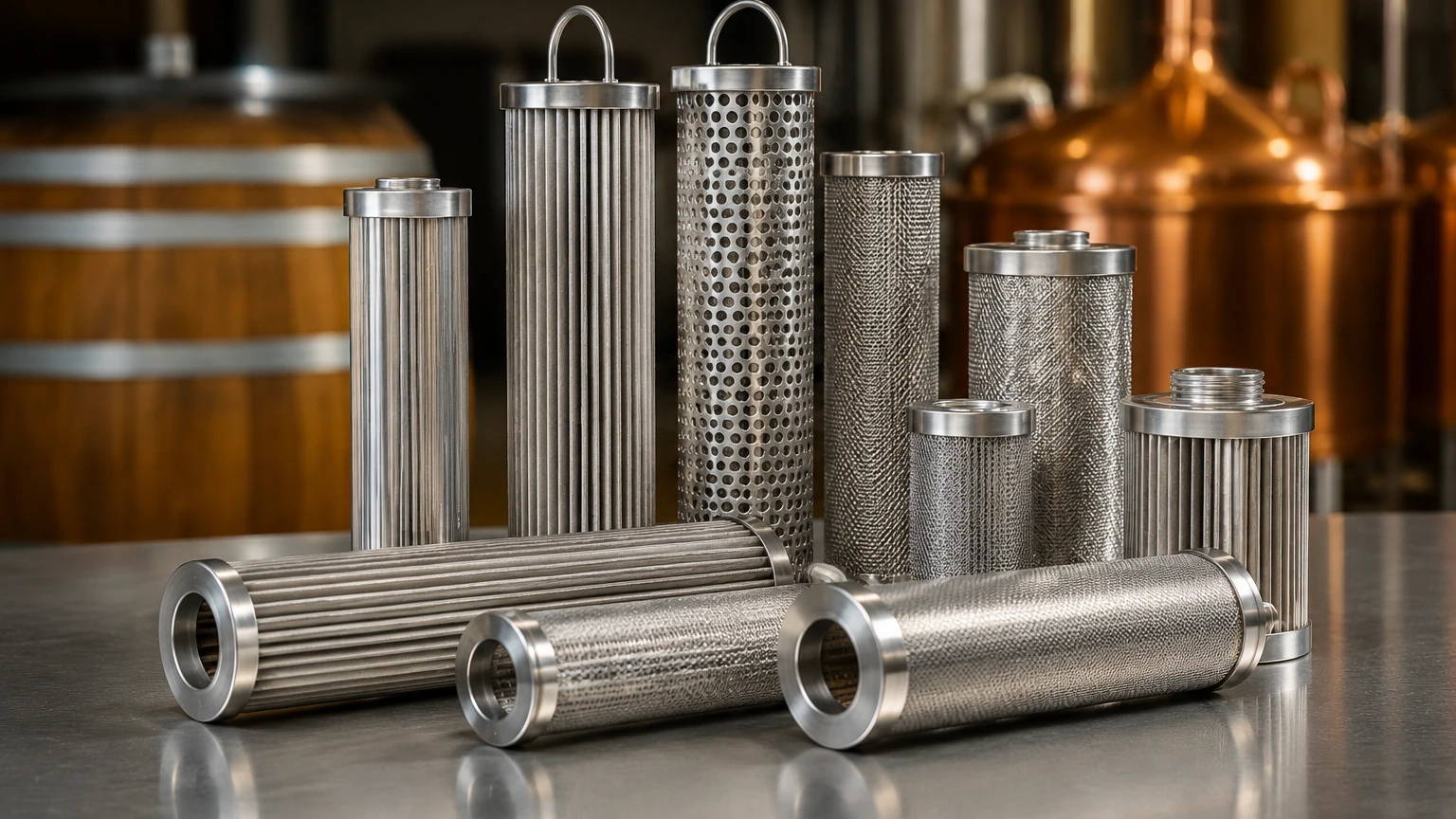
Sintered mesh is created by bonding multiple layers of woven wire mesh through a heat-treatment process. This results in a robust, multi-layered filter medium that offers precise filtration ratings and high mechanical strength. In brewing, sintered mesh is often used in trap filters to protect downstream equipment from stray particles or as a durable alternative to disposable depth filters.
Wedge Wire Screens
Wedge wire is characterized by its V-shaped profile wires, which create a non-clogging surface. This is the standard for lauter tun bottoms and mash tuns. The geometry of the wedge wire allows for efficient wort runoff while providing a stable floor for the grain bed, which itself acts as a secondary filter medium.
Pleated Filter Cartridges
To increase the available surface area within a standard filter housing, stainless steel mesh can be pleated. This design significantly increases the flow capacity and dirt holding capacity compared to cylindrical filters of the same size. Pleated cartridges are ideal for high-volume polishing stages where space is limited but high throughput is required.
Cleaning-in-Place (CIP) and Maintenance
One of the primary advantages of stainless steel brewery filtration systems is their compatibility with CIP processes. Unlike polymer-based filters that may degrade with repeated exposure to high temperatures and harsh chemicals, stainless steel components are designed for longevity.
Effective CIP Protocols
A typical CIP cycle for brewery filters involves several steps:
* Pre-rinse: Removing loose debris with warm water.
* Caustic Wash: Using sodium hydroxide to dissolve organic matter, proteins, and hop resins.
* Acid Wash: Using phosphoric or nitric acid to remove inorganic scales (beerstone).
* Sanitization: Using hot water or chemical sanitizers (like PAA) to ensure the system is microbiologically clean.
Engineers must ensure that the filter media can withstand the maximum temperatures (often up to 85°C-90°C) and concentrations used in these cycles. The structural integrity of the mesh and the quality of the welds are paramount to preventing bypass or failure during these high-stress cleaning events.
Customization and OEM Solutions
Every brewery has a unique layout, production volume, and product range. Consequently, off-the-shelf filtration solutions may not always provide the optimal balance of performance and cost. Customization in brewery filtration systems allows for the optimization of housing sizes, connection types (such as Tri-clamp or DIN), and specific micron ratings tailored to a particular beer style.
OEM manufacturers like Kaifil work with brewery equipment suppliers and engineering firms to develop bespoke filtration components. This includes designing custom filter baskets for hop infusers, specialized strainers for whirlpool outlets, and reinforced cartridges for high-pressure hydraulic systems within the brewery. By focusing on the specific challenges of the application—such as high viscosity in high-gravity brewing or high solids in heavily dry-hopped beers—custom solutions can reduce waste and improve overall equipment effectiveness (OEE).
Total Cost of Ownership (TCO) in Filtration
When evaluating brewery filtration systems, it is essential to look beyond the initial purchase price. The Total Cost of Ownership includes:
* Consumable Costs: The price and frequency of replacing disposable filter elements versus the cost of cleaning and maintaining permanent stainless steel filters.
* Product Loss: The amount of beer trapped in the filtration system (holdup volume) that cannot be recovered.
* Utility Consumption: The energy required to pump beer through the filters and the water/chemicals used for CIP.
* Labor: The time required for manual cleaning, assembly, and disassembly of filter housings.
Stainless steel filtration solutions often have a higher upfront cost but provide a lower TCO over time due to their durability and cleanability. By reducing the reliance on single-use cartridges, breweries can also align with sustainability goals by minimizing waste.
Conclusion
Selecting and maintaining brewery filtration systems requires a deep understanding of both the biological requirements of the beer and the mechanical capabilities of the filtration hardware. From the initial separation of grains to the final sterile polish, the use of high-quality stainless steel components ensures a hygienic, efficient, and repeatable process. By considering factors such as micron ratings, material grades, and CIP compatibility, engineers can implement filtration strategies that protect product quality while optimizing production costs.
