


Candle Filter
In the landscape of industrial liquid-solid separation, the candle filter stands as a critical component for processes requiring high clarity, efficient cake discharge, and enclosed operation. As a pressure filtration system, it is designed to handle fluids with relatively low solids content, typically ranging from 0.01% to 2%. For engineers and procurement professionals in the chemical, pharmaceutical, and food processing industries, understanding the technical nuances of candle filter design is essential for optimizing throughput and ensuring long-term equipment reliability.
At its core, a candle filter consists of a series of cylindrical filter elements—the "candles"—suspended within a vertical pressure vessel. These elements provide the surface area necessary for filtration while allowing for automated cleaning through back-pulsing or back-washing. This guide examines the engineering principles, material considerations, and selection criteria that define high-performance candle filtration solutions.
The Mechanics of Pressure Filtration and Cake Formation
The operation of a candle filter is a batch process that relies on pressure differentials to drive liquid through a filter medium. Unlike simple strainers, candle filters often utilize the principle of cake filtration. In this process, the initial layer of solids deposited on the filter medium acts as the actual filtration barrier for subsequent particles. This "filter cake" can achieve much finer filtration than the medium alone, often capturing sub-micron particles.
The Filtration Cycle
An industrial candle filter cycle typically follows five distinct phases:
1. Filling: The pressure vessel is filled with the slurry. Air is displaced through a vent at the top of the vessel.
2. Filtration: Pressure is applied, forcing the liquid (filtrate) through the candle elements and into a central header or manifold. Solids are retained on the outer surface of the candles.
3. Washing (Optional): If the solids must be purified, a wash liquid is passed through the cake to displace the mother liquor.
4. Drying: Compressed air or gas is blown through the cake to reduce moisture content before discharge.
5. Discharge: The most critical phase for a candle filter. The cake is removed by a sudden internal pressure pulse (back-pulse) of gas or liquid, causing the filter medium to expand slightly or the cake to lose its adhesion, dropping the solids to the bottom of the vessel for removal.
Engineers must carefully calibrate the pressure and flow rates to ensure the cake remains stable on the vertical candles during the filtration phase. If the pressure drops prematurely, the cake may slough off, leading to inconsistent filtration quality.
Material Specifications: The Role of Stainless Steel and Alloys
Given the demanding environments in which these filters operate—often involving corrosive chemicals, high temperatures, or strict hygienic requirements—the choice of material for the candle elements is paramount. Stainless steel is the industry standard due to its mechanical strength and resistance to oxidation.
Grade Selection
* 304/304L Stainless Steel: Suitable for general industrial applications and food-grade processes where corrosion risk is moderate.
* 316L Stainless Steel: The preferred choice for pharmaceutical and chemical applications. The addition of molybdenum provides superior resistance to chlorides and organic acids.
* 904L and Hastelloy: In highly aggressive environments, such as those involving hot sulfuric acid or high-salinity brines, specialized alloys are required to prevent pitting and stress corrosion cracking.
Filter Media Types
The "skin" of the candle can be constructed from various metal structures, depending on the required micron rating and cleaning efficiency:
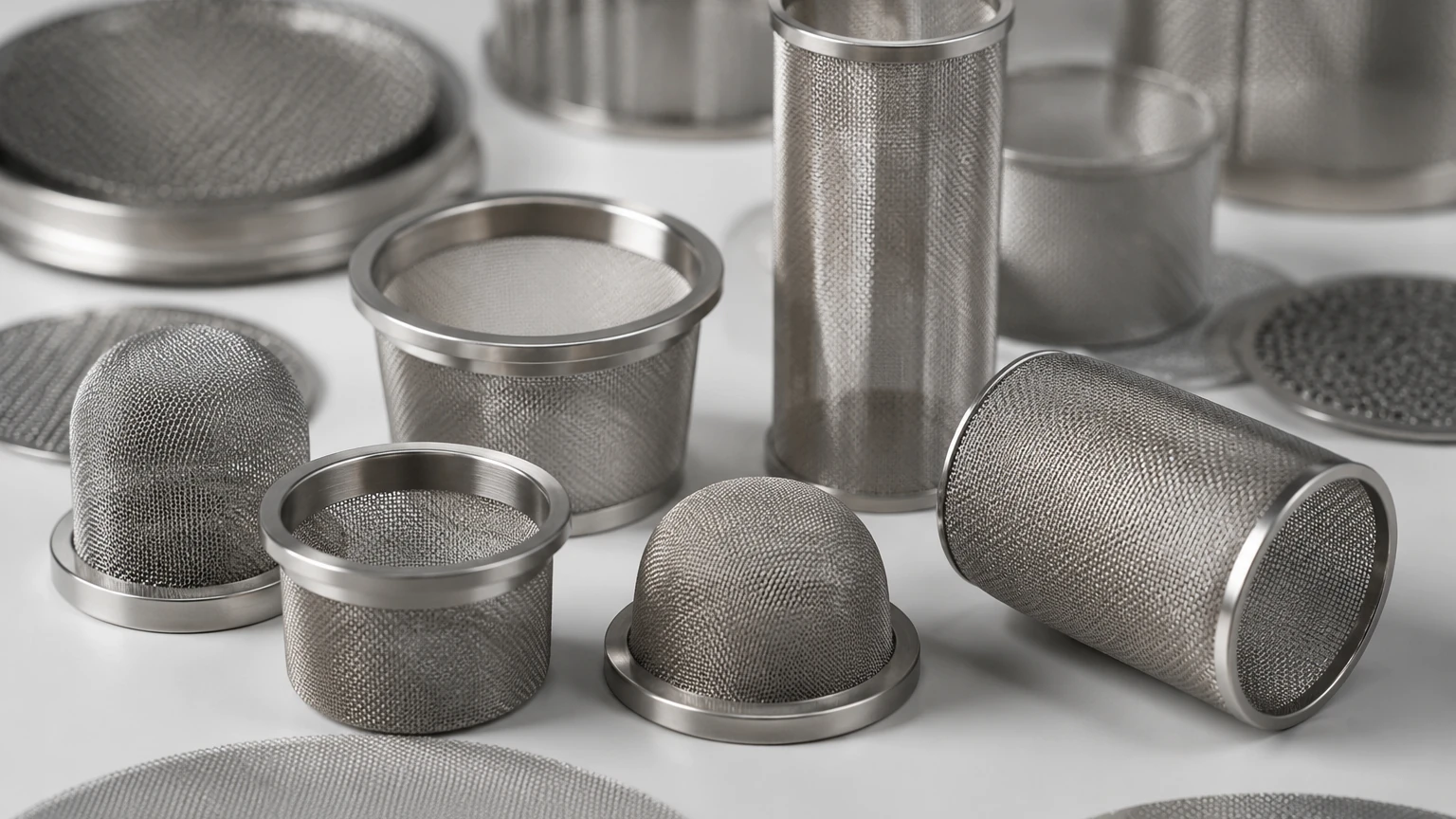
* Woven Wire Mesh: Available in various weaves (plain, twill, or dutch), providing precise pore sizes and high open areas. Woven mesh is excellent for surface filtration and is easily cleaned.
* Wedge Wire: Constructed from V-shaped profiles, wedge wire is exceptionally robust and resistant to plugging. It is ideal for applications with fibrous or sticky solids.
* Sintered Metal: For high-pressure applications or extremely fine filtration, sintered wire mesh or metal fibers offer a rigid, porous structure that can withstand repeated back-pulsing without deformation.
For a detailed look at material compatibility and technical drawings of these components, you can refer to our Main Page.
Critical Selection Criteria for Engineering Teams
Selecting the right candle filter involves more than simply matching a micron rating. Engineering teams must evaluate the physical and chemical properties of both the fluid and the solids to be removed.
Particle Size Distribution (PSD)
Understanding the range of particle sizes is vital. If the PSD is broad, a candle filter can quickly build a permeable cake. However, if the particles are uniform and very fine, they may "blind" the filter medium. In such cases, the use of a filter aid (such as diatomaceous earth or perlite) may be necessary to maintain porosity.
Flux Rate and Surface Area
The flux rate—the volume of filtrate passing through a unit area of filter medium per unit of time—determines the total number of candles required. Over-sizing the system leads to unnecessary capital expenditure, while under-sizing results in frequent cleaning cycles and reduced production capacity. Engineers typically design for a flux rate that allows for a sustainable pressure drop over the course of the batch.
Temperature and Pressure Ratings
Candle filters must be designed to withstand the maximum operating pressure of the pump, plus a safety margin. Furthermore, thermal expansion must be accounted for, especially in the manifold and candle attachments, to prevent mechanical failure during high-temperature sterilization or processing.
Industrial Applications: From Chemical Processing to Pharmaceuticals
The versatility of the candle filter makes it a staple in several high-stakes industries. Its enclosed design is particularly valued for handling hazardous or volatile substances.
Chemical and Petrochemical
In the chemical industry, candle filters are frequently used for catalyst recovery. Precious metal catalysts used in hydrogenation or other reactions are expensive; the candle filter's ability to dry and discharge the cake in a contained environment ensures maximum recovery with minimal operator exposure.
Pharmaceutical and Biotechnology
Hygiene and containment are the primary drivers in pharma. Candle filters are used for the filtration of Active Pharmaceutical Ingredients (APIs) and intermediates. The ability to perform Clean-in-Place (CIP) and Steam-in-Place (SIP) operations without disassembling the filter housing is a significant advantage for maintaining sterile conditions.
Food and Beverage
From clarifying edible oils to filtering sugar syrups, candle filters provide the high-volume throughput required in food production. The use of stainless steel ensures compliance with FDA and other regulatory standards, while the automated discharge reduces labor costs and downtime.
Maintenance Strategies and Backwashing Efficiency
The longevity of a candle filter is directly tied to the efficiency of its cleaning cycle. Unlike disposable cartridges, candle elements are designed for years of service, provided they are maintained correctly.
Back-Pulse Optimization
The back-pulse mechanism uses a reservoir of compressed gas or filtered liquid to reverse the flow through the candles. The duration and pressure of this pulse must be precisely controlled. Too weak, and the cake will not fully dislodge; too strong, and the filter medium may suffer fatigue or damage. Monitoring the "clean" pressure drop after each cycle is the best way to track the effectiveness of the cleaning process.
Inspection and Integrity Testing
Regular inspection of the seals and gaskets (often made of PTFE or EPDM) is necessary to prevent bypass. In critical applications, integrity testing (such as a bubble point test) can be performed on the individual candles to ensure there are no breaches in the wire mesh or sintered structure.
Replacement Cycles
While stainless steel candles are durable, they are not infinite. Factors such as erosion from abrasive particles or chemical thinning can eventually compromise the element. Establishing a baseline for expected service life based on the specific slurry characteristics helps in planning preventative maintenance and avoiding unscheduled shutdowns.
Custom Engineering and OEM Solutions
No two industrial processes are identical, and off-the-shelf filtration solutions often fall short of specific performance targets. Customization is where the expertise of a specialized manufacturer becomes invaluable.
Tailored Candle Geometry
The length and diameter of the candles can be adjusted to fit existing vessel footprints or to optimize the volume-to-surface-area ratio. For high-viscosity liquids, wider spacing between candles may be required to prevent the cakes from bridging together, which would impede discharge.
Specialized Fittings and Manifolds
The method by which the candle attaches to the header—whether via threaded connections, bayonet mounts, or flanged joints—impacts both the ease of maintenance and the security of the seal. Custom manifolds can be engineered to ensure perfectly even flow distribution, preventing "dead zones" where solids might settle and cause bacterial growth or corrosion.
OEM Collaboration
For equipment integrators, partnering with a manufacturer that understands the nuances of wire mesh and metal fabrication is essential. Providing detailed specifications regarding the chemical environment and mechanical stress allows for the development of OEM components that enhance the overall value of the filtration system.
Conclusion: Optimizing Filtration Performance
The candle filter remains one of the most effective tools for industrial liquid-solid separation, offering a unique combination of fine filtration, automated operation, and robust durability. By focusing on high-quality stainless steel construction and precise engineering of the filter media, facilities can achieve significant improvements in product purity and process efficiency.
When evaluating a filtration partner, engineers should prioritize technical expertise, material traceability, and the ability to provide customized solutions. Whether you are upgrading an existing system or designing a new process, a deep understanding of candle filter mechanics is the foundation of successful industrial filtration. For more information on our full range of stainless steel filtration components and custom manufacturing capabilities, please visit our Main Page.
