


Candle Filters
In the landscape of industrial liquid-solid separation, candle filters represent a critical technology for high-clarity filtration and cake recovery. These pressure-driven systems are characterized by their vertical orientation and the use of multiple cylindrical filter elements, known as "candles," suspended within a pressure vessel. For engineers and procurement teams in the chemical, pharmaceutical, and food processing sectors, understanding the technical nuances of candle filters is essential for optimizing process efficiency and ensuring the longevity of filtration hardware.
As a specialized manufacturer of stainless steel filtration solutions, Kaifil provides the precision-engineered components required to sustain these demanding industrial processes. By focusing on material integrity and filtration accuracy, Kaifil supports the global demand for durable, high-performance candle filter elements. More information regarding specialized metal filtration components can be found on our Main Page.
Technical Design and Construction of Candle Filters
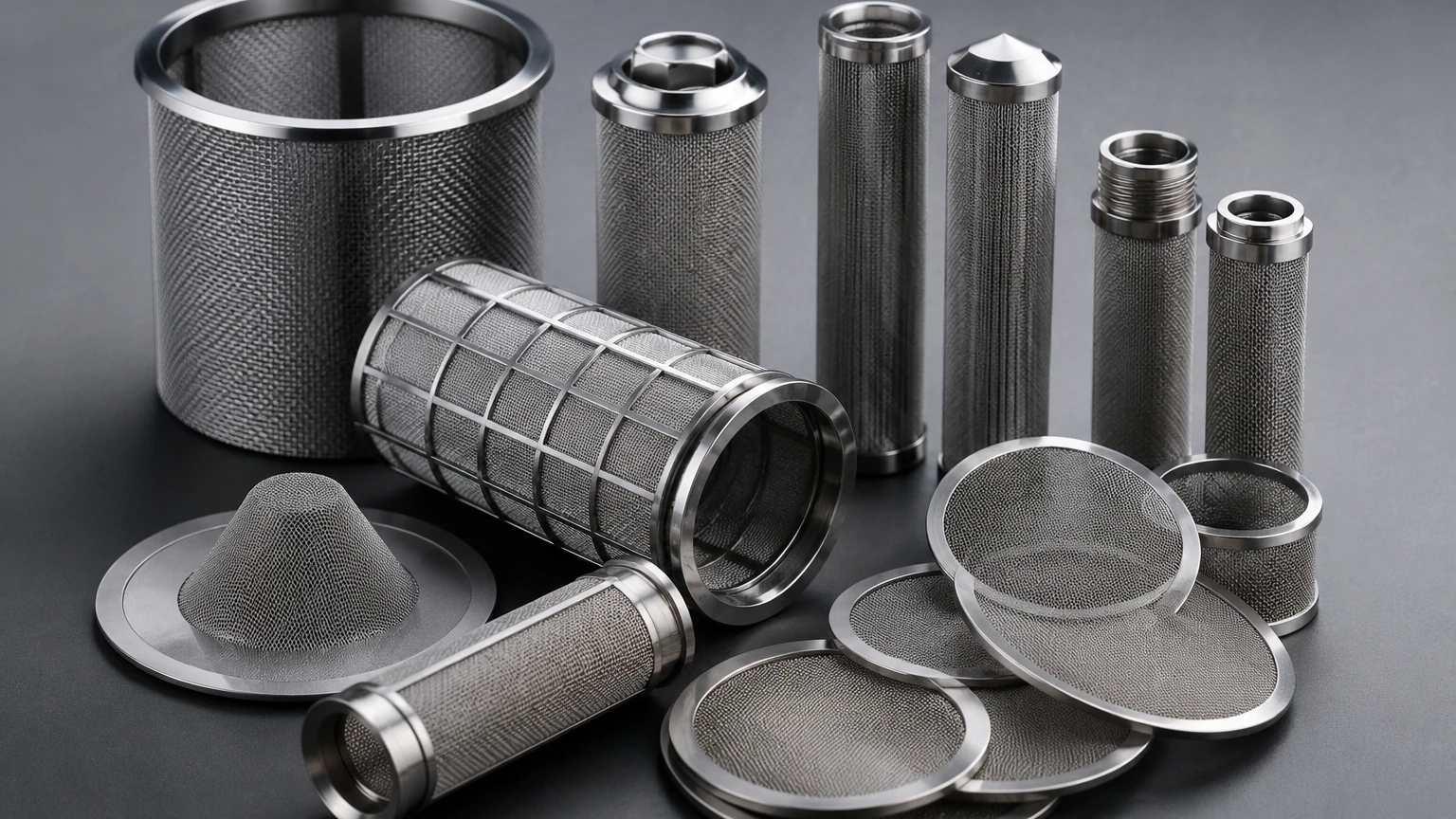
The efficiency of a candle filter system is fundamentally tied to the design of the individual candle elements. These elements are typically composed of a central perforated support tube wrapped with a filtration medium. In industrial B2B applications, stainless steel is the preferred material due to its mechanical strength and resistance to thermal and chemical degradation.
Filtration Media Selection
The choice of media determines the filtration rating and the ease of cake discharge. Common options include:
* Stainless Steel Wire Mesh: Utilizing various weave patterns such as Plain Dutch Weave or Twilled Dutch Weave, these meshes offer precise pore sizes and high mechanical stability. They are ideal for applications requiring high flow rates and repeatable cleaning cycles.
* Sintered Metal Fiber: For fine filtration requirements, sintered metal fibers provide a high porosity structure that allows for excellent dirt-holding capacity and low pressure drops.
* Wedge Wire: Often used for coarser separation or as a robust support structure, wedge wire candles are highly resistant to clogging and provide superior structural integrity during high-pressure backwashing.
Structural Components
A standard candle assembly includes the filter medium, the internal support core, and the end fittings. The fittings must be engineered to provide a leak-proof seal within the vessel’s header plate. Common attachment methods include threaded connections, bayonet mounts, or flange-bolted designs. Precision in manufacturing these fittings is vital to prevent bypass, which can compromise the purity of the filtrate.
The Operating Principle: Filtration and Cake Discharge
Candle filters operate on a batch cycle consisting of several distinct phases: filling, filtration, washing (optional), drying, and discharge. Unlike continuous filters, candle filters are particularly effective for slurries with low solids concentrations where high filtrate clarity is the primary objective.
The Filtration Phase
During the filtration cycle, the slurry is pumped into the pressure vessel. The liquid passes through the filter media and into the hollow center of the candle, while solids are retained on the outer surface. As the cycle progresses, a "filter cake" builds up. This cake itself eventually acts as a secondary filtration layer, often increasing the efficiency of the separation as the pores become partially bridged by the solids.
Backwashing and Automated Cleaning
One of the primary advantages of candle filters is their ability to be cleaned in place without opening the vessel. Once the maximum pressure drop is reached or the cake has reached its optimal thickness, the flow is stopped. To discharge the cake, a reverse flow of liquid or gas (back-pulsing) is introduced into the center of the candles. This causes the filter medium to slightly expand or vibrate, shedding the accumulated cake, which then falls to the conical bottom of the vessel for removal.
Engineering Considerations for Filter Selection
When specifying candle filters for industrial environments, engineers must evaluate several technical parameters to ensure the system meets the specific needs of the application. Failure to account for these variables can lead to premature element failure or process bottlenecks.
Filtration Accuracy and Micron Rating
The required clarity of the filtrate dictates the micron rating of the candle elements. It is important to distinguish between absolute and nominal ratings. In critical pharmaceutical or chemical processes, absolute-rated stainless steel mesh is often required to guarantee that no particles above a certain size pass through the system. Kaifil specializes in providing these high-precision components to meet rigorous industry standards.
Chemical and Thermal Compatibility
Industrial slurries often involve aggressive solvents, high-acidity environments, or extreme temperatures. While Stainless Steel 316L is the industry standard for its corrosion resistance, certain applications may require specialized alloys like Hastelloy or Monel. Engineers must confirm the compatibility of the filter media, support structures, and seals with the process fluid to prevent galvanic corrosion or material degradation.
Mechanical Strength and Collapse Pressure
Candle filters are subject to significant pressure differentials, especially during the back-pulsing phase. The internal support core must be designed to withstand the maximum operating pressure of the pump without collapsing. Conversely, the media must be securely bonded to the core to prevent delamination during reverse flow. High-quality manufacturing ensures that these components can endure thousands of cycles without structural fatigue.
Applications Across Key Industries
Because of their versatility and closed-system design, candle filters are utilized in a variety of sectors where product purity and operator safety are paramount.
* Chemical Processing: Used for catalyst recovery, removal of impurities from resins, and filtration of aggressive chemicals. The closed design prevents the escape of hazardous vapors.
* Pharmaceutical Industry: Ideal for the recovery of active pharmaceutical ingredients (APIs). The ability to perform Clean-In-Place (CIP) and Sterilize-In-Place (SIP) operations is a significant benefit in sterile manufacturing.
* Food and Beverage: Employed in the clarification of edible oils, syrups, and beverages. Stainless steel construction ensures compliance with food safety regulations and allows for easy sanitization.
* Water Treatment: Used in high-flow industrial water systems to remove fine suspended solids and protect downstream equipment like RO membranes.
Maintenance and Total Cost of Ownership
While the initial investment in stainless steel candle filters may be higher than disposable alternatives, the total cost of ownership (TCO) is often lower due to the durability and cleanability of the media. Proper maintenance is key to maximizing this ROI.
Cleaning Protocols
Over time, fine particles may become embedded within the depth of the filter mesh, a phenomenon known as blinding. When standard backwashing is no longer effective in restoring the pressure drop, elements can be removed for intensive cleaning. Methods include:
1. Ultrasonic Cleaning: Using high-frequency sound waves in a chemical bath to dislodge microscopic debris from the mesh pores.
2. Chemical Cleaning: Circulating specific solvents or acids to dissolve organic or inorganic scaling.
3. Burn-off Ovens: For polymer applications, controlled heating can be used to carbonize and remove plastic residues from the metal mesh.
Replacement Cycles
Even with robust stainless steel construction, candle filters are not permanent. Mechanical wear, erosion from abrasive slurries, and repeated thermal cycling will eventually necessitate replacement. Engineers should monitor the rate of pressure increase over several cycles to predict the end-of-life for filter elements and prevent unplanned downtime.
Customization and OEM Solutions with Kaifil
Every industrial process has unique requirements regarding flow rate, space constraints, and filtration targets. Standard off-the-shelf solutions often fall short of providing optimal performance. This is where customized engineering becomes a necessity.
Kaifil works closely with engineering teams to develop bespoke candle filter components that integrate seamlessly into existing pressure vessels. Whether it is a specific micron rating, a unique fitting design, or a specialized alloy requirement, our manufacturing capabilities are geared toward solving complex filtration challenges. By focusing on the precision of the wire mesh and the integrity of the weld points, we ensure that every candle element contributes to a reliable and efficient filtration system.
For technical professionals seeking to optimize their filtration processes, selecting the right partner for component manufacturing is as important as the system design itself. Reliable filtration depends on the intersection of high-quality materials, expert engineering, and a deep understanding of the application's physical demands.
To explore our full range of stainless steel filtration products and discuss custom OEM requirements, please visit our Main Page.
