


What Is a Pressure Vessel
In the landscape of industrial engineering and fluid management, understanding the core infrastructure that facilitates high-stakes processes is essential for safety, efficiency, and regulatory compliance. One of the most critical components in these systems is the pressure vessel. For engineers and procurement professionals managing chemical processing, pharmaceutical manufacturing, or water treatment plants, the question of what is a pressure vessel extends beyond a simple definition; it encompasses a complex set of engineering standards, material sciences, and filtration integration requirements.
At its most fundamental level, a pressure vessel is a container designed to hold gases or liquids at a pressure substantially different from the ambient pressure. This pressure differential is a source of significant stored energy, which necessitates rigorous design and manufacturing protocols. In the context of industrial filtration, the pressure vessel often serves as the housing for filter cartridges, wire mesh elements, and other precision components that ensure the purity of the process media.
Understanding the Fundamental Engineering of Pressure Vessels
To answer what is a pressure vessel from an engineering perspective, one must look at the physics of containment. These vessels are typically constructed in cylindrical, spherical, or high-pressure capsule shapes. The geometry is not aesthetic; it is calculated to distribute the internal stress—specifically hoop stress and longitudinal stress—evenly across the walls of the container.
Most industrial standards, such as the ASME (American Society of Mechanical Engineers) Boiler and Pressure Vessel Code (BPVC), define a pressure vessel as a container operating at internal or external pressures exceeding 15 psig (pounds per square inch gauge). Below this threshold, containers may be classified as atmospheric tanks, which are subject to less stringent regulatory oversight. However, in industrial filtration, pressures often reach hundreds or even thousands of psi, making the integrity of the vessel paramount.
Key Components of a Pressure Vessel
1. The Shell: The primary envelope that contains the fluid. In filtration applications, the shell must be sized to accommodate the flow rate and the physical dimensions of the filter elements.
2. The Heads (End Caps): These close off the ends of the shell. They can be hemispherical, ellipsoidal, or torispherical, each offering different levels of pressure resistance and volume efficiency.
3. Nozzles: These are the entry and exit points for the fluid. Precision engineering of nozzles is required to minimize turbulence and ensure a uniform flow distribution across the internal filter media.
4. Supports: Whether the vessel is vertical (supported by skirts or lugs) or horizontal (supported by saddles), the support system must account for the weight of the vessel, the fluid, and the dynamic loads during operation.
The Intersection of Pressure Vessel Design and Industrial Filtration
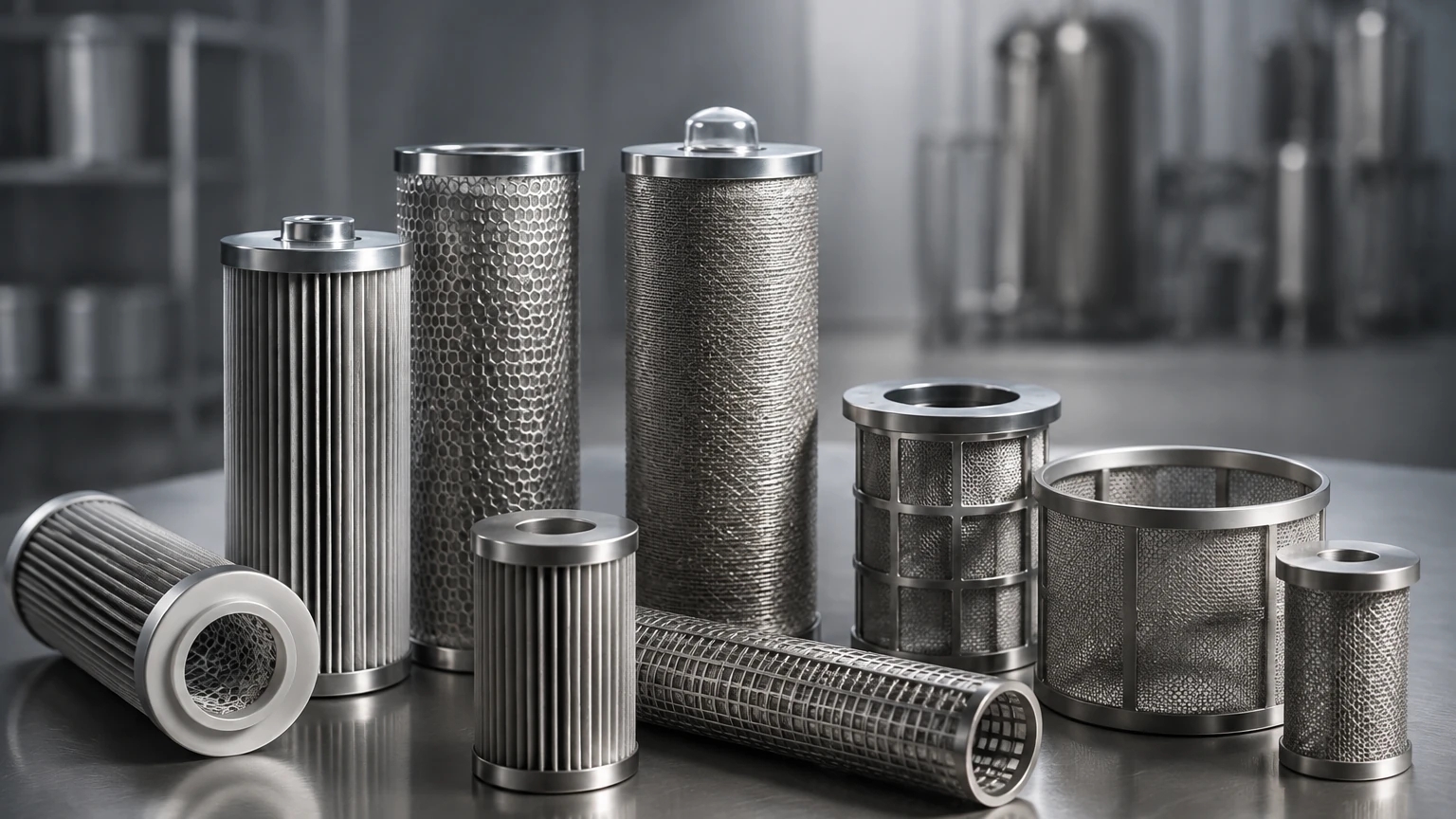
In many B2B industrial environments, a pressure vessel is synonymous with a filter housing. When an engineer asks what is a pressure vessel in a filtration context, they are usually referring to the pressurized chamber that protects and optimizes the performance of stainless steel filter cartridges or wire mesh filters.
For high-performance filtration, the vessel must be designed to handle the "clean pressure drop" and the "terminal pressure drop." As the internal filter media captures contaminants, the resistance to flow increases, raising the internal pressure. The vessel must be rated to withstand the maximum pump pressure or the system's relief valve setting, regardless of how clogged the filter becomes.
Kaifil specializes in the internal components that make these vessels functional. By visiting our Main Page, professionals can explore how custom wire mesh and stainless steel cartridges are engineered to fit precisely within these pressurized environments, ensuring no bypass occurs and that the structural integrity of the filter element matches the demands of the vessel.
Material Selection: Why Stainless Steel Dominates Pressure Vessel Applications
When determining what is a pressure vessel material strategy should be, stainless steel is often the primary choice for demanding industrial sectors. The selection of the material is dictated by three main factors: the chemical compatibility of the fluid, the operating temperature, and the required pressure rating.
304 vs. 316L Stainless Steel
* Type 304 Stainless Steel: This is the standard choice for many food and beverage applications and general industrial water treatment. It offers excellent formability and welding characteristics, which are vital for maintaining the leak-proof integrity of a pressure vessel.
* Type 316L Stainless Steel: For chemical processing and pharmaceutical applications, 316L is preferred due to the addition of molybdenum, which enhances resistance to pitting and crevice corrosion in chloride-rich environments. The "L" denotes low carbon content, which is crucial for preventing carbide precipitation during welding, ensuring the heat-affected zones of the vessel remain as corrosion-resistant as the base metal.
In addition to the shell material, the internal filtration components must also be compatible. A high-pressure vessel is only as effective as the filter it contains. If the filter media collapses under pressure, the entire process fails. This is why Kaifil focuses on high-strength, custom-woven wire mesh and sintered metal components that can withstand the differential pressures found inside industrial vessels.
Regulatory Frameworks: ASME, PED, and Safety Compliance
A critical part of defining what is a pressure vessel involves the legal and safety standards governing its manufacture. Because a failure can be catastrophic, most jurisdictions require adherence to specific codes:
* ASME Section VIII: This is the most widely recognized code globally for the design, fabrication, and inspection of pressure vessels. It provides formulas for calculating minimum wall thickness and specifies the types of non-destructive testing (NDT) required.
* PED (Pressure Equipment Directive): In the European Union, the PED 2014/68/EU governs the design and manufacture of pressure equipment. It categorizes vessels based on their volume and the hazard level of the fluid they contain.
* Safety Factors: Engineers typically apply a safety factor (often 3.5 or 4 to 1) to the ultimate tensile strength of the material. This ensures that the vessel can handle unexpected pressure spikes without rupturing.
When sourcing filtration components for these regulated vessels, it is vital to ensure that the filter elements do not interfere with the vessel's safety mechanisms, such as pressure relief valves or burst disks. The flow characteristics of the filter must be well-documented to prevent localized pressure buildup that could exceed the vessel's design limits.
Maintenance and Operational Safety for Pressurized Systems
Understanding what is a pressure vessel lifecycle requires a commitment to ongoing maintenance. Over time, factors like cyclic loading (repeatedly pressurizing and depressurizing), thermal expansion, and corrosion can weaken the vessel walls.
Essential Inspection Protocols
1. Visual Inspection: Checking for external signs of corrosion, leaks at the flanges, or deformation of the shell.
2. Ultrasonic Testing (UT): Using sound waves to measure the thickness of the vessel walls to ensure that corrosion hasn't thinned the material below the required minimum.
3. Hydrostatic Testing: Periodically filling the vessel with water and pressurizing it to 1.3 or 1.5 times its operating pressure to check for leaks or structural weaknesses.
4. Filter Replacement Cycles: In a filtration pressure vessel, the filter elements must be replaced before the differential pressure reaches a critical point. Using high-quality, durable stainless steel filters from a specialized manufacturer can extend these cycles and reduce the total cost of ownership.
Customizing Filtration Solutions for High-Pressure Environments
Every industrial process has unique requirements, which means a "one size fits all" approach rarely works for pressure vessels or their internal filtration systems. When an organization evaluates what is a pressure vessel configuration they need, they must consider customization.
Kaifil provides OEM and customized filtration solutions that bridge the gap between standard pressure vessel design and specific application needs. Whether it is a unique micron rating for a pharmaceutical line or a high-temperature wire mesh for a chemical reactor, the synergy between the vessel and the filter is what determines process success.
For technical teams looking to optimize their filtration performance within pressurized systems, reviewing specialized product options is the next logical step. Detailed engineering data and customization capabilities can be found on our Main Page, where we provide the technical support necessary to match precision filter components with the rigorous demands of industrial pressure vessel operations.
Conclusion: The Strategic Importance of Pressure Vessel Knowledge
In summary, asking what is a pressure vessel reveals a sophisticated world of engineering where safety and performance are inextricably linked. For the B2B buyer, the focus should remain on the quality of materials, adherence to international safety codes, and the compatibility of internal filtration components. By selecting high-grade stainless steel housings and pairing them with precision-engineered filter elements, industries can ensure long-term reliability and protect both their personnel and their bottom line. As industrial demands evolve, the integration of advanced filtration technology within robust pressure vessel designs will continue to be a cornerstone of modern manufacturing excellence.
