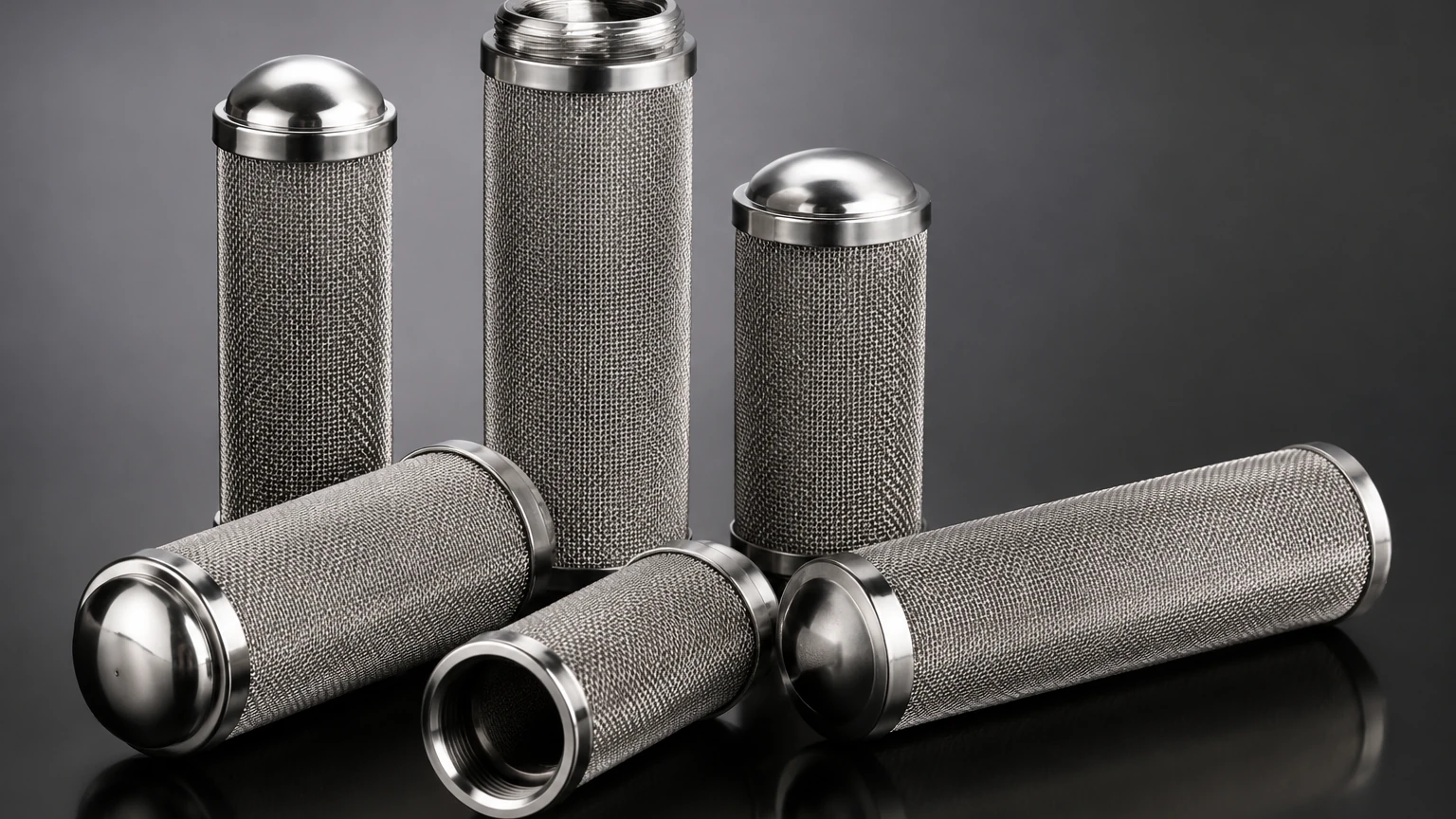
Capsule Filter
In the landscape of industrial liquid and gas processing, the capsule filter represents a critical evolution in filtration technology. Unlike traditional filter cartridges that require separate stainless steel or plastic housings, a capsule filter is a self-contained, ready-to-use unit. This integrated design combines the filter media and the housing into a single, disposable assembly, significantly reducing the risks of cross-contamination and the time required for cleaning and validation. For engineers and procurement teams in the pharmaceutical, chemical, and food and beverage sectors, understanding the technical nuances of capsule filters is essential for optimizing process efficiency and ensuring product purity.
Understanding Capsule Filter Architecture and Design
The fundamental advantage of a capsule filter lies in its construction. The unit typically consists of a pleated filter media—which can be made from materials such as polyethersulfone (PES), polypropylene (PP), polytetrafluoroethylene (PTFE), or nylon—encapsulated within a rugged polypropylene shell. This shell is thermally bonded, eliminating the need for adhesives or glues that could potentially leach into the process stream.
From an engineering perspective, the internal geometry is designed to maximize the effective filtration area (EFA). Pleated designs allow for a high surface area within a compact footprint, which directly correlates to higher flow rates and a greater dirt-holding capacity. Most capsule filters feature standard inlet and outlet connections, such as NPT threads, hose barbs, or sanitary flange (Tri-Clamp) fittings, allowing for seamless integration into existing piping systems.
For specialized industrial applications where standard polymer capsules may face pressure or temperature limitations, manufacturers like Kaifil provide high-performance stainless steel components that can be integrated into broader filtration systems. To explore a comprehensive range of industrial filtration solutions, professionals can visit the Main Page of the Kaifil website for technical specifications and customization options.
Critical Selection Criteria for Industrial Applications
Selecting the appropriate capsule filter requires a detailed analysis of the process fluid and the desired outcome. Engineers must evaluate several key factors to ensure the filter performs reliably under operational stresses.
Pore Size and Retention Ratings
Capsule filters are available in a wide range of pore sizes, typically from 0.05 microns to over 50 microns. It is vital to distinguish between "nominal" and "absolute" ratings. An absolute-rated filter is designed to retain 99.9% or more of particles at the specified micron size, which is critical for sterile filtration or the removal of specific contaminants in pharmaceutical and semiconductor manufacturing. Nominal ratings, while useful for pre-filtration, do not guarantee the same level of precision.
Effective Filtration Area (EFA)
The EFA determines the throughput and the service life of the filter. A larger EFA reduces the flux (flow per unit area), which can minimize the risk of "gel-clipping" or premature clogging when handling fluids with high particulate loads or high viscosity. When scaling up from laboratory trials to full-scale production, maintaining a consistent EFA-to-volume ratio is necessary to ensure predictable performance.
Chemical Compatibility and Material Science
The chemical nature of the process fluid dictates the choice of both the filter media and the housing material. Incompatibility can lead to structural failure, media migration, or the introduction of extractables into the product.
* Polyethersulfone (PES): Preferred for aqueous solutions and biological fluids due to its high flow rates and low protein binding characteristics.
* Polytetrafluoroethylene (PTFE): The standard for aggressive chemicals, solvents, and air/gas filtration. Its hydrophobic nature makes it ideal for vent filters and moisture-sensitive applications.
* Polypropylene (PP): A versatile, cost-effective material used primarily for pre-filtration and applications involving acids, bases, and many organic solvents.
* Nylon: Often selected for its natural hydrophilicity and compatibility with many solvent-based systems, though it may be sensitive to certain pH ranges.
Engineers must also consider the "extractables profile" of the capsule filter. In high-purity industries, it is necessary to verify that the filter does not release plasticizers or other chemicals during operation. Quality manufacturers provide validation guides that detail the testing performed to meet USP Class VI plastics requirements and other regulatory standards.
Engineering Performance: Flow Rates and Pressure Management
Flow rate and differential pressure ($ΔP$) are the primary indicators of a filtration system's health. The initial pressure drop across a clean capsule filter is a function of the fluid's viscosity, the filter's pore size, and the flow rate.
In a B2B industrial environment, it is standard practice to size a filter so that the initial $ΔP$ does not exceed 2-3 psi (0.14-0.21 bar). As the filter accumulates contaminants, the $ΔP$ will increase. A "terminal pressure drop" is usually defined—often around 30-35 psi—at which point the capsule filter must be replaced. Exceeding this limit can result in media deformation or a "breakthrough" where contaminants are forced through the filter.
For high-viscosity fluids, such as syrups in the food industry or resins in chemical processing, engineers may need to use multiple capsule filters in parallel to distribute the flow and keep the pressure drop within safe operating limits. Conversely, serial filtration (using a coarse pre-filter followed by a fine final filter) can significantly extend the life of the more expensive final capsule by removing the bulk of the particulate load upstream.
Integrity Testing and Quality Assurance Protocols
In critical applications, particularly in the pharmaceutical and biotech industries, the integrity of the capsule filter must be verified before and after use. This ensures that the filter has not been damaged during installation or operation and that it meets its stated retention specifications.
Common non-destructive integrity tests include:
1. Bubble Point Test: Measures the pressure required to force air through a liquid-wetted filter. The pressure at which a continuous stream of bubbles appears is characteristic of the largest pore size.
2. Diffusion Flow (Forward Flow) Test: Measures the rate of gas diffusion through the liquid-filled pores of the filter at a pressure below the bubble point.
3. Water Intrusion Test (WIT): Used specifically for hydrophobic PTFE filters, measuring the pressure required to force water into the pore structure.
By implementing these tests, technical teams can provide documented evidence of filtration performance, which is a requirement for many regulatory audits and quality control standards.
Total Cost of Ownership and Operational Efficiency
While the unit price of a capsule filter may be higher than a standard filter cartridge, the total cost of ownership (TCO) often favors the capsule design in specific scenarios. The primary cost savings come from the elimination of "housing maintenance."
In traditional systems, stainless steel housings must be disassembled, cleaned, and sterilized (often via Autoclave or Steam-in-Place) between batches. This process consumes labor, water, and chemicals, and introduces the risk of human error. A capsule filter, being a closed system, is simply swapped out. This reduction in downtime is particularly valuable in multi-product facilities where rapid changeovers are required.
Furthermore, capsule filters minimize product loss. Because the housing volume is minimized and often designed for low hold-up, more of the valuable process fluid reaches the final container. For high-value pharmaceuticals or specialty chemicals, the recovery of even a few hundred milliliters of product can offset the cost of the disposable filter.
Customization and OEM Integration for Specialized Systems
Every industrial process has unique requirements that standard off-the-shelf capsule filters may not fully address. Customization options often include specific inlet/outlet configurations, specialized venting valves, or the inclusion of specific pre-filter layers within the same capsule to handle complex fluid streams.
For manufacturers of industrial equipment, such as hydraulic power units or medical diagnostic machines, OEM capsule filters provide a compact and reliable filtration solution that can be branded and integrated directly into the equipment design. This ensures that end-users utilize the correct replacement filters, maintaining the integrity of the machine's performance over time.
Kaifil specializes in bridging the gap between standard filtration and custom engineering. By providing precision-engineered metal components and tailored filtration solutions, they support industries that demand high durability and exact performance. For more information on how custom filtration can be integrated into your specific application, visit the Main Page to connect with their engineering team.
Best Practices for Installation and Maintenance
To maximize the performance of a capsule filter, several operational best practices should be followed:
* Venting: Always ensure the capsule is properly vented during the initial filling. Air trapped in the filter can create airlocks, reducing the effective filtration area and causing erratic flow.
* Directional Flow: Ensure the filter is installed in the correct orientation. Most capsules have an arrow indicating the flow direction; reversing this can damage the internal pleat support.
* Sterilization Limits: If the process requires sterilization, verify the maximum number of autoclave cycles or the maximum temperature/pressure for Steam-in-Place (SIP) operations. Over-sterilization can embrittle the polypropylene shell.
* Storage: Unused filters should be kept in their original packaging in a cool, dry environment to prevent degradation of the polymer materials.
By adhering to these guidelines and selecting the right materials, engineers can ensure that their capsule filters provide a reliable barrier against contaminants, protecting both the process equipment and the final product purity. Whether used in a small-scale pilot plant or a high-volume production line, the capsule filter remains a versatile and indispensable tool in modern industrial filtration.