


Gas Filter System
In industrial processing, the integrity of a gas filter system is a critical factor in protecting downstream equipment, ensuring product purity, and maintaining operational safety. Whether handling compressed air, technical gases, or corrosive process vapors, the selection of filtration components dictates the efficiency and longevity of the entire installation. For engineers and procurement specialists, understanding the technical nuances of stainless steel filtration media is essential for optimizing performance in demanding environments.
Industrial gas filtration involves the removal of solid particulates, liquid droplets (coalescing), and sometimes gaseous contaminants from a gas stream. Unlike liquid filtration, gas filtration must account for higher velocities, compressibility, and the potential for rapid pressure fluctuations. A well-engineered gas filter system utilizes robust materials, such as those found on the Kaifil Main Page, to withstand these physical stresses while providing precise micron ratings.
Engineering Fundamentals of Gas Filtration
The primary objective of any gas filter system is to achieve a specific level of cleanliness without inducing an excessive pressure drop. In industrial settings, this is typically measured by the efficiency of particulate removal at a defined micron size.
Particulate Removal Mechanisms
In a gas stream, particles are captured through several physical mechanisms:
1. Inertial Impaction: Larger particles, unable to follow the gas streamlines around the filter fibers, collide with and adhere to the media.
2. Interception: Mid-sized particles that follow the streamline come close enough to a fiber to be captured by its surface.
3. Diffusion (Brownian Motion): Very small particles (typically sub-micron) move erratically due to molecular collisions, increasing their likelihood of contacting the filter media.
For high-temperature or high-pressure gas applications, stainless steel wire mesh and sintered metal components are preferred because they maintain their pore structure under mechanical stress, ensuring consistent filtration efficiency over time.
Material Selection for Demanding Gas Environments
The choice of material is the most significant factor in the durability of a gas filter system. While polymer-based filters are common in low-temperature, non-corrosive applications, industrial processes often require the resilience of metal.
Stainless Steel 304 and 316L
Stainless steel is the industry standard for gas filtration in chemical processing, pharmaceuticals, and food production.
* 304 Stainless Steel: Suitable for general industrial gases where moisture levels are controlled and highly corrosive agents are absent.
* 316L Stainless Steel: The "L" denotes low carbon, which provides superior corrosion resistance, particularly against pitting and crevice corrosion in chloride-rich environments or acidic gas streams.
Thermal and Chemical Stability
A stainless steel gas filter system can operate at temperatures exceeding 500°C (depending on the alloy and seal materials), far surpassing the limits of synthetic fibers. This thermal stability is crucial for exhaust gas filtration, steam filtration, and catalyst recovery processes where the gas remains at process temperatures to prevent condensation.
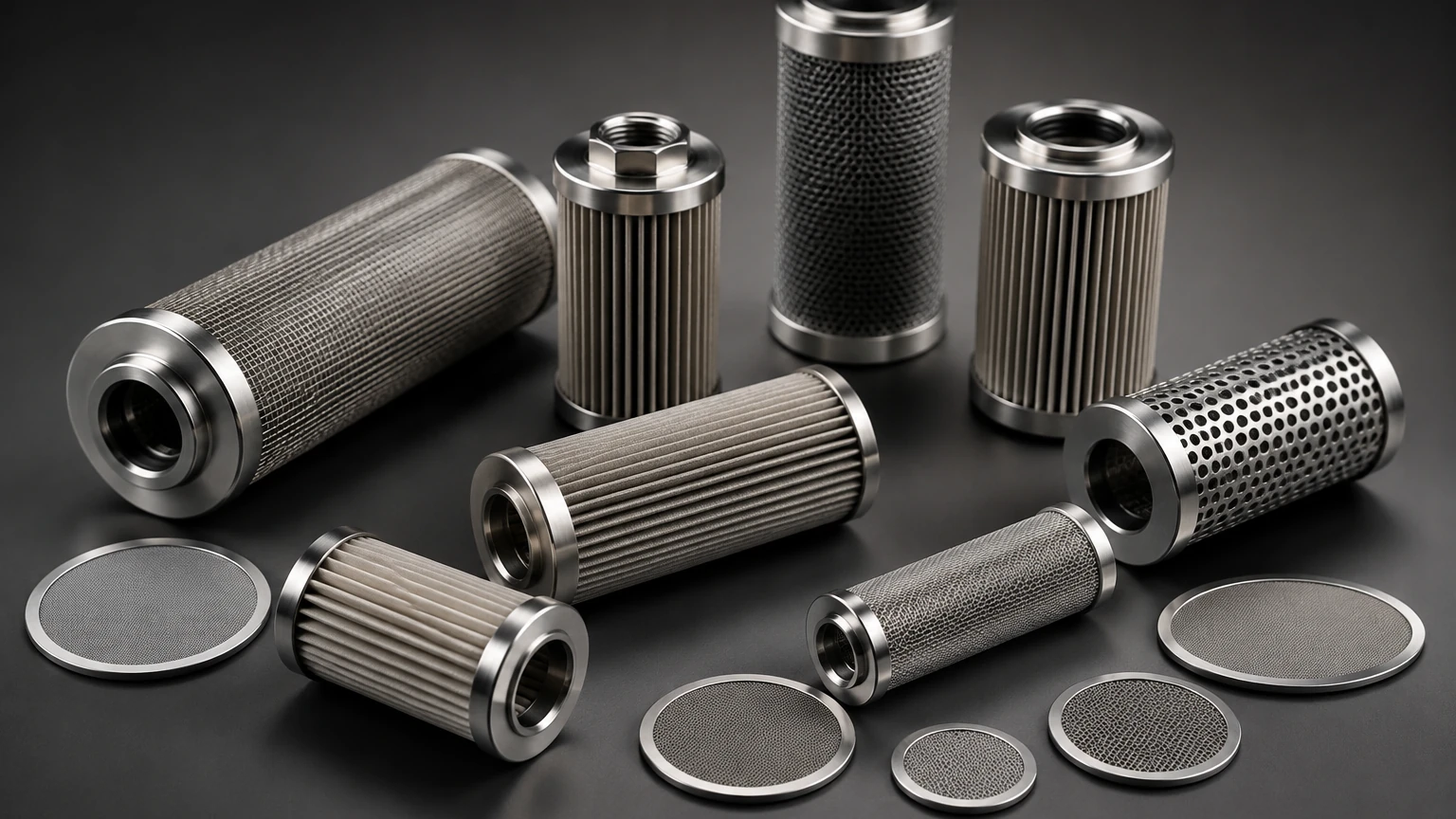
Key Components: Wire Mesh and Sintered Metal Cartridges
The heart of the gas filter system is the filter element. Kaifil specializes in manufacturing several types of metal filter elements that cater to different gas processing needs.
Pleated Wire Mesh Elements
To maximize the filtration surface area within a compact housing, wire mesh is often pleated. This design reduces the face velocity of the gas as it passes through the media, which in turn lowers the initial pressure drop and extends the service life between cleaning cycles. Pleated elements are ideal for high-flow gas systems where space is a constraint.
Sintered Metal Fiber and Powder
For applications requiring absolute filtration ratings in the sub-micron range, sintered metal media provide a high-porosity structure with excellent mechanical strength. Sintered fiber felt offers a high dirt-holding capacity, making it effective for gases with a high particulate load. Sintered powder elements, conversely, provide a very rigid structure suitable for high-differential pressure applications.
Critical Performance Parameters
When evaluating a gas filter system, engineers must look beyond the micron rating. Several performance metrics define the total efficiency of the system.
Pressure Drop (ΔP)
Every filter introduces resistance to flow. The "clean pressure drop" is the resistance of a new filter element. As the filter captures contaminants, the pressure drop increases. In a gas filter system, keeping the ΔP low is vital for energy efficiency, especially in compressed gas systems where every bar of pressure lost represents significant electrical cost at the compressor.
Flow Capacity and Velocity
Gas velocity must be carefully managed to prevent "media migration" or the re-entrainment of captured particles. If the velocity is too high, the kinetic energy of the gas can push particles through the depth of the filter or damage the delicate wire mesh structure. Proper sizing of the filter housing and element ensures that the gas velocity remains within the laminar or transitional flow regimes.
Structural Integrity
In high-pressure gas systems, the filter element must be able to withstand the full system pressure in the event of a total blockage. Collapse or burst pressure ratings are critical safety specifications that must be verified during the procurement phase.
Customization and OEM Integration
No two industrial processes are identical, which is why customization is a core requirement for many gas filter system projects. OEM manufacturers like Kaifil work with engineering teams to develop bespoke solutions that fit specific spatial and functional requirements.
Custom End Fittings and Dimensions
Standard off-the-shelf filters may not fit legacy housings or specialized equipment. Customization allows for the integration of specific end-cap styles (such as 222, 226, or NPT threaded connections) and non-standard lengths or diameters. This ensures a leak-proof seal, which is paramount when handling toxic or flammable gases.
Multi-Stage Filtration Arrays
In many cases, a single filter is insufficient. A robust gas filter system often employs a multi-stage approach:
1. Pre-filtration: A coarse wire mesh (50-100 microns) to remove large scale and debris.
2. Fine Filtration: A pleated or sintered element (5-10 microns) for the bulk of particulate removal.
3. Polishing Stage: High-efficiency media (0.1-1 micron) for critical protection of downstream components.
Maintenance, Cleaning, and Replacement
One of the primary advantages of a stainless steel gas filter system is that the elements are often cleanable and reusable, providing a significantly lower total cost of ownership compared to disposable filters.
Cleaning Methodologies
Depending on the contaminant, stainless steel elements can be cleaned using:
* Ultrasonic Cleaning: High-frequency sound waves create cavitation bubbles that dislodge particles from deep within the mesh.
* Backpulsing/Backwashing: Reversing the gas flow to blow particles off the surface of the media.
* Chemical Cleaning: Using compatible solvents or acids to dissolve organic or mineral deposits.
Determining Replacement Cycles
While cleanable, metal filters eventually reach a point of "permanent fouling" where the baseline pressure drop after cleaning is significantly higher than when the filter was new. Monitoring the rate of pressure increase over several cleaning cycles allows maintenance teams to predict the end-of-life for the element and schedule replacements during planned shutdowns.
Selecting a Gas Filter System Supplier
For engineers and purchasing managers, selecting a supplier involves more than comparing price points. A reliable partner must provide technical transparency and manufacturing excellence. When sourcing components for a gas filter system, it is important to confirm:
* Material Certification: Verification that the stainless steel used meets ASTM or ISO standards for chemical composition.
* Filtration Accuracy Testing: Documentation of how micron ratings are determined (e.g., bubble point testing or multi-pass testing).
* Manufacturing Capabilities: The ability to handle complex welding and pleating tasks without compromising the integrity of the filter media.
* Technical Support: Access to engineering expertise to assist in sizing and material selection for specific gas chemistries.
By focusing on these technical benchmarks, organizations can ensure that their gas filter system provides reliable, long-term protection for their industrial processes. For more information on specific filtration components and custom manufacturing capabilities, professionals can review product options and application support on the Kaifil Main Page.
Conclusion
A high-performance gas filter system is an investment in process stability. By prioritizing high-grade materials like 316L stainless steel, optimizing for low pressure drop, and utilizing the benefits of cleanable metal media, industrial facilities can achieve superior filtration results. Whether for protecting a high-speed turbine or ensuring the purity of a pharmaceutical-grade nitrogen stream, the right filtration technology is the first line of defense against contamination and equipment failure.
