


Carbonation Stone Diffusion
In industrial liquid processing, the efficiency of gas-to-liquid transfer is a critical factor in product quality and operational throughput. Carbonation stone diffusion is the technical process of introducing a gas—most commonly carbon dioxide (CO2) or nitrogen (N2)—into a liquid medium through a porous material. This method is ubiquitous in the beverage industry for carbonating beer, soda, and sparkling water, but it also finds extensive application in chemical processing, water treatment, and pharmaceutical manufacturing for pH adjustment and oxygen stripping.
For engineers and procurement professionals, understanding the mechanics of carbonation stone diffusion is essential for selecting components that ensure consistent results, minimize gas wastage, and withstand rigorous cleaning protocols. As a specialist manufacturer of custom stainless steel filtration and diffusion components, Kaifil provides the technical expertise required to navigate these complex variables. To explore our full range of porous metal solutions, you may visit our Main Page.
The Physics of Carbonation Stone Diffusion
The fundamental goal of carbonation stone diffusion is to maximize the absorption rate of gas into a liquid. This process is governed by several physical principles, primarily Henry’s Law and the concept of surface area-to-volume ratios.
Henry’s Law and Solubility
Henry’s Law states that the amount of dissolved gas in a liquid is proportional to its partial pressure above the liquid. In a diffusion system, increasing the pressure of the gas being forced through the stone enhances the solubility of that gas in the liquid. However, pressure is only one part of the equation. Temperature also plays a vital role; colder liquids can hold more dissolved gas than warmer ones. Therefore, carbonation stone diffusion is most effective when performed at lower temperatures and higher controlled pressures.
The Importance of Bubble Size
The effectiveness of a diffusion stone is largely determined by the size of the bubbles it produces. A carbonation stone made from sintered stainless steel contains thousands of microscopic pores. When gas is forced through these pores, it emerges as a cloud of "micro-bubbles."
Smaller bubbles provide a significantly higher total surface area for a given volume of gas compared to larger bubbles. This increased surface area allows for more contact points between the gas and the liquid, leading to faster and more complete dissolution. If the bubbles are too large, they tend to rise to the surface of the liquid too quickly and escape into the headspace, resulting in inefficient gas usage and inconsistent carbonation levels.
Material Selection: The Sintered Stainless Steel Advantage
When specifying components for carbonation stone diffusion, material integrity is paramount. Most industrial applications require 316L stainless steel due to its superior corrosion resistance and mechanical strength.
Why Sintered Metal?
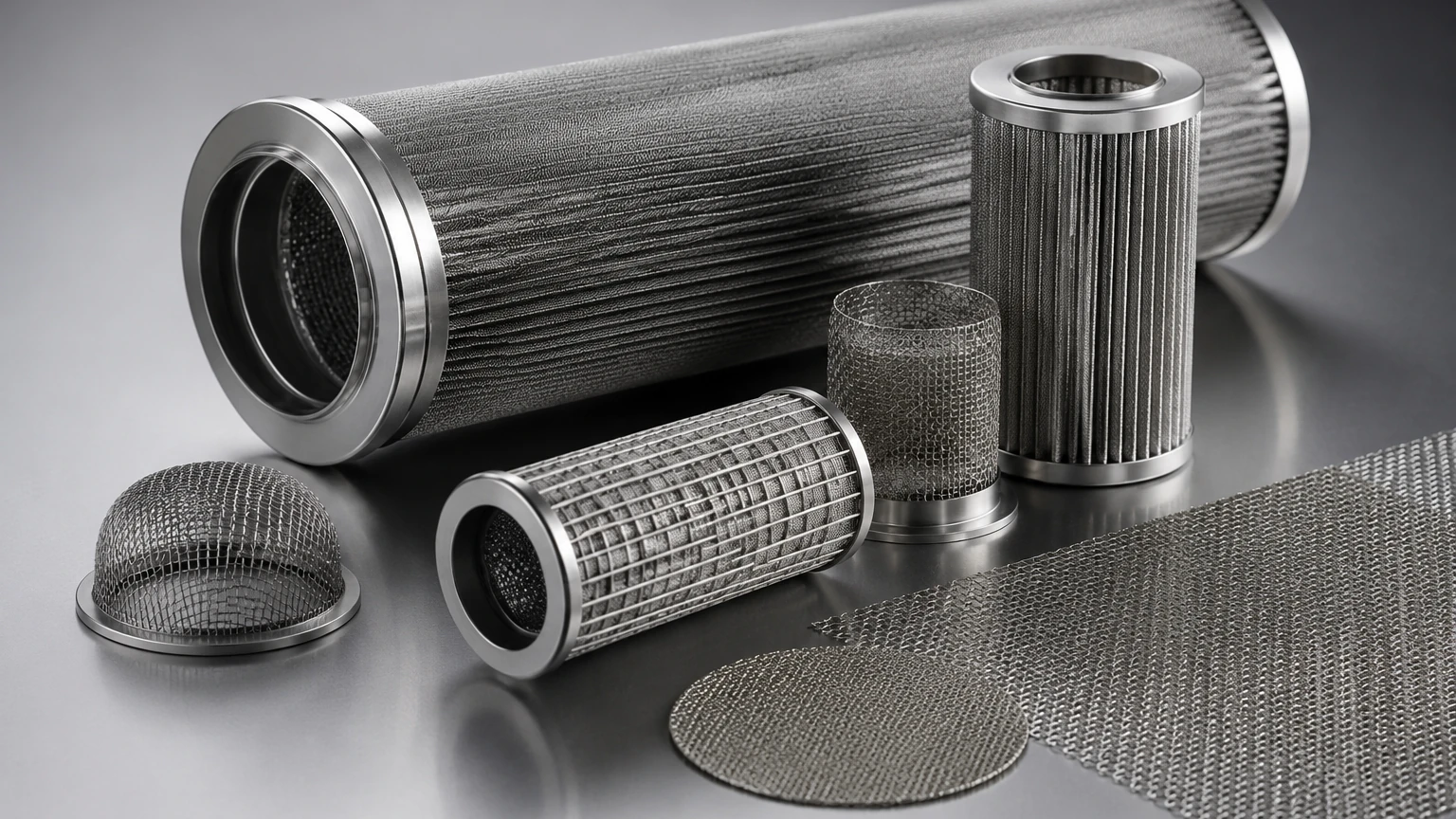
Sintered metal is created by taking stainless steel powder and subjecting it to high heat and pressure in a controlled atmosphere. This process bonds the particles together without melting them, creating a rigid structure with a highly controlled and uniform porosity. Unlike drilled pipes or simple mesh, sintered stainless steel provides a tortuous path for the gas, ensuring that it is broken down into the smallest possible bubbles as it exits the stone.
Chemical Compatibility and Food Safety
In the food and beverage industry, the material must be non-reactive and capable of withstanding acidic environments (such as those found in soft drinks or fermented beverages). 316L stainless steel is the industry standard because it resists pitting and crevice corrosion. Furthermore, it is a "clean" material that does not leach contaminants into the product, which is vital for maintaining the sensory profile of the liquid and meeting stringent regulatory standards.
Engineering Parameters: Micron Ratings and Wetting Pressure
Selecting the right carbonation stone requires a deep dive into technical specifications, specifically the micron rating and the wetting pressure.
Micron Ratings
The micron rating refers to the average size of the pores in the sintered metal. Common ratings for carbonation stone diffusion range from 0.5 microns to 2 microns.
* 0.5 Micron Stones: These produce the finest bubbles and are ideal for high-precision carbonation where maximum absorption efficiency is required. However, they require higher gas pressure to operate and are more susceptible to clogging if the liquid contains particulates.
* 2 Micron Stones: These allow for higher flow rates and are less likely to clog, making them suitable for liquids with higher viscosity or minor solid content. While the bubbles are slightly larger, they are still significantly more efficient than traditional sparging methods.
Wetting Pressure (Bubble Point)
Engineers must account for "wetting pressure," which is the minimum pressure required to overcome the surface tension of the liquid within the pores of the stone. Before gas can begin to diffuse, the internal pressure must exceed the sum of the liquid’s hydrostatic pressure and the wetting pressure of the specific micron-rated stone. Failure to account for this can lead to "slugging," where gas enters the liquid in large, uneven bursts rather than a steady stream of micro-bubbles.
In-Tank vs. In-Line Diffusion Systems
The implementation of carbonation stone diffusion generally falls into two categories: in-tank and in-line. The choice depends on the production volume, the desired speed of carbonation, and the existing infrastructure.
In-Tank Diffusion
In this setup, the carbonation stone is mounted inside a bright tank or fermentation vessel, usually near the bottom. The gas is slowly introduced while the liquid is under pressure. This method is common in craft brewing and small-scale chemical batching. While effective, it can be time-consuming, as the gas must migrate through the entire volume of the tank.
In-Line Diffusion
In-line carbonation stone diffusion occurs while the liquid is being pumped from one vessel to another. The stone is housed within a specialized tee-junction or housing in the piping. As the liquid flows past the stone, gas is injected directly into the stream. This method is highly efficient and allows for continuous processing. It also offers better control over the final gas concentration, as the flow rates of both the liquid and the gas can be precisely metered and automated.
Operational Maintenance and CIP Protocols
To maintain the performance of carbonation stone diffusion systems, a rigorous maintenance schedule is required. Because the pores are microscopic, they are prone to fouling from proteins, sugars, minerals, or yeast cells.
Clean-in-Place (CIP) Procedures
Sintered stainless steel is robust enough to handle standard CIP chemicals, including caustic soda and phosphoric acid. However, care must be taken to ensure that the cleaning agents are thoroughly rinsed. It is often recommended to maintain a small amount of gas pressure during the cleaning cycle to prevent cleaning fluids and debris from being forced deep into the pores of the stone.
Handling and Storage
Oils from human skin can clog 0.5-micron pores. Therefore, technical staff should handle carbonation stones with gloves. When not in use, stones should be cleaned, dried, and stored in a clean environment to prevent atmospheric dust from settling on the porous surface.
Troubleshooting Clogging
If a stone shows a significant increase in required pressure to achieve the same flow rate, it is likely clogged. In many cases, ultrasonic cleaning or a high-temperature burn-off (if the assembly allows) can restore the stone to its original permeability. If these methods fail, the stone must be replaced to prevent process bottlenecks.
Procurement and Customization: Engineering Checklist
When sourcing components for carbonation stone diffusion, purchasing teams and engineers should confirm several key details to ensure the component is fit for purpose:
1. Connection Type: Does the application require NPT threads, Tri-Clamp fittings, or a custom flange? Ensuring a leak-proof seal is critical for maintaining pressure.
2. Total Surface Area: Is the length and diameter of the stone sufficient for the volume of liquid being processed? Larger volumes require more surface area to prevent gas "choking."
3. Pressure Rating: Can the assembly withstand the maximum delivery pressure of the gas system and the hydrostatic pressure of the tank?
4. Customization: Does the application require a specific geometry to fit into a tight space or a unique housing for in-line integration?
As a manufacturer, Kaifil specializes in providing these customized solutions. We understand that no two industrial processes are identical, and we offer the engineering support necessary to develop filtration and diffusion components that meet specific micron requirements and mechanical constraints. For detailed product specifications and application support, please refer to our Main Page.
Conclusion
Carbonation stone diffusion is a sophisticated process that relies on the precise intersection of material science and fluid dynamics. By utilizing sintered stainless steel components with the correct micron ratings and ensuring proper installation and maintenance, industrial operators can achieve superior gas dissolution, reduce waste, and ensure product consistency. Whether you are carbonating a beverage or stripping oxygen from a sensitive chemical compound, the quality of the diffusion stone is the determining factor in your system's overall efficiency.
