


Cartridge Dust Collectors
Industrial air quality management is a critical pillar of modern manufacturing, directly impacting worker safety, equipment longevity, and regulatory compliance. Among the various technologies available for capturing airborne particulates, cartridge dust collectors have emerged as the preferred solution for high-efficiency filtration in compact spaces. Unlike traditional baghouse systems, these collectors utilize pleated media to maximize surface area, allowing for higher airflow capacities within a smaller physical footprint.
For engineers and procurement specialists, selecting the right filtration components requires a deep understanding of the mechanical and chemical demands of the application. Whether the process involves chemical processing, metalworking, or pharmaceutical manufacturing, the performance of cartridge dust collectors depends heavily on the integrity of the filter media and the precision of the cartridge construction.
The Engineering Mechanics of Cartridge Dust Collectors
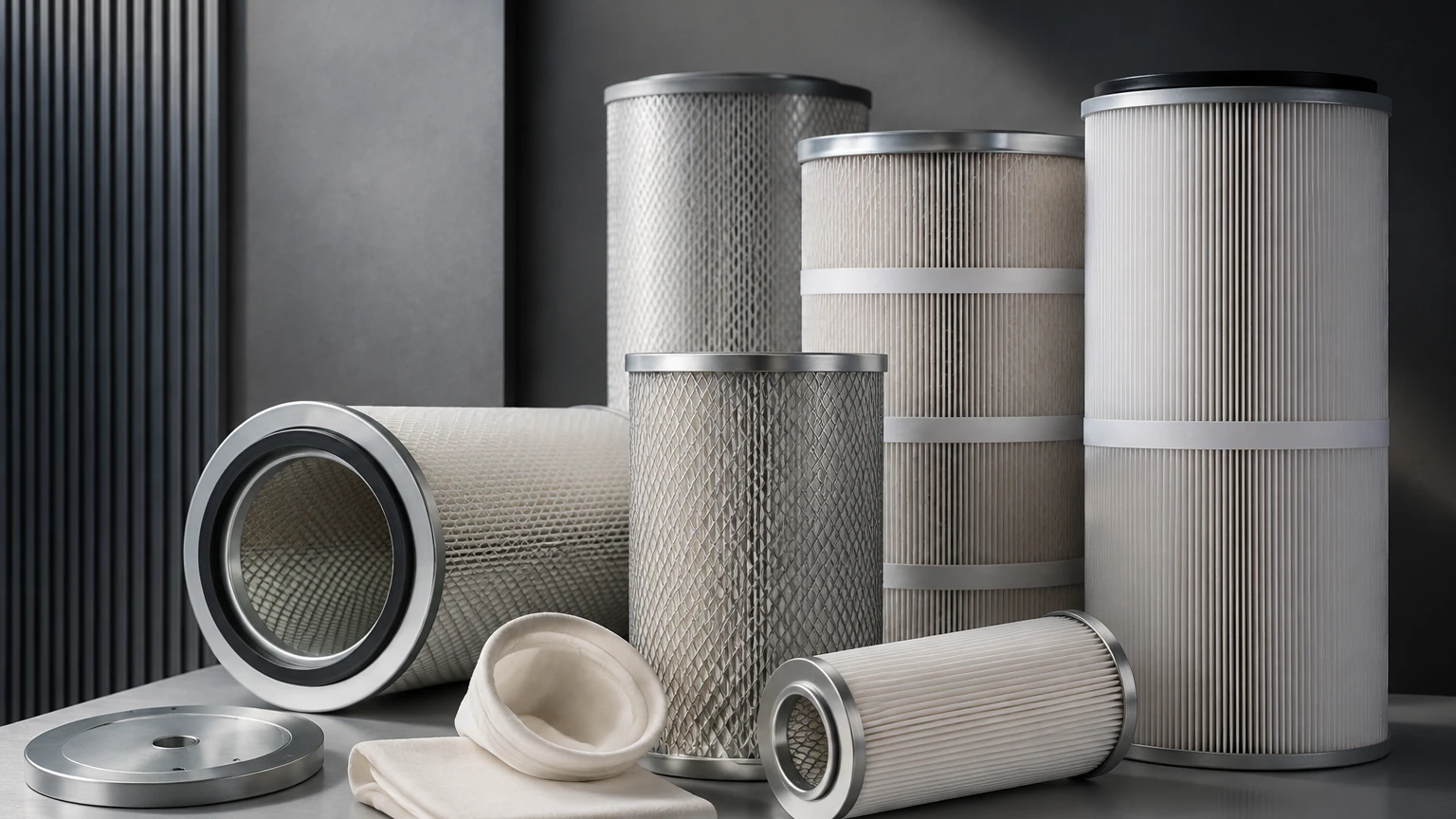
Cartridge dust collectors operate on the principle of surface filtration. Contaminated air enters the collector housing, where it is passed through pleated filter elements. The pleats are the defining feature of these systems; by folding the media, manufacturers can fit significantly more filtration surface area into a standard cylindrical or conical cartridge than would be possible with a flat or tubular bag.
As dust accumulates on the exterior surface of the media, it forms a "dust cake." While this cake initially improves filtration efficiency, it eventually increases the pressure drop across the filter. To maintain consistent airflow, most modern cartridge dust collectors employ a pulse-jet cleaning system. This mechanism directs a high-pressure burst of compressed air down the center of the cartridge, momentarily reversing the airflow and dislodging the dust cake into a collection hopper. The ability of the filter media to withstand these repetitive mechanical stresses is a primary factor in determining the service life of the component.
Media Selection and Material Compatibility
The choice of media is the most significant variable in the performance of cartridge dust collectors. While cellulose and synthetic blends are common in standard industrial settings, demanding environments require more robust materials. Stainless steel wire mesh and specialized metal filtration components are often necessary when dealing with high temperatures, corrosive gases, or abrasive particulates.
Stainless Steel Wire Mesh
In applications involving volatile chemicals or extreme heat, traditional paper or polyester media may degrade or ignite. Stainless steel wire mesh provides a durable alternative that maintains structural integrity under thermal stress. These metal filter elements are often used in specialized cartridge dust collectors where the goal is not only air purification but also the recovery of valuable catalysts or chemical powders.
Precision Metal Components
Beyond the media itself, the structural components of the cartridge—such as the inner core, outer cage, and end caps—must be engineered to resist deformation. In high-pressure systems, a weak inner core can lead to cartridge collapse, resulting in catastrophic system failure and downstream contamination. Utilizing high-grade stainless steel for these structural elements ensures that the cartridge dust collectors can handle the rigors of continuous pulse-jet cleaning and high-velocity airflow.
Design Considerations: Pleat Geometry and Airflow Dynamics
Effective filtration is a balance between filtration efficiency and energy consumption. Engineers must evaluate several design parameters when specifying cartridges for dust collection systems:
1. Pleat Density and Spacing: While more pleats increase surface area, packing them too tightly can lead to "bridging," where dust becomes trapped between the folds and cannot be dislodged by the pulse-jet system. Optimized spacing ensures that the entire surface area of the media is utilized and effectively cleaned.
2. Air-to-Media Ratio (AMR): Also known as the filtration velocity, this is the ratio of the volume of air passing through the collector to the total area of the filter media. A lower AMR typically results in higher efficiency and longer filter life, as it reduces the force with which particles impact the media.
3. Pressure Drop (Delta P): This measures the resistance to airflow. A high initial pressure drop indicates an undersized system or restrictive media, which increases the energy required by the system's fan to maintain the necessary CFM (cubic feet per minute).
When reviewing technical specifications, it is vital to confirm that the cartridge design aligns with the specific particulate size and load of the application. For instance, sub-micron particles require media with high efficiency ratings (such as MERV 15 or 16), whereas larger, abrasive dust may require specialized coatings or heavier-duty wire mesh to prevent premature wear.
Customization and OEM Requirements
Standard off-the-shelf filters are often insufficient for specialized industrial machinery. Customization in the manufacturing of filtration components allows for a precise fit within existing cartridge dust collectors, ensuring a leak-proof seal and optimized performance. Customization options typically include:
* Dimensional Adjustments: Modifying the length, outer diameter, and inner diameter to meet specific housing requirements.
* End Cap Configurations: Selecting from various styles such as flange tops, bolt-hole bottoms, or specialized twist-lock mechanisms to ensure secure installation.
* Gasket Materials: Choosing chemically resistant materials like EPDM, Silicone, or Viton to prevent bypass leakage in harsh environments.
For original equipment manufacturers (OEMs), partnering with a supplier capable of producing precision metal filter components is essential for maintaining the performance standards of their dust collection units. Reliable OEM solutions focus on consistency in pleat count, weld integrity, and material purity.
Maintenance, Replacement Cycles, and Total Cost of Ownership
While the initial purchase price of a filter cartridge is a factor, the total cost of ownership (TCO) is driven by the replacement frequency, energy consumption, and labor costs associated with maintenance. High-quality stainless steel or reinforced cartridges may have a higher upfront cost but offer a significantly lower TCO due to their durability and cleanability.
Monitoring Performance
Differential pressure gauges are the primary tool for monitoring the health of cartridge dust collectors. A steady increase in baseline pressure (the pressure immediately after a cleaning pulse) indicates that the media is becoming "deep-loaded" or blinded. Once the pressure drop reaches a pre-defined limit (often 5 to 6 inches of water gauge), the filters must be replaced to avoid excessive energy use and reduced suction at the source.
Replacement Best Practices
When replacing cartridges, it is essential to inspect the tube sheet and gaskets for signs of wear. Even a small gap in the seal can allow significant amounts of dust to bypass the filter, leading to environmental non-compliance and potential damage to the system's fan. For those looking to optimize their current systems, you can Review product options and application support on the Main Page to identify the most suitable materials and designs for specific industrial challenges.
Industry-Specific Applications for Cartridge Filtration
Cartridge dust collectors are utilized across a diverse range of sectors, each with unique technical requirements:
* Chemical Processing: Requires filters that can withstand corrosive vapors and prevent cross-contamination. Stainless steel cartridges are often the standard here due to their chemical inertness.
* Food and Beverage: Filtration components must meet strict sanitary standards. This often involves using 304 or 316L stainless steel and FDA-compliant gaskets to ensure that the air used in processing environments is free of contaminants.
* Pharmaceuticals: High-potency active pharmaceutical ingredients (APIs) require ultra-high efficiency filtration and often involve "bag-in/bag-out" replacement procedures to protect maintenance personnel.
* Metalworking and Thermal Spraying: These processes generate very fine, often conductive or combustible dust. Cartridge dust collectors in these environments must be equipped with flame-retardant media and proper grounding to mitigate explosion risks.
Selecting a Filtration Partner
For technical professionals, the reliability of a filtration system is only as good as its weakest component. Choosing a manufacturer that understands the nuances of industrial filtration—from material science to fluid dynamics—is paramount. A partner should be able to provide detailed data on filtration accuracy, pressure drop curves, and material certifications.
Kaifil specializes in the production of high-performance stainless steel filtration solutions, providing the precision components necessary for demanding industrial environments. By focusing on durability and customized engineering, Kaifil supports the efficient operation of cartridge dust collectors across various sectors. For more information on custom filtration designs and technical specifications, visit the Main Page to explore our full range of capabilities.
In conclusion, the effective implementation of cartridge dust collectors requires more than just selecting a unit with the correct CFM rating. It demands a rigorous evaluation of the filter media, the structural integrity of the cartridges, and the specific environmental conditions of the application. By prioritizing high-quality materials and precision engineering, industrial facilities can achieve superior air quality, lower operational costs, and long-term reliability.
