


Cartridge Filters Manufacturers
In industrial processing, the efficiency of a filtration system is often the determining factor in product quality, equipment longevity, and overall operational costs. Selecting the right cartridge filters manufacturers involves more than just comparing price points; it requires a deep understanding of engineering specifications, material science, and the specific demands of the application environment. For engineers and procurement teams, the goal is to find a partner capable of delivering precise filtration performance while ensuring the structural integrity of the filter components under high pressure and temperature conditions.
Industrial cartridge filters serve as critical barriers against contaminants in sectors ranging from chemical processing and pharmaceuticals to food and beverage production. Because these environments often involve corrosive fluids, extreme temperatures, or high-pressure differentials, the move toward stainless steel and precision metal filtration has become a standard for reliability. This article explores the technical considerations and evaluation criteria essential when partnering with manufacturers in this specialized field.
Technical Engineering Criteria for Industrial Filtration
When evaluating cartridge filters manufacturers, the first step is to assess their technical understanding of filtration principles. A filter is not merely a consumable; it is a precision-engineered component designed to achieve a specific micron rating while maintaining a manageable pressure drop.
Micron Ratings: Absolute vs. Nominal
One of the most frequent points of confusion in procurement is the distinction between absolute and nominal micron ratings. A nominal rating refers to a filter's ability to retain a major percentage (usually 60% to 90%) of particles of a specific size. In contrast, an absolute rating implies that the filter will capture 99.9% or more of particles at that size. High-quality manufacturers, such as those specializing in stainless steel wire mesh, provide validated absolute ratings through rigorous testing, ensuring that downstream processes are protected from even trace amounts of oversized contaminants.
Differential Pressure and Flow Rates
The relationship between flow rate and differential pressure (ΔP) is a vital engineering metric. As a filter captures contaminants, the resistance to flow increases. Manufacturers must provide data on the clean pressure drop to help engineers size housings and pumps correctly. A well-designed cartridge maximizes surface area—often through pleating—to ensure high flow rates and a high dirt-holding capacity, which directly extends the interval between cleaning or replacement cycles.
Key Capabilities of Leading Cartridge Filters Manufacturers
In the B2B landscape, the distinction between a distributor and a true manufacturer is significant. A manufacturer with in-house capabilities, like Kaifil, offers direct control over the fabrication process, from the initial weaving of the wire mesh to the final welding of the end caps.
Material Sourcing and Traceability
For industries like pharmaceuticals and food processing, material traceability is non-negotiable. Leading manufacturers provide material test reports (MTRs) that verify the chemical composition of the stainless steel used. Whether the application requires Grade 304 for general corrosion resistance or Grade 316L for superior resistance to pitting and chloride-rich environments, the manufacturer must guarantee the integrity of the raw materials.
Advanced Manufacturing Processes
The structural integrity of a metal filter cartridge depends on the quality of its construction. This includes:
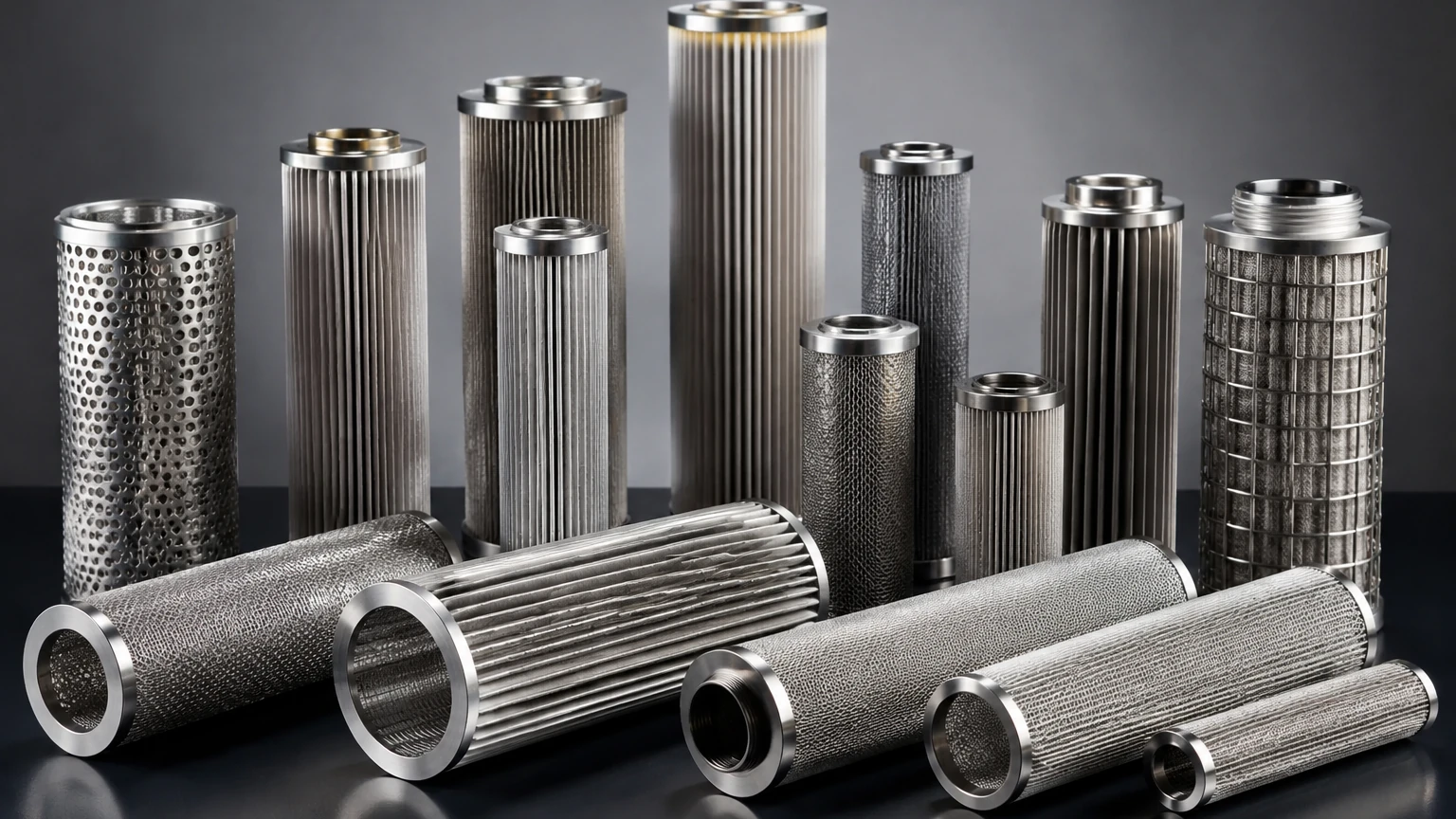
* Sintering: A thermal process that bonds wire mesh layers together without the use of binders, creating a robust, fixed-pore structure that will not migrate or shed fibers.
* Precision Welding: Using TIG or plasma welding to join components ensures that there are no bypass paths for contaminants. Unlike adhesive-bonded filters, all-welded stainless steel cartridges can withstand extreme thermal cycling.
* Pleating Technology: For applications requiring high surface area in a compact footprint, pleating the wire mesh increases the effective filtration area, lowering the flux rate and increasing the life of the filter.
Material Selection and Chemical Compatibility
Choosing the correct material is the most critical decision in the filtration design phase. While polymer-based filters are common in water treatment, industrial chemical processes often demand the durability of metal. Cartridge filters manufacturers specializing in stainless steel provide solutions that are inherently resistant to a wide range of chemicals and solvents.
Stainless Steel 304 vs. 316L
* SS 304: Suitable for many industrial water applications, oils, and mild chemicals. It offers a cost-effective solution where extreme corrosion resistance is not required.
* SS 316L: The "L" stands for low carbon, which improves weldability and resistance to intergranular corrosion. This material is the industry standard for pharmaceutical and chemical applications where the filter is exposed to aggressive cleaning agents or corrosive process fluids.
Specialty Alloys
In cases involving extreme high temperatures or highly acidic environments, manufacturers may offer specialty alloys like Hastelloy or Monel. Understanding the chemical compatibility of the entire assembly—including the gaskets and O-rings (typically Viton, EPDM, or PTFE)—is essential to prevent premature failure.
Customization: From Prototyping to Full-Scale OEM Production
Standard off-the-shelf filters rarely meet the unique requirements of specialized industrial machinery. This is where the Main Page of a dedicated manufacturer becomes a resource for engineers looking for custom solutions. OEM capabilities allow for the adjustment of several variables:
1. Dimensions: Custom lengths and diameters to fit existing or proprietary filter housings.
2. End-Cap Configurations: Manufacturers must support various industry-standard interfaces, such as Double Open End (DOE), Code 7 (226 O-rings with locking tabs), or Code 3 (222 O-rings).
3. Filtration Media Layers: By combining different layers of sintered mesh or fiber felt, manufacturers can create a "gradient" filtration effect, where outer layers trap coarse particles and inner layers provide fine filtration, significantly increasing the service life.
Working directly with a manufacturer allows for a collaborative engineering process. This ensures that the final product is optimized for the specific viscosity of the fluid, the expected contaminant load, and the required cleaning protocols.
Evaluating Total Cost of Ownership in Filtration Systems
A common pitfall in procurement is focusing solely on the initial purchase price. For industrial operations, the Total Cost of Ownership (TCO) is a much more accurate metric. This includes the cost of the filter, the labor required for changes, the cost of disposal, and the potential cost of system downtime.
Disposable vs. Reusable Filters
While polymer cartridges have a lower upfront cost, they are single-use items that generate significant waste and recurring expenses. Stainless steel cartridges, manufactured by specialists like Kaifil, are cleanable and reusable. Methods such as ultrasonic cleaning, backwashing, or chemical steeping can restore the filter to near-original performance levels. Over a period of two to five years, the TCO of a high-quality stainless steel filter is often significantly lower than that of disposable alternatives.
Energy Efficiency
A filter with a high clean pressure drop requires the pump to work harder, consuming more energy. By selecting a manufacturer that optimizes the pleat geometry and mesh weave for maximum porosity, facilities can reduce their energy consumption and carbon footprint.
Quality Assurance and Testing Standards for Metal Filters
To ensure reliability in demanding environments, cartridge filters manufacturers must adhere to strict quality control protocols. Engineers should inquire about the following testing procedures:
* Bubble Point Test: A non-destructive test used to verify the integrity of the filter and confirm its pore size. It measures the pressure required to force air through a liquid-wetted filter.
* Pressure Decay Test: Used to check for leaks in the housing or the seals of the cartridge.
* Flow Fatigue Testing: Ensures the filter can withstand the repeated pressure pulses common in hydraulic and high-pressure process systems.
Certifications such as ISO 9001 indicate a manufacturer's commitment to consistent quality management systems, which is vital for maintaining long-term supply chain stability.
Industry-Specific Applications and Selection Advice
The requirements for a filter used in a hydraulic system differ vastly from those used in a brewery. A versatile manufacturer understands these nuances:
* Chemical Processing: Requires high resistance to solvents and acids. Sintered powder or multi-layer mesh filters are often preferred for their structural rigidity.
* Food and Beverage: Focuses on cleanability and compliance with food-safety standards. Filters must be able to withstand Steam-in-Place (SIP) and Clean-in-Place (CIP) sterilization cycles.
* Hydraulic Systems: Filters must handle high-viscosity fluids and protect sensitive valves from wear-inducing particles. High-strength mesh is required to prevent collapse under high differential pressure.
Conclusion: Selecting the Right Manufacturing Partner
Choosing between various cartridge filters manufacturers is a strategic decision that impacts the reliability of an entire production line. Technical professionals should look for partners who offer more than just a product catalog. The ideal manufacturer provides engineering support, material verification, and a clear understanding of the application's challenges.
Before finalizing a supplier, confirm their ability to handle custom OEM requests, their adherence to international testing standards, and their capacity to provide detailed performance data. By focusing on quality construction and technical compatibility, engineers can ensure that their filtration systems deliver consistent performance, lower maintenance costs, and long-term durability in the most demanding industrial environments.
