


Titanium Basket
In the landscape of industrial surface finishing and chemical processing, the titanium basket serves as a fundamental component for electrochemical reactions and corrosive fluid handling. Unlike standard stainless steel containers, these specialized baskets are engineered to withstand aggressive chemical environments while maintaining structural integrity and electrical conductivity. For engineers and procurement professionals, understanding the technical nuances of titanium basket design, material grades, and application-specific configurations is essential for optimizing process efficiency and reducing long-term operational costs.
As a manufacturer specializing in precision metal filtration and components, Kaifil recognizes that the selection of a titanium basket is rarely a commodity purchase. It requires a deep dive into the chemical compatibility of the electrolyte, the required current density, and the mechanical stresses of the industrial environment. This guide provides a technical overview of titanium baskets to assist in the selection and engineering process.
Material Properties and Engineering Advantages of Titanium Baskets
The primary reason for utilizing titanium in basket construction is its exceptional corrosion resistance, particularly in oxidizing environments and chloride-containing solutions. This resistance is derived from the spontaneous formation of a stable, protective oxide film (TiO2) on the metal's surface. If damaged, this film reforms almost instantly in the presence of oxygen or moisture.
Grade Selection: CP Grade 1 vs. Grade 2
Most industrial titanium baskets are fabricated from Commercially Pure (CP) Titanium.
* Grade 1 (CP1): This is the most ductile grade with the highest cold formability. It is often used for intricate mesh designs or where deep drawing is required. It offers the best corrosion resistance but has lower mechanical strength compared to Grade 2.
* Grade 2 (CP2): This is the "workhorse" of the industrial sector. It offers a superior balance of moderate strength and excellent cold formability. Most heavy-duty baskets used in electroplating and chemical immersion are constructed from Grade 2 due to its ability to withstand the weight of anode materials while resisting chemical attack.
Thermal and Electrical Conductivity
Engineers must account for titanium’s specific physical properties. Titanium has lower electrical and thermal conductivity compared to copper or aluminum. In electroplating applications, this necessitates the use of copper-cored titanium hooks or larger cross-sectional areas for the hooks to prevent overheating and ensure efficient current transfer to the anode material contained within the basket.
Design Variations: Expanded Mesh, Perforated, and Woven Structures
The geometry of a titanium basket is dictated by the size of the media it holds and the flow requirements of the process liquid. There are three primary surface configurations used in industrial manufacturing.
Expanded Metal Mesh
Expanded mesh is the most common choice for anode baskets. It is produced by shearing and stretching a solid titanium sheet to create a diamond-shaped pattern. This process is highly cost-effective as it involves no material waste. From an engineering perspective, expanded mesh provides a high open-area percentage, which facilitates excellent electrolyte circulation and uniform current distribution.
Perforated Titanium Sheet
For applications requiring higher structural rigidity or the containment of very small pellets, perforated sheets are preferred. While the open area is typically lower than expanded mesh, perforated baskets offer superior mechanical strength and can be manufactured with precise hole diameters to prevent "fines" from escaping into the tank.
Woven Titanium Wire Cloth
In specialized filtration or fine-particle containment, woven titanium wire mesh is utilized. This provides the highest level of precision regarding aperture size. Manufacturers like Kaifil often integrate woven mesh into basket frames for high-purity pharmaceutical or chemical filtration where specific micron ratings are required. For more information on custom metal filtration structures, professionals can visit the Main Page to explore technical specifications.
Critical Role in Electroplating and Surface Finishing
In the electroplating industry, the titanium basket acts as the container for anode materials such as nickel, copper, or zinc nuggets. Its performance directly impacts the quality of the plated finish and the efficiency of the power supply.
Anode Contact and Current Distribution
The basket must ensure constant electrical contact with the anode material. As the nuggets dissolve during the plating process, they settle toward the bottom. A well-designed basket maintains a consistent "anode area," preventing fluctuations in current density that could lead to uneven plating thickness or "burning" of the parts being processed.
Hook Engineering
The hooks are the primary interface between the bus bar and the basket. They must be engineered to carry the full amperage of the process.
1. Solid Titanium Hooks: Suitable for low-amperage applications.
2. Copper-Cored Titanium Hooks: Essential for high-current applications. The copper core provides high conductivity, while the titanium exterior protects the copper from the corrosive plating bath.
3. Knife-Edge vs. Square Hooks: Knife-edge hooks provide a smaller contact point with higher pressure, which can help break through oxidation on the bus bar to ensure a better electrical connection.
Performance Factors: Flow Dynamics and Current Conductivity
When specifying a titanium basket, engineers must evaluate how the basket's physical presence affects the fluid dynamics within the process tank.
Electrolyte Circulation
Inadequate flow through the basket can lead to localized depletion of metal ions and temperature spikes within the basket. This can cause the anode material to polarize or "passivate," effectively stopping the plating reaction. High-open-area expanded mesh (often 60% or higher) is typically recommended to allow the electrolyte to move freely around the anode nuggets, ensuring a constant supply of ions to the cathode.
Structural Integrity under Load
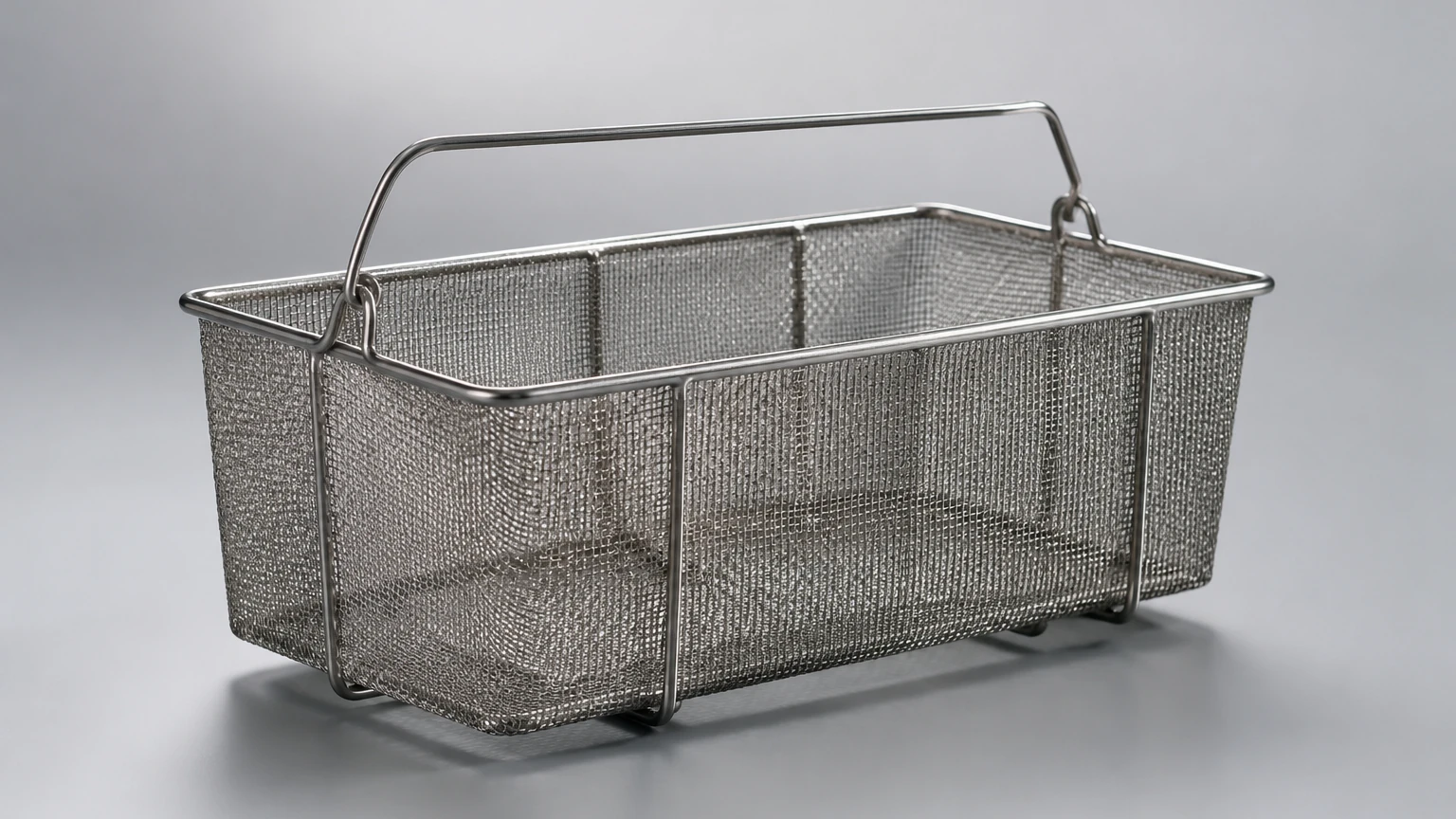
Titanium baskets must support significant weight, especially in tall tanks. A basket filled with nickel S-rounds can weigh several hundred pounds. Engineering considerations include:
* Reinforcement Bands: Horizontal titanium bands welded to the exterior to prevent the mesh from bulging or bursting.
* Bottom Reinforcement: Thicker gauge titanium plates at the base to support the cumulative weight of the anode stack.
* Side Channels: Vertical reinforcements that provide longitudinal stiffness, preventing the basket from twisting or bending during installation and removal.
Selection Criteria for Industrial Procurement
To ensure the longevity and performance of a titanium basket, procurement teams should confirm several technical details with the manufacturer before production.
Chemical Compatibility and Bath Chemistry
While titanium is highly resistant to most acids, it is susceptible to attack by hydrofluoric acid (HF) and high concentrations of phosphoric or sulfuric acid at elevated temperatures. Furthermore, in fluoride-containing baths, titanium will rapidly corrode. It is imperative to match the grade of titanium and any potential coatings to the specific chemistry of the process.
Dimensional Accuracy
The basket dimensions must account for the "anode-to-cathode" distance. If a basket is too wide, it may cause uneven plating; if it is too narrow, it may not hold enough material to maintain the required metal ion concentration. Standard tolerances in industrial basket manufacturing are typically +/- 1/8 inch, but precision applications may require tighter specifications.
Customization and OEM Requirements
Many industrial systems require custom-shaped baskets, such as trapezoidal, cylindrical, or "mini" baskets for lab-scale operations. Working with a manufacturer that offers OEM capabilities ensures that the basket integrates seamlessly with existing tank rails and bus bar configurations. Technical professionals often review product options and application support on the Main Page to determine the feasibility of custom metal components for their specific hardware.
Maintenance Protocols for Extended Service Life
Although titanium is durable, it is not indestructible. A proactive maintenance schedule can extend the life of a titanium basket from a few years to over a decade.
1. Regular Cleaning: Over time, "anode sludge" (insoluble impurities from the anode material) can accumulate at the bottom of the basket or clog the mesh. This sludge can increase electrical resistance and impede flow. Baskets should be removed and rinsed periodically.
2. Hook Inspection: The contact points on the hooks should be checked for signs of arcing or pitting. Poor contact leads to heat generation, which can eventually damage the hook or the bus bar.
3. Mesh Integrity Checks: Inspect for any broken strands in the expanded mesh. While small breaks may not immediately impact performance, they can snag anode bags (if used) or lead to structural failure under heavy loads.
4. Anode Bag Maintenance: Most titanium baskets are used with fabric anode bags to catch fines. These bags must be inspected for holes and replaced when they become clogged with sludge to maintain proper ion flow.
Total Cost of Ownership (TCO) Considerations
When comparing titanium baskets to alternatives like stainless steel or plastic-coated steel, the initial capital expenditure for titanium is higher. However, the TCO is significantly lower in aggressive environments. Stainless steel baskets often fail within months in high-chloride environments, leading to production downtime, contamination of the plating bath, and frequent replacement costs.
Titanium’s longevity, combined with its ability to be repaired (TIG welding can often fix minor structural damage), makes it the most cost-effective solution for professional industrial operations. By investing in high-quality titanium components, facilities reduce the risk of catastrophic failure and ensure consistent product quality across long production cycles.
For engineers seeking reliable filtration and metal component solutions, focusing on material purity, weld quality, and design precision is the path to optimized performance. Whether for electroplating, chemical processing, or specialized industrial filtration, the titanium basket remains a critical asset in the modern manufacturing toolkit.
