


Catalyst Filter
In industrial chemical processing, the efficiency of a reaction often depends on the performance and recovery of catalysts. A catalyst filter is a specialized filtration component designed to separate solid catalyst particles from liquid or gaseous product streams. These filters are essential in heterogeneous catalysis, where the catalyst exists in a different phase than the reactants. Because catalysts are often composed of precious metals or complex engineered compounds, their recovery is a matter of both process purity and economic necessity.
For engineers and plant managers, selecting the correct catalyst filter involves balancing filtration precision with mechanical durability. These components must withstand high temperatures, corrosive environments, and significant pressure differentials while maintaining a consistent micron rating. As a manufacturer specializing in stainless steel filtration solutions, Kaifil provides the technical expertise required to develop custom filtration components that meet these demanding industrial standards.
The Role of Catalyst Filters in Industrial Processing
Catalyst filters serve two primary functions within a production line: catalyst recovery and product clarification. In many chemical synthesis processes, such as hydrogenation or polymerization, the catalyst is suspended in the reaction medium. Once the reaction is complete, the catalyst must be removed to prevent it from contaminating the final product.
Catalyst Recovery and Economic Efficiency
Many industrial catalysts utilize expensive materials like platinum, palladium, or nickel. Losing even a small percentage of these materials during each production cycle can lead to significant financial losses. A high-efficiency catalyst filter ensures that these particles are captured and can be returned to the reactor or sent for regeneration. This closed-loop approach reduces the total cost of ownership for the chemical process.
Product Purity and Downstream Protection
Beyond the cost of the catalyst itself, the presence of residual catalyst fines in the final product can compromise quality and lead to downstream issues. In pharmaceutical or food-grade applications, catalyst breakthrough is a critical failure point. Additionally, residual solids can cause fouling in heat exchangers, damage high-pressure pumps, or deactivate secondary catalysts in multi-stage reactions. Effective filtration acts as a safeguard for the entire processing infrastructure.
Engineering Considerations for Catalyst Filter Selection
Selecting a catalyst filter is not a one-size-fits-all process. Engineers must evaluate several technical parameters to ensure the filter performs reliably under operating conditions. Failure to account for these variables can lead to premature filter blinding, mechanical collapse, or insufficient filtration accuracy.
Micron Rating and Particle Size Distribution
The most fundamental specification is the micron rating. However, a single nominal rating is often insufficient. Engineers must understand the particle size distribution (PSD) of the catalyst. If the catalyst breaks down into "fines" during the reaction due to mechanical attrition, the filter must be capable of capturing these smaller particles without clogging. Sintered metal and precision wire mesh filters offer controlled pore sizes that provide reliable absolute filtration ratings.
Temperature and Chemical Compatibility
Chemical reactions often occur at elevated temperatures and in the presence of aggressive solvents or acids. Standard polymer-based filters are rarely suitable for these environments. Stainless steel alloys, such as 304, 316L, or specialized Hastelloy, are typically required. These materials maintain their structural integrity at temperatures exceeding 300°C and resist the corrosive effects of the process fluid. Material selection should always be verified against the specific chemical composition of the stream.
Differential Pressure and Mechanical Strength
As the filter captures catalyst particles, a filter cake builds up on the surface. This cake increases the resistance to flow, leading to a rise in differential pressure (ΔP). The catalyst filter must be engineered to withstand the maximum expected ΔP without deforming or bypassing. In high-pressure hydraulic or chemical systems, the mechanical strength of the filter media and its supporting structure is a critical safety and performance factor.
Types of Filter Media for Catalyst Recovery
The choice of filter media significantly impacts the cleaning cycle and the service life of the component. For catalyst applications, metal-based media are the industry standard due to their durability and cleanability.
Sintered Metal Fiber and Powder
Sintered metal filters are created by bonding metal fibers or powders through a thermal process without melting them. This creates a porous, rigid structure with high permeability. Sintered metal fiber felt is particularly effective for catalyst filtration because it offers high dirt-holding capacity and low initial pressure drop. It allows for deep filtration, capturing particles within the matrix of the media.
Multi-Layer Sintered Wire Mesh
For surface filtration applications, multi-layer sintered wire mesh is often the preferred choice. By sintering several layers of stainless steel wire mesh together, manufacturers create a medium that combines fine filtration with high mechanical strength. The outer layers provide protection and support, while the inner layers determine the filtration accuracy. This structure is highly resistant to backwashing and mechanical vibration.
Wedge Wire Screens
In applications involving larger catalyst pellets or high-flow reactors, wedge wire screens provide a robust solution. The V-shaped profile of the wire prevents clogging and allows for easy cleaning. While not suitable for fine catalyst recovery (sub-10 micron), they are excellent for primary catalyst retention in fixed-bed reactors.
Operational Challenges: Cleaning and Maintenance
One of the primary advantages of using stainless steel catalyst filters is that they are often cleanable and reusable. However, the cleaning strategy must be integrated into the system design to avoid process downtime.
In-Situ Backwashing and Backpulsing
Many automated catalyst filtration systems use backwashing (liquid) or backpulsing (gas) to remove the filter cake. By reversing the flow through the filter, the captured catalyst is dislodged from the surface and returned to the process or a collection vessel. The success of backwashing depends on the uniformity of the filter media; any weak spots or inconsistent pore sizes will lead to "channeling," where the cleaning fluid bypasses the clogged areas.
Ultrasonic and Chemical Cleaning
Over time, fine particles may become deeply embedded in the filter media, or chemical deposits may form. In these cases, the filters are removed for external cleaning. Ultrasonic cleaning uses high-frequency sound waves in a solvent bath to dislodge particles from deep within the pores. Chemical cleaning involves soaking the filters in specialized agents to dissolve organic or inorganic foulants. Understanding the expected replacement cycle versus the cleaning cycle is essential for calculating the total cost of operation.
Customization and OEM Solutions
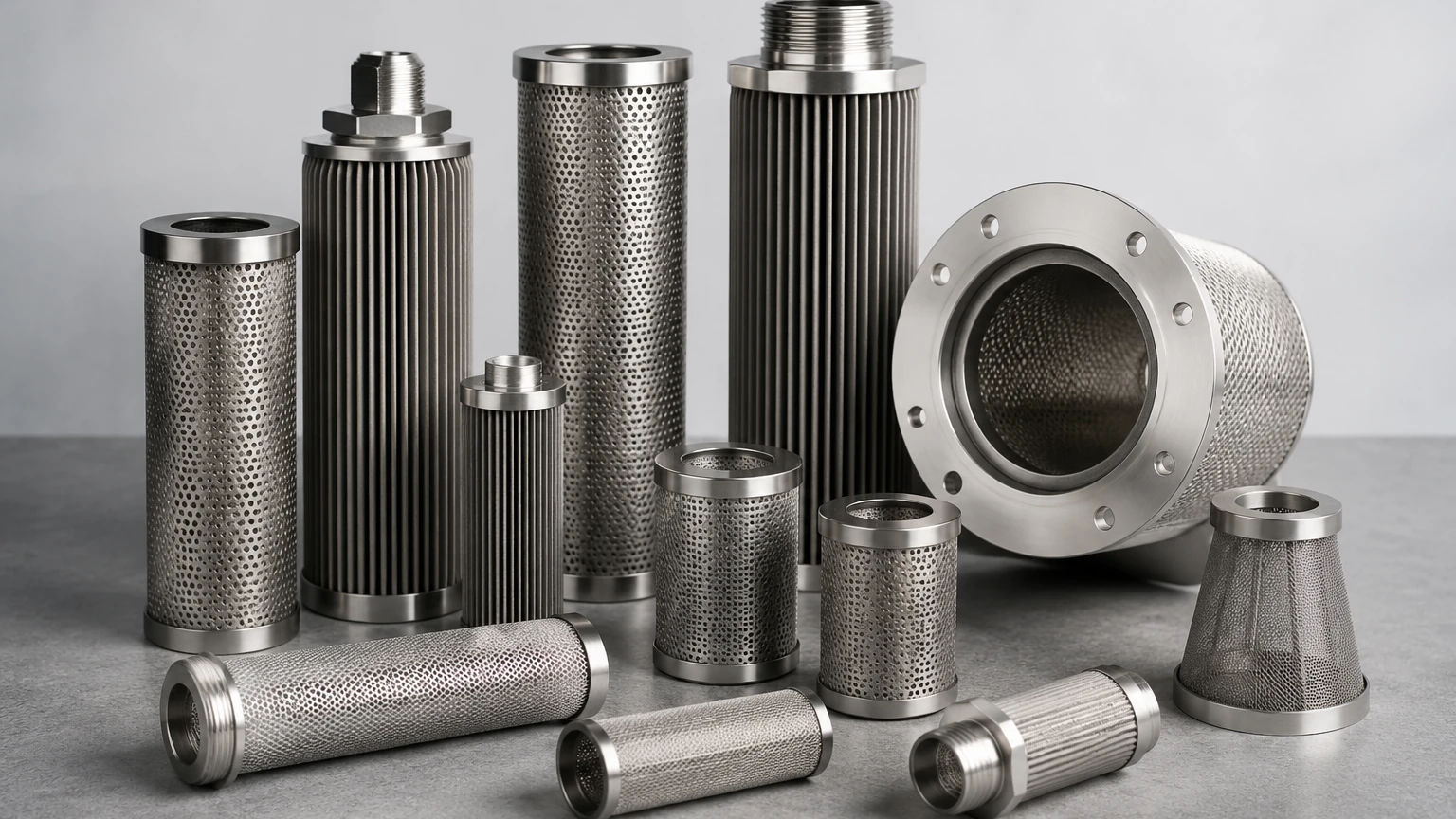
Industrial filtration requirements are rarely identical. Factors such as vessel geometry, flow rates, and specific catalyst types necessitate customized designs. Working with a specialized manufacturer like Kaifil allows engineering teams to specify exact dimensions, fitting types (such as NPT, flange, or DOE), and reinforced structures for high-pressure environments.
Customization also extends to the filtration surface area. By utilizing pleated designs, manufacturers can significantly increase the available filtration area within the same footprint. This reduces the flux (flow per unit area), which in turn lowers the rate of pressure increase and extends the time between cleaning cycles. For complex industrial systems, reviewing product options and application support on the Main Page can provide insights into how customized components integrate into larger filtration assemblies.
Industry Applications of Catalyst Filtration
Catalyst filters are utilized across a broad spectrum of industries, each with unique technical requirements:
* Petrochemical and Refining: Used in Fluid Catalytic Cracking (FCC) and hydrotreating processes to recover catalysts and protect downstream equipment from abrasive fines.
* Pharmaceutical Synthesis: Critical for the removal of precious metal catalysts (like Palladium on Carbon) from active pharmaceutical ingredients (APIs).
* Food and Beverage: Employed in the hydrogenation of edible oils to ensure the complete removal of nickel catalysts.
* Fine Chemicals: Essential for specialty chemical production where high purity and catalyst reuse are required for economic viability.
Conclusion
The selection of a catalyst filter is a critical engineering decision that impacts the safety, efficiency, and profitability of industrial chemical processes. By focusing on material compatibility, mechanical strength, and the specific characteristics of the catalyst particles, technical teams can implement filtration solutions that offer long-term reliability. Stainless steel filtration components provide the necessary durability to handle the rigors of modern industrial environments while allowing for sustainable catalyst recovery and high product purity. When designing or upgrading a filtration system, consulting with experienced manufacturers ensures that the chosen components are optimized for the specific demands of the application.
