


Cip Cleaning Method
In modern industrial processing, maintaining the internal cleanliness of piping, tanks, and filtration systems without disassembly is a critical operational requirement. This process, known as Clean-in-Place (CIP), has become the standard for industries where hygiene, safety, and efficiency are paramount. For engineers and facility managers, understanding the technical nuances of the cip cleaning method is essential for ensuring the longevity of filtration components and the purity of the final product.
At its core, the CIP method utilizes a combination of chemical action, heat, and mechanical force (turbulence) to remove soil, debris, and microbial contaminants from the internal surfaces of a closed system. For stainless steel filtration systems, such as those manufactured by Kaifil, the CIP process must be carefully calibrated to ensure that the filter media—whether wire mesh or sintered metal—is thoroughly cleaned without compromising its structural integrity.
Fundamentals of the CIP Cleaning Method
The effectiveness of any CIP cycle is governed by four interdependent variables, often referred to as the TACT parameters: Time, Action, Chemical, and Temperature. Balancing these factors is the key to a successful cleaning protocol.
1. Time: The duration of each phase in the CIP cycle. Sufficient contact time is required for chemicals to penetrate and break down organic or inorganic deposits on the filter surface.
2. Action (Mechanical Force): In filtration systems, this is primarily achieved through turbulent flow. A high Reynolds number (typically above 3,000) is necessary to create the scrubbing action required to dislodge particles trapped within the pores of a stainless steel mesh.
3. Chemical Concentration: The selection of cleaning agents—typically caustic soda for organic matter and acids for mineral scale—must be matched to the specific contaminants and the material limits of the filter.
4. Temperature: Higher temperatures generally increase the kinetic energy of the cleaning solution, enhancing chemical reactions and the solubility of contaminants. However, excessive heat can lead to thermal stress in some metal components if not managed correctly.
The Role of Stainless Steel in CIP-Compatible Systems
Stainless steel is the material of choice for industrial filtration systems requiring frequent CIP cycles. Unlike polymer-based filters, which may degrade under high temperatures or harsh chemical exposure, stainless steel components offer the mechanical robustness needed for repeated cleaning.
When designing a system for the cip cleaning method, engineers must consider the grade of steel. Type 304 and 316L stainless steel are the industry standards, with 316L providing superior resistance to pitting and crevice corrosion, particularly when exposed to chlorides or acidic descaling agents. Furthermore, the surface finish (measured as Roughness Average or Ra) plays a vital role. A smoother surface reduces the ability of microorganisms to adhere, making the CIP process more effective and reducing the risk of biofilm formation.
For high-performance applications, visiting the Main Page of a specialized manufacturer like Kaifil provides insights into how precision-engineered wire mesh and filter cartridges are designed to withstand the rigors of these industrial cleaning environments.
Step-by-Step Execution of the CIP Cycle
A standard CIP sequence for a filtration system involves several distinct stages, each designed to address specific types of fouling. While the exact protocol varies by industry, the following steps are typical:
1. Pre-Rinse
The process begins with a water rinse to remove the bulk of the loose solids and residual product. This step prevents the subsequent chemical wash from becoming prematurely saturated with debris, thereby maximizing the efficiency of the cleaning agents. The water used in this stage is often recovered from the final rinse of the previous cycle to conserve resources.
2. Caustic Wash (Alkaline Cleaning)
Sodium hydroxide (caustic soda) is the most common agent used in this phase. It is highly effective at dissolving fats, proteins, and organic oils. In the food and beverage industry, this stage is critical for removing the "burnt-on" organic matter often found in heat exchangers and associated filters. The caustic solution is typically heated to between 60°C and 85°C.
3. Intermediate Rinse
A brief water rinse follows the caustic wash to flush out dissolved organics and residual alkaline chemicals, preventing them from neutralizing the acid wash in the next step.
4. Acid Wash
Nitric or phosphoric acid solutions are used to remove inorganic deposits, such as mineral scale (milk stone in dairies) or calcium carbonate. This step is also vital for passivating the stainless steel surface, helping to maintain the protective chromium oxide layer that prevents corrosion.
5. Final Rinse and Sanitization
The system is flushed with high-quality water (often deionized or reverse osmosis water) to remove all traces of chemicals. Finally, a sanitizing agent—such as peracetic acid or a chlorine-based solution—may be circulated to ensure the system is microbiologically clean before production resumes.
Engineering Parameters for Effective Filter Cleaning
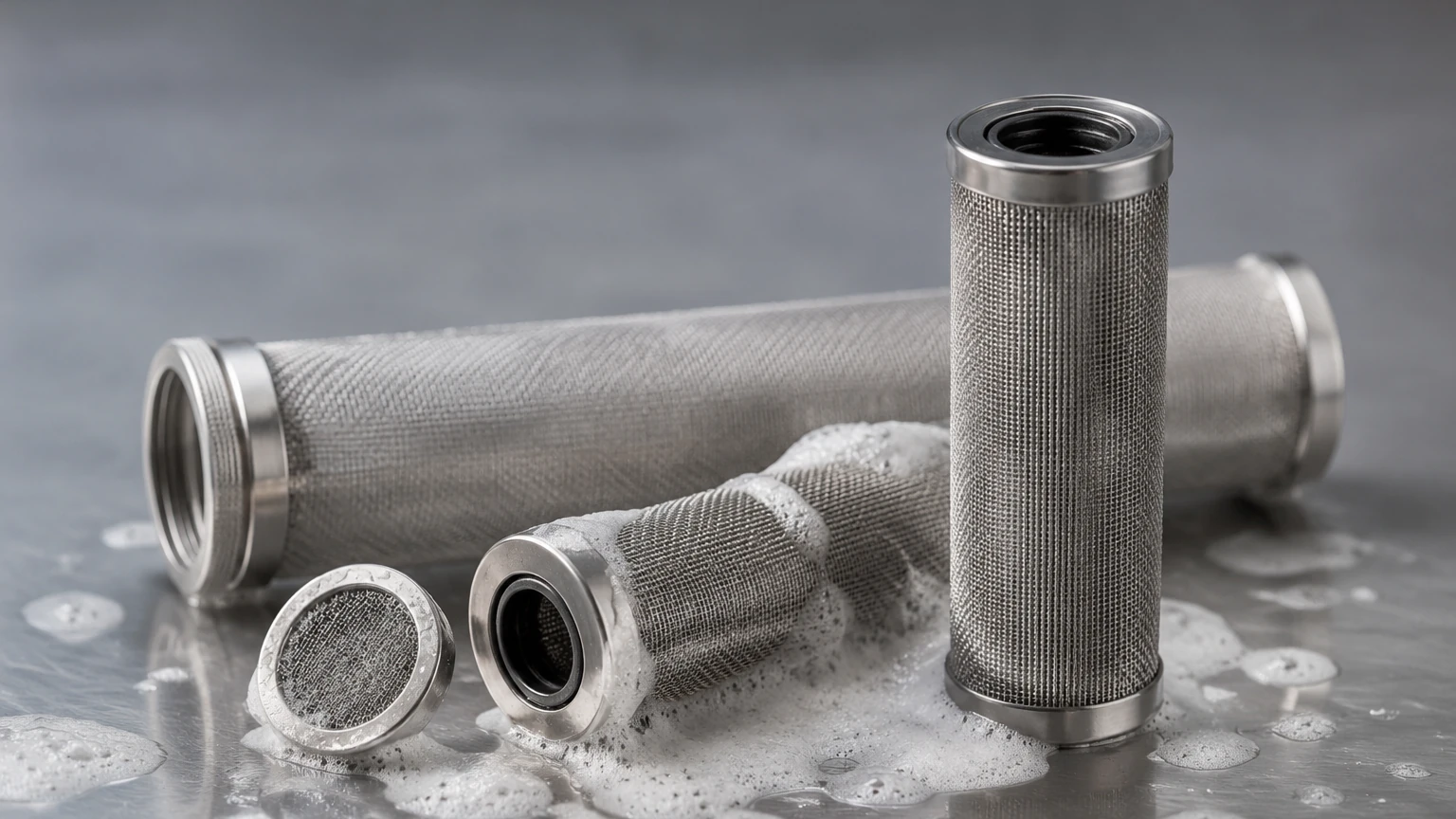
For engineers, the challenge of the cip cleaning method lies in ensuring that the cleaning solution reaches every part of the filter media. This is particularly difficult with pleated filter cartridges or multi-layered wire mesh, where "shadow zones" or stagnant areas can occur.
* Flow Velocity: To achieve the necessary mechanical scrubbing, the CIP pump must be sized to provide a flow rate significantly higher than the standard production flow. A common rule of thumb is a velocity of at least 1.5 meters per second in the piping.
* Differential Pressure Monitoring: Monitoring the pressure drop across the filter during the CIP cycle helps determine if the cleaning is effective. A return to the "clean" differential pressure (ΔP) indicates that the pores of the mesh have been successfully cleared.
* Backwashing Integration: In many automated systems, the CIP method is combined with backwashing (reversing the flow). This mechanical shock helps dislodge particles from the depth of the filter media, pushing them out the way they entered.
Chemical Compatibility and Material Selection
One of the most common risks in industrial CIP is material degradation due to chemical incompatibility. While stainless steel is highly resistant, certain cleaning agents can cause issues if used improperly. For instance, high concentrations of chlorine at elevated temperatures can lead to stress corrosion cracking in 300-series stainless steels.
Engineers must also verify the compatibility of gaskets and seals (such as EPDM, Viton, or PTFE) used within the filter housing. A failure in a small O-ring during a CIP cycle can lead to bypass, contamination, and costly downtime. When sourcing components, it is essential to consult with manufacturers who provide detailed material specifications for their filtration solutions.
Evaluating Risks: Biofilms and Cross-Contamination
If the cip cleaning method is not executed correctly, the primary risk is the development of biofilms. Biofilms are complex colonies of microorganisms that adhere to surfaces and secrete a protective matrix. Once established, they are remarkably resistant to standard cleaning agents.
In filtration systems, biofilms often take hold in dead legs (areas of stagnant flow) or on the downstream side of the filter mesh if the system design allows for back-contamination. To mitigate this, systems should be designed with minimal dead legs and high-quality, crevice-free welds. Regular validation through ATP (Adenosine Triphosphate) testing or microbial swabbing is necessary to confirm that the CIP process is achieving the required sterility levels.
Customization and Selection for CIP Environments
Not all filters are created equal when it comes to cleanability. A filter designed for a single-use application will fail rapidly if subjected to the thermal and chemical stresses of a CIP environment. When selecting a filtration solution, purchasing teams should confirm the following with their supplier:
* Maximum Operating Temperature: Can the filter withstand the 80°C+ temperatures of a caustic wash?
* Chemical Resistance: Is the mesh and support structure compatible with the specific acids and sanitizers used in the facility?
* Mechanical Strength: Will the filter media deform under the high-pressure surges associated with CIP pump start-ups?
Kaifil specializes in providing customized stainless steel filtration solutions that address these specific engineering challenges. By focusing on precision manufacturing and material expertise, they help industrial operators implement a cip cleaning method that is both effective and sustainable.
Conclusion: Optimizing Total Cost of Ownership
Implementing a robust CIP protocol is an investment in the longevity of industrial equipment. While the initial cost of high-quality stainless steel filters may be higher than disposable alternatives, the ability to clean and reuse these components through a standardized cip cleaning method significantly reduces the total cost of ownership.
By optimizing the TACT parameters, ensuring chemical compatibility, and selecting filters designed for cleanability, engineers can achieve a balance between operational uptime and rigorous hygiene standards. For those seeking reliable filtration components that meet these demanding requirements, exploring the technical resources and product options available on the Kaifil Main Page is a recommended next step in the procurement process.
