


Coalescer Definition
In the landscape of industrial fluid processing, the ability to separate immiscible liquids or remove entrained liquids from gas streams is critical for equipment protection, product purity, and environmental compliance. To achieve this, engineers rely on a specific class of separation technology. A formal coalescer definition describes a technological device or process component designed to merge small droplets of a dispersed phase into larger droplets, facilitating their separation from a continuous phase based on density differences.
Unlike standard filtration, which primarily focuses on removing solid particulates from a fluid stream, a coalescer acts as a phase separator. It utilizes specialized media—often constructed from high-precision stainless steel wire mesh or synthetic fibers—to intercept fine droplets that would otherwise remain suspended in a stable emulsion or aerosol. For technical professionals and procurement teams, understanding the nuances of this definition is the first step in selecting the correct hardware for demanding applications in chemical processing, oil and gas, and power generation.
Understanding the Technical Coalescer Definition in Industrial Processes
To expand upon the basic coalescer definition, one must look at the physics of fluid dynamics. In a mixture of two immiscible liquids, such as oil and water, the dispersed phase exists as tiny droplets (often measured in microns) suspended within the continuous phase. Due to their small size and the effects of surface tension, these droplets may not settle out naturally within a reasonable timeframe.
Industrial coalescers are engineered to break these emulsions. The process involves three distinct stages:
1. Interception: The dispersed droplets come into contact with the coalescing media.
2. Attachment: The droplets adhere to the fibers or mesh of the media.
3. Coalescence: As more droplets accumulate, they merge into larger globules.
Once the droplets reach a sufficient size, the gravitational forces acting upon them overcome the viscous drag of the continuous phase. Depending on the relative densities, the coalesced phase will either sink to the bottom or rise to the top of the vessel for collection and removal. This makes the coalescer an indispensable tool in any system where liquid-liquid or liquid-gas separation is required to maintain downstream efficiency.
Principles of Operation: How Coalescence Occurs
The effectiveness of a coalescer is governed by several physical principles, most notably Stokes' Law. This law dictates the settling velocity of a droplet in a fluid, stating that the velocity is proportional to the square of the droplet's diameter. By merging many small droplets into a single large one, a coalescer exponentially increases the settling velocity, allowing for rapid separation in a relatively small vessel footprint.
The Role of Surface Energy
In the context of a coalescer definition, the surface properties of the media are paramount. Coalescing media are often categorized as either hydrophilic (water-attracting) or hydrophobic (water-repelling), depending on which phase needs to be coalesced. In an oil-water separator, a hydrophilic medium will attract water droplets, causing them to wet the surface of the fibers and merge.
Mechanical vs. Electrostatic Coalescence
While most industrial applications utilize mechanical coalescers—which rely on physical barriers like stainless steel wire mesh—some specialized sectors use electrostatic coalescers. These use high-voltage electric fields to induce droplet collision. However, for the majority of chemical and hydraulic applications, mechanical coalescers are preferred due to their reliability, lack of moving parts, and compatibility with a wide range of fluid chemistries. For those seeking specific component specifications, visiting the Main Page provides a broader view of how these mechanical elements are manufactured to meet industrial standards.
Material Selection and Engineering Considerations
When defining the requirements for a coalescing system, material selection is perhaps the most critical engineering decision. The harsh environments of chemical processing and offshore oil production demand materials that can withstand corrosion, high temperatures, and mechanical stress.
Stainless Steel Wire Mesh
Stainless steel is the industry standard for coalescer internals. Grades such as 304, 316L, and even high-nickel alloys are used to construct the mesh pads and vane packs that serve as the coalescing surface. The advantages of using stainless steel include:
* Corrosion Resistance: Essential for handling acidic or alkaline fluid streams.
* Structural Integrity: Unlike synthetic fibers, metal mesh does not collapse under high differential pressure.
* Cleanability: Stainless steel components can often be cleaned and reused, reducing the total cost of ownership.
Media Density and Surface Area
The "void fraction" or porosity of the media is a key part of the technical coalescer definition. If the mesh is too dense, the pressure drop across the unit becomes excessive, leading to energy inefficiency. If it is too loose, small droplets may pass through without being intercepted. Engineers must balance the surface area available for droplet attachment with the flow requirements of the system.
Evaluating Coalescer Performance and Efficiency
How do we measure the success of a coalescer? Performance is typically evaluated based on the "effluent quality," or the concentration of the dispersed phase remaining in the fluid after it has passed through the separator. This is usually expressed in parts per million (ppm).
Factors Influencing Efficiency
Several variables can impact the performance of a coalescing system:
1. Interfacial Tension (IFT): A measure of the force holding the surface of the droplets together. Low IFT (often caused by the presence of surfactants) makes it much harder for droplets to coalesce.
2. Viscosity: High-viscosity fluids resist the movement of droplets, slowing down the coalescence process.
3. Flow Velocity: If the fluid moves too quickly through the media, the shear forces can break apart droplets that have already begun to coalesce, a phenomenon known as "re-entrainment."
Micron Ratings and Separation Limits
In a standard coalescer definition, the micron rating refers to the smallest droplet size the unit can effectively capture. High-efficiency coalescers can often remove droplets down to 0.3 microns in gas streams and 5-10 microns in liquid streams. Achieving these levels of precision requires tight manufacturing tolerances and high-quality filter media.
Common Operational Risks and Maintenance Requirements
While coalescers are designed for durability, they are not immune to operational challenges. Engineers must be aware of several risks that can compromise the separation process.
Particulate Fouling
Coalescers are phase separators, not primary particulate filters. If the process fluid contains a high load of solid contaminants (sand, scale, or rust), these solids will lodge in the coalescing media, leading to a rapid increase in differential pressure. To prevent this, a pre-filter is almost always installed upstream of the coalescer to remove solids.
Surfactant Poisoning
Surfactants are chemical agents that reduce the interfacial tension between two liquids. In many industrial processes, surfactants are added intentionally (e.g., detergents or corrosion inhibitors), but they can "poison" a coalescer by coating the media and preventing droplets from attaching and merging. When surfactants are present, specialized media treatments or different separation technologies may be required.
Replacement Cycles
For cartridge-style coalescers, the replacement cycle is determined by the differential pressure (ΔP). As the media becomes loaded with contaminants or as the fibers degrade over time, the ΔP will rise. Monitoring this pressure drop is essential for preventing element collapse and ensuring continuous product quality.
Customization and OEM Solutions for Industrial Coalescence
No two industrial applications are identical. The coalescer definition for a subsea oil-water separator is vastly different from that of a food-grade steam filtration system. This is where customization becomes vital.
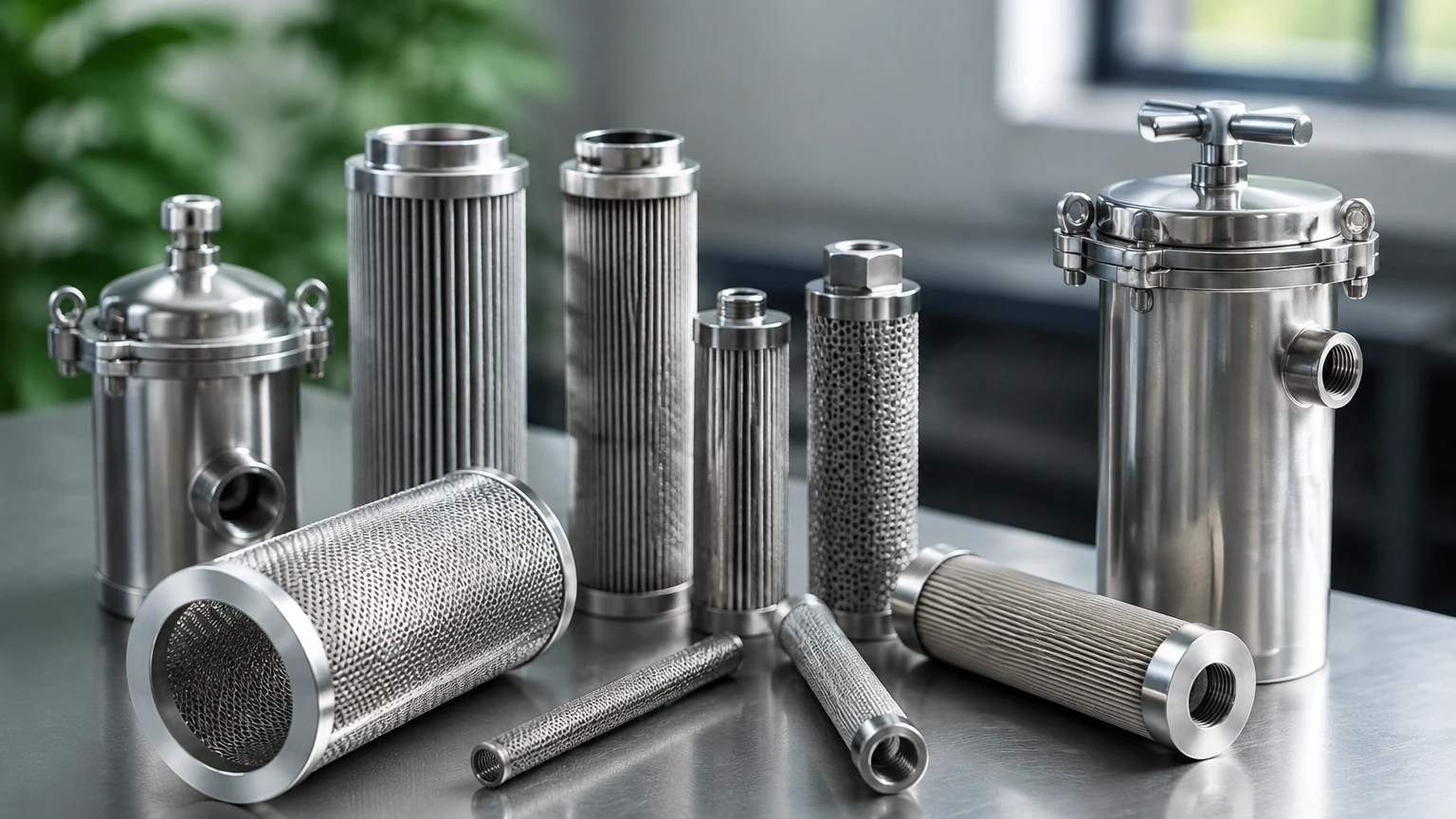
Customized stainless steel filtration solutions allow engineers to specify the exact wire diameter, weave pattern, and housing dimensions required for their specific process. OEM manufacturers play a critical role here, providing the technical expertise needed to translate application requirements into high-performance hardware. Whether it is a unique cylindrical cartridge or a large-scale mesh pad for a separator vessel, the focus remains on durability and precise filtration performance.
By working with experienced manufacturers, purchasing teams can ensure that the components they procure are not only compliant with industry standards but also optimized for the specific flow rates and chemical compositions of their facility. For detailed technical specifications and to explore the range of available filtration components, you can refer to the Main Page for more information.
Summary of Key Confirmation Steps for Engineers
Before finalizing a purchase or specifying a coalescer design, the following technical data should be confirmed:
* Fluid Properties: Confirm the density, viscosity, and interfacial tension of both the continuous and dispersed phases at operating temperatures.
* Contaminant Profile: Identify if solid particulates or surfactants are present in the stream to determine if pre-filtration or specialized media is necessary.
* Operating Conditions: Define the maximum and minimum flow rates, operating pressure, and allowable pressure drop.
* Material Compatibility: Ensure the stainless steel grade and any sealing materials (O-rings/gaskets) are compatible with the process chemicals.
* Target Purity: Clearly define the required ppm level for the outlet fluid to ensure the coalescer is sized for the necessary efficiency.
In conclusion, a robust coalescer definition encompasses more than just a simple filter; it represents a sophisticated engineering solution for phase separation. By understanding the underlying physics, material requirements, and operational risks, industrial professionals can implement filtration systems that enhance process reliability and protect valuable downstream assets.
