


Sip Validation
In the pharmaceutical, biotechnology, and high-purity food and beverage industries, maintaining a sterile environment is not merely a preference but a regulatory and operational necessity. Sterilization-in-Place (SIP) has emerged as the industry standard for ensuring that process equipment, including complex piping, vessels, and filtration systems, is rendered free of viable microorganisms without the need for disassembly. However, the effectiveness of an SIP process is only as reliable as its validation.
Sip validation is the documented evidence that a specific sterilization process will consistently produce a system meeting its predetermined sterility assurance level (SAL). For engineers and quality control professionals, understanding the nuances of sip validation is critical when selecting filtration components that must withstand repeated thermal stress while maintaining structural integrity. As a manufacturer of precision stainless steel filtration solutions, Kaifil recognizes that the filter element is often the most vulnerable point in an SIP circuit, requiring careful engineering and rigorous validation protocols.
Fundamentals of SIP Validation in Industrial Systems
SIP typically utilizes saturated steam as the sterilizing agent. The process relies on the latent heat of vaporization released when steam condenses on the cooler surfaces of the equipment. This heat denatures the proteins and enzymes of microorganisms, effectively neutralizing them.
Validation of this process is complex because steam must reach every "cold spot" within the system. Unlike a controlled autoclave environment, an in-place system has varying geometries, dead legs, and thermal masses. A robust validation program ensures that the most difficult-to-reach areas—such as filter housings, valve seats, and long piping runs—reach the required temperature for the necessary duration.
For those seeking to optimize their filtration hardware for these demanding cycles, visiting the Main Page of a specialized manufacturer can provide insights into the mechanical specifications required for steam-stable components. Validation is not a one-time event; it is a continuous cycle of design, testing, and re-verification that aligns with Current Good Manufacturing Practices (cGMP).
Critical Parameters for Successful SIP Validation
To achieve successful sip validation, several physical and biological parameters must be monitored and controlled. These parameters define the boundaries of the sterilization cycle and are the primary focus during the Performance Qualification (PQ) phase.
1. Temperature and Pressure Correlation
Saturated steam follows a strict pressure-temperature relationship. Validation involves confirming that the pressure within the system corresponds to the expected saturated steam temperature. If the temperature is lower than the pressure suggests, it indicates the presence of non-condensable gases (NCGs) or air, which act as insulators and prevent effective sterilization.
2. Time at Temperature
The "hold time" is the duration for which all parts of the system are maintained at the sterilization temperature (typically 121.1°C or 250°F). This duration is determined by the bioburden of the system and the desired SAL, often targeting a 10^-6 reduction in microbial population.
3. Steam Quality
Steam used for SIP must be "clean steam" or "pure steam," free from boiler additives and volatile organic compounds. Validation protocols often include testing for:
* Dryness Value: Ensuring the steam is not too wet (which causes condensate pooling) or superheated (which lacks the necessary moisture for rapid microbial kill).
* Non-condensable Gases: Limiting NCGs to prevent cold spots.
* Superheat: Ensuring the steam does not exceed the saturation temperature for its pressure by more than 25°C.
Material Selection and Filter Durability during SIP Cycles
The choice of filtration media is a decisive factor in the success of sip validation. In many industrial applications, polymer-based filters may struggle with the repeated thermal expansion and contraction associated with steam cycles, leading to warping or integrity failure.
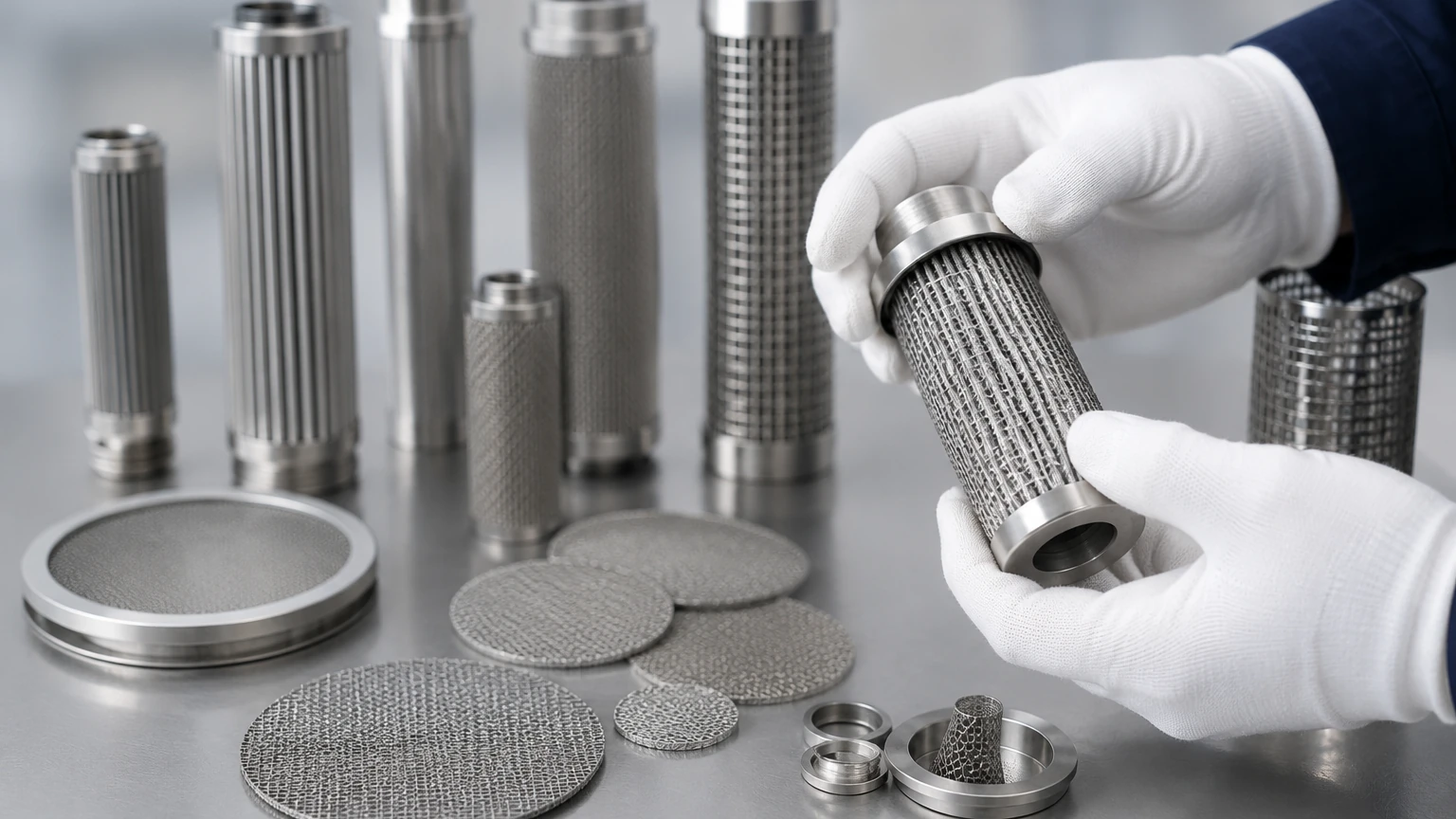
Stainless steel filters, particularly those constructed from 316L, offer superior resistance to the harsh conditions of SIP. Sintered wire mesh and fiber felt metal filters provide the mechanical strength to withstand high-pressure steam without shedding fibers or losing pore geometry. During validation, engineers must confirm that the filter housing and the element itself can handle the differential pressure that occurs during the transition from steam injection to cooling (often involving the injection of sterile air or nitrogen).
When evaluating a filter for SIP compatibility, engineers should consider the maximum allowable differential pressure at sterilization temperatures. A filter that performs well at ambient temperature may deform under the same pressure at 121°C. Therefore, the mechanical design of the filter support core and the end-cap bonding method are critical evaluation criteria during the project planning phase.
Common Challenges and Risks in SIP Validation
Even with high-quality components, several technical hurdles can jeopardize sip validation. Identifying these risks early in the system design phase is essential for long-term operational success.
Condensate Management
Condensate is the primary enemy of SIP. If steam condenses and pools in a low point or a dead leg, it creates a "cold spot" where the temperature may not reach the required sterilization level. Furthermore, water acts as a barrier, preventing steam from reaching the surface of the equipment. Validation must prove that the system is properly sloped and that steam traps are functioning correctly to remove condensate as it forms.
Air Removal and Entrapment
Air is a poor conductor of heat compared to steam. If air is trapped within a filter housing or a complex valve manifold, it can prevent the steam from contacting the surfaces. This is why many SIP cycles begin with a series of pressure pulses or a vacuum stage to evacuate air before the main steam injection.
Thermal Expansion and Gasket Integrity
Repeated heating and cooling cause significant thermal expansion. In a rigid stainless steel system, this expansion puts immense stress on gaskets and seals. If a seal fails during the cooling phase, non-sterile ambient air can be drawn into the system, compromising the entire batch. Validation protocols should include regular integrity testing of seals and gaskets, specifically those in the filter housing assembly.
Engineering Best Practices for SIP System Design
To ensure that a system is "validatable," certain engineering principles must be followed during the design and installation of the filtration and piping modules.
1. Elimination of Dead Legs: A dead leg is any area of piping where the length is significantly greater than the diameter, preventing the flow of steam. The "2D" or "3D" rule (where the length of the leg is no more than 2 or 3 times the pipe diameter) is a common benchmark in sanitary design.
2. Proper Orientation of Filter Housings: Filter housings should be installed in a vertical orientation when possible, with the inlet and outlet configured to allow for complete gravity drainage of condensate.
3. Use of High-Accuracy Sensors: Validation relies on data. Resistance Temperature Detectors (RTDs) should be placed at the predicted cold spots, typically near the steam traps or at the bottom of large filter housings. These sensors must be calibrated and capable of withstanding the SIP environment.
4. Controlled Cooling: After the sterilization hold time, the system must be cooled. Rapid cooling can cause a vacuum to form, which might collapse thin-walled components or suck in contaminants. A validated SIP process will include a controlled bleed of sterile compressed air or nitrogen to maintain a positive pressure during the cooling phase.
Establishing a Robust SIP Validation Protocol
A standard sip validation protocol is divided into three distinct phases: Installation Qualification (IQ), Operational Qualification (OQ), and Performance Qualification (PQ).
Installation Qualification (IQ)
In this phase, the engineering team confirms that the system is built according to the design specifications. This includes verifying material certificates (MTRs) for stainless steel filters, ensuring that the correct steam traps are installed, and confirming that all piping is sloped correctly for drainage.
Operational Qualification (OQ)
OQ involves testing the system's functions without the final product. This includes checking for leaks, verifying that the control system correctly manages the steam valves, and ensuring that the safety interlocks are functional. During OQ, temperature mapping is performed using thermocouples to identify any cold spots in the system.
Performance Qualification (PQ)
PQ is the final step, where the system is tested under real-world conditions. This often involves the use of Biological Indicators (BIs), typically spores of *Geobacillus stearothermophilus*. These spores are highly resistant to heat. BIs are placed at the identified cold spots, and after the SIP cycle, they are incubated to confirm that no microbial growth occurs. A successful PQ usually requires three consecutive successful runs to demonstrate the repeatability of the process.
Conclusion and Technical Considerations for Purchasing
Sip validation is a multi-disciplinary challenge that requires a deep understanding of thermodynamics, microbiology, and mechanical engineering. For purchasing teams and engineers, the focus should be on selecting filtration components that are not only rated for the required micron level but are also engineered for the rigors of repeated steam sterilization.
When sourcing stainless steel filters for SIP-capable systems, it is vital to confirm the manufacturer’s data regarding thermal fatigue resistance and the maximum differential pressure at elevated temperatures. By integrating high-performance metal filters into a well-designed SIP circuit, facilities can reduce the risk of validation failure, minimize downtime, and ensure the highest standards of product purity. For those in the process of designing or upgrading their filtration systems, consulting with technical experts and reviewing detailed product specifications on the Main Page of a dedicated manufacturer is a prudent first step toward achieving a validated and reliable sterilization process.
