


Coalescing Air Separator
In industrial fluid systems, the presence of entrained air and micro-bubbles is more than a minor nuisance; it is a primary driver of system inefficiency, component degradation, and premature failure. While standard air vents can handle large pockets of trapped air, they are often ineffective against the microscopic bubbles that circulate within high-velocity process fluids. This is where the coalescing air separator becomes an essential component. By utilizing specialized internal media, these devices facilitate the merging of micro-bubbles into larger buoyant masses that can be effectively removed from the system.
For engineers and facility managers, understanding the technical nuances of a coalescing air separator—from the physics of bubble formation to the material science of the internal filtration media—is critical for optimizing system performance and longevity. As a manufacturer specializing in precision stainless steel filtration solutions, Kaifil provides the engineering expertise and high-performance components necessary to address these challenges in demanding industrial environments.
The Role of Coalescing Air Separators in Industrial Fluid Systems
Entrained air enters industrial systems through various means, including initial filling, pump seals, and chemical reactions within the process fluid. Once present, air exists in three primary forms: large pockets, entrained bubbles, and dissolved air. Standard centrifugal separators or simple air scoops are designed to capture large pockets, but they often allow micro-bubbles to pass through.
Micro-bubbles are particularly problematic because they tend to adhere to heat transfer surfaces, creating an insulating layer that reduces thermal efficiency. In hydraulic systems, entrained air leads to cavitation, which can erode pump impellers and valves. Furthermore, the presence of oxygen accelerates the oxidation of metal components, leading to the formation of magnetite and other corrosive byproducts. A coalescing air separator is engineered specifically to target these micro-bubbles, ensuring the fluid remains as air-free as possible to protect downstream equipment.
Technical Principles: How Coalescence Removes Entrained Air
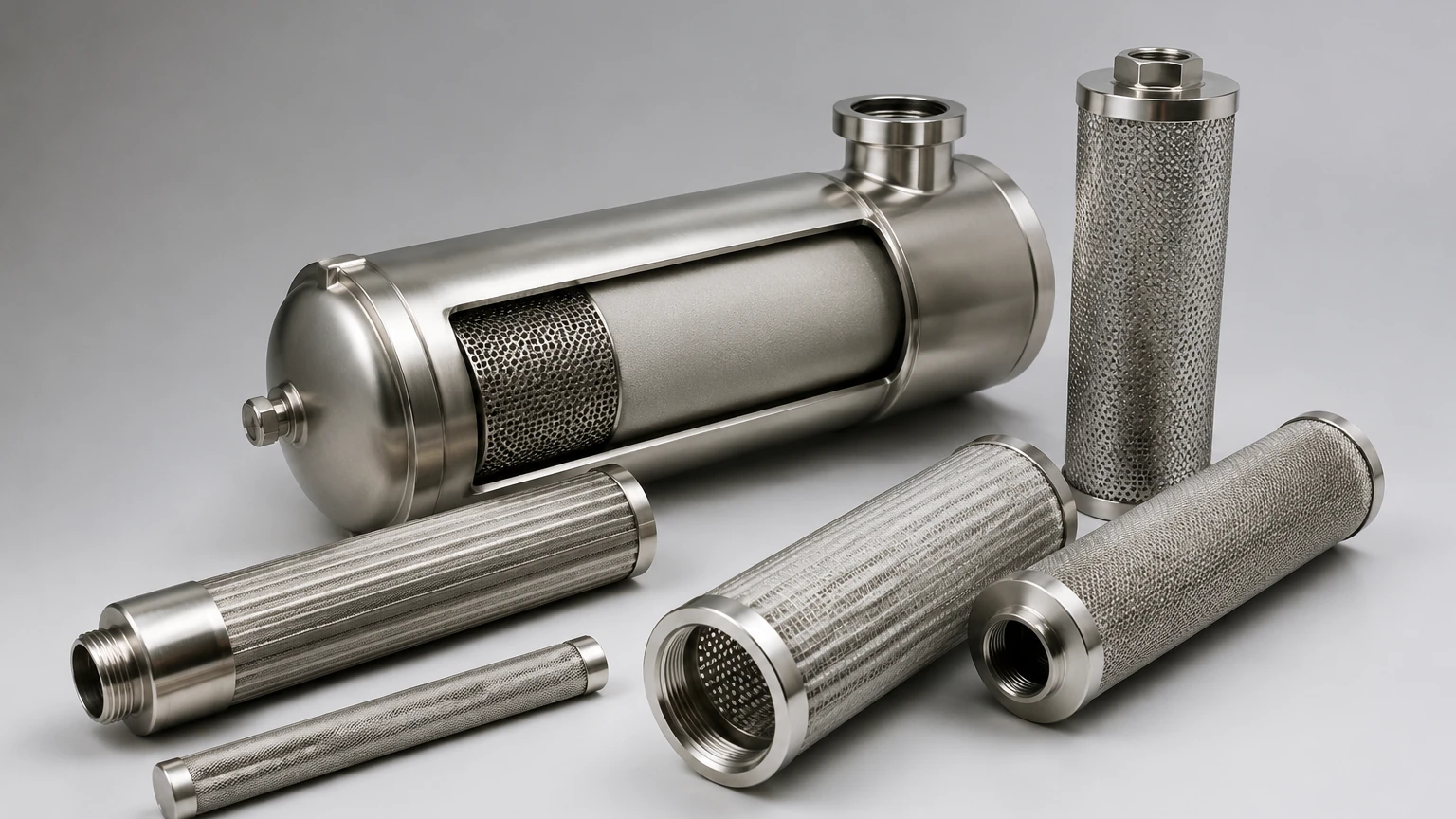
The effectiveness of a coalescing air separator relies on the principle of coalescence—the process by which small droplets or bubbles merge to form larger ones. In the context of air separation, this is achieved by forcing the fluid to pass through a "coalescing medium," which is typically a dense matrix of stainless steel wire mesh or structured metal packing.
As the fluid enters the separator, its velocity is reduced. The micro-bubbles within the fluid come into contact with the surfaces of the internal media. Due to surface tension and the low-velocity environment, these bubbles adhere to the wire mesh. As more bubbles strike the same area, they merge (coalesce) into larger bubbles. Once these bubbles reach a certain size, their buoyancy overcomes the adhesive force of the fluid flow, causing them to rise to the top of the separator chamber. From there, an automatic air vent releases the accumulated gas into the atmosphere.
This process is highly dependent on the surface area and the geometry of the internal media. High-quality separators utilize precision-engineered stainless steel mesh that provides maximum surface area with minimal pressure drop, a balance that is crucial for maintaining system flow rates.
Engineering Considerations for Media Selection
The internal coalescing element is the heart of the separator. When selecting or designing these components, engineers must consider several technical factors:
1. Surface Area Density: The more contact points available, the higher the probability of bubble capture. However, excessive density can lead to a high pressure drop (ΔP), which increases the load on system pumps.
2. Void Volume: A high void volume ensures that the fluid can pass through the media with minimal resistance. Stainless steel wire mesh is often preferred because it offers a high surface-area-to-volume ratio while maintaining a high percentage of open area.
3. Media Geometry: The orientation of the mesh—whether it is knitted, pleated, or wrapped—affects the turbulence levels within the separator. Controlled turbulence can actually aid in bringing micro-bubbles into contact with the media surfaces.
4. Structural Integrity: In high-pressure or high-flow applications, the coalescing media must be able to withstand mechanical stress without deforming or shedding fibers. This is why robust stainless steel constructions are the industry standard for B2B industrial applications.
Performance Evaluation and Sizing Criteria
Selecting the correct coalescing air separator requires a detailed analysis of the system’s operating parameters. Purchasing a separator based solely on pipe size is a common error that can lead to sub-optimal performance. Instead, engineers should evaluate the following:
Flow Velocity
For effective coalescence, the fluid velocity through the separator body should typically be kept below 10 feet per second (3 meters per second). If the velocity is too high, the kinetic energy of the fluid will strip the micro-bubbles off the media before they have a chance to coalesce and rise.
Pressure Drop (ΔP)
Every component added to a fluid loop introduces a pressure drop. Engineers must confirm that the separator’s ΔP at the maximum design flow rate does not exceed the system's available head pressure. Using high-efficiency stainless steel mesh internals can help keep these losses to a minimum.
Temperature and Pressure Ratings
Industrial processes often involve extreme conditions. Coalescing air separators must be rated for the maximum operating temperature and pressure of the system. For applications involving steam or high-temperature thermal oils, all-metal internals and housings are required to prevent thermal degradation.
Material Durability and Chemical Compatibility
In industries such as chemical processing, pharmaceutical manufacturing, and food production, the material of the coalescing air separator is non-negotiable. While carbon steel or plastic components might suffice for basic HVAC applications, industrial-grade filtration requires higher specifications.
Stainless steel (typically Grade 304 or 316L) is the material of choice for several reasons:
* Corrosion Resistance: It resists the corrosive effects of oxygen-rich environments and aggressive process chemicals.
* Hygienic Properties: In food and beverage or pharmaceutical sectors, 316L stainless steel ensures that the separator does not introduce contaminants and can withstand CIP (Clean-In-Place) protocols.
* Longevity: Stainless steel internals do not become brittle over time, ensuring that the coalescing media remains intact for the duration of the equipment's service life.
At Kaifil, we focus on producing these high-durability components, ensuring that the internal wire mesh structures meet the stringent requirements of global industrial standards. To explore our full range of material options and technical specifications, you can visit our Main Page.
Maintenance, Cleaning, and Total Cost of Ownership
While coalescing air separators are generally low-maintenance devices, they are not "set and forget." Over time, the internal media can act as a secondary filter, trapping suspended solids or sludge. If the media becomes fouled, the pressure drop will increase, and the coalescing efficiency will decrease.
Cleaning Protocols
Many industrial separators feature a removable bottom flange or a blow-down valve. A blow-down valve allows for the removal of heavy sediment that settles at the bottom of the unit. For systems with high particulate loads, a separator with a removable coalescing element is recommended, allowing the stainless steel mesh to be cleaned via ultrasonics or chemical baths and then reinstalled.
Replacement Cycles
Unlike disposable fiber filters, high-quality stainless steel coalescing media is designed to last for many years. However, the automatic air vent mechanism at the top of the unit is a mechanical part that may require replacement every 3 to 5 years, depending on water quality and chemical additives.
Total Cost of Ownership (TCO)
When evaluating the cost of a coalescing air separator, engineers should look beyond the initial purchase price. A cheaper unit with inefficient media or lower-grade materials will result in higher energy costs (due to pressure drop) and higher maintenance costs (due to frequent cleaning or corrosion). Investing in a precision-engineered stainless steel solution typically yields a lower TCO through improved system efficiency and reduced downtime.
Customization and OEM Solutions for Filtration Components
Every industrial system has unique constraints, whether it is a limited installation footprint, unusual flow characteristics, or specific chemical compatibility needs. Off-the-shelf separators may not always provide the optimal solution. This is where customization becomes a critical factor for OEMs and system designers.
Customization options often include:
* Variable Mesh Density: Tailoring the coalescing media to target specific bubble sizes or fluid viscosities.
* Custom Housing Dimensions: Designing the separator to fit into tight modular skids or existing piping configurations.
* Specialized Connections: Offering flanged, threaded, or weld-end connections that match the rest of the system's infrastructure.
Kaifil works closely with global customers to develop these customized filtration components. By combining advanced manufacturing capabilities with deep engineering knowledge, we ensure that every coalescing air separator component we produce is optimized for its specific application. Whether you are designing a new hydraulic power unit or upgrading a large-scale chemical reactor cooling loop, selecting the right filtration partner is the first step toward achieving reliable, long-term performance.
For technical professionals seeking to optimize their fluid systems, the coalescing air separator is a vital tool. By understanding the underlying physics and insisting on high-quality materials and engineering, you can significantly improve the reliability and efficiency of your industrial processes. To learn more about our manufacturing capabilities and how we support industrial filtration needs, please visit our Main Page.
