


Coalescing Filter Oil Water Separator
In industrial fluid processing, the separation of immiscible liquids—specifically oil and water—is a critical requirement for maintaining equipment longevity, ensuring product purity, and meeting environmental discharge standards. A coalescing filter oil water separator is a specialized piece of engineering equipment designed to accelerate the natural separation process of these fluids. Unlike standard particulate filters that rely solely on mechanical straining, coalescing systems utilize the physical properties of the fluids and the surface characteristics of the filter media to merge fine droplets into larger masses that can be easily removed.
For engineers and procurement teams, selecting the right separation technology requires a deep understanding of fluid dynamics, material science, and the specific operational constraints of the application. This guide explores the technical foundations, material considerations, and selection criteria for industrial coalescing systems.
The Mechanics of Coalescence in Fluid Separation
The fundamental challenge in oil-water separation is the presence of stable or semi-stable emulsions. In these states, one liquid is dispersed within another in the form of microscopic droplets. Because these droplets are so small, their buoyancy is often insufficient to overcome the viscous drag of the continuous phase, meaning they will not settle out by gravity alone within a practical timeframe.
A coalescing filter oil water separator addresses this by employing a multi-stage process:
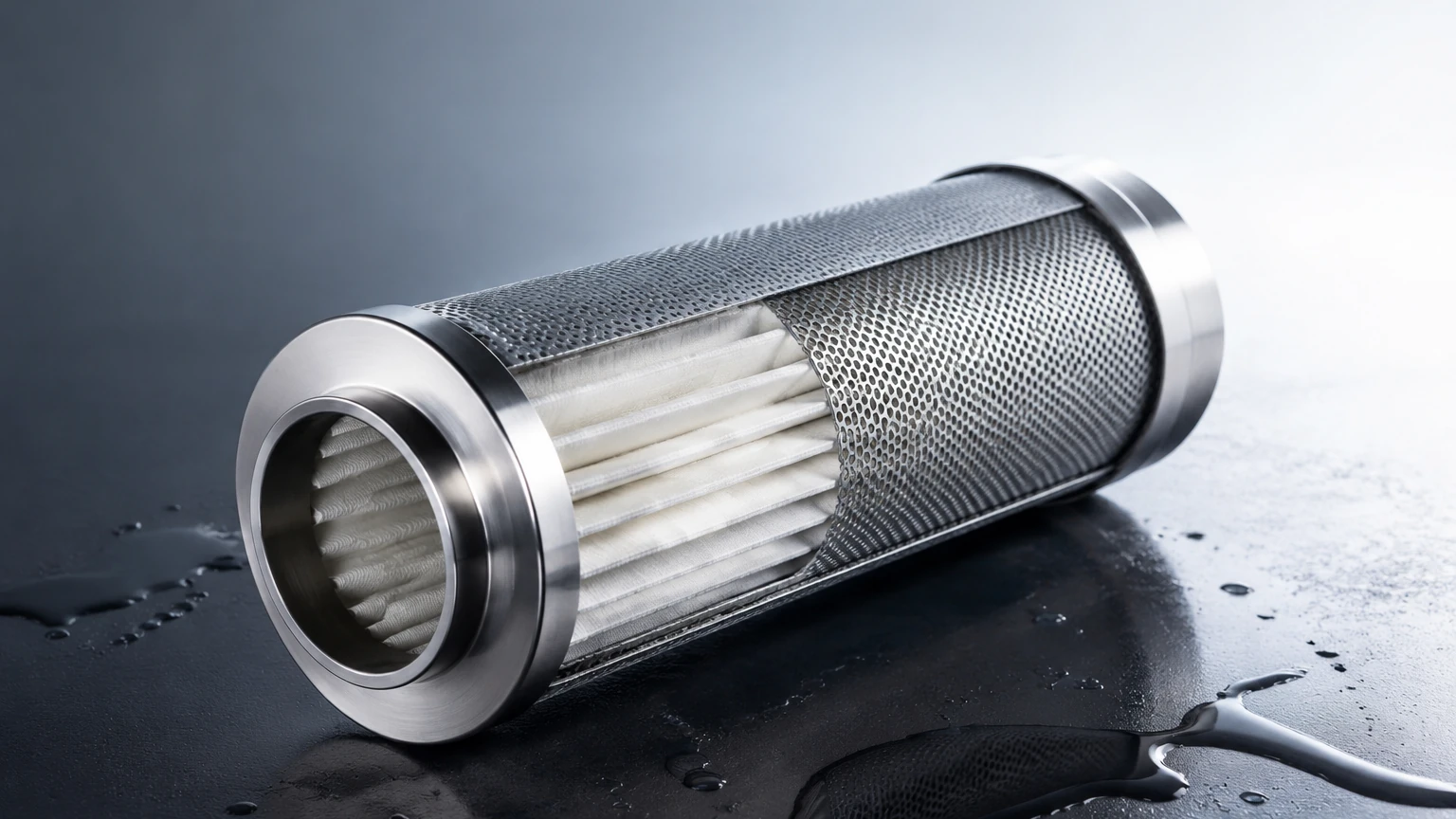
1. Particulate Filtration: Before coalescence can occur, solid contaminants must be removed. Solids can stabilize emulsions and clog the fine pores of the coalescing media. Most high-quality separators include an initial stage of stainless steel wire mesh or pleated media to capture these solids.
2. Droplet Capture and Coalescence: As the emulsion passes through the coalescing media—often a graded density matrix of fibers or metallic mesh—the dispersed droplets are intercepted. Through a combination of direct interception, inertial impaction, and Brownian motion, the droplets come into contact with the media fibers.
3. Growth and Release: The media is engineered to be "wetted" by the dispersed phase. As more droplets are captured, they merge (coalesce) into larger droplets. Once these droplets grow large enough that the drag force of the flowing fluid exceeds the adhesive force holding them to the media, they are released.
4. Phase Separation: The now-enlarged droplets, having significantly greater mass, either rise to the top (if they are oil in water) or sink to the bottom (if they are water in oil) due to the density difference between the two liquids. This stage often utilizes a secondary "separator" element that is hydrophobic (water-repelling) to prevent the droplets from re-entraining in the clean effluent.
Material Engineering: The Role of Stainless Steel in Coalescing Media
The choice of material for the filter media is perhaps the most critical factor in the performance of a coalescing filter oil water separator. While synthetic fibers like polyester or fiberglass are common in light-duty applications, industrial environments often demand the durability and chemical resistance of stainless steel.
Kaifil specializes in custom stainless steel filtration solutions, utilizing high-grade materials such as 304 and 316L stainless steel. The advantages of using metal-based media in coalescing applications include:
* Thermal Stability: Stainless steel components can operate in high-temperature processes where synthetic materials would soften or degrade. This is essential in steam-assisted oil recovery or high-temperature chemical processing.
* Chemical Compatibility: In the pharmaceutical and chemical sectors, the fluids being processed may be highly acidic or alkaline. Stainless steel offers superior resistance to corrosion, ensuring that the filter media does not leach contaminants into the process stream.
* Structural Integrity: Under high-pressure conditions or during pressure surges, stainless steel wire mesh maintains its pore structure. This prevents "channeling," where the fluid bypasses the media, leading to a total failure of the separation process.
* Cleanability and Reusability: Unlike disposable cartridges, stainless steel filter elements can often be cleaned using ultrasonic baths or backwashing, reducing the total cost of ownership and the environmental impact of waste disposal.
Critical Design Parameters for Industrial Applications
When specifying a coalescing filter oil water separator, engineers must look beyond simple flow rates. Several technical parameters dictate whether a system will achieve the required parts-per-million (PPM) efficiency.
Interfacial Tension (IFT)
Interfacial tension is a measure of the force holding the interface between the two liquids together. Fluids with low IFT (often caused by the presence of surfactants or detergents) are much harder to coalesce because the droplets do not merge easily. If the IFT is below 20 dynes/cm, standard coalescing media may fail, requiring specialized surface treatments or longer residence times.
Fluid Viscosity
Viscosity affects the speed at which a droplet can move through the continuous phase. In high-viscosity oils, water droplets move slowly, which can hinder the separation stage after coalescence has occurred. In such cases, the separator vessel must be sized larger to allow for slower flow velocities and increased settling time.
Specific Gravity Differential
The separation of the two phases after coalescence relies on the difference in density. If the specific gravity of the oil and water are very close (e.g., heavy crude oil vs. brackish water), the gravitational separation becomes inefficient. Design modifications, such as the inclusion of plate packs or specialized separator elements, may be necessary to assist the process.
Operational Performance: Efficiency, Pressure Drop, and Flow Velocity
The performance of a coalescing filter oil water separator is typically measured by its removal efficiency and its impact on system pressure.
* Filtration Accuracy: This refers to the smallest droplet size the media can effectively capture and coalesce. High-performance industrial systems can often reduce water content in oil to less than 100 PPM, or oil in water to less than 5 PPM, depending on the initial concentration.
* Flux and Velocity: Flow velocity is a double-edged sword. While higher flow rates increase throughput, excessive velocity can cause "shear," breaking large droplets back down into fine emulsions as they pass through the media. Engineering the filter area to maintain an optimal flux (flow per unit of surface area) is vital for consistent performance.
* Differential Pressure ($ΔP$): As the filter captures solids or as the media becomes saturated with the dispersed phase, the resistance to flow increases. A high initial pressure drop indicates an undersized filter, while a rapidly increasing pressure drop usually suggests a need for better pre-filtration or a more frequent cleaning cycle.
For technical professionals looking to optimize these parameters, reviewing detailed engineering data is a necessary step. You can find more information on specific component designs on the Main Page.
Application-Specific Solutions: From Hydraulics to Chemical Processing
The versatility of the coalescing filter oil water separator allows it to be used across diverse industrial sectors, each with unique requirements.
Hydraulic and Lubrication Systems
Water contamination in hydraulic oil leads to oxidation, loss of lubricity, and component corrosion. Coalescing filters are used in kidney-loop systems to continuously remove moisture, extending the life of pumps and valves. In these applications, the filter must be able to handle varying oil viscosities as temperatures fluctuate during startup and operation.
Chemical and Petrochemical Processing
In the production of fuels and chemicals, water must be removed to prevent catalyst poisoning and to meet product specifications. Stainless steel coalescers are preferred here due to the aggressive nature of the hydrocarbons and the high pressures involved in the refining process.
Wastewater Treatment
Industries must remove oil from wash water or process runoff before discharge to comply with environmental regulations. Coalescing separators provide a compact and efficient alternative to large API separators or dissolved air flotation (DAF) systems, especially when space is limited.
Food and Beverage Production
In applications involving edible oils or steam filtration, the materials must be food-grade and capable of withstanding Clean-in-Place (CIP) procedures. Stainless steel wire mesh filters from Kaifil are ideal for these environments, providing precise filtration without the risk of fiber migration associated with synthetic media.
Maintenance, Replacement Cycles, and Operational Efficiency
To maintain the efficiency of a coalescing filter oil water separator, a proactive maintenance strategy is required. Unlike simple particulate filters, the failure of a coalescer is not always signaled by a pressure spike. If the media becomes "blinded" by surfactants or if the separator element is damaged, the effluent may remain contaminated even if the pressure drop is low.
Key Maintenance Considerations:
* Monitoring Effluent Quality: Regular sampling of the output fluid is the only definitive way to ensure the coalescer is functioning. Turbidity meters or moisture sensors can be integrated for real-time monitoring.
* Pre-filter Replacement: Protecting the coalescing stage is the most effective way to extend the system's life. If the pre-filter is bypassed or fails, the coalescing media will quickly become fouled with solids, necessitating a costly deep-clean or replacement.
* Seals and Gaskets: In high-pressure or chemical applications, the integrity of the housing seals is paramount. A bypass of even 1% of the fluid around the filter element can result in the entire batch failing to meet PPM standards.
Technical Checklist for Procurement and Customization
Before purchasing or commissioning a custom coalescing filter oil water separator, engineering teams should confirm the following data points with their manufacturer:
1. Fluid Characteristics: What are the specific gravities, viscosities, and operating temperatures of both the continuous and dispersed phases?
2. Contamination Levels: What is the influent concentration (e.g., 5,000 PPM) and what is the required effluent target (e.g., <10 PPM)?
3. Flow Dynamics: What is the minimum, normal, and maximum flow rate? Are there significant pressure pulsations in the system?
4. Material Requirements: Does the application require 316L stainless steel for corrosion resistance, or is 304 sufficient? Are there specific gasket materials (Viton, PTFE) required for chemical compatibility?
5. Customization Needs: Does the filter need to fit into an existing housing, or is a complete OEM solution required? Kaifil provides extensive OEM capabilities to develop components that meet these exact spatial and performance constraints.
By addressing these factors during the design phase, companies can ensure they invest in a filtration solution that provides reliable performance with minimal operational disruption. For further technical guidance and to explore the full range of custom stainless steel filtration components, visit the Main Page to review product options and application support.
