


Coalescing Oil Water Separator
In industrial fluid management, the efficient separation of oil from water is a critical requirement for process integrity, equipment longevity, and environmental compliance. Coalescing oil water separators represent a highly specialized category of filtration technology designed to remove non-emulsified hydrocarbons from aqueous solutions. Unlike gravity-based settling tanks that rely solely on residence time, coalescing systems utilize advanced media to accelerate the separation process. For engineers and technical procurement teams, understanding the mechanical principles, material requirements, and engineering variables of these systems is essential for optimizing industrial performance.
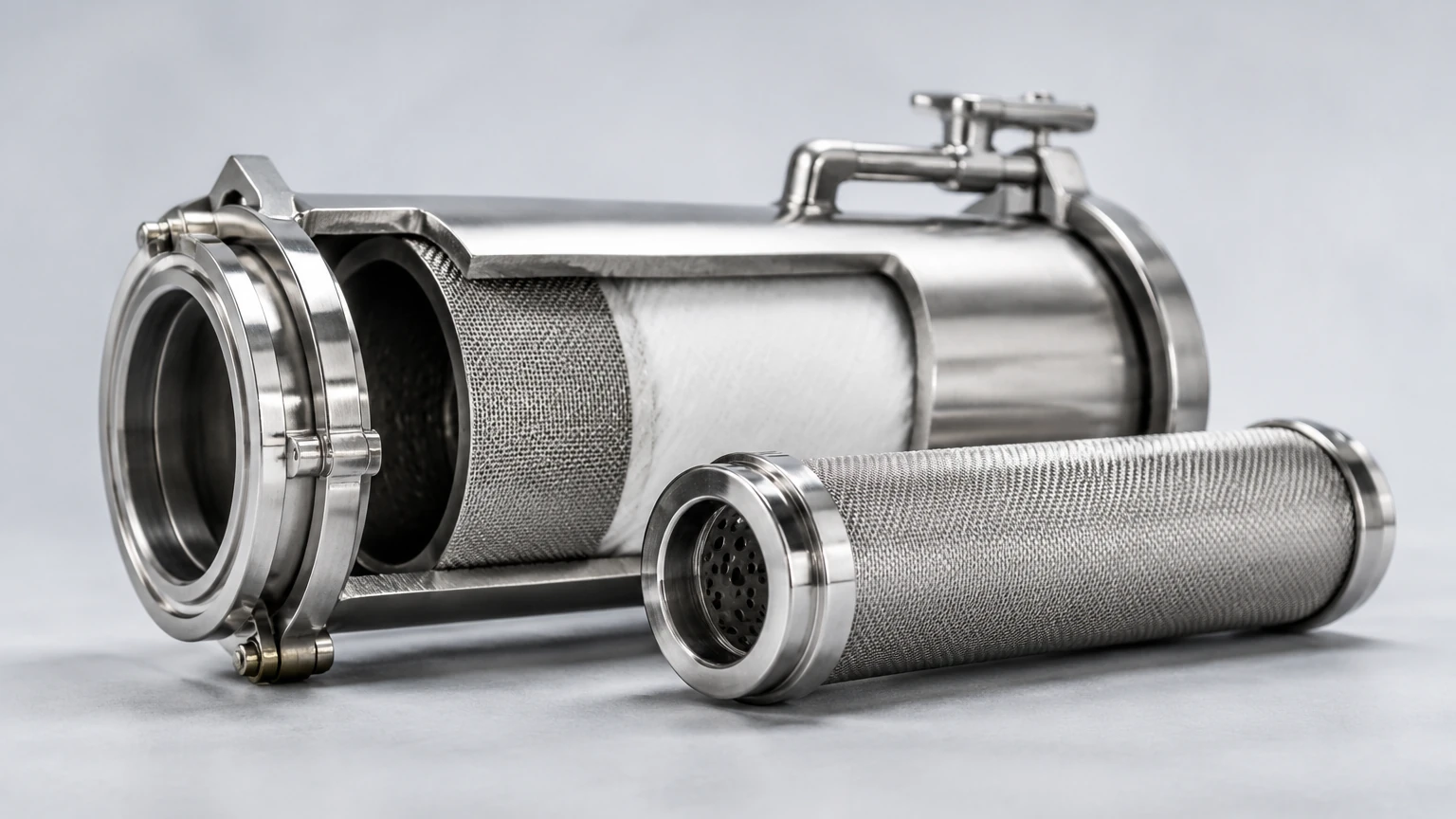
At the core of these systems are precision-engineered components, often constructed from high-grade stainless steel to withstand corrosive environments and high-pressure differentials. As a manufacturer specializing in custom filtration solutions, Kaifil provides the technical foundation for these systems through high-performance wire mesh and filter cartridges designed for demanding industrial applications.
Understanding the Mechanism of Coalescing Oil Water Separation
The fundamental principle behind a coalescing oil water separator is the enhancement of droplet size. In many industrial processes, oil exists in water as a dispersion of fine droplets. According to Stokes' Law, the rise rate of an oil droplet is proportional to the square of its diameter. Therefore, larger droplets rise significantly faster than smaller ones.
Coalescence is the process where small droplets collide and merge into larger ones. A coalescing separator facilitates this through a specialized medium—often a multi-layered stainless steel wire mesh or a structured cartridge. As the contaminated fluid passes through the media, the oil droplets, which are typically oleophilic (oil-attracting), adhere to the surface of the filter fibers. As more droplets accumulate, they merge until they reach a size where buoyancy overcomes the adhesive forces of the media. These larger globules then break free and rise rapidly to the surface of the separator, where they can be skimmed or decanted.
This process is highly dependent on the velocity of the fluid. To ensure maximum efficiency, the system must maintain laminar flow. Turbulent flow can break apart coalescing droplets, reversing the separation process and reducing the overall effectiveness of the system. Engineering the internal geometry and selecting the correct filtration density are therefore paramount to achieving the desired effluent quality.
Material Engineering: Why Stainless Steel is Essential for Coalescing Media
The choice of material for the coalescing media and the internal housing is a primary factor in the durability and reliability of the separator. While plastic or fiberglass media may be suitable for light-duty applications, industrial environments involving chemical processing, high temperatures, or high-pressure hydraulics require the robustness of stainless steel.
Corrosion Resistance and Chemical Compatibility
In industries such as chemical processing and pharmaceutical manufacturing, the fluids being treated may contain aggressive solvents or have extreme pH levels. Stainless steel grades like 304 and 316L provide the necessary resistance to chemical attack, ensuring that the coalescing media does not degrade over time. This material stability prevents media migration—where particles of the filter itself break off and contaminate the downstream fluid.
Structural Integrity under Pressure
Industrial filtration often involves significant pressure differentials. Stainless steel wire mesh and sintered metal cartridges offer superior mechanical strength compared to synthetic alternatives. They can withstand the hydraulic shocks and high flow rates common in industrial water treatment and hydraulic oil reclamation without deforming. This structural stability ensures that the pore size and surface area of the media remain consistent, providing predictable filtration performance throughout the component's service life.
Thermal Stability
Many oil-water separation tasks occur at elevated temperatures, particularly in steam condensate recovery or industrial cleaning processes. Stainless steel maintains its mechanical properties at temperatures that would cause synthetic media to soften or fail. This allows for a wider operating range and reduces the risk of catastrophic system failure due to thermal stress.
Key Performance Indicators for Industrial Oil-Water Separators
When evaluating a coalescing oil water separator, engineers must look beyond basic flow rates. Several technical metrics determine whether a system is fit for a specific industrial purpose.
1. Filtration Accuracy (Micron Rating): This refers to the size of the oil droplets the media can effectively capture. Higher precision media can capture droplets down to 5–10 microns, which is necessary for meeting strict environmental discharge limits.
2. Oil Removal Efficiency: Usually expressed as a percentage or in parts per million (ppm) of residual oil in the effluent. High-performance coalescers can often achieve effluent concentrations of less than 5 ppm of non-emulsified oil.
3. Pressure Drop ($ΔP$): The resistance to flow caused by the media. A well-designed system balances high surface area for coalescence with a low initial pressure drop to minimize energy consumption and pump wear.
4. Flow Velocity: The speed at which the fluid moves through the coalescing pack. If the velocity is too high, the residence time is insufficient for droplets to merge; if it is too low, the system becomes unnecessarily large and expensive.
For detailed specifications on media types and performance benchmarks, technical teams can consult the Main Page of the manufacturer to review available filtration grades and customization options.
Applications Across Demanding Industrial Sectors
Coalescing oil water separators are utilized across a broad spectrum of industries, each with unique challenges regarding fluid chemistry and separation requirements.
Chemical and Petrochemical Processing
In these sectors, separators are used to recover valuable hydrocarbons from process water or to protect downstream equipment from oil contamination. The use of custom-designed stainless steel filters is standard here to handle the varied chemical compositions and high-temperature requirements.
Hydraulic and Lubrication Systems
Water is a common contaminant in hydraulic oils, leading to oxidation, additive depletion, and component wear. Coalescing separators are integrated into kidney-loop filtration systems to continuously remove water from the oil, extending the life of both the fluid and the hydraulic machinery.
Food and Beverage Industry
Processing facilities often generate wastewater containing fats, oils, and greases (FOG). Stainless steel separators are preferred in this industry due to their ease of cleaning and sterilization, ensuring compliance with hygiene standards while effectively managing waste streams.
Marine and Bilge Water Treatment
International maritime regulations (such as MARPOL) mandate strict limits on the oil content of bilge water discharged into the ocean. Coalescing separators equipped with precision metal filter components are essential for achieving the required 15 ppm or lower oil concentration in harsh marine environments.
Selection and Sizing: Engineering Considerations for Purchasing Teams
Selecting the right coalescing oil water separator requires a comprehensive analysis of the specific application. Purchasing teams and engineers should confirm the following data points before finalizing a design:
* Fluid Characteristics: What is the specific gravity of both the oil and the water? What is the operating temperature and viscosity? These factors directly impact the rise rate of the oil droplets.
* Contamination Levels: What is the expected influent oil concentration? High concentrations may require a pre-separation stage to prevent the coalescing media from becoming overwhelmed.
* Solids Loading: Coalescing media is designed to capture liquid droplets, not solid particles. If the fluid contains significant suspended solids, a pre-filter (such as a stainless steel wire mesh strainer) must be installed to prevent the coalescer from clogging.
* Space Constraints: Industrial facilities often have limited footprints. Custom-designed separators can be engineered to fit specific spatial requirements while maintaining the necessary residence time for effective separation.
Kaifil’s expertise in OEM and customized filtration allows for the development of components that meet these specific variables, ensuring that the final separator assembly performs according to the calculated engineering specifications.
Maintenance Strategies for Long-Term Filtration Efficiency
While coalescing oil water separators are generally low-maintenance compared to centrifugal systems, they are not "set and forget" equipment. A proactive maintenance schedule is vital for maintaining effluent quality and protecting the system.
Monitoring Pressure Differential
As the coalescing media captures oil and potentially traps residual solids, the pressure drop across the unit will increase. Monitoring this $ΔP$ is the most effective way to determine when the media needs cleaning or replacement. Sudden spikes in pressure often indicate a surge in solid contaminants or a failure in the pre-filtration stage.
Cleaning Protocols
One of the primary advantages of stainless steel coalescing media is its cleanability. Unlike disposable synthetic filters, many metal mesh components can be cleaned using backwashing, ultrasonic cleaning, or chemical soaking. This significantly reduces the total cost of ownership by extending the replacement cycle of the internal components.
Inspection of Seals and Gaskets
In any pressurized filtration system, the integrity of seals is paramount. During routine maintenance, gaskets and O-rings should be inspected for signs of swelling, cracking, or compression set, particularly in applications involving high temperatures or aggressive chemicals.
Conclusion
The coalescing oil water separator is a vital tool for modern industry, bridging the gap between basic gravity separation and expensive chemical treatment. By leveraging the physical properties of oil and water and utilizing high-performance materials like stainless steel, these systems provide a reliable, cost-effective solution for fluid purification. For engineers and technical buyers, focusing on material quality, precise engineering of the coalescing media, and a clear understanding of the application's specific variables will lead to the most successful implementation. Whether for environmental compliance or process optimization, the right filtration components are the foundation of a high-performing separation system.
