


Well Steel Casing
In industrial fluid extraction, water treatment, and chemical processing, the integrity of a borehole is fundamentally dependent on the quality and specification of the well steel casing. Serving as the primary structural retainer for the wellbore, the casing is designed to prevent the collapse of surrounding geological formations, isolate different hydraulic zones, and provide a secure conduit for the installation of high-precision filtration components. For engineers and procurement specialists, selecting the appropriate well steel casing is not merely a matter of structural support but a critical decision that impacts the long-term efficiency, purity, and maintenance costs of the entire filtration system.
As a specialized manufacturer of stainless steel filtration solutions, Kaifil recognizes that the casing is the foundation upon which effective filtration is built. Whether the application involves municipal water supply, industrial cooling, or chemical recovery, the synergy between the outer casing and the internal filter elements—such as wire mesh filters and stainless steel cartridges—determines the system's operational lifespan. Understanding the technical nuances of material selection, mechanical stress, and corrosion resistance is essential for optimizing industrial well performance.
Structural Functions and Engineering Requirements
The primary role of well steel casing is to provide a permanent, stable lining for the drilled hole. In industrial environments, this involves several complex engineering functions:
1. Borehole Stabilization: The casing must withstand the lateral pressure exerted by soil, rock, and fluid-bearing strata. Without adequate casing strength, the wellbore is susceptible to sloughing or total collapse, which can destroy expensive downhole equipment and filtration assemblies.
2. Hydraulic Isolation: In many industrial sites, multiple aquifers or fluid zones exist at different depths. Well steel casing, when properly cemented, prevents the migration of fluids between these zones. This is vital for preventing the contamination of clean water sources by brackish or chemically laden fluids from other strata.
3. Equipment Housing: The internal diameter of the casing must be precisely engineered to accommodate pumps, sensors, and filtration components. For high-performance systems, the transition between the casing and the well screen must be seamless to ensure uniform flow distribution and minimize turbulence.
When evaluating casing for a project, engineers must calculate the expected collapse pressure and tensile load. The collapse pressure is the external pressure at which the casing wall will fail inward, while the tensile load refers to the weight of the casing string itself as it is suspended during installation. These factors dictate the required wall thickness and the grade of steel necessary for the application.
Material Selection: The Shift Toward Stainless Steel
While carbon steel has historically been used for well steel casing due to its lower initial cost, industrial applications increasingly demand the use of stainless steel. The total cost of ownership (TCO) for carbon steel often exceeds that of stainless steel when factoring in corrosion-related failures, frequent maintenance, and the eventual need for well rehabilitation.
Corrosion Resistance in Industrial Environments
Industrial wells often encounter aggressive environments, including high salinity, low pH, or the presence of hydrogen sulfide (H2S) and carbon dioxide (CO2). Carbon steel is highly susceptible to both general and localized corrosion (pitting) in these conditions. Corrosion not only weakens the structural integrity of the well steel casing but also introduces iron oxides and other particulates into the fluid stream, which can prematurely clog fine wire mesh filters and cartridges.
Stainless steel grades, particularly AISI 304 and 316L, offer superior resistance to oxidative and chemical attacks.
* Grade 304: Suitable for most freshwater applications where chloride levels are moderate. It provides excellent structural strength and durability.
* Grade 316L: The "L" denotes low carbon, which improves weldability and resistance to intergranular corrosion. This grade contains molybdenum, making it the preferred choice for brackish water, chemical processing, and environments with high chloride concentrations.
By utilizing stainless steel casing, facilities can ensure that the fluid reaching the Main Page of their filtration system remains free from casing-derived contaminants, thereby extending the life of downstream precision filter components.
Integration with Filtration and Well Screens
The relationship between the well steel casing and the filtration system is symbiotic. In a typical industrial well design, the casing extends from the surface to the top of the production zone. At this point, it is joined to a well screen—a specialized filtration component designed to allow fluid entry while excluding sand and gravel.
Compatibility with Wire Mesh and Cartridge Filters
In many advanced industrial applications, the well screen itself is a sophisticated piece of engineering. Kaifil specializes in manufacturing stainless steel wire mesh filters and cartridges that are often integrated into these systems. The well steel casing must be compatible with these components in terms of:
* Connection Standards: Whether using API threads, NPT threads, or specialized flange connections, the casing and the filter assembly must maintain a leak-proof seal to prevent bypass of unfiltered fluid.
* Diameter Consistency: Precision in the internal diameter (ID) of the casing is required to ensure that filter cartridges can be installed and retrieved without binding. This is especially critical in deep wells where slight deviations in casing straightness can cause significant mechanical issues.
* Flow Dynamics: The transition zone where the casing meets the filter must be designed to minimize pressure drop. High-velocity fluid entering through a narrow casing can cause erosion on the surface of the wire mesh, leading to premature failure.
Technical Specifications: Wall Thickness and Joint Strength
Selecting well steel casing requires a deep dive into dimensional tolerances. The wall thickness is not just a measure of strength; it also dictates the available internal space for filtration media. In high-pressure industrial applications, engineers often use the "Standard Dimension Ratio" (SDR) to determine the appropriate thickness relative to the diameter.
Joint Integrity
The joints are the most vulnerable points in a casing string. There are three primary methods for joining well steel casing sections:
1. Threaded and Coupled (T&C): This is the most common method, allowing for rapid assembly on-site. The threads must be machined to high tolerances to ensure they can carry the weight of the entire string and remain watertight under pressure.
2. Welded Joints: Often used in large-diameter industrial wells, welding provides a continuous, monolithic structure. However, it requires skilled technicians and can be susceptible to corrosion at the weld site if proper post-weld treatment is not applied.
3. Flush Joint Threads: In applications where space is limited, flush joint casing allows for a smooth outer and inner profile. This is particularly useful when the casing must be installed inside an existing, larger casing (a process known as lining).
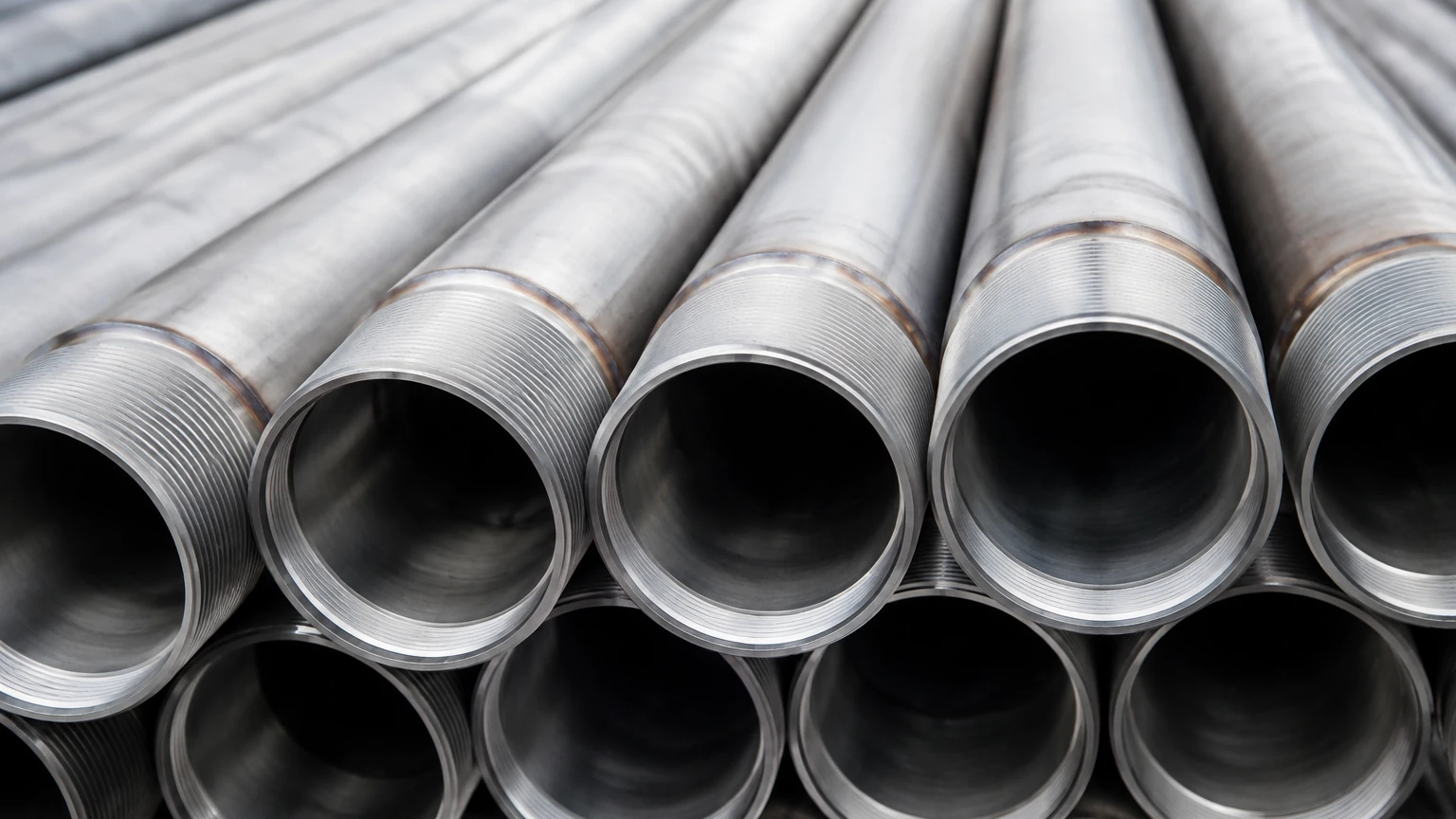
Longevity, Maintenance, and Performance Evaluation
The lifespan of well steel casing is a primary driver of the project's ROI. In a well-designed system, the casing should last several decades. However, performance can degrade due to scale buildup, biofouling, or electrochemical corrosion.
Monitoring and Rehabilitation
Engineers should implement regular monitoring protocols, such as downhole camera inspections and geophysical logging, to assess the condition of the casing. If scale or bio-growth is detected on the casing walls, it can often be removed through mechanical brushing or chemical treatment. However, if the casing has suffered significant wall thinning or perforation, a liner may need to be installed.
When the casing remains in good condition, the internal filtration components—such as those provided by Kaifil—can perform at peak efficiency. Clean casing walls ensure that there is no turbulence or particulate shedding that could interfere with the precision of stainless steel filter cartridges. For those looking to optimize their filtration setup, exploring the technical resources on the Main Page can provide insights into how custom filter designs can be tailored to fit specific casing dimensions and environmental challenges.
Customization and OEM Solutions for Industrial Wells
Standard off-the-shelf casing may not suffice for specialized industrial processes. In sectors such as pharmaceutical manufacturing or high-purity chemical production, the well steel casing may require specific surface finishes or non-standard alloys to meet stringent purity requirements.
Engineering Tailored Solutions
Customization options for well steel casing and its associated filtration components include:
* Passivation and Electropolishing: For applications requiring extreme cleanliness, stainless steel casing and filter housings can be electropolished to remove surface impurities and enhance corrosion resistance.
* Perforated Casing Patterns: In some recovery wells, the casing itself is perforated in specific patterns to control the flow of fluid. Precision manufacturing ensures that these perforations do not compromise the structural integrity of the pipe.
* Specialized End Fittings: Custom flanges or transition pieces can be manufactured to allow the casing to interface with unique industrial piping systems or high-pressure pump manifolds.
Kaifil’s expertise in precision metal fabrication allows for the development of these customized components, ensuring that the entire well assembly—from the outer casing to the innermost wire mesh filter—functions as a cohesive, high-performance unit.
Conclusion: Making Informed Procurement Decisions
The selection of well steel casing is a foundational decision in industrial engineering. By prioritizing high-grade materials like stainless steel and ensuring precise mechanical specifications, engineers can protect their investment and ensure the long-term viability of their fluid extraction and filtration processes.
When planning a project, it is essential to consider the casing not as a standalone pipe, but as the primary housing for a sophisticated filtration ecosystem. Ensuring compatibility between the casing and the internal filter elements is the key to achieving optimal flow rates, high filtration accuracy, and minimal downtime. For technical professionals seeking reliable, custom-engineered filtration components to complement their well steel casing, reviewing the comprehensive product options and application support available on the Kaifil Main Page is the recommended next step in the engineering process. By focusing on quality at every layer of the well, from the steel casing to the precision mesh, industrial operators can achieve superior performance in even the most demanding environments.
