


Coated Filter
In industrial filtration, the performance of a stainless steel filter is often defined not just by its mechanical structure, but by its surface characteristics. A coated filter represents an engineered solution where a specialized layer is applied to a substrate—typically stainless steel wire mesh or sintered metal—to enhance specific properties such as chemical resistance, hydrophobicity, or anti-sticking capabilities. For engineers and procurement teams, understanding the technical nuances of these coatings is essential for optimizing filtration efficiency and extending the service life of equipment in aggressive environments.
At Kaifil, the focus is on providing precision-engineered filtration components that meet the rigorous demands of chemical processing, pharmaceuticals, and food production. By integrating advanced coating technologies with high-quality stainless steel substrates, industrial operators can achieve filtration performance that standard materials cannot provide alone. To explore the full range of custom filtration solutions, technical professionals can visit the Main Page for detailed product specifications and engineering support.
The Engineering Logic Behind the Coated Filter
The primary motivation for utilizing a coated filter is to modify the interface between the filter media and the process fluid. While stainless steel grades like 304 and 316L offer excellent structural integrity and basic corrosion resistance, certain applications involve extreme pH levels, highly adhesive particulates, or specific surface tension requirements that necessitate additional surface treatment.
A coated filter functions by creating a barrier or a functional surface that alters how particles interact with the mesh. For instance, in applications involving viscous fluids or sticky resins, a standard wire mesh filter may suffer from rapid fouling or "blinding," where particles become permanently lodged in the pores. A specialized coating can lower the surface energy of the filter, allowing for easier cake release during backwashing or manual cleaning cycles.
Furthermore, coatings can provide an additional layer of protection against localized corrosion, such as pitting or crevice corrosion, which can occur in chloride-rich environments even with high-grade stainless steel. By selecting the appropriate coating material, engineers can significantly reduce the Total Cost of Ownership (TCO) by extending replacement intervals and reducing maintenance downtime.
Common Coating Materials and Their Industrial Functions
The selection of a coating for an industrial filter depends heavily on the chemical composition of the filtrate, the operating temperature, and the required filtration accuracy. Several materials are commonly used to create a coated filter, each offering distinct advantages.
PTFE and Fluoropolymer Coatings
Polytetrafluoroethylene (PTFE) and related fluoropolymers are among the most common materials used for coating stainless steel filters. These coatings are prized for their exceptional chemical inertness and low coefficient of friction. A PTFE-coated filter is often used in applications requiring hydrophobicity (water-repelling) or where the filtrate contains sticky substances that would otherwise adhere to the metal surface. This is particularly useful in gas-solid separation where moisture might cause traditional filters to clog.
Ceramic and Mineral Coatings
In high-temperature environments where polymers would degrade, ceramic coatings offer a robust alternative. These coatings provide excellent thermal stability and extreme hardness, making them ideal for abrasive slurries. A ceramic-coated filter can withstand temperatures exceeding 500°C, providing a protective shield for the underlying stainless steel mesh against thermal oxidation and mechanical wear.
Metal Plating and Specialized Alloys
Sometimes, a coated filter involves the application of another metal layer, such as nickel or chrome plating, or even more exotic alloys. These are used to enhance the hardness of the mesh or to provide specific catalytic properties. In the chemical industry, nickel-coated filters may be used to handle specific caustic solutions where pure stainless steel might experience gradual thinning over time.
Epoxy and Phenolic Resins
For less extreme temperatures, epoxy or phenolic coatings are used to provide a cost-effective barrier against mild acids and bases. These are frequently found in water treatment and general industrial cooling systems where the primary goal is to prevent oxidation and ensure the longevity of the filter cartridge structure.
Substrate Considerations: The Foundation of the Filter
The effectiveness of a coated filter is intrinsically linked to the quality of the substrate. At Kaifil, we emphasize that the coating is only as reliable as the material it adheres to. Typically, the substrate is a precision-woven stainless steel wire mesh or a multi-layer sintered metal structure.
1. Material Grade: 316L stainless steel is the industry standard for substrates due to its low carbon content and molybdenum addition, which provides superior resistance to pitting.
2. Surface Preparation: Before any coating is applied, the substrate must undergo rigorous cleaning and often a mechanical or chemical etching process. This ensures maximum adhesion and prevents the coating from delaminating under high differential pressure.
3. Micron Rating Integrity: One of the most critical engineering challenges in producing a coated filter is maintaining the specified micron rating. Because the coating adds a layer of thickness to the wires, it effectively reduces the size of the openings. Engineers must calculate the "pre-coated" mesh dimensions to ensure that the final product meets the required filtration accuracy after the coating process is complete.
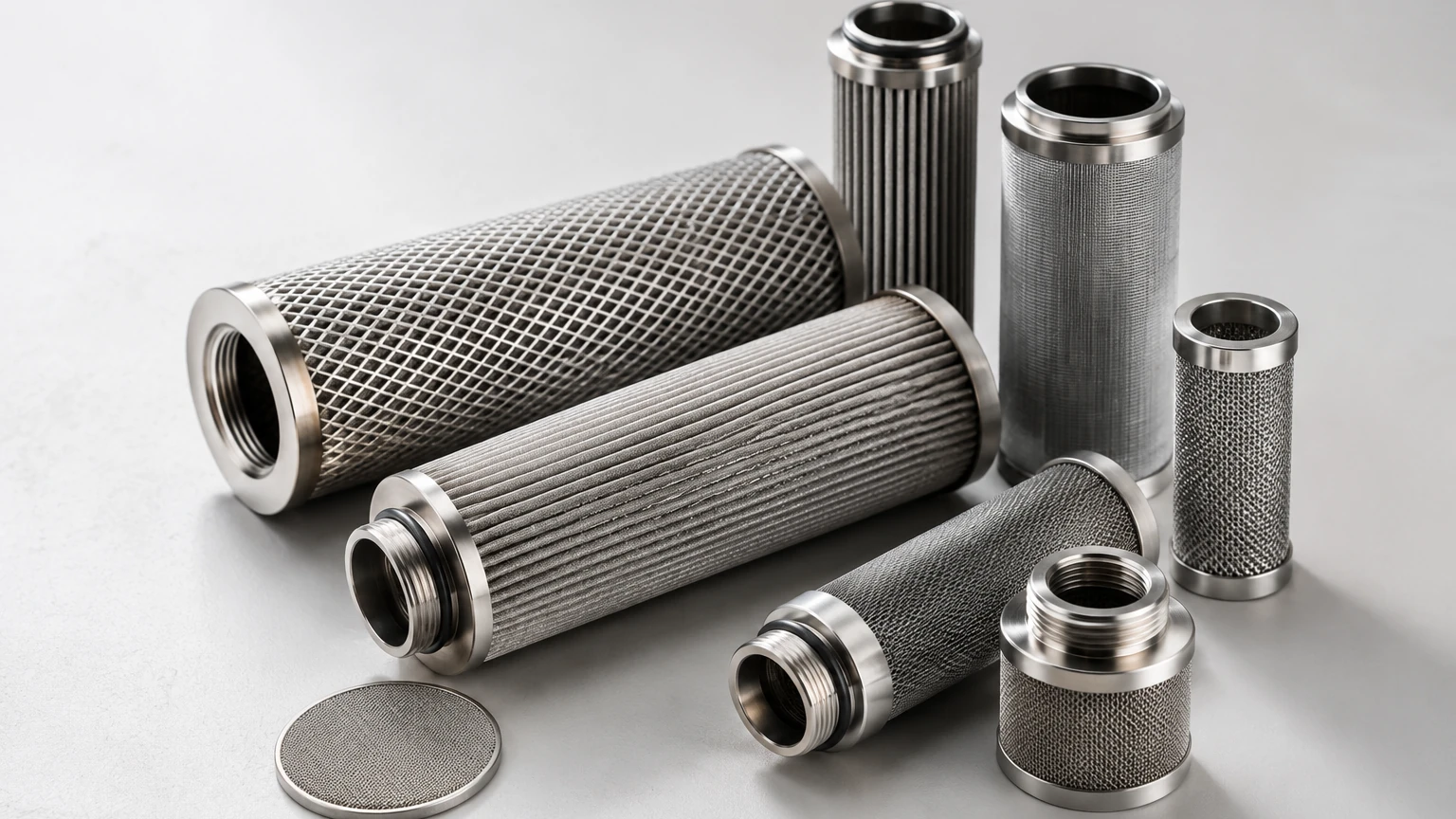
Performance Evaluation and Selection Criteria
When specifying a coated filter for an industrial application, engineers must evaluate several performance metrics to ensure compatibility and efficiency. A mismatch between the coating and the process conditions can lead to premature failure or contamination of the filtrate.
Chemical Compatibility
The first step is to verify that the coating material is chemically resistant to all components of the process fluid, including cleaning agents. For example, while a PTFE coating is resistant to almost all chemicals, it may be susceptible to certain alkali metals or fluorine at high temperatures.
Thermal Limits
Every coating has a maximum continuous operating temperature. Exceeding this limit can cause the coating to soften, peel, or release volatile organic compounds (VOCs). It is vital to confirm both the process temperature and any potential temperature spikes during sterilization or system flushing.
Differential Pressure (ΔP) Tolerance
The application of a coating can change the flow characteristics of the filter. A coated filter may exhibit a slightly higher initial pressure drop compared to an uncoated version due to the reduced open area. Engineers must ensure that the system’s pumps and housings can accommodate this change without sacrificing flow rate.
Adhesion Strength
In high-velocity flow or backpulsing applications, the mechanical bond between the coating and the stainless steel mesh is under constant stress. Specifying a filter with high adhesion strength is necessary to prevent the coating from flaking off and becoming a contaminant itself.
Maintenance, Cleaning, and Replacement Cycles
One of the primary benefits of a coated filter is the ease of maintenance. However, specialized coatings require specific cleaning protocols to maintain their integrity.
* Cleaning Agents: While the stainless steel substrate might be compatible with harsh acids, the coating might not be. It is essential to use cleaning solutions that do not degrade the polymer or ceramic layer.
* Mechanical Cleaning: Abrasive brushing or high-pressure scraping should generally be avoided on coated filters, as these can scratch or strip the functional layer. Ultrasonic cleaning is often the preferred method for coated metal filters, as it removes particulates from the pores without damaging the surface treatment.
* Inspection: Regular visual and integrity testing (such as bubble point testing) should be performed to check for signs of coating wear. Once the coating begins to thin or peel, the filter's performance—especially its anti-stick or corrosion-resistant properties—will diminish rapidly, signaling the need for replacement.
By optimizing the cleaning cycle and utilizing the protective benefits of the coating, facilities can significantly reduce the frequency of filter changes. This not only saves on the cost of the filters themselves but also reduces the labor and lost production time associated with system maintenance.
Strategic Sourcing for Industrial Filtration
Selecting the right coated filter requires a deep understanding of both material science and fluid dynamics. For purchasing teams and engineers, partnering with a manufacturer that offers customization is key. Standard off-the-shelf filters rarely meet the specific needs of complex chemical or pharmaceutical processes.
Kaifil provides the technical expertise necessary to navigate these choices, offering custom stainless steel filtration solutions tailored to specific industrial environments. Whether the requirement is for a high-temperature ceramic-coated mesh or a food-grade PTFE-treated cartridge, the focus remains on durability and precision. For more information on how custom filtration components can improve your process efficiency, please refer to the Main Page.
In conclusion, the coated filter is a sophisticated tool in the industrial filtration arsenal. By carefully matching the coating material to the application's chemical and thermal demands, and ensuring the substrate is of the highest quality, engineers can achieve superior filtration results, protect downstream equipment, and optimize the overall efficiency of their operations. Understanding these factual boundaries and engineering considerations ensures that the chosen filtration solution provides reliable service in even the most demanding conditions.
