


Air Compressor Air Filter Housing
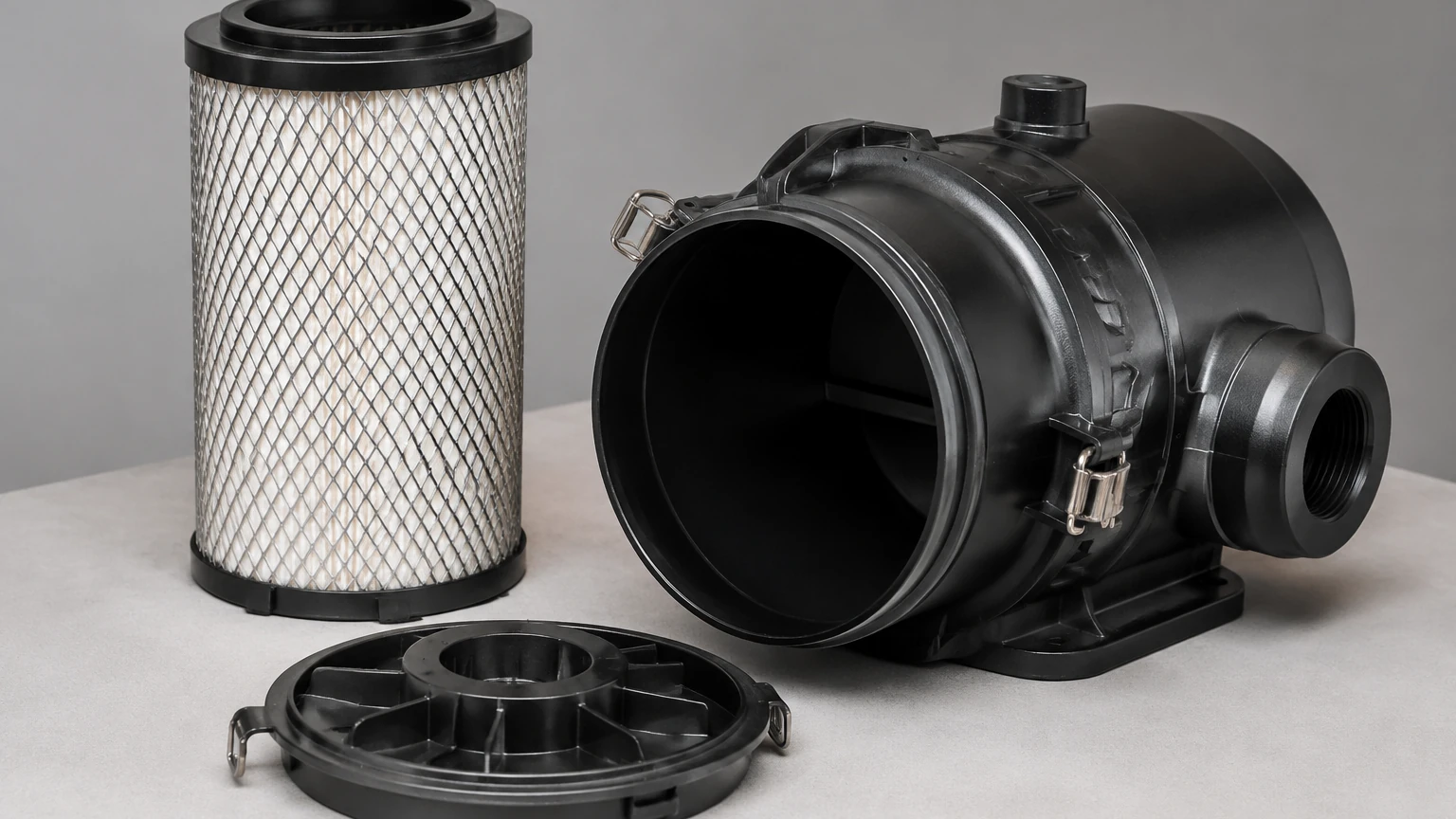
In industrial compressed air systems, the air compressor air filter housing serves as the primary line of defense for the entire downstream infrastructure. While the filter element itself performs the task of capturing particulates, the housing is an engineered component designed to manage airflow dynamics, withstand structural stresses, and ensure a leak-proof environment for the filtration process. For engineers and procurement teams, selecting the correct housing involves a deep understanding of material compatibility, pressure ratings, and the specific environmental challenges of the application.
As a specialized manufacturer of stainless steel filtration solutions, Kaifil provides precision-engineered components that address the rigorous demands of industrial air intake and processing. Understanding the technical nuances of housing design is essential for optimizing system performance and reducing the total cost of ownership. For more information on our full range of industrial filtration capabilities, please visit our Main Page.
The Engineering Role of the Filter Housing
The air compressor air filter housing is far more than a protective shell. Its design directly influences the efficiency of the compressor by governing the intake air's velocity and turbulence. In high-capacity industrial compressors, even slight restrictions in the intake path can lead to significant energy losses and increased wear on the compression stages.
Structural Integrity and Pressure Management
An effective housing must be rated for the specific operating pressures of the system. In suction-side applications, the housing must resist vacuum-induced deformation. In pressurized line applications, it must function as a pressure vessel, adhering to safety standards and preventing catastrophic failure. Engineering teams must evaluate the wall thickness and weld quality of the housing to ensure it can withstand the cyclic loading inherent in industrial air demand.
Flow Dynamics and Pressure Drop
Minimizing the "pressure drop" (delta P) is a primary goal in filtration engineering. The internal geometry of the air compressor air filter housing is designed to transition the air from the inlet port to the filter surface with minimal turbulence. A poorly designed housing can create eddies and flow restrictions that force the compressor to work harder, leading to higher electricity consumption and shortened service life for the motor.
Material Selection: Why Stainless Steel is the Industrial Standard
While plastic or carbon steel housings may suffice for light-duty or residential applications, industrial environments demand materials that can withstand corrosion, temperature fluctuations, and mechanical impact. Stainless steel, particularly grades 304 and 316L, is the preferred choice for several critical reasons.
Corrosion Resistance in Humid Environments
Air compression naturally concentrates moisture. In many regions, the intake air is humid, leading to condensate formation within the housing. Carbon steel housings are prone to internal rusting over time, which can introduce secondary contaminants into the air stream—the very problem the filter is meant to solve. Stainless steel housings remain inert, ensuring that the air remains as clean as the filter element allows.
Chemical and Thermal Stability
In chemical processing or pharmaceutical environments, the ambient air may contain trace amounts of corrosive vapors. Furthermore, air temperatures can rise significantly during the compression process. Stainless steel maintains its structural integrity and corrosion resistance across a wide temperature spectrum, making it suitable for both standard and high-temperature air compressor air filter housing applications.
Hygienic Requirements
For the food and beverage industry, filtration components must meet strict sanitary standards. Stainless steel housings can be manufactured with specific surface finishes (measured in Ra) to prevent bacterial growth and allow for effective cleaning or sterilization. This level of precision is a hallmark of Kaifil’s manufacturing process, ensuring that the filtration hardware does not become a source of contamination.
Key Design Considerations for Industrial Applications
When specifying an air compressor air filter housing, engineers must look beyond basic dimensions. Several technical features determine the housing's suitability for a specific industrial role.
Sealing Mechanisms
The interface between the housing and the filter element is a common failure point. High-quality housings utilize precision-machined seats and high-performance O-rings or gaskets. Depending on the application, materials like Viton, EPDM, or Silicone are selected based on their chemical compatibility and temperature resistance. A bypass of even 1% of the air can significantly degrade the air quality downstream, potentially damaging sensitive pneumatic tools or contaminating products.
Port Configurations and Installation
Industrial systems require flexible installation options. Housings are typically available with NPT, BSP, or flanged connections. The orientation of the inlet and outlet ports (e.g., in-line, T-style, or L-style) must be considered to minimize piping complexity and ensure easy access for maintenance. For large-scale operations, multi-round housings—which hold several filter elements in a single vessel—are used to handle high flow rates while maintaining a manageable footprint.
Drainage and Monitoring
In many compressed air setups, the housing serves as a collection point for moisture and oil aerosols. Integrated drain ports (manual or automatic) are essential for removing these liquids before they can saturate the filter media. Additionally, the inclusion of differential pressure gauge ports allows operators to monitor the health of the filter element in real-time, enabling data-driven maintenance rather than relying on arbitrary schedules.
Customization and OEM Solutions
Standard off-the-shelf housings often fall short in specialized industrial environments. This is where custom manufacturing becomes vital. At Kaifil, we specialize in developing tailored filtration components that meet specific engineering constraints.
Tailored Dimensions and Mounting
In many retrofit projects, space is at a premium. A custom air compressor air filter housing can be designed to fit within existing spatial envelopes while maintaining the required flow capacity. This includes custom mounting brackets, unique port orientations, and specialized exterior finishes to match the surrounding equipment.
Filtration Accuracy and Media Compatibility
The housing must be engineered to support the specific type of filter media required for the task. Whether the application calls for a coarse wire mesh pre-filter or a high-efficiency sub-micron cartridge, the internal support structures of the housing must ensure the media remains stable under flow pressure. Kaifil’s expertise in stainless steel wire mesh and precision metal components allows us to provide a holistic solution where the housing and the filter element work in perfect synergy.
Maintenance, Replacement, and Total Cost Considerations
From a procurement perspective, the initial cost of an air compressor air filter housing is only one part of the equation. The total cost of ownership (TCO) is influenced by durability, ease of maintenance, and the impact on system efficiency.
Ease of Element Replacement
Industrial downtime is expensive. A well-designed housing features quick-release clamps, swing bolts, or threaded covers that allow for rapid filter element changes without the need for specialized tools. This reduces the labor cost and the duration of maintenance windows.
Longevity and Reusability
Unlike plastic housings that can become brittle over time or carbon steel units that eventually succumb to rust, a high-quality stainless steel housing is a long-term investment. With proper maintenance, these housings can last for decades, requiring only the periodic replacement of seals and filter elements. This durability makes them a more cost-effective choice over the life of the compressor system.
Performance Expectations
Engineers should expect a housing to maintain its seal and structural integrity throughout its service life. Any sign of bypass, external leakage, or structural fatigue is an indication that the housing is not suited for the application. By choosing a manufacturer with a proven track record in industrial filtration, such as Kaifil, purchasing teams can ensure that their air compressor air filter housing meets the necessary performance benchmarks.
Conclusion: Selecting the Right Filtration Partner
The air compressor air filter housing is a critical junction in any industrial air system. Its ability to protect the compressor, maintain air quality, and minimize energy consumption makes it a component that requires careful technical evaluation. Factors such as material grade, flow dynamics, sealing reliability, and ease of maintenance should guide the selection process.
Kaifil’s commitment to quality and engineering precision ensures that our stainless steel filtration solutions provide the reliability required for demanding industrial environments. From material selection to customized design, we work closely with global customers to deliver filtration components that optimize performance and durability. To explore our full range of products and technical capabilities, we invite you to review our Main Page and contact our engineering team for customized support.
