


Compact Baghouse Dust Collector
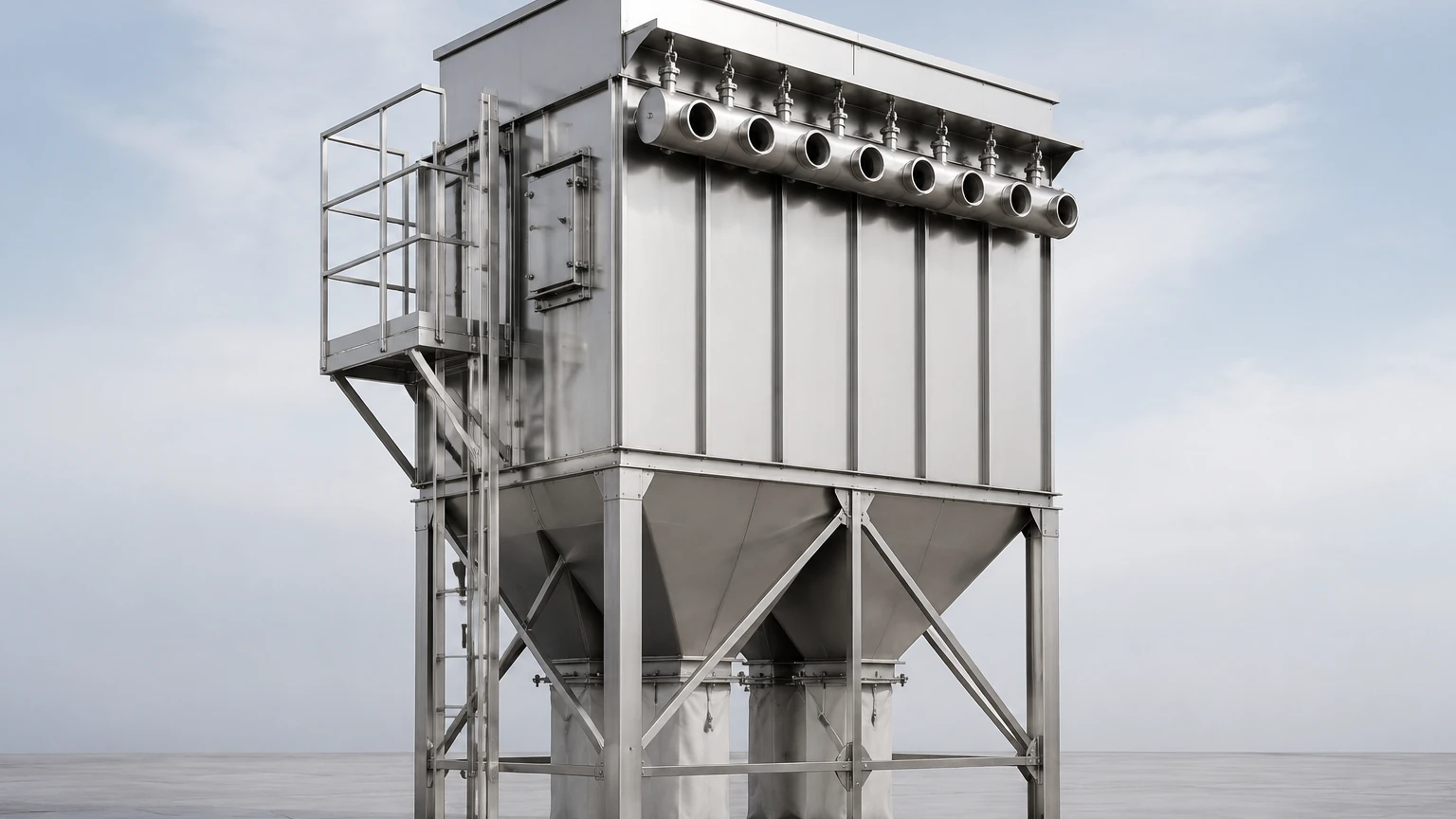
In modern industrial environments, spatial efficiency and air quality compliance are no longer mutually exclusive goals. As manufacturing facilities face stricter environmental regulations and rising floor space costs, the compact baghouse dust collector has emerged as a critical piece of infrastructure. Unlike traditional, large-scale dust collection systems that require significant external acreage, compact versions are engineered to provide high-efficiency particulate air (HEPA) or near-HEPA filtration levels within a significantly smaller footprint. For engineers and facility managers, selecting the right system requires a deep understanding of filtration mechanics, material compatibility, and the integration of precision components.
At the core of these systems is the ability to handle high volumes of dust-laden air while maintaining a low pressure drop. This is achieved through advanced internal geometries and the use of high-performance filter media. For many specialized applications—particularly those involving high temperatures, corrosive chemicals, or abrasive particulates—standard fabric bags are often replaced or supplemented by stainless steel filter cartridges and wire mesh components. To explore the full range of custom filtration solutions available for these demanding environments, professionals can visit the Main Page of leading manufacturers to review specific technical specifications.
Understanding the Design Principles of Compact Baghouse Systems
The fundamental objective of a compact baghouse dust collector is to separate dry particulates from a gas stream using a series of filter elements. The "compact" designation typically refers to a modular or integrated design where the fan, motor, and cleaning mechanism are housed within a single, space-saving enclosure.
Air-to-Cloth Ratio and Filtration Velocity
One of the most critical engineering metrics in dust collection is the air-to-cloth (A/C) ratio, which represents the volume of air passing through one square foot of filter media per minute (expressed in CFM/ft²). In compact systems, achieving a sustainable A/C ratio is challenging because the total available filter surface area is limited by the unit's size. Engineers must balance the filtration velocity to ensure that dust particles are captured effectively without becoming deeply embedded in the media fibers, a phenomenon known as "blinding."
Pulse-Jet Cleaning Mechanisms
Most modern compact baghouses utilize pulse-jet cleaning. This process involves a high-pressure burst of compressed air directed down the center of the filter element. This creates a shockwave that flexes the media and dislodges the accumulated dust cake, which then falls into a collection hopper. In compact designs, the timing and pressure of these pulses must be precisely calibrated to prevent re-entrainment—where dust from one filter is immediately sucked onto an adjacent filter due to the tight spacing within the housing.
The Role of High-Performance Filtration Media
While traditional baghouses often use polyester or aramid felts, compact systems frequently demand more robust media to handle higher dust loads per unit of surface area. This is where the integration of stainless steel filtration components becomes vital.
Stainless Steel Wire Mesh and Sintered Elements
In applications involving high-temperature gases (exceeding 500°F) or chemically aggressive dust, synthetic fabrics fail. Stainless steel wire mesh filters and sintered metal cartridges offer several advantages in a compact baghouse dust collector setup:
1. Thermal Stability: Unlike polymers, stainless steel maintains structural integrity at extreme temperatures, preventing filter collapse or melting.
2. Chemical Resistance: For pharmaceutical or chemical processing, 316L stainless steel provides superior resistance to corrosion, ensuring the longevity of the filtration system.
3. Cleanability: Metal filters can be cleaned more aggressively and more frequently than fabric, allowing for a more consistent pressure drop over the life of the component.
4. Rigidity: Precision metal filter components do not require internal cages for support, which can sometimes save internal space and simplify the maintenance process.
Critical Evaluation Criteria for Industrial Dust Collectors
When specifying a compact baghouse dust collector, engineering teams must look beyond the initial purchase price and evaluate the system based on total cost of ownership (TCO) and operational reliability.
Filtration Efficiency and Micron Ratings
The primary performance indicator is the system’s ability to capture particles of a specific size. For many industrial sectors, capturing sub-micron particles is essential for both health safety and the protection of downstream equipment. It is important to confirm whether the filter media is rated for surface filtration or depth filtration. Surface filtration, common in pleated metal cartridges, allows for easier cleaning and lower stable pressure drops.
Pressure Drop (Delta P)
The pressure drop across the filter media directly correlates to the energy consumption of the system’s blower. A high Delta P means the fan must work harder, increasing electrical costs and potentially reducing the airflow at the source of dust generation. Compact systems must be evaluated for their "clean" pressure drop and their "operating" pressure drop once a dust cake has formed.
Footprint and Service Clearance
The primary driver for choosing a compact unit is space. However, engineers must also account for the clearance required to change filters. Top-access designs are often preferred in compact units because they allow for filter replacement without needing wide side-aisles, further optimizing the facility layout.
Addressing Common Operational Risks and Maintenance Challenges
Even the most well-engineered compact baghouse dust collector can face operational hurdles if not maintained correctly. Understanding these risks is essential for preventing unscheduled downtime.
Blinding and Bridging
Blinding occurs when fine particles become lodged in the pores of the filter media, making pulse cleaning ineffective. Bridging occurs in the hopper, where dust accumulates and blocks the discharge outlet. In compact systems, where hoppers are often smaller, monitoring the discharge rate is crucial. The use of vibration-assisted hoppers or fluidizing beds can help mitigate these risks.
Moisture and Oil Contamination
If the incoming air stream contains moisture or oil vapors, the dust can become "tacky," forming a sludge that cannot be removed by pulse-jet cleaning. This is particularly problematic in metalworking or food processing. In such cases, pre-coating the filters or installing a moisture separator upstream is necessary. For systems utilizing stainless steel components, the ability to perform ultrasonic cleaning or chemical washes can be a significant advantage in recovering fouled filters.
Seal Integrity
In a compact housing, the proximity of components makes the integrity of the tube sheet seals paramount. Even a minor leak in the seal between the dirty air plenum and the clean air plenum can lead to significant bypass, resulting in visible emissions and potential regulatory fines. High-quality gaskets and precision-machined filter seats are required to ensure a leak-proof fit.
Customization and Selection Strategies for Engineering Teams
No two industrial processes are identical, and a "one-size-fits-all" approach rarely works for dust collection. Customization is often the key to achieving optimal performance.
Material Selection for the Environment
Before finalizing a specification, confirm the exact nature of the dust. Is it explosive (requiring ATEX or NFPA compliant explosion venting)? Is it abrasive? For abrasive dusts, such as those found in glass manufacturing or mining, the internal surfaces of the compact baghouse dust collector and the filter supports should be constructed from hardened materials or heavy-duty stainless steel to prevent erosion.
Integration with Existing Systems
A compact collector must integrate seamlessly with the facility's existing ductwork and compressed air supply. Engineers should verify that the plant's compressed air system can provide the necessary volume and pressure for the pulse-jet cleaning cycle without significant pressure drops that might affect other pneumatic tools.
Future-Proofing and Scalability
While the current need might be for a single workstation, consider whether the compact unit is modular. Some designs allow for additional filter sections to be added in the future, providing a scalable solution as production capacity increases. Reviewing the manufacturer's Main Page can provide insights into the modularity and customization options available for specific industrial models.
Total Cost of Ownership Considerations
The initial capital expenditure (CAPEX) of a compact baghouse dust collector is only one part of the financial equation. Operating expenses (OPEX) often outweigh the initial cost over the life of the system. Key factors include:
* Filter Replacement Frequency: High-quality stainless steel or specialized synthetic filters may have a higher upfront cost but last significantly longer than standard bags.
* Energy Consumption: Systems designed with low internal turbulence and high-efficiency fans will reduce monthly utility bills.
* Compressed Air Usage: Efficient pulse-jet controllers that trigger cleaning based on pressure drop (cleaning-on-demand) rather than a fixed timer save significant amounts of compressed air.
* Waste Disposal: The cost of disposing of collected dust, especially if it is hazardous, should be factored into the operational plan.
Conclusion
The compact baghouse dust collector is an indispensable tool for modern industry, providing powerful filtration in a package that fits within the constraints of contemporary factory floors. By focusing on engineering fundamentals—such as air-to-cloth ratios, material science, and pulse-jet efficiency—technical professionals can select a system that not only meets environmental standards but also contributes to operational excellence.
Whether your application requires standard fabric media or custom-engineered stainless steel filtration components, the key to success lies in detailed technical evaluation and partnership with experienced manufacturers. For more information on precision metal filter components and customized industrial filtration solutions, visiting the Main Page of a specialized manufacturer like Kaifil can provide the technical data necessary to make an informed decision. Proper selection, combined with a robust maintenance strategy, ensures that the dust collection system remains a reliable asset for years to come.
