


Compressed Air Oil Separator
In industrial pneumatic systems, the quality of compressed air is a critical factor that directly influences the longevity of downstream equipment and the integrity of the final product. One of the most vital components in ensuring this quality is the compressed air oil separator. Designed to remove lubricant aerosols and droplets from the air stream, this component is essential for maintaining efficient operation in screw and vane compressors. For engineers and maintenance professionals, understanding the technical nuances of oil separation is paramount to optimizing system performance and reducing total cost of ownership.
The Role of Oil Separation in Industrial Pneumatic Systems
Most industrial air compressors use oil for lubrication, sealing, and cooling within the compression chamber. While this oil is necessary for the mechanical health of the compressor, it must be removed before the air enters the distribution network. A compressed air oil separator serves as the final stage of this removal process.
Without effective separation, oil carryover can lead to several systemic failures. In pneumatic control systems, oil can gum up sensitive valves and actuators. In finishing applications, such as spray painting, oil contamination causes surface defects. More critically, in industries like food and beverage or pharmaceuticals, oil contamination can lead to batch rejection and regulatory non-compliance. Therefore, the separator is not merely a consumable part but a precision-engineered barrier that protects the entire industrial process.
How a Compressed Air Oil Separator Works: The Coalescence Process
The primary mechanism behind a compressed air oil separator is coalescence. Unlike simple particulate filtration, which relies on mechanical straining, coalescence involves the merging of small liquid droplets into larger ones. This process typically occurs within several layers of specialized media, often involving borosilicate glass fibers or specialized stainless steel mesh structures.
The Three Stages of Coalescence
1. Diffusion (Brownian Motion): Extremely small oil particles (less than 0.1 microns) move erratically due to collisions with gas molecules. This movement increases the probability that the particles will come into contact with the filter fibers.
2. Interception: Mid-sized particles (0.1 to 1 micron) follow the air streamlines but pass close enough to a fiber to be captured by its surface.
3. Inertial Impaction: Larger, heavier particles (greater than 1 micron) possess enough momentum that they cannot follow the air streamlines as they curve around a fiber. Instead, they strike the fiber directly and adhere to it.
As these captured droplets accumulate on the fiber surfaces, they migrate through the media toward the outer or inner discharge side (depending on the flow direction). As they move, they collide and merge with other droplets, eventually forming large drops that are heavy enough to fall to the bottom of the separator housing due to gravity. From there, the collected oil is typically returned to the compressor’s lubrication circuit via a scavenge line.
Key Engineering Specifications for Filter Selection
When specifying a compressed air oil separator, engineers must look beyond simple dimensions. Several performance metrics define the efficiency and economic impact of the component.
Residual Oil Carryover
This is the amount of oil remaining in the compressed air after it has passed through the separator, usually measured in parts per million (ppm) or milligrams per cubic meter (mg/m³). High-quality separators can achieve carryover levels as low as 1–3 ppm. Achieving lower levels often requires secondary filtration, but the primary separator must do the bulk of the work to prevent overloading downstream filters.
Pressure Drop (Differential Pressure)
The pressure drop ($ΔP$) is the difference in pressure between the inlet and the outlet of the separator. This is a critical factor in energy efficiency. Every 2 psi (0.14 bar) of pressure drop in the filtration system typically requires a 1% increase in compressor power to maintain the same discharge pressure. Engineers should select separators that offer a low initial $ΔP$ and a stable pressure profile over their service life.
Flow Capacity and Velocity
Separators are rated for specific volumetric flow rates (typically in SCFM or m³/min). Operating a separator above its rated capacity increases the velocity of the air through the media. High velocity can "re-entrain" oil droplets, pulling them off the discharge side of the media and back into the air stream, effectively negating the coalescence process.
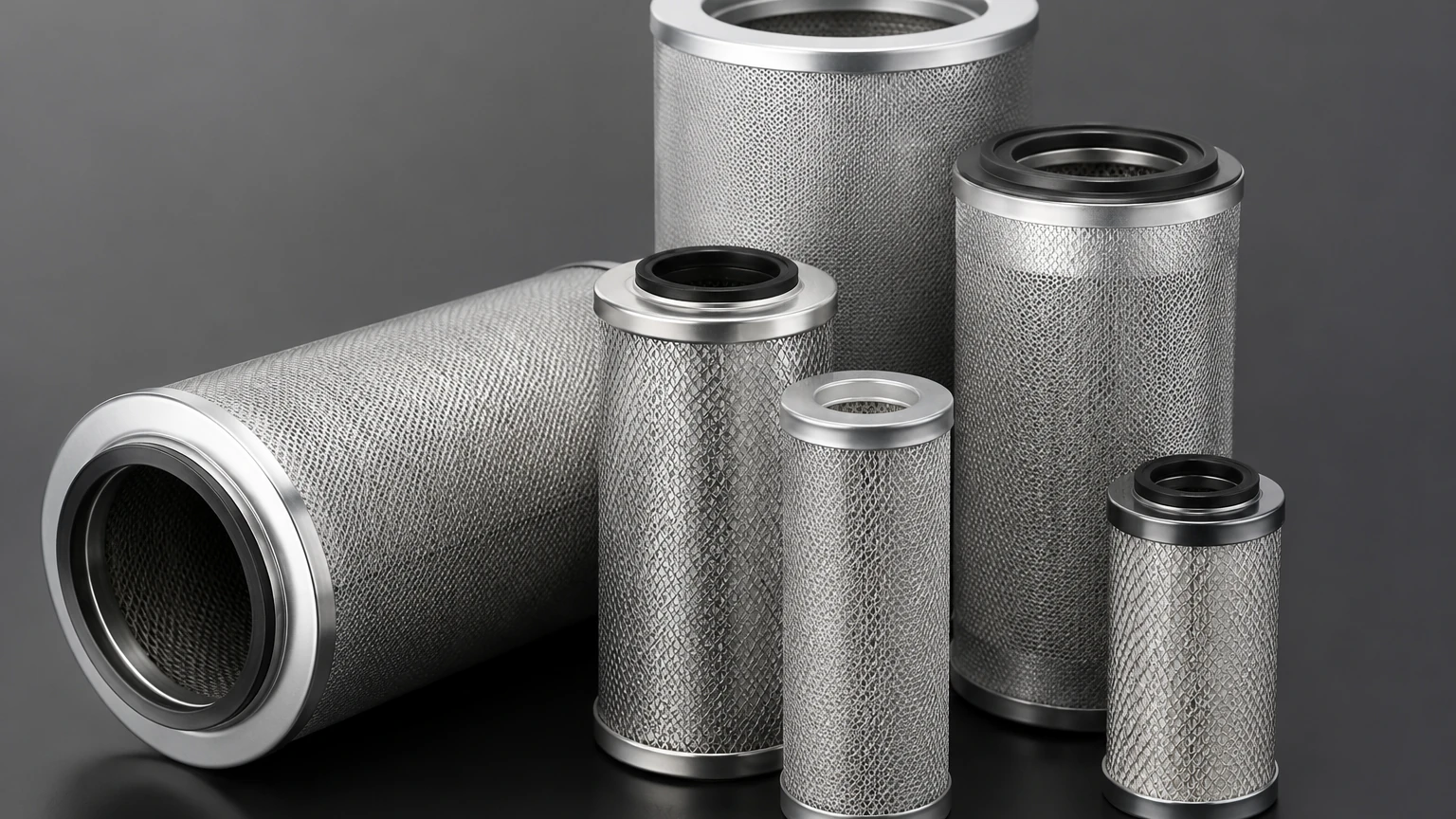
Material Considerations: The Advantages of Stainless Steel Filtration
While many standard separators use galvanized steel or plastic components, demanding industrial environments often require more robust materials. This is where specialized manufacturers like Kaifil provide significant value. For an overview of how custom metal filtration components are integrated into industrial systems, professionals can refer to the Kaifil Main Page for technical specifications on material grades and construction methods.
Corrosion Resistance
In many applications, the compressed air contains moisture and acidic combustion byproducts (in the case of engine-driven compressors) or chemical vapors from the ambient environment. Standard carbon steel components can corrode, leading to structural failure of the separator or the introduction of rust particles into the air stream. Stainless steel 304 or 316L provides superior resistance to these corrosive elements, ensuring the separator remains structurally sound throughout its life cycle.
Structural Integrity under Pressure
Compressed air systems are subject to pressure pulsations and occasional surges. A separator must maintain its shape and the integrity of its seals under these conditions. Stainless steel support cores and end caps offer higher mechanical strength than plastic or thin-gauge aluminum, preventing the media from collapsing or bypassing.
Temperature Stability
Compressor discharge temperatures can fluctuate significantly. Synthetic lubricants and high-temperature environments can degrade standard adhesives and gaskets. Using stainless steel components combined with high-temperature sealing materials allows the compressed air oil separator to operate reliably in extreme conditions where standard filters might fail.
Common Operational Challenges and Maintenance Strategies
Maintaining the efficiency of a compressed air oil separator requires a proactive approach to monitoring and replacement.
Identifying Separator Failure
The most common sign of a failing separator is a sudden increase in oil consumption by the compressor. If the scavenge line is clear but oil levels are dropping rapidly, the separator media may be saturated or ruptured. Another indicator is a high differential pressure alarm. Most modern compressors include a $ΔP$ sensor; a reading exceeding 0.8 to 1.0 bar (12–15 psi) usually indicates that the separator is clogged with solid contaminants and requires immediate replacement.
The Impact of Oil Quality
The performance of the separator is inextricably linked to the quality of the compressor lubricant. Low-quality oils or those that have exceeded their service life can varnish or carbonize. These carbon deposits can plug the fine pores of the coalescence media, leading to premature pressure drop and reduced separation efficiency. Regular oil analysis and timely oil changes are essential to extending the life of the separator.
Proper Installation and Scavenging
Even the best separator will fail if the scavenge system is not functioning. The scavenge tube must be the correct length to reach the bottom of the separator. If the tube is too short, an oil pool will build up until it reaches the air stream and is carried downstream. If the scavenge line check valve or orifice is blocked, the same result occurs. During every separator change, the scavenge line should be inspected and cleaned.
Customization and OEM Solutions for Specialized Applications
Standard off-the-shelf separators are sufficient for many general industrial uses. However, specialized applications—such as high-pressure systems, vacuum pumps, or systems operating in highly corrosive chemical plants—often require customized solutions.
Customization options include:
* Variable Media Density: Tailoring the fiber layers to handle specific oil viscosities or higher-than-normal aerosol concentrations.
* Bespoke Dimensions: Fitting high-performance filtration into compact or non-standard compressor housings.
* Reinforced Construction: Utilizing heavy-duty stainless steel mesh for applications with high vibration or extreme pressure cycles.
By working with a manufacturer that specializes in custom stainless steel filtration, engineering teams can develop separators that are perfectly matched to their specific operating parameters, rather than compromising with a generic component.
Conclusion: Selection for Long-Term Value
Selecting the right compressed air oil separator is a balance between initial cost, energy efficiency, and protection of downstream assets. While it may be tempting to view these components as simple commodities, the engineering behind the coalescence media and the structural integrity provided by materials like stainless steel are what determine the true cost of air.
By prioritizing low pressure drop, high separation efficiency, and material compatibility, facilities can significantly reduce energy consumption and prevent costly downtime associated with oil contamination. For those involved in the design or maintenance of complex industrial systems, partnering with a technical manufacturer ensures that the filtration solution meets the rigorous demands of modern manufacturing. For more information on custom filtration engineering and product options, visiting the technical resources on the Kaifil Main Page can provide the necessary data to make an informed selection.
