


Compressor Filters Diving
High-pressure breathing air is the fundamental requirement for all diving operations, whether for recreational exploration, technical diving, or commercial underwater construction. The integrity of the air supplied to a diver is entirely dependent on the efficiency and reliability of the compressor's filtration system. In the B2B sector, where dive centers, military units, and industrial gas suppliers operate high-capacity compressors, understanding the technical nuances of compressor filters diving is essential for ensuring safety, equipment longevity, and compliance with international breathing air standards.
Industrial high-pressure compressors typically operate at pressures ranging from 200 bar (3,000 psi) to 300 bar (4,350 psi). At these pressures, even trace amounts of contaminants in the ambient air or generated by the compressor pump itself can become toxic or lethal. Effective filtration is not merely a maintenance task; it is a critical engineering safeguard. This article explores the technical requirements, material considerations, and engineering standards associated with high-pressure diving air filtration.
The Critical Role of Filtration in High-Pressure Diving Systems
When air is compressed, the concentration of any impurities present in the intake air increases proportionally with the pressure. For instance, if air is compressed to 200 bar, the concentration of contaminants is 200 times higher than in the ambient environment. This physical reality necessitates a robust, multi-stage filtration process to remove moisture, oil vapors, carbon monoxide, and particulate matter.
In the context of compressor filters diving, the filtration system must address three primary types of contamination:
1. Liquid and Aerosol Contaminants: These include water and lubricating oil from the compressor's crankcase. If these reach the diver's lungs, they can cause lipoid pneumonia or severe respiratory distress.
2. Gaseous Contaminants: Carbon monoxide (CO) and carbon dioxide (CO2) are the most dangerous. CO can enter the system through the compressor intake if it is placed near engine exhaust or can be produced by the partial combustion of lubricating oil if the compressor overheats.
3. Solid Particulates: Dust, pollen, and metal wear particles from the compressor's internal components can damage the diver's regulator and pose inhalation risks.
To manage these risks, engineers design filtration stacks that utilize a combination of mechanical separation, coalescing filters, and adsorbent media. For those sourcing these components, visiting the Main Page of a specialized manufacturer like Kaifil provides insights into the precision metal components required to house and support these filtration media under extreme pressure.
International Standards for Breathing Air Quality
Every B2B entity involved in diving air production must adhere to strict purity standards. The two most recognized standards are EN 12021 (European Standard) and CGA Grade E (United States Compressed Gas Association). These standards dictate the maximum allowable levels of contaminants in the final compressed air product.
* Oxygen Content: Must be 21% ± 1%.
* Carbon Monoxide (CO): Typically limited to less than 5 ppm (parts per million) or 10 ppm depending on the jurisdiction.
* Carbon Dioxide (CO2): Usually limited to 500 ppm.
* Oil (Mist and Vapor): Must not exceed 0.5 mg/m³.
* Water Vapor: The air must be dry enough to prevent freezing in the regulator at low temperatures, often requiring a dew point significantly below the ambient temperature.
Achieving these standards consistently requires high-quality filter cartridges that are specifically designed for the flow rates and pressures of the compressor in use. Engineering teams must ensure that the filter housings and internal elements can withstand the mechanical stresses of rapid pressurization and depressurization cycles.
Multi-Stage Filtration: From Coalescence to Adsorption
A standard high-pressure filtration stack for diving air consists of several distinct stages, each targeting specific contaminants. The design of these stages often involves specialized stainless steel components to ensure structural integrity and corrosion resistance.
Mechanical Separation and Coalescing
Before the air enters the chemical filtration cartridges, it typically passes through a mechanical separator. This stage uses centrifugal force to spin the air, causing heavier liquid droplets (water and oil) to hit the walls and drain away. Following this, a coalescing filter—often utilizing a fine borosilicate glass fiber or a stainless steel wire mesh—captures smaller aerosols, merging them into larger droplets that can be removed.
Desiccation (Moisture Removal)
Dry air is essential not only for diver safety but also for the effectiveness of subsequent filtration stages. Molecular sieves (synthetic zeolites) are used to adsorb water vapor. These beads have a high affinity for water molecules and can achieve extremely low dew points. The molecular sieve is often held in place by precision-engineered stainless steel mesh screens that prevent the media from migrating into the air stream.
Adsorption of Oil Vapors and Odors
Activated carbon is the primary medium for removing gaseous hydrocarbons and unpleasant odors. Because activated carbon is sensitive to moisture, it is always placed after the desiccant stage. In high-performance compressor filters diving, the quality of the activated carbon and the contact time (determined by the flow rate and bed depth) are critical factors in ensuring air purity.
Catalytic Conversion of Carbon Monoxide
In environments where CO contamination is a risk, a catalyst such as Hopcalite (a mixture of manganese and copper oxides) is used. Hopcalite converts carbon monoxide into carbon dioxide through oxidation. This process requires very dry air, as moisture permanently deactivates the catalyst. Consequently, Hopcalite is always the final stage in a complex filtration cartridge.
The Importance of Stainless Steel in Diving Filtration
In the demanding environment of high-pressure air production, the materials used for filter housings and internal support structures are paramount. Stainless steel, particularly grades like 304 and 316L, is the preferred choice for several reasons:
1. Pressure Resistance: High-pressure filter housings must be rated for working pressures exceeding 300 bar. Stainless steel provides the necessary tensile strength and fatigue resistance to handle these loads over thousands of fill cycles.
2. Corrosion Resistance: Diving compressors are frequently operated in coastal or marine environments where salt air is prevalent. Stainless steel prevents the formation of rust, which could contaminate the air or weaken the pressure vessel.
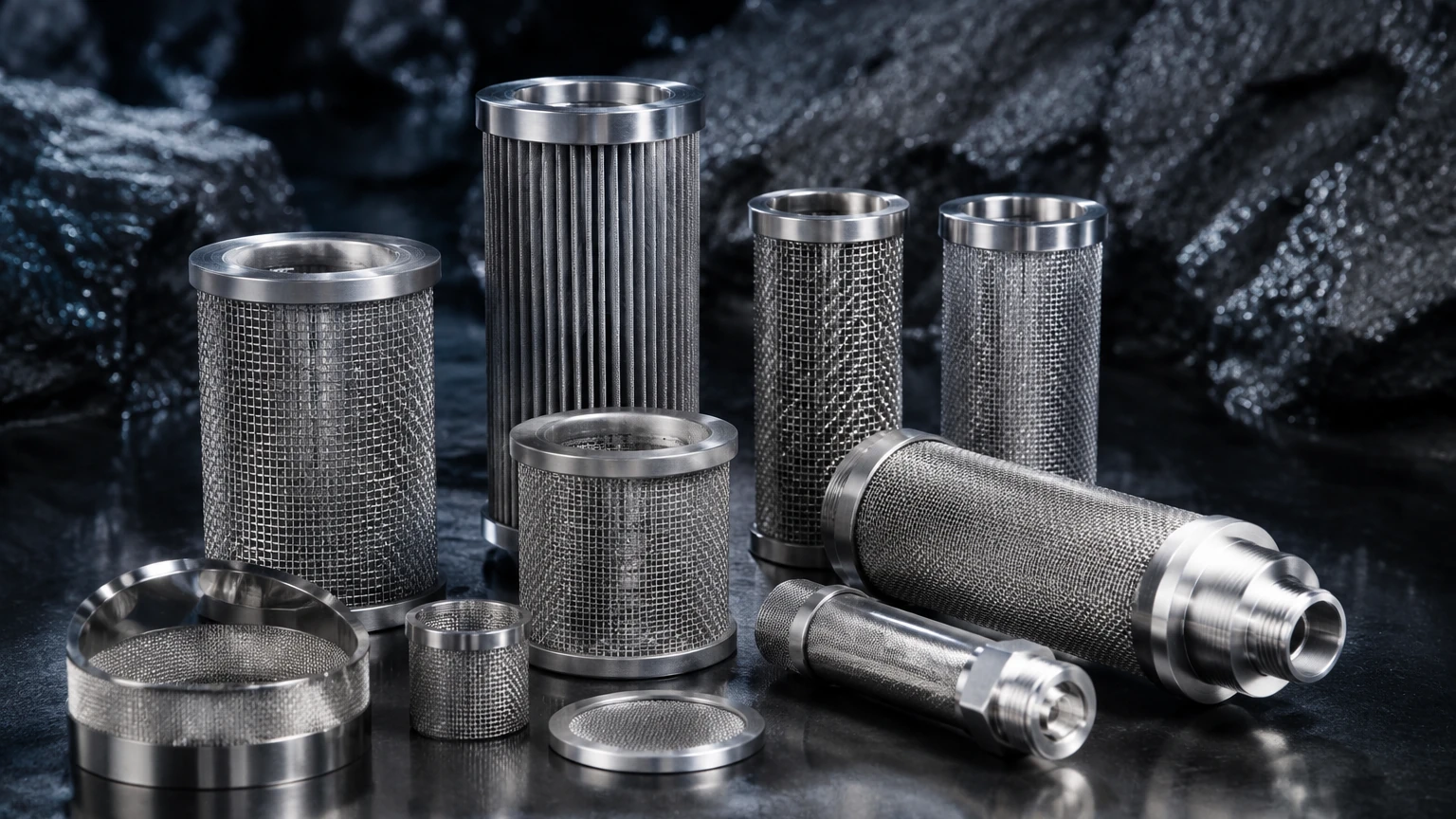
3. Precision and Cleanliness: Stainless steel wire mesh is used for pre-filtration and as a support for adsorbent beds. Unlike plastic or lower-grade metals, stainless steel does not outgas and can be manufactured to extremely tight tolerances, ensuring that no fine particles of filtration media (like molecular sieve dust) escape into the breathing air.
Kaifil specializes in these types of custom stainless steel filtration solutions, providing the precision metal filter components that are essential for the high-performance cartridges used in compressor filters diving. For technical professionals looking to optimize their filtration systems, reviewing the options on the Main Page can help identify the right materials for specific industrial applications.
Engineering Considerations for Filter Selection and Customization
When selecting or designing a filtration system for a diving compressor, engineers must look beyond the basic micron rating. Several factors influence the total performance and cost-effectiveness of the system:
Flow Rate and Pressure Drop
Every filter element introduces a degree of resistance to the air flow, known as pressure drop. An excessive pressure drop reduces the efficiency of the compressor and can lead to overheating. Engineers must balance the density of the filtration media with the required flow rate (measured in SCFM or LPM) to ensure optimal performance.
Micron Rating and Particulate Capture
While the chemical stages handle vapors and gases, the final stage of a compressor filter must include a particulate filter. For breathing air, a rating of 1 to 5 microns is standard. Using a stainless steel pleated filter cartridge can provide a larger surface area, reducing the frequency of replacements while maintaining high filtration accuracy.
Custom OEM Solutions
Many industrial compressor manufacturers require custom filtration components to fit unique housing designs or to meet specific environmental challenges. Customization options include varying the mesh weave, the diameter of the cartridge, and the type of end caps (e.g., threaded or O-ring seals). Working with a manufacturer that understands the rigors of high-pressure gas filtration allows for the development of bespoke solutions that enhance both safety and reliability.
Maintenance, Replacement Cycles, and Safety Monitoring
The most advanced filtration system is only as effective as its maintenance schedule. Filter cartridges in compressor filters diving have a finite lifespan, determined by the volume of air processed and the ambient conditions (temperature and humidity).
Saturation and Breakthrough
As the adsorbent media (molecular sieve and activated carbon) capture contaminants, they eventually reach saturation. Once saturated, "breakthrough" occurs, and contaminants begin to pass through the filter. High temperatures significantly accelerate this process; for every 10°C (18°F) increase in air temperature, the capacity of the filter media can be reduced by as much as 50%.
Monitoring Systems
To mitigate the risk of breakthrough, many modern B2B compressor systems incorporate electronic moisture monitors and CO sensors. These devices provide real-time data and can automatically shut down the compressor if air quality deviates from the set standards. For systems without electronic monitoring, strict logging of run-time hours and the use of visual moisture indicators (color-changing crystals) are mandatory.
Total Cost of Ownership (TCO)
When evaluating filtration options, purchasing teams should consider the total cost of ownership rather than just the initial purchase price of the cartridge. High-quality stainless steel components and premium adsorbent media may have a higher upfront cost but often provide longer service intervals, better protection for downstream equipment, and, most importantly, a higher margin of safety for the diver.
Conclusion: Prioritizing Quality in Diving Air Filtration
In the world of professional diving, there is no room for compromise regarding air quality. The engineering behind compressor filters diving is a sophisticated blend of fluid dynamics, chemistry, and material science. By utilizing high-quality stainless steel filtration components and adhering to rigorous maintenance protocols, operators can ensure the delivery of pure, safe breathing air in even the most demanding conditions.
For engineers and procurement professionals, selecting a manufacturing partner with expertise in custom stainless steel filtration is a critical step in building a reliable high-pressure system. From wire mesh pre-filters to precision-engineered cartridges, the components that make up the filtration stack are the final line of defense for the diver. For more information on specialized filtration products and engineering support, please visit the Main Page to explore how Kaifil supports industrial and diving applications with durable, high-performance filtration solutions.
