


Compressor Oil Separator
In the realm of industrial compressed air and gas systems, the compressor oil separator is a critical component designed to ensure the delivery of high-quality, oil-free air while maintaining the efficiency of the lubrication circuit. For oil-injected screw compressors, vane compressors, and certain centrifugal designs, oil serves vital functions: it lubricates moving parts, seals the compression chambers, and absorbs the heat generated during the compression process. However, this oil must be effectively removed from the discharged air before it reaches downstream equipment.
A high-performance compressor oil separator utilizes sophisticated filtration principles to reduce oil carryover to minimal levels, often measured in parts per million (ppm). This guide provides an engineering-focused overview of how these separators function, the materials used in their construction, and the critical factors that engineers must consider when selecting or customizing these components for industrial applications.
Principles of Oil-Air Separation
The separation of oil from a compressed air stream is not a single-step event but a multi-stage process involving mechanical separation and fine filtration. The compressor oil separator acts as the final stage in this sequence.
Primary Separation
Before the air reaches the filter element, primary separation occurs within the separator tank. As the oil-laden air enters the tank, a change in velocity and direction causes the larger oil droplets to fall out of the air stream due to gravity and centrifugal force. This stage typically removes approximately 95% to 98% of the oil. The remaining oil exists as a fine mist or aerosol, which requires a specialized separator element for removal.
The Coalescing Process
The core function of a compressor oil separator element is coalescence. This involves three distinct physical mechanisms:
1. Direct Interception: Larger oil particles that follow the air stream lines come into contact with the filter fibers and are captured.
2. Inertial Impaction: Heavier oil droplets, unable to navigate the tortuous path through the filter media due to their momentum, collide with the fibers and adhere to them.
3. Brownian Diffusion: Extremely small oil aerosols (typically smaller than 0.1 microns) move in random patterns due to molecular collisions. This random motion increases the probability that they will strike a fiber and be captured.
As these small droplets accumulate on the fibers, they merge to form larger drops. These larger drops eventually migrate to the outer surface of the filter media (or the inner surface, depending on the flow direction), where they are pulled down by gravity to the bottom of the separator. From there, the oil is returned to the compressor’s lubrication circuit via a scavenge line.
Engineering Considerations for Material Selection
The durability and efficiency of a compressor oil separator are heavily dependent on the materials used in its construction. Because these components operate under high pressure and elevated temperatures, material compatibility is paramount.
Filter Media
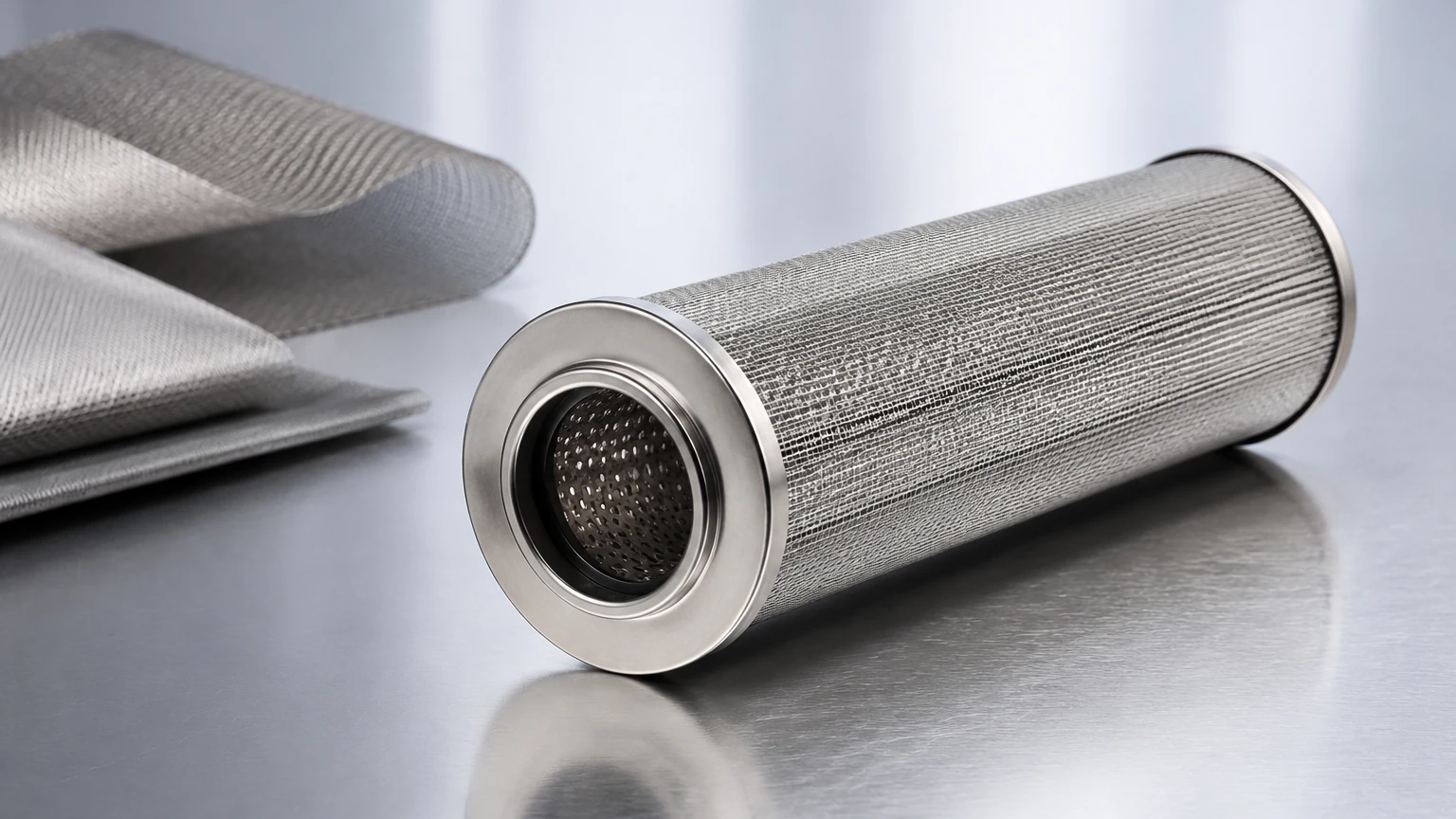
Most modern separators use a combination of borosilicate glass fibers and synthetic materials. These fibers are arranged in a multi-layered structure to provide graduated filtration. However, in demanding industrial environments—such as chemical processing or high-temperature steam applications—stainless steel wire mesh is often utilized as a support structure or as a primary filtration medium. Stainless steel provides the structural integrity required to prevent media migration and can withstand aggressive lubricants that might degrade synthetic fibers.
Structural Components
The end caps, inner cores, and outer cages of the separator must resist the mechanical stresses of the compressed air flow. Kaifil specializes in utilizing high-grade stainless steel for these components to ensure corrosion resistance and longevity. A robust inner core is essential to prevent the element from collapsing under high differential pressure, which can occur if the filter becomes saturated or fouled.
Gaskets and Seals
Proper sealing is critical to prevent "bypass," where unfiltered air escapes around the element. Gaskets are typically made from Viton, NBR, or other high-performance elastomers that are compatible with both mineral and synthetic compressor oils. For a comprehensive look at material options and technical specifications, engineers can review the detailed product data on our Main Page.
Performance Metrics: Efficiency and Pressure Drop
When evaluating a compressor oil separator, engineers must balance filtration efficiency against the energy costs associated with pressure drop.
Residual Oil Carryover
The primary performance metric is the amount of oil remaining in the air after it passes through the separator. High-quality elements can achieve residual oil levels as low as 1–3 mg/m³ (approx. 1–3 ppm). Lower carryover protects downstream filters, desiccant dryers, and pneumatic tools, reducing overall system maintenance costs.
Differential Pressure (Delta P)
Pressure drop is the resistance offered by the filter element to the air flow. A new, clean separator typically exhibits an initial pressure drop of 0.15 to 0.25 bar (2 to 3.6 psi). As the element captures contaminants and becomes saturated with oil, this pressure drop increases.
From a B2B perspective, managing pressure drop is an energy-saving imperative. In most industrial systems, every 2 psi (0.14 bar) increase in pressure drop requires approximately a 1% increase in the compressor motor's energy consumption. Therefore, selecting a separator with a low stable pressure drop and a high dirt-holding capacity is essential for reducing the total cost of ownership.
Common Risks and Failure Modes
Understanding the potential failure points of a compressor oil separator is vital for maintaining system uptime. Engineers should be aware of the following risks:
* Oil Saturation and Flooding: If the scavenge line is blocked or the primary separation stage fails, the separator element can become flooded. This leads to massive oil carryover into the air lines, potentially damaging downstream equipment.
* Media Migration: In lower-quality separators, the filter fibers may break loose and enter the air stream. Using stainless steel mesh reinforcement, a standard in Kaifil’s customized designs, significantly mitigates this risk.
* Electrostatic Discharge: The friction of air passing through the filter media can generate static electricity. If not properly grounded, this can lead to internal sparking, which poses a fire risk in the oil-rich environment of the separator tank. Quality separators include grounding staples or conductive gaskets to ensure electrical continuity.
* Collapse under Pressure: If the differential pressure exceeds the structural limits of the inner core, the element may collapse. This usually occurs during a "cold start" when the oil is more viscous or if the element has exceeded its service life.
Customization and OEM Requirements
Standard off-the-shelf separators do not always meet the specific needs of specialized industrial machinery. Customization is often required for unique flow rates, extreme temperatures, or non-standard housing dimensions.
As a professional manufacturer, Kaifil provides customized filtration solutions that address these specific engineering challenges. Whether the application requires a specific micron rating for a unique gas mixture or a reinforced stainless steel structure for high-pressure hydraulic systems, custom engineering ensures that the separator integrates perfectly with the compressor's design.
When sourcing a custom compressor oil separator, purchasing teams and engineers should confirm the following data points:
1. Maximum Flow Rate (ACFM or m³/min): To ensure the element is not undersized, which would lead to high velocity and poor separation.
2. Operating Pressure and Temperature: To select appropriate materials for the media and seals.
3. Type of Lubricant: To ensure chemical compatibility between the oil and the filter components.
4. Dimensions and Connection Type: To ensure a precise fit within the existing separator vessel.
Maintenance and Replacement Cycles
The service life of a compressor oil separator is generally determined by the increase in differential pressure. Most manufacturers recommend replacement when the pressure drop reaches 0.8 to 1.0 bar (12 to 15 psi). However, in many industrial settings, separators are replaced on a scheduled basis—typically every 4,000 to 8,000 operating hours—to prevent unexpected failures.
Regular monitoring of the differential pressure gauge is the most effective way to predict the end of a separator’s life. Additionally, monitoring the oil consumption of the compressor can indicate if the separator is losing efficiency or if the scavenge line is malfunctioning. If oil consumption increases suddenly, it is often a sign that the separator element has been compromised or reached its saturation limit.
Conclusion
The compressor oil separator is more than just a filter; it is a precision-engineered component that protects the integrity of the entire compressed air system. By understanding the principles of coalescence, the importance of structural materials like stainless steel, and the economic impact of pressure drop, engineers can make informed decisions that optimize performance and reduce energy costs.
For those seeking reliable, high-performance filtration components tailored to specific industrial requirements, Kaifil offers extensive expertise in custom stainless steel and wire mesh solutions. To explore our full range of capabilities and technical resources, we invite you to visit our Main Page and consult with our engineering team for your next project.
