


Condensed Gas
In industrial process engineering, the management of condensed gas represents a critical challenge that spans across chemical processing, power generation, and high-pressure pneumatic systems. When a gas undergoes a phase change into a liquid—whether through cooling, compression, or expansion—the resulting condensate can introduce significant operational risks if not properly managed. From an engineering perspective, the transition from a gaseous state to a condensed gas state requires specialized filtration and separation strategies to protect downstream equipment and maintain process integrity.
For technical teams and procurement managers, understanding the mechanics of condensation and the role of high-performance stainless steel filtration is essential. This guide explores the technical considerations of handling condensed gas, the selection criteria for filtration components, and how specialized manufacturing solutions from Kaifil support these demanding environments. For a broader overview of our engineering capabilities and product catalog, please visit our Main Page.
The Mechanics of Condensed Gas in Industrial Streams
Condensed gas typically refers to the liquid fraction that forms within a gas stream when the temperature drops below the dew point or the pressure increases beyond the vapor pressure of the substance. In many industrial applications, this is not a desired outcome but a byproduct of thermodynamic shifts. For instance, in compressed air systems, water vapor and oil aerosols often form a condensed gas mixture that can lead to corrosion and mechanical failure in pneumatic tools.
In more complex chemical processes, the condensation might involve aggressive solvents or hydrocarbons. The primary challenge for engineers is that these liquid droplets, once formed, can travel at high velocities. This creates a two-phase flow (gas and liquid) that is significantly more abrasive and difficult to manage than a single-phase gas stream. Effective filtration must be able to remove these droplets—a process known as coalescing—while withstanding the physical stresses of the flow.
Engineering Considerations for Gas-Liquid Separation
When designing a system to handle condensed gas, several engineering parameters must be prioritized to ensure the longevity of the filtration components and the efficiency of the separation process.
1. Coalescing Efficiency
Unlike standard particulate filtration, which captures solid contaminants on the surface of a mesh, separating condensed gas requires a depth-loading or specialized mesh structure that encourages small droplets to collide and form larger drops. These larger drops then fall out of the gas stream due to gravity. The choice of wire mesh density and the layering of stainless steel filter cartridges are pivotal in achieving high coalescing efficiency without causing an excessive pressure drop.
2. Differential Pressure and Flow Velocity
As gas condenses, the volume of the stream changes, and the presence of liquid increases the resistance within the filter media. Engineers must calculate the maximum allowable differential pressure ($ΔP$) to prevent the collapse of the filter element. Furthermore, if the gas velocity is too high, it can "re-entrain" the condensed gas, stripping the liquid off the filter surface and carrying it further downstream. Selecting the correct surface area and mesh geometry is vital to maintaining velocities within the optimal range for separation.
3. Thermal and Chemical Compatibility
Condensed gas often carries concentrated chemical properties. For example, in steam systems, the condensate can be highly corrosive depending on the pH levels and dissolved oxygen. Stainless steel, particularly grades 304 and 316L, is the industry standard for these applications because it maintains structural integrity under thermal cycling and resists the oxidative or acidic nature of many industrial condensates.
Selecting the Right Filtration Media for Condensate Management
The choice of filtration media is the most significant factor in the total cost of ownership and the reliability of a system dealing with condensed gas. While disposable synthetic filters are common in light-duty applications, industrial-scale processes typically require the durability of metal components.
Sintered Stainless Steel Mesh
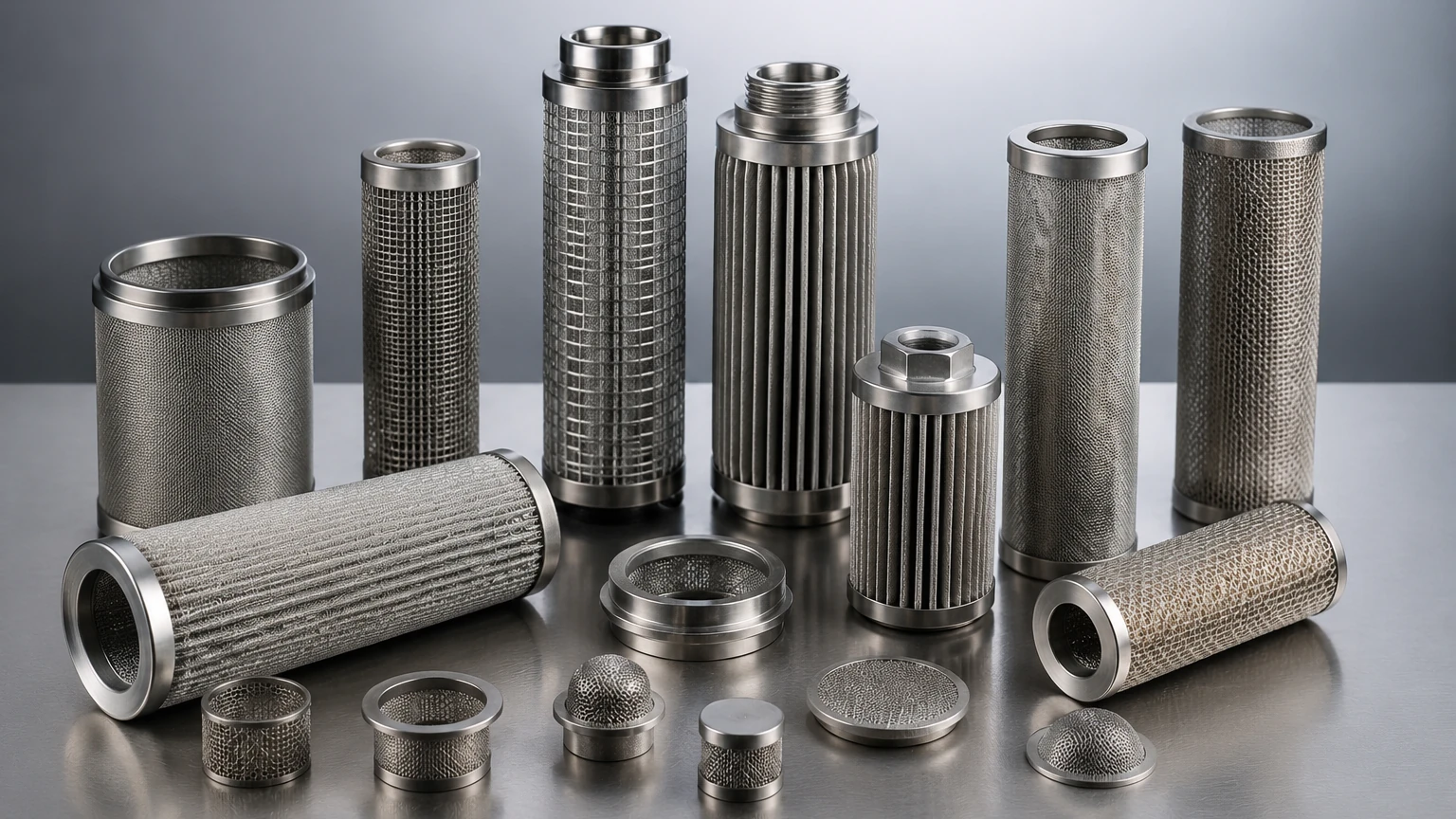
Sintered mesh provides a robust, multi-layer structure that is ideal for high-pressure gas streams. By bonding multiple layers of wire cloth together, manufacturers create a media that offers precise pore sizes and high mechanical strength. This is particularly useful in applications where the condensed gas may be under extreme pressure or where the filter must be cleaned and reused multiple times.
Wedge Wire and Perforated Supports
In systems where large volumes of condensed gas are expected, wedge wire screens or perforated metal supports are often used as pre-filters or as structural reinforcements for finer mesh. These components are designed to handle high flow rates and provide a first line of defense against "slugs" of liquid that could otherwise damage more delicate filtration layers.
Custom OEM Solutions
Every industrial environment has unique requirements based on the specific type of gas and the environmental conditions. Kaifil specializes in providing customized filtration solutions that address these variables. Whether the application requires a specific micron rating for fine aerosol removal or a custom housing interface for an existing system, our engineering team works to develop components that meet these exact specifications. To review our full range of customization options, you can return to our Main Page.
Common Risks of Poor Condensate Control
Failure to effectively remove condensed gas from a process stream can lead to several high-cost failures. Understanding these risks helps justify the investment in high-quality stainless steel filtration.
* Compressor Damage: In gas compression cycles, the presence of liquid droplets can cause "liquid slugging." Because liquids are incompressible, they can cause catastrophic mechanical failure of the compressor valves and pistons.
* Corrosion and Pitting: Condensed gas often traps impurities from the gas stream, concentrating them into a corrosive liquid. If this liquid is allowed to settle in piping or sensitive instruments, it can lead to localized pitting and eventual structural failure.
* Product Contamination: In industries such as food and beverage or pharmaceuticals, any condensed gas (such as oil or water from a compressed air line) that comes into contact with the product can lead to batch rejection and regulatory non-compliance.
* Instrumentation Inaccuracy: Sensors and flow meters are often calibrated for single-phase flow. The introduction of a condensed gas phase can lead to erratic readings and loss of process control.
Maintenance and Replacement Cycles
One of the primary advantages of utilizing stainless steel filtration for condensed gas applications is the ability to clean and regenerate the filter media. Unlike polymer-based filters that must be discarded once saturated or fouled, stainless steel cartridges can often be cleaned through ultrasonic baths, backwashing, or chemical cleaning.
Engineers should establish maintenance protocols based on differential pressure monitoring. A steady increase in $ΔP$ usually indicates a buildup of solid particulates trapped alongside the condensed gas. By implementing a regular cleaning cycle, facilities can significantly extend the service life of their filtration components, reducing the total cost of ownership compared to frequent disposable filter purchases.
When evaluating a replacement cycle, consider the following:
1. The nature of the condensate: Is it oily, aqueous, or chemically aggressive?
2. Particulate load: How much solid debris is accompanying the gas stream?
3. Operating temperature: Are there frequent thermal shocks that might fatigue the metal over several years?
Conclusion: Optimizing Your Filtration Strategy
Managing condensed gas is a complex task that requires a deep understanding of thermodynamics, fluid dynamics, and material science. By selecting high-quality stainless steel filtration components, industrial operators can ensure that their systems remain efficient, protected, and compliant with industry standards.
As a professional manufacturer, Kaifil provides the technical expertise and manufacturing precision needed to solve the most difficult gas-liquid separation challenges. From material selection to the final customized design, we focus on delivering durability and performance. For more information on our stainless steel filter cartridges, wire mesh filters, and custom engineering services, please visit our Main Page. Our team is ready to assist with technical evaluations and selection advice to help you achieve optimized filtration performance in your specific application.
