


Cuno Water Filter Housing
In industrial water treatment and process filtration, the filter housing serves as the critical pressure vessel that contains and directs fluid through the filtration media. Among the industry standards, the Cuno water filter housing—now part of the 3M Purification portfolio—represents a benchmark for reliability and performance. For engineers and procurement professionals, selecting the correct housing involves a deep understanding of fluid dynamics, material compatibility, and the specific requirements of the application, whether it be in chemical processing, food and beverage production, or pharmaceutical manufacturing.
Choosing a cuno water filter housing requires more than just matching a pipe size; it involves evaluating the structural integrity of the vessel, the sealing mechanism of the cartridges, and the long-term maintenance requirements of the system. As a specialist in custom stainless steel filtration solutions, Kaifil provides the high-performance internal components and filter cartridges that ensure these housings operate at peak efficiency. To explore our full range of compatible filtration products, you can visit our Main Page.
Engineering Standards for Industrial Filter Housings
Industrial filter housings are designed to withstand significant internal pressures while maintaining a leak-proof environment. A cuno water filter housing is typically engineered to meet specific industrial standards, such as ASME (American Society of Mechanical Engineers) Section VIII, which governs the design and fabrication of pressure vessels. This ensures that the housing can handle the stresses of hydraulic shock and continuous operation without risk of catastrophic failure.
Pressure Ratings and Flow Rates
The performance of a housing is defined by its maximum operating pressure (MOP) and its maximum operating temperature (MOT). In many industrial settings, housings are rated for 150 PSI or 300 PSI, depending on the wall thickness and the type of closure used. Flow rate is another critical factor; the housing must be sized to accommodate the required volume of fluid without creating an excessive pressure drop (delta P). A high initial pressure drop across the housing itself, even before the filter cartridge is installed, indicates an undersized vessel that will lead to increased energy costs and reduced pump life.
Connection Types
Housings are available with various inlet and outlet configurations, including NPT (National Pipe Thread), BSTP, or flanged connections (ANSI or DIN). For sanitary applications, Tri-Clamp connections are standard to allow for easy disassembly and cleaning. The choice of connection often dictates the ease of integration into existing piping systems and the overall footprint of the filtration skid.
Material Considerations: Stainless Steel vs. Polymeric Housings
The environment in which a cuno water filter housing operates determines the material of construction. While plastic housings (such as polypropylene or styrene-acrylonitrile) are common in light commercial and residential applications, industrial processes almost exclusively demand metal vessels for durability and chemical resistance.
304 and 316L Stainless Steel
Stainless steel is the preferred material for most industrial filtration tasks. Type 304 stainless steel offers excellent strength and basic corrosion resistance, making it suitable for general water filtration. However, in environments involving chlorides, high temperatures, or aggressive chemicals, Type 316L stainless steel is the industry standard. The "L" denotes low carbon content, which improves weldability and reduces the risk of intergranular corrosion. In pharmaceutical and food-grade applications, the internal surfaces of the housing are often electropolished to a specific Ra (roughness average) to prevent bacterial growth and facilitate sterilization.
Chemical Compatibility
Beyond the metal itself, the compatibility of the gaskets and O-rings is paramount. Standard housings may come with Buna-N seals, but chemical processing or high-temperature steam sterilization may require EPDM, Viton (FKM), or PTFE-encapsulated silicone. Failure to match the seal material to the process fluid can lead to leaks, bypass, and contamination of the downstream product.
Technical Specifications and Flow Dynamics
The internal geometry of a cuno water filter housing is designed to minimize turbulence and ensure even distribution of the fluid across the filter media. This is particularly important in multi-round housings, where several cartridges are housed in a single vessel. If the flow is not distributed evenly, the cartridges closest to the inlet may blind (clog) prematurely, while others remain underutilized.
Cartridge Sealing Mechanisms
One of the defining features of high-quality housings is the cartridge seating arrangement. Cuno-style housings often accommodate various end-cap configurations, such as:
* Double Open End (DOE): Uses flat gaskets at both ends and requires a spring-loaded cap to maintain a seal.
* 222 O-Ring / Fin: Features a double O-ring seal that plugs into a machined seat, providing a more secure, bypass-free connection suitable for critical filtration.
* 226 O-Ring / Bayonet: Includes a locking tab mechanism to ensure the cartridge remains seated even under high back-pressure or vibration.
Air Vents and Drains
Properly engineered housings include dedicated ports for air venting and liquid drainage. Air trapped inside the housing can create air pockets that reduce the effective filtration area and lead to oxidation in sensitive fluids. Similarly, a bottom drain is essential for safe maintenance, allowing the operator to empty the vessel before opening it for a cartridge change-out.
Maintenance, Seal Integrity, and Gasket Selection
The reliability of a filtration system is only as good as its maintenance protocol. For a cuno water filter housing, the primary maintenance task is the replacement of the filter elements and the inspection of the sealing surfaces. Over time, the O-rings and gaskets that prevent bypass can degrade due to thermal cycling or chemical exposure.
Identifying Bypass
Bypass occurs when fluid flows around the filter media rather than through it. This is often caused by a crushed DOE cartridge, a nicked O-ring, or a warped seal plate. In critical applications, such as the protection of reverse osmosis (RO) membranes or the final filtration of bottled water, even a small amount of bypass can lead to significant downstream damage or product recalls. Regular integrity testing and visual inspection of the housing's internal seats are necessary to prevent these issues.
Replacement Cycles
The frequency of cartridge replacement is typically determined by the differential pressure. Most industrial systems are designed for a change-out when the delta P reaches 20-35 PSI. Operating beyond this point risks structural failure of the filter element or "unloading," where captured contaminants are forced through the media by the high pressure.
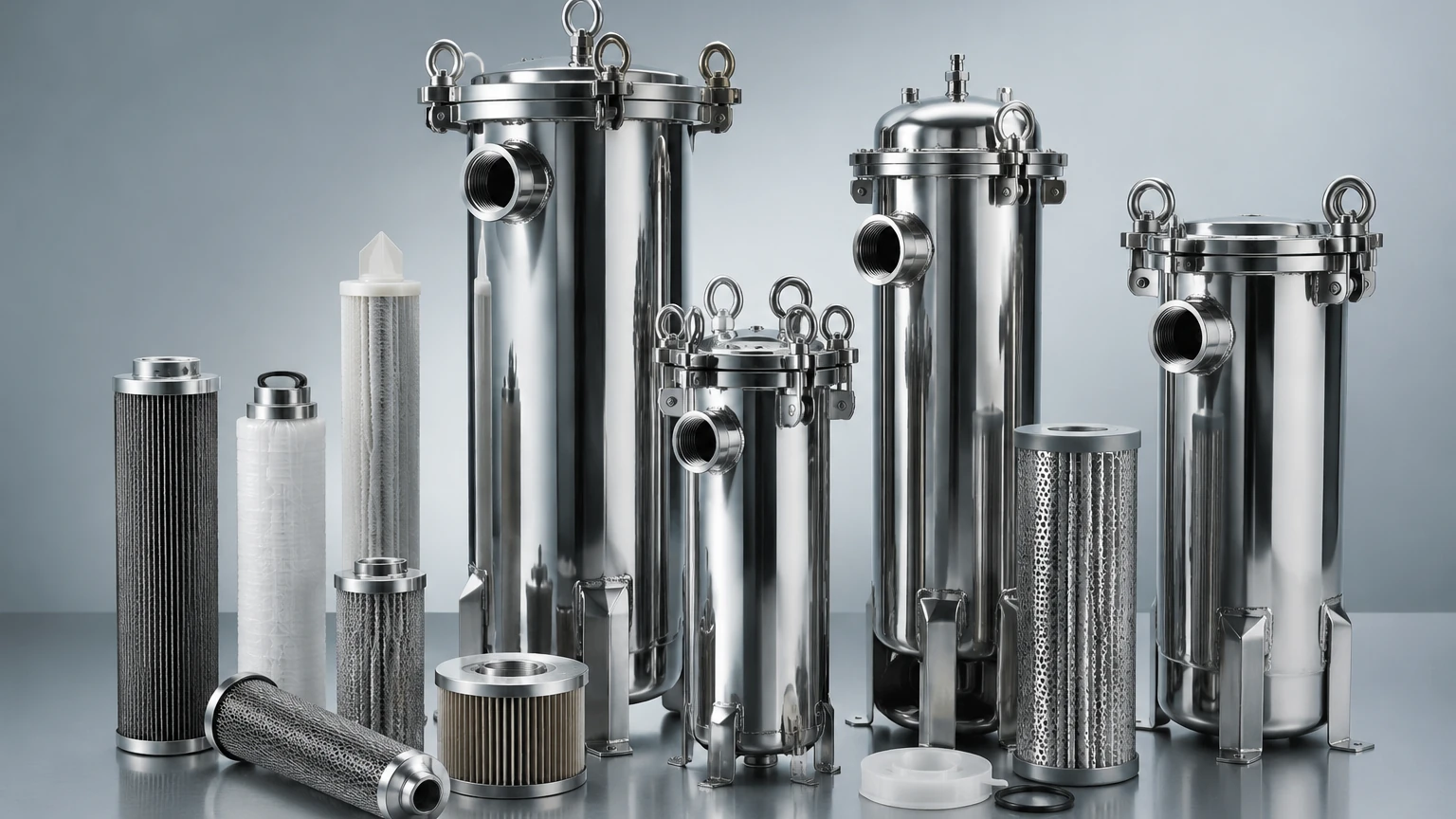
Customization and Integration with High-Performance Filter Cartridges
While the housing provides the structure, the filter cartridge performs the actual work of separation. Many industrial users find that standard off-the-shelf cartridges do not meet the specific demands of their process, particularly regarding temperature or chemical compatibility. This is where customized stainless steel filtration solutions become essential.
The Role of Stainless Steel Wire Mesh
In high-temperature or high-viscosity applications, traditional melt-blown or pleated paper cartridges may fail. Kaifil specializes in manufacturing stainless steel wire mesh filters that can be integrated into cuno water filter housing systems. These metal elements offer several advantages:
* Cleanability: Unlike disposable filters, stainless steel mesh can be cleaned via backwashing or ultrasonic cleaning, significantly reducing waste.
* Durability: They can withstand high differential pressures and extreme temperatures that would melt or deform plastic filters.
* Precision: Sintered wire mesh provides absolute filtration ratings, ensuring consistent performance in critical applications.
By pairing a robust housing with a custom-engineered metal filter, facilities can achieve a more reliable and sustainable filtration process. For more information on how our manufacturing capabilities can support your specific requirements, please visit our Main Page.
Economic Considerations: Total Cost of Ownership in Filtration Systems
When evaluating a cuno water filter housing, it is important to look beyond the initial purchase price and consider the Total Cost of Ownership (TCO). The TCO includes the cost of the housing, the ongoing cost of replacement cartridges, energy consumption related to pressure drop, and the labor required for maintenance.
Reducing Operational Costs
A common mistake in procurement is selecting a smaller, cheaper housing that requires more frequent cartridge changes. A larger housing with more surface area will have a lower clean pressure drop and a longer service life per cartridge, often paying for itself within the first year of operation through reduced labor and consumable costs.
Standardization and Inventory Management
Standardizing on a specific housing type across a facility can simplify inventory management. By using housings that accept standard cartridge geometries, a plant can reduce the number of SKUs held in stock and ensure that replacement parts are always available. This also streamlines the training for maintenance personnel, as the procedures for opening and sealing the vessels remain consistent across different production lines.
Conclusion: Selecting the Right Solution for Industrial Success
The cuno water filter housing remains a cornerstone of industrial filtration due to its proven design and versatility. However, the success of any filtration system depends on the synergy between the housing, the filter media, and the operational environment. Engineers must carefully confirm the chemical compatibility, pressure requirements, and flow dynamics before finalizing a selection.
Whether you are looking to replace an existing vessel or design a new filtration system from the ground up, focusing on quality materials and precise engineering is the only way to ensure long-term reliability. At Kaifil, we support these goals by providing the technical expertise and customized stainless steel components necessary to optimize industrial filtration performance. From material selection to filtration accuracy, our team works to deliver dependable solutions for the most demanding environments. To learn more about our capabilities and product offerings, visit our Main Page.
