


Filter Mesh Sheet
In the landscape of industrial separation and purification, the filter mesh sheet serves as a fundamental component for a vast array of mechanical filtration systems. Whether utilized as a standalone screening medium or as the primary material for complex filter cartridges, the selection of a filter mesh sheet requires a deep understanding of material science, fluid dynamics, and mechanical engineering. For engineers and procurement specialists, identifying the correct specification is not merely about particle size; it involves balancing flow rates, structural integrity, and chemical compatibility to ensure long-term operational efficiency.
Kaifil, a specialist in custom stainless steel filtration solutions, provides high-precision filter mesh sheets designed to meet the rigorous demands of industrial environments. By focusing on technical accuracy and manufacturing excellence, Kaifil supports industries ranging from chemical processing to food and beverage production, ensuring that every filtration component performs reliably under specific application stresses.
Understanding Material Composition in Filter Mesh Sheets
The performance of a filter mesh sheet is primarily dictated by its material composition. In industrial settings, stainless steel is the preferred medium due to its inherent durability and resistance to environmental degradation. However, the specific grade of stainless steel must be matched to the operating conditions of the application.
Stainless Steel Grade 304
Grade 304 is the most common material for general industrial filtration. It offers excellent physical strength and good corrosion resistance against many organic and inorganic chemicals. It is widely used in food processing and water treatment where extreme chemical exposure is not a primary concern.
Stainless Steel Grade 316 and 316L
For more demanding environments, Grade 316 is specified. The addition of molybdenum enhances its resistance to pitting and crevice corrosion, particularly in chloride-rich environments. Grade 316L (low carbon) is preferred for applications involving welding, as it minimizes carbide precipitation that can lead to intergranular corrosion. These grades are standard in pharmaceutical and marine applications.
Specialized Alloys
In cases involving extreme temperatures or highly aggressive acids, specialized alloys such as Monel, Inconel, or Hastelloy may be used. These materials ensure the filter mesh sheet retains its structural properties and filtration accuracy even when exposed to conditions that would cause standard stainless steel to fail.
Weave Patterns and Their Impact on Filtration Performance
The method by which the wires are interlaced to form a filter mesh sheet determines the mechanical properties and the filtration characteristics of the medium. Engineers must select a weave pattern that aligns with the required micron rating and the nature of the fluid being processed.
Plain Weave
This is the most straightforward weave, where each warp wire crosses over and under each shute wire. It provides a consistent aperture size and is ideal for general-purpose screening and low-pressure filtration. Plain weave sheets are easy to clean and offer high open-area percentages.
Twill Weave
In a twill weave, each warp wire passes over and under two shute wires. This allows for the use of heavier wires for a given mesh count, resulting in a more robust mesh sheet. Twill weaves are often used when a fine mesh is required but must withstand higher mechanical loads.
Dutch Weave (Plain and Twill)
Dutch weaves utilize different diameters for warp and shute wires. The wires are driven closely together, creating a dense, wedge-shaped opening rather than a square aperture. Plain Dutch weave offers high filtration accuracy and strength, while Twill Dutch weave allows for the finest filtration levels (down to a few microns) by layering the wires more densely. These are commonly used in high-pressure hydraulic systems and fuel filtration.
Key Technical Specifications for Industrial Selection
When specifying a filter mesh sheet, several technical parameters must be quantified to ensure the component meets the application's performance expectations.
1. Mesh Count: This refers to the number of openings per linear inch. A higher mesh count indicates a finer filtration capability but typically results in a lower open area.
2. Wire Diameter: The thickness of the wire used in the weave. Larger diameters increase the strength and lifespan of the mesh but reduce the open area and increase the pressure drop.
3. Aperture (Opening Size): The clear distance between two adjacent wires. This defines the particle size that will be retained by the mesh. It is calculated as: `Aperture = (1 / Mesh Count) – Wire Diameter`.
4. Percentage of Open Area: This is the ratio of the total area of the openings to the total area of the sheet. A higher open area results in a lower pressure drop and higher flow rates. It is calculated as: `Open Area % = (Aperture / (Aperture + Wire Diameter))^2 * 100`.
Engineering Considerations: Pressure Drop and Mechanical Integrity
One of the most critical aspects of filter mesh sheet selection is the management of pressure drop (Delta P). As fluid passes through the mesh, the resistance offered by the wires causes a reduction in pressure. If the mesh is too fine or the open area too small, the pressure drop may exceed the system's design limits, leading to reduced flow or pump strain.
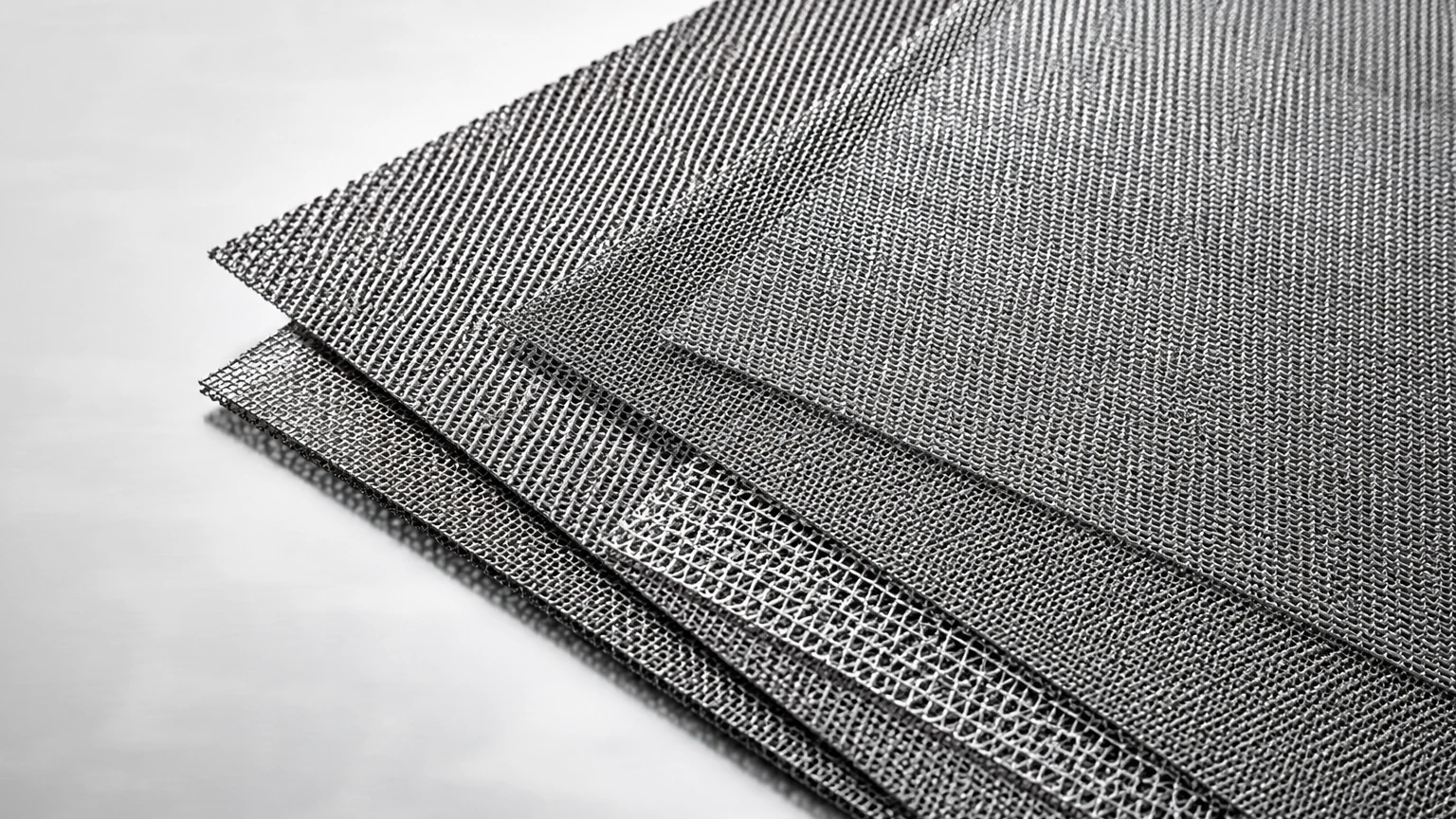
Furthermore, the mechanical integrity of the sheet must be evaluated. In high-pressure systems, the mesh sheet may be subject to "blinding" (clogging) or deformation. To counter this, engineers often specify multi-layer sintered mesh. Sintering involves bonding multiple layers of mesh together using heat and pressure without the use of binders. This process creates a composite sheet that combines the fine filtration of a thin mesh with the mechanical support of a coarse mesh, resulting in a highly stable and durable filtration medium.
Customization and Secondary Processing
In many B2B applications, a standard roll of mesh is insufficient. The filter mesh sheet must be processed into specific shapes or components to fit into existing machinery. Kaifil specializes in these secondary processes, ensuring that the final product integrates seamlessly into the client's system.
* Precision Cutting: Utilizing CNC laser or waterjet cutting to achieve exact dimensions for discs, gaskets, or custom shapes.
* Forming and Pleating: Increasing the surface area of the filter by pleating the mesh sheet, which allows for higher dirt-holding capacity and longer service intervals within a compact footprint.
* Welding and Assembly: Using advanced welding techniques (such as TIG or plasma welding) to create cylindrical cartridges or conical filters without compromising the integrity of the mesh or introducing contaminants.
* Sintering: As mentioned, creating rigid, multi-layer structures for demanding industrial environments.
Industry-Specific Applications for Filter Mesh Sheets
The versatility of the filter mesh sheet allows it to be employed across diverse sectors, each with its own set of regulatory and performance standards.
Chemical and Petrochemical
In these industries, mesh sheets are used for catalyst recovery, solvent filtration, and protecting downstream equipment from particulate damage. Resistance to aggressive chemicals and high temperatures is paramount.
Food and Beverage
Filtration in this sector requires compliance with hygienic standards (such as FDA or 3A). Stainless steel mesh sheets are used for straining juices, filtering frying oils, and ensuring the purity of bottled water. The ability to withstand Clean-in-Place (CIP) procedures is essential.
Pharmaceutical and Biotechnology
Precision is the priority here. Filter mesh sheets are used in the production of active pharmaceutical ingredients (APIs) and for sterile air filtration. The materials must be non-leaching and capable of achieving ultra-fine filtration ratings.
Hydraulics and Lubrication
Protecting sensitive valves and pumps requires the removal of microscopic wear particles. Dutch weave mesh sheets are frequently used in these applications to provide high-strength filtration that can handle high-viscosity fluids and high-pressure surges.
Evaluating Total Cost of Ownership and Maintenance
While the initial purchase price of a filter mesh sheet is a factor, engineers should focus on the Total Cost of Ownership (TCO). A high-quality stainless steel mesh sheet from a manufacturer like Kaifil may have a higher upfront cost than synthetic alternatives, but its durability and cleanability often lead to lower long-term expenses.
Cleaning and Regeneration
Unlike disposable filters, stainless steel mesh sheets can often be cleaned and reused. Methods include:
* Backwashing: Reversing the flow of fluid to dislodge particles from the surface.
* Ultrasonic Cleaning: Using high-frequency sound waves in a cleaning solution to remove deeply embedded contaminants.
* Chemical Cleaning: Using specific solvents to dissolve built-up residues, provided the mesh material is compatible with the cleaning agent.
Replacement Cycles
Regular inspection of the mesh is necessary to identify signs of fatigue, such as wire breakage or permanent deformation. Establishing a predictable replacement cycle based on pressure drop monitoring helps prevent catastrophic failure and ensures consistent product quality.
Conclusion: Optimizing Your Filtration System
Selecting the right filter mesh sheet is a technical decision that impacts the reliability and efficiency of an entire industrial process. By considering material grades, weave patterns, and mechanical specifications, engineers can implement filtration solutions that minimize downtime and maximize performance.
As a professional manufacturer, Kaifil provides the expertise and manufacturing capabilities required to develop customized filtration components that meet specific industrial challenges. From material selection to precision assembly, the focus remains on delivering high-performance solutions for demanding environments. For more information on custom filtration components and engineering support, please visit the Main Page to explore our full range of capabilities and product options.
