


Cutting Oil Filtration System
In modern precision machining and industrial manufacturing, the efficiency of a cutting oil filtration system is a primary determinant of both component quality and operational profitability. Cutting oils, whether neat oils or water-soluble coolants, serve critical functions: lubricating the tool-workpiece interface, dissipating heat, and flushing away chips. However, as these fluids circulate, they inevitably become contaminated with metal fines, micro-chips, abrasive grains, and tramp oils. Without an effective filtration strategy, these contaminants compromise the integrity of the machining process.
For engineers and facility managers, selecting the right filtration components is not merely a maintenance consideration but a strategic engineering decision. High-performance stainless steel filtration media, such as those featured on our Main Page, provide the durability and precision required to maintain fluid purity in demanding environments. This guide explores the technical parameters, engineering considerations, and economic factors involved in optimizing a cutting oil filtration system.
The Impact of Contamination on Machining Performance
The presence of particulate matter in cutting oil leads to a cascade of mechanical and chemical issues. When metal fines are allowed to recirculate, they act as an unintended abrasive, increasing friction and heat generation at the cutting edge. This phenomenon, often referred to as "secondary cutting," significantly accelerates tool wear, leading to more frequent tool changes and increased downtime.
Furthermore, the surface finish of the workpiece is directly affected by the cleanliness of the oil. Micro-particles trapped between the tool and the part can cause scratching, pitting, and dimensional inaccuracies. In industries such as aerospace and medical device manufacturing, where tolerances are measured in microns, even slight contamination can result in high scrap rates.
Beyond mechanical wear, contaminated oil is prone to chemical degradation. Fine metal particles increase the surface area available for oxidation and catalytic reactions, which can lead to the breakdown of additives and the development of acidity. An optimized cutting oil filtration system extends the life of the fluid by removing these catalysts, thereby reducing the frequency of total fluid replacement and the associated costs of hazardous waste disposal.
Technical Components of a Cutting Oil Filtration System
An effective filtration architecture typically employs multiple stages to address different sizes and types of contaminants. While primary separation may involve settling tanks or magnetic separators for large ferrous chips, the critical fine filtration stage relies on high-precision media.
Stainless Steel Wire Mesh Filters
Stainless steel wire mesh is a preferred medium for cutting oil applications due to its precise pore size and structural integrity. Unlike paper or fabric media, stainless steel mesh offers a consistent "absolute" filtration rating. This means the mesh is engineered to block a specific percentage of particles above a designated micron size, ensuring predictable performance under varying pressures.
Filter Cartridges and Elements
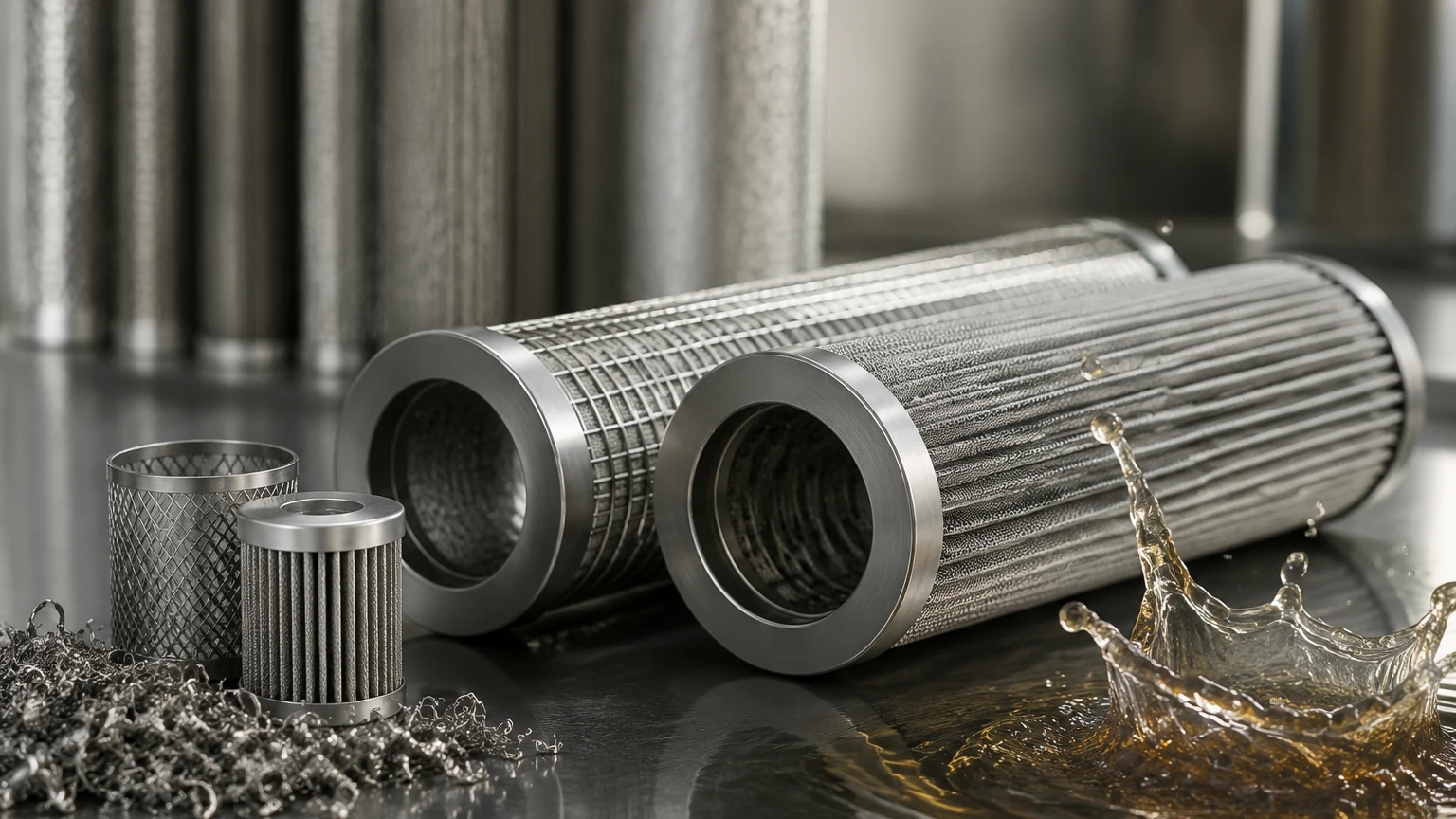
In high-pressure systems, such as those used for deep-hole drilling or high-speed milling, stainless steel filter cartridges are essential. These elements are designed to withstand high differential pressures without collapsing or bypassing. The use of pleated designs increases the effective surface area, allowing for higher flow rates and longer service intervals before the pressure drop necessitates cleaning or replacement.
Magnetic Separation Integration
For machining ferrous materials, integrating magnetic separation before the fine filtration stage can significantly reduce the load on the stainless steel elements. By removing the bulk of magnetic fines, the cutting oil filtration system can focus on non-ferrous particles and ultra-fine contaminants, extending the lifecycle of the primary filter media.
Engineering Considerations for Filter Selection
When specifying components for a cutting oil filtration system, engineers must balance several competing technical variables. A mismatch in any of these areas can lead to system inefficiency or premature component failure.
1. Micron Rating and Filtration Efficiency
The choice of micron rating depends on the specific machining process. For roughing operations, a 50-100 micron filter may suffice. However, for finishing operations or systems using high-pressure through-spindle coolant (TSC), filtration levels as fine as 5 to 10 microns are often required. It is important to distinguish between "nominal" and "absolute" ratings; for critical applications, absolute-rated stainless steel mesh provides the necessary reliability.
2. Fluid Viscosity and Flow Rate
Cutting oils vary significantly in viscosity, which is also highly sensitive to temperature. High-viscosity oils create a higher pressure drop across the filter media. Engineers must calculate the required surface area of the filter to ensure that the flow rate remains sufficient for cooling and lubrication without exceeding the maximum allowable pressure drop ($ΔP$).
3. Material Compatibility
While 304-grade stainless steel is suitable for many applications, 316L stainless steel is often preferred for its superior corrosion resistance, especially when dealing with aggressive chemical additives or water-based coolants with high chloride content. Choosing the correct alloy ensures that the filter itself does not become a source of contamination through corrosion.
4. Structural Integrity and Pressure Limits
In many industrial systems, the filtration unit must handle sudden pressure spikes. The mechanical strength of the filter element—often reinforced with internal support cores or external shrouds—must be verified against the system's maximum operating pressure and potential hydraulic shock.
Advantages of Stainless Steel Media in Oil Filtration
While disposable media (such as bags or paper rolls) are common in some low-end applications, stainless steel filtration solutions offer distinct advantages for professional B2B industrial environments.
* Durability and Reusability: Stainless steel filters are permanent or semi-permanent components. They can be cleaned through backwashing, ultrasonic cleaning, or chemical baths, allowing them to be returned to service multiple times. This eliminates the recurring cost of purchasing and disposing of single-use filters.
* Thermal Stability: Machining processes can generate significant heat. Stainless steel maintains its structural properties and filtration accuracy at temperatures that would cause synthetic or cellulose media to soften or degrade.
* No Media Migration: One risk with fibrous filters is "media migration," where bits of the filter material break off and enter the clean oil stream. Stainless steel wire mesh is a rigid, woven structure that eliminates this risk, ensuring that the filtration process does not introduce new contaminants.
* Precision Geometry: Advanced manufacturing allows for highly controlled mesh openings. This precision ensures that the cutting oil filtration system provides a consistent barrier against specific particle sizes, which is vital for maintaining the ISO cleanliness codes required by high-end machine tool manufacturers.
Maintenance, Cleaning, and Total Cost of Ownership (TCO)
The economic viability of a cutting oil filtration system is best evaluated through Total Cost of Ownership (TCO) rather than initial purchase price. While a stainless steel filter element has a higher upfront cost than a disposable bag, the long-term savings are substantial.
Monitoring Pressure Drop
The primary indicator for maintenance is the differential pressure across the filter. Most modern systems utilize pressure transducers or gauges to signal when the filter has reached its dirt-holding capacity. Operating a system with a clogged filter not only reduces flow to the tool but can also lead to "bypass" events where unfiltered oil enters the system through a relief valve.
Cleaning Protocols
For stainless steel elements, the cleaning process is critical. Ultrasonic cleaning is highly effective for removing fine metal dust trapped deep within the mesh. For oils that have oxidized or formed a varnish, specialized solvent baths may be required. Establishing a rigorous cleaning schedule based on operating hours ensures consistent fluid quality and prevents the permanent "blinding" of the mesh.
Waste Reduction
By using cleanable stainless steel filters, a facility significantly reduces its solid waste stream. In many jurisdictions, used oil-soaked disposable filters are classified as hazardous waste, carrying high disposal fees and complex regulatory requirements. Transitioning to a permanent filtration solution aligns with industrial sustainability goals and reduces environmental liability.
Customization and OEM Solutions for Industrial Filtration
Every machining environment is unique, often requiring customized filtration components to fit specific machine footprints or flow requirements. As a manufacturer specializing in custom stainless steel filtration, Kaifil works with engineers to develop bespoke solutions that go beyond off-the-shelf options.
Customization options often include:
* Bespoke Dimensions: Tailoring the length, diameter, and fitting types of filter cartridges to integrate seamlessly into existing housings.
* Multi-Layer Sintered Mesh: For applications requiring extreme durability, multiple layers of wire mesh can be sintered together to create a robust, high-strength filter medium that combines fine filtration with mechanical rigidity.
* Specialized End Caps: Engineering custom interfaces (such as threaded, flange, or O-ring seals) to ensure zero-leakage performance in high-pressure cutting oil circuits.
Engineers looking to optimize their systems should confirm the specific flow dynamics and contaminant profiles of their application before selecting a filter design. For more information on available configurations and technical support, please refer to the Main Page.
Conclusion
A robust cutting oil filtration system is an investment in the longevity of machine tools, the quality of finished products, and the overall efficiency of the manufacturing process. By prioritizing high-quality stainless steel media and considering the complex engineering variables of flow, viscosity, and micron precision, manufacturers can achieve a significant reduction in operational costs. Whether through standard components or custom-engineered OEM solutions, the goal remains the same: maintaining the highest level of fluid purity to drive industrial excellence.
