


Cvd Reactor
Chemical Vapor Deposition (CVD) is a sophisticated vacuum deposition method used to produce high-quality, high-performance solid materials. In the modern industrial landscape, the cvd reactor serves as the heart of thin-film deposition processes, essential for the semiconductor industry, optical coatings, and the production of synthetic diamonds. However, the efficiency and yield of a CVD process are heavily dependent on the precision of the environment within the reaction chamber. This environment is controlled not only by temperature and pressure but also by the purity of the gases introduced and the effective management of particulate byproducts.
For engineers and technical procurement teams, understanding the intersection of reactor design and high-performance filtration is critical. As a manufacturer specializing in stainless steel filtration, Kaifil provides the necessary components to ensure that these reactors operate at peak efficiency. For a broader look at available filtration technologies, you may visit our Main Page.
The Fundamentals of CVD Reactor Technology
A cvd reactor operates by exposing a substrate to one or more volatile precursors, which react or decompose on the substrate surface to produce the desired thin film. This process often results in the formation of byproducts, which are removed from the chamber by gas flow. The reactors can be categorized based on their operating pressure (Atmospheric Pressure CVD, Low-Pressure CVD, or Ultra-high Vacuum CVD) and the method of precursor heating (Hot-wall vs. Cold-wall).
Regardless of the specific configuration, the integrity of the deposited film relies on a contaminant-free environment. Even microscopic particles can cause structural defects in the film, leading to device failure in semiconductor applications or reduced durability in industrial coatings. Consequently, the filtration of precursor gases and the protection of the vacuum system are paramount engineering considerations.
Critical Filtration Points in CVD Systems
In a standard CVD setup, there are three primary stages where filtration is indispensable:
1. Precursor Gas Delivery: Before entering the cvd reactor, gases such as silane, ammonia, or organometallic compounds must be filtered to remove moisture and particulate matter. Stainless steel filter cartridges are preferred here due to their ability to withstand the reactive nature of these precursors.
2. Point-of-Use (POU) Filtration: Located just before the gas enters the reaction chamber, POU filters act as the final defense against contaminants introduced by the gas delivery lines or valves.
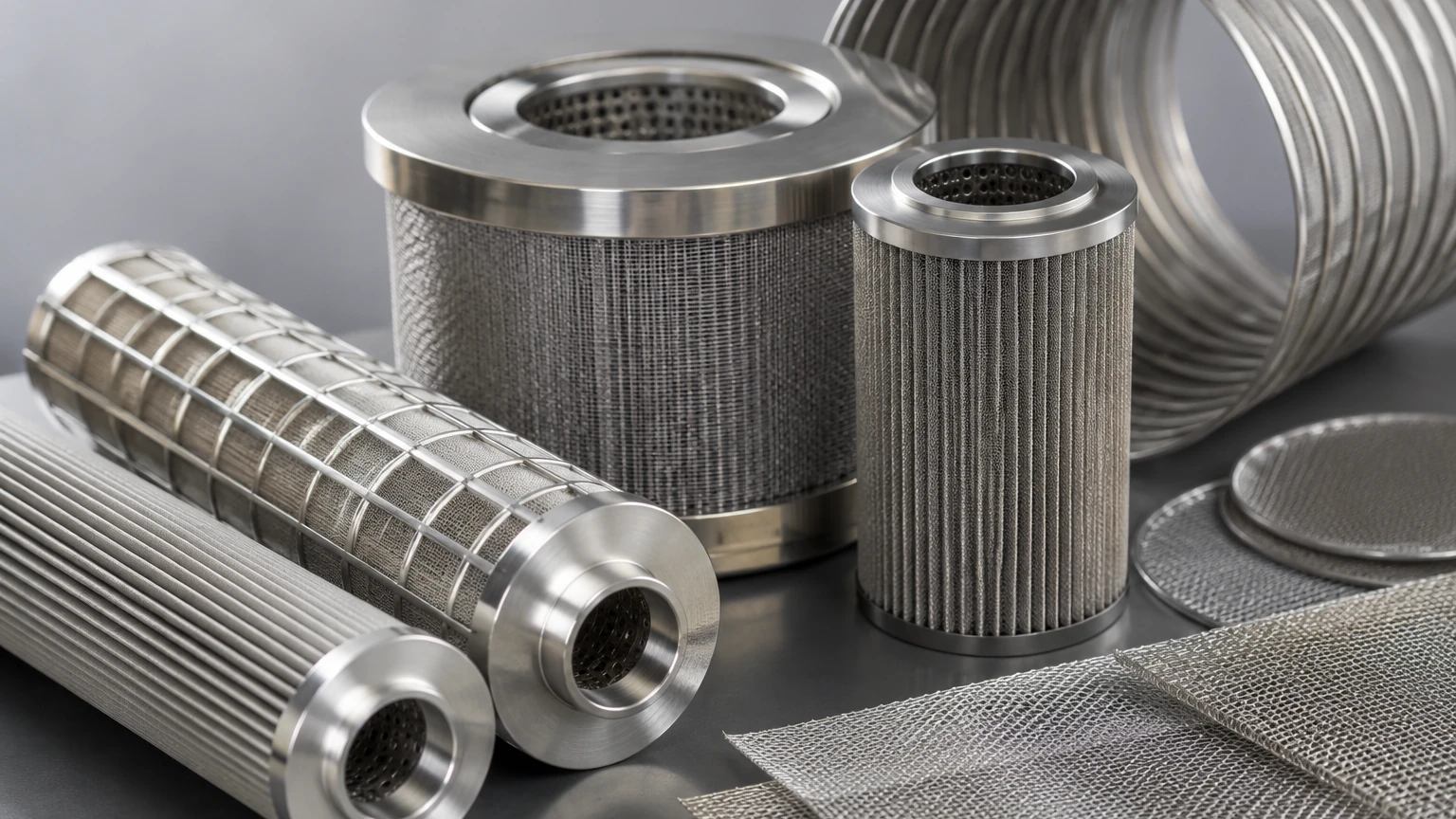
3. Exhaust and Vacuum Pump Protection: The reaction process often generates solid byproducts or unreacted precursors. If these particles reach the vacuum pump, they can cause mechanical wear, oil contamination, and eventual system failure. Sintered metal filters are frequently used in the exhaust line to capture these particulates before they exit the system.
Material Selection: Why Stainless Steel is Essential
When designing components for a cvd reactor, material compatibility is the first hurdle. The reactor environment is often characterized by high temperatures (ranging from 300°C to over 1000°C) and the presence of corrosive gases. Traditional polymer-based filters are unsuitable for these conditions as they would degrade, outgas, or melt.
Thermal Stability
Stainless steel, particularly 316L, maintains its structural integrity at elevated temperatures. This allows filters to be placed closer to the reaction zone without the risk of thermal failure. In high-temperature CVD processes, sintered metal fiber or wire mesh filters provide the necessary heat resistance to ensure continuous operation.
Chemical Resistance
CVD precursors and byproducts can be highly reactive. For instance, in the deposition of silicon nitride or tungsten, the gases involved can be highly acidic or alkaline. Stainless steel offers excellent resistance to a wide range of chemicals, preventing corrosion that could otherwise introduce metallic impurities into the deposition chamber.
Mechanical Strength
CVD processes often involve significant pressure differentials, especially during the transition from atmospheric pressure to vacuum. Sintered metal filters provide the mechanical strength required to withstand these pressure swings without deforming or shedding media, which is a common failure mode in less robust filter types.
Engineering Challenges: Heat, Pressure, and Chemical Resistance
Designing a filtration solution for a cvd reactor requires a deep understanding of fluid dynamics and material science. Engineers must balance several competing factors to optimize performance:
Micron Rating and Efficiency
In semiconductor-grade CVD, the required filtration efficiency is often 99.9999999% (9-nines) at the most penetrating particle size. Achieving this level of precision requires advanced manufacturing techniques, such as the use of sintered metal fibers that create a tortuous path for particles, ensuring they are captured through diffusion, interception, or inertial impaction.
Pressure Drop (Delta P)
Maintaining a consistent flow rate is vital for uniform film growth. A filter with a high pressure drop can disrupt the gas flow and lead to uneven deposition across the substrate. Kaifil's engineering approach focuses on maximizing the effective filtration area within a compact footprint, utilizing pleated wire mesh or high-porosity sintered fibers to keep pressure drop to a minimum while maintaining high capture efficiency.
Outgassing and Purity
In vacuum environments, materials can release trapped gases, a phenomenon known as outgassing. This can contaminate the cvd reactor and ruin the deposition process. Stainless steel filtration components are typically electropolished and vacuum-baked to ensure they meet the stringent outgassing requirements of ultra-high vacuum (UHV) systems.
Protecting Vacuum Pumps and Downstream Infrastructure
The exhaust side of a cvd reactor is one of the most challenging environments for filtration. As gases cool after leaving the reaction chamber, byproducts may condense or precipitate into solid particles. These particles are often abrasive or chemically active.
If these solids enter the vacuum pump, they can damage the rotors, contaminate the pump oil, and lead to frequent maintenance shutdowns. By installing high-capacity sintered metal filter cartridges in the exhaust line, operators can significantly extend the mean time between failures (MTBF) for their vacuum systems. These filters must be designed for high dirt-holding capacity, as the volume of byproducts can be substantial in high-throughput industrial CVD processes.
Furthermore, these filters must be easy to clean or replace. Sintered stainless steel filters offer the advantage of being cleanable through ultrasonic baths or chemical cleaning, providing a lower total cost of ownership compared to disposable alternatives.
Customizing Filtration Components for Specific CVD Applications
No two CVD processes are identical. A reactor used for graphene growth has different requirements than one used for ALD (Atomic Layer Deposition) or PECVD (Plasma-Enhanced Chemical Vapor Deposition). Customization is therefore a key part of the procurement process.
Tailored Geometry
Space is often at a premium inside the gas cabinets and around the cvd reactor housing. Custom-designed filter housings and elements can be manufactured to fit specific spatial constraints without sacrificing filtration performance. This includes specialized end-cap configurations, such as VCR® fittings, which are standard in high-purity gas delivery systems to ensure leak-tight connections.
Alloy Selection
While 316L stainless steel is the industry standard, some CVD processes involve extremely aggressive gases like chlorine or fluorine. In these cases, specialized alloys such as Hastelloy® or Inconel® may be used for the filtration media to provide enhanced corrosion resistance. Kaifil works closely with engineers to select the optimal alloy based on the specific chemistry of their precursors.
Maintenance and Replacement Cycles
In a production environment, downtime is the enemy of profitability. Establishing a predictable maintenance cycle for the filtration components of a cvd reactor is essential.
* Monitoring Differential Pressure: The most effective way to determine when a filter needs service is by monitoring the pressure drop across the element. An increase in differential pressure indicates that the filter is reaching its loading capacity.
* Scheduled Inspections: For exhaust filters, regular inspections are necessary to check for byproduct buildup that could lead to clogging.
* Total Cost Considerations: While stainless steel filters have a higher initial cost than polymer filters, their durability, cleanability, and ability to protect expensive vacuum pumps make them the more cost-effective choice over the long term.
Engineers should confirm the compatibility of their cleaning protocols with the filter material. For example, if using aggressive acids to clean byproduct buildup, the filter must be made of a grade of stainless steel or an alloy that can withstand that specific cleaning agent.
Conclusion
The success of a cvd reactor operation hinges on the precise control of the gas-phase environment. High-performance stainless steel filtration is not merely a peripheral component but a core necessity for achieving high yields and maintaining system uptime. From protecting the purity of incoming precursors to safeguarding downstream vacuum equipment, the role of specialized metal filtration cannot be overstated.
By focusing on material integrity, precision engineering, and customized designs, manufacturers like Kaifil enable the advancement of CVD technologies across various industries. For technical specifications and to explore our range of industrial filtration solutions, please refer to our Main Page. Understanding the technical nuances of filter selection today ensures the reliability and performance of the deposition processes of tomorrow.
