


Drill Pipe Screens
In the demanding environment of oil and gas drilling, the integrity of downhole equipment is paramount to operational efficiency. Drill pipe screens, often referred to as mud screens or borehole filters, serve as the primary line of defense against debris that can compromise expensive Measurement While Drilling (MWD) and Logging While Drilling (LWD) tools. As a specialized manufacturer of stainless steel filtration solutions, Kaifil understands that these components are not merely consumables; they are critical engineering safeguards designed to prevent catastrophic tool failure and minimize non-productive time (NPT).
This guide examines the technical specifications, material considerations, and selection criteria for drill pipe screens, providing engineers and purchasing teams with the factual data required to optimize their filtration strategies.
The Role of Drill Pipe Screens in Downhole Operations
Drilling fluid, or "mud," is a complex mixture designed to lubricate the drill bit, stabilize the wellbore, and carry cuttings to the surface. However, this fluid often contains unwanted solids, such as metal fragments from casing wear, rubber from pump liners, or large rock cuttings that have bypassed surface shaker screens. If these particles reach the drill bit nozzles or the sensitive internal components of MWD/LWD tools, they can cause blockages or erosive damage.
Drill pipe screens are installed within the drill string, typically at the top of the drill pipe or just above the bottom hole assembly (BHA). Their primary function is to capture these oversized particles while allowing the drilling fluid to pass through with minimal pressure resistance. By ensuring that only clean fluid reaches the downhole tools, these screens prevent "washouts"—where high-pressure fluid erodes a hole through a component—and nozzle plugging, which can lead to costly pipe trips.
For organizations seeking comprehensive technical data on industrial filtration components, visiting the Main Page of a dedicated manufacturer provides insights into the manufacturing precision required for these high-stakes applications.
Engineering Considerations for Material Selection
The performance of a drill pipe screen is heavily dependent on the materials used in its construction. Because these screens are subjected to high-velocity fluid flow, abrasive particles, and potentially corrosive chemical environments, material selection is a critical engineering decision.
Stainless Steel Grades
Most industrial drill pipe screens are manufactured from high-grade stainless steel. The choice between grades often depends on the specific wellbore conditions:
* 304 Stainless Steel: This is the standard material for most drilling environments. It offers excellent mechanical strength and reasonable corrosion resistance at a cost-effective price point.
* 316 Stainless Steel: For environments with higher concentrations of chlorides or H2S (sour gas), 316 stainless steel is preferred due to its superior pitting and corrosion resistance.
* 17-4 PH Stainless Steel: In applications where extreme mechanical stress and erosion are present, precipitation-hardening grades like 17-4 PH provide the necessary hardness and tensile strength to resist deformation under high pressure.
Erosion and Abrasion Resistance
Beyond the base alloy, the design of the screen must account for erosion. High-velocity mud flow can quickly wear down thin-gauge wire or perforated plates. Manufacturers like Kaifil utilize advanced welding techniques and reinforced structural ribs to ensure that the screen maintains its shape and filtration integrity even under the abrasive force of high-solids mud systems.
Types of Drill Pipe Screen Designs
Drill pipe screens come in various configurations, each designed to balance filtration accuracy with flow capacity. Selecting the right design requires an understanding of the mud properties and the sensitivity of the downhole tools.
Rod-Style Screens
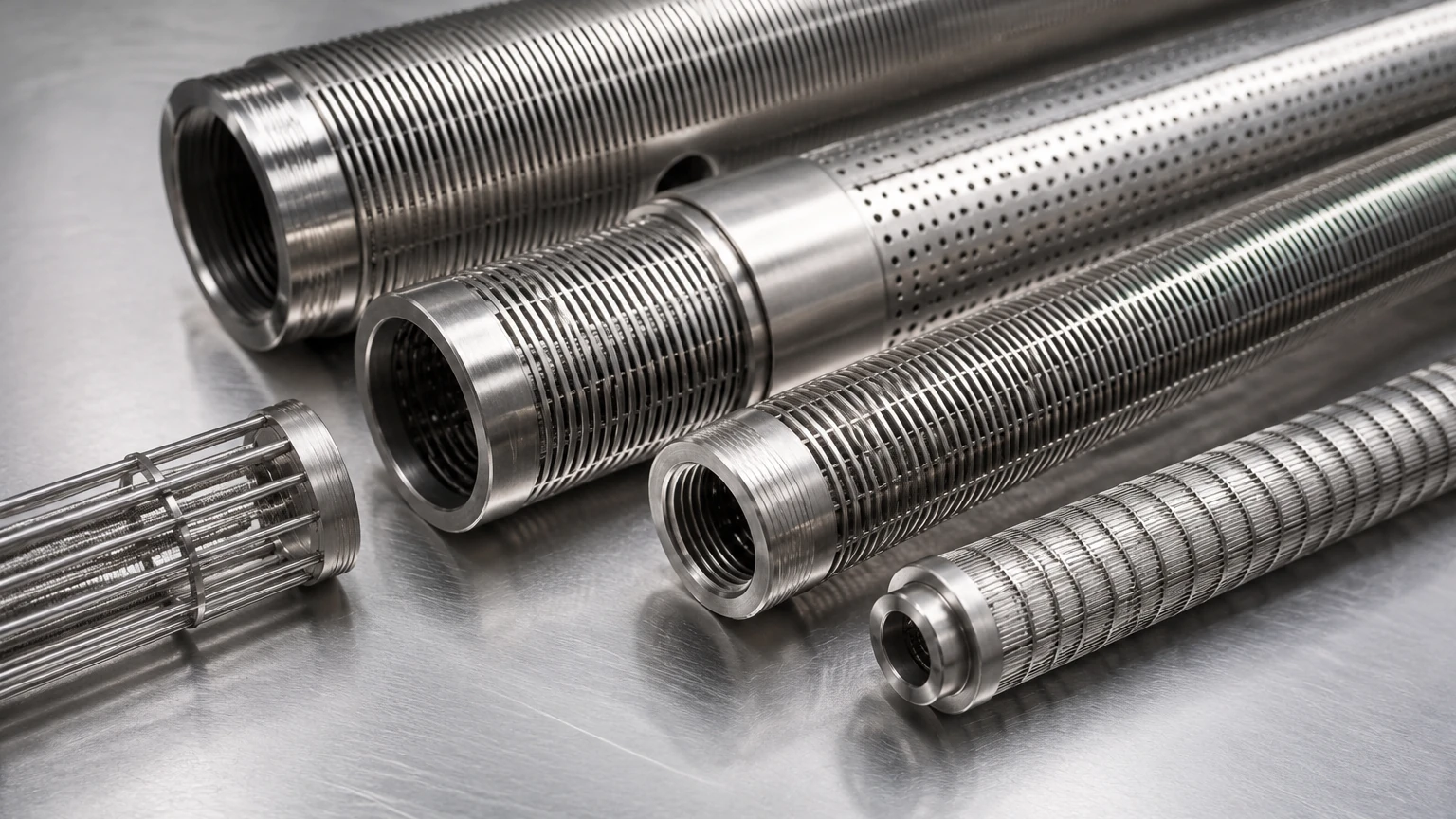
Rod-style screens consist of a series of longitudinal rods welded to a support structure. These are known for their extreme durability and high flow capacity. They are typically used when the primary goal is to catch large debris without significantly impacting the pump pressure. However, their filtration accuracy is generally lower than mesh-based designs.
Perforated Cone Screens
These are the most common type of drill pipe screens. They feature a conical body made from perforated stainless steel plate. The conical shape provides a larger surface area than a flat screen, which helps distribute the pressure drop and prevents rapid clogging. The hole size can be customized to match the specific requirements of the BHA components.
Wire Mesh Lined Screens
For applications requiring high-precision filtration, perforated screens can be lined with stainless steel wire mesh. This combination provides the structural strength of the perforated plate with the fine filtration capabilities of the mesh. These are particularly useful when protecting highly sensitive MWD tools that cannot tolerate even small particles. As a manufacturer specializing in wire mesh filters and stainless steel filter cartridges, Kaifil provides the technical expertise to ensure these mesh linings are securely bonded to withstand the rigors of downhole flow.
Technical Specifications and Performance Evaluation
When evaluating drill pipe screens, engineers must look beyond simple dimensions. Several technical factors determine the efficiency of the filtration process.
Flow Area and Open Area Ratio
A critical metric is the "Open Area Ratio." This is the ratio of the total area of the holes in the screen to the cross-sectional area of the drill pipe. A common engineering standard is to maintain an open area that is at least 2 to 3 times the area of the pipe ID. This ensures that the screen does not become a bottleneck in the fluid system, which would otherwise lead to excessive pump pressure and potential motor strain.
Pressure Differential (Delta P)
The pressure drop across the screen is a function of the mud viscosity, flow rate, and the screen's open area. A well-designed screen should exhibit a low initial Delta P. As the screen captures debris, the pressure drop will naturally increase. Monitoring this pressure differential at the surface is a key diagnostic tool for determining when a screen may be reaching its capacity.
Length and Taper
The length of the screen (typically ranging from 6 inches to 4 feet) and the angle of the taper are designed to optimize the "catch volume." A longer screen can hold more debris before the flow is significantly restricted, which is essential for long-interval drilling operations.
Installation, Maintenance, and Replacement Cycles
Proper handling of drill pipe screens is essential to prevent premature failure. Even a high-quality stainless steel screen can be compromised by poor installation practices.
Seating and Flange Integrity
The screen is held in place by a flange that sits on the shoulder of the drill pipe tool joint. It is vital to ensure that the flange is the correct size for the specific pipe weight and connection type (e.g., API Regular, IF, or proprietary connections). An ill-fitting flange can lead to fluid bypassing the screen or, in extreme cases, the screen being pushed downhole, causing a major fishing operation.
Cleaning and Inspection
After each trip, drill pipe screens should be removed, cleaned, and inspected. Cleaning should be performed using high-pressure water or steam to remove caked mud and trapped debris. Inspection criteria include:
* Erosion patterns: Check for thinning of the metal or "washout" spots.
* Structural integrity: Look for broken welds or deformed rods.
* Flange wear: Ensure the seating surface is flat and free of nicks.
Replacement Strategy
Because drill pipe screens are subject to constant wear, they should be treated as high-turnover components. Establishing a proactive replacement cycle based on circulating hours and mud abrasiveness is more cost-effective than waiting for a screen to fail. A failed screen not only stops filtering but can also become a source of debris itself if fragments of the screen break off and travel downhole.
Customization and OEM Solutions for Specialized Environments
Every drilling project presents unique challenges, from high-temperature geothermal wells to deep-water offshore exploration. Standard off-the-shelf screens may not always provide the optimal balance of durability and filtration.
Kaifil specializes in customized filtration solutions, working closely with engineering teams to develop drill pipe screens tailored to specific operational parameters. This includes:
* Custom Lengths: Designing extra-long screens for high-debris environments.
* Specialized Coatings: Applying tungsten carbide or other hard-facing materials to high-wear areas to extend service life.
* Variable Micron Ratings: Utilizing specific wire mesh weaves to achieve precise filtration levels for advanced downhole sensors.
By focusing on precision manufacturing and material integrity, Kaifil ensures that each filtration component meets the rigorous demands of industrial applications. For more information on custom metal filtration components and industrial-grade solutions, professionals can explore the Main Page to see the full scope of available OEM capabilities.
Conclusion: The Economics of High-Quality Filtration
In the context of a multi-million dollar drilling program, the cost of a drill pipe screen is negligible. However, the cost of the failure it prevents is substantial. A single trip to replace a damaged MWD tool can cost hundreds of thousands of dollars in rig time and tool repair fees.
Investing in high-quality stainless steel drill pipe screens is a strategic decision that prioritizes long-term operational stability over short-term savings. By understanding the engineering principles behind screen design—from material selection and open area ratios to custom OEM configurations—purchasing and engineering teams can ensure that their downhole assets remain protected in even the most challenging drilling environments. Reliable filtration, supported by expert manufacturing, remains a cornerstone of efficient and safe industrial operations.
